
Podcast: Download

 Would you buy a shotgun to defend your career?
How could facing death help you be stronger in other areas of your life?
And how do you know when it’s time to bend and when it’s time to stand firm?
Author and surfing legend Shaun Tomson discusses winning, surviving horrendous loss, and how you can make sure you’re not one of the million people who will die this year because of bad choices.
In this interview:
- Shaun and his shotgun on the North Shore of Oahu
- Preparing to die for what he loved
- Facing death and never giving up
- Dealing with the loss of his 15 year old son
- Accepting the brutal reality instead of living in fantasy
- How to write your own life code
- Lessons learned after being sucker punched
- Battling a scarcity mindset
- Building courage and optimism
About Shaun Tomson
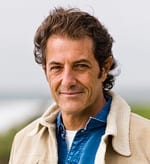 Shaun Tomson has been listed as one of the 25 most influential surfers of the century and as one of the 10 greatest surfers of all time. He was a professional surfer for 14 years, winning the IPS World Pro Championship in 1977 while developing a revolutionary technique for riding inside the tube, the most challenging part of the wave. During his career he was both the youngest and oldest surfer to win a pro event and he is considered to be one of the architects of professional surfing.
Shaun Tomson founded, managed and sold two multi-million dollar clothing brands – Instinct in the ’80s and Solitude in the 90′s. He is the author of the best-selling book Surfer’s Code, and the writer and producer of the award-winning documentary film Bustin Down the Door.
He is a Business Finance and Administration graduate from the University of Natal. He is an inductee in the Jewish and South African Sports Hall of Fame and the US Surfing Hall of Fame. He is a board member and ambassador for Surfrider Foundation, the world’s largest environmental group dedicated to protecting the world’s oceans, waves and beaches and he received the SIMA Environmentalist of the Year Award in 2002. He is an inspirational speaker and business consultant for some of the world’s largest companies.
Shaun lives with his wife and son in Santa Barbara, California and still finds time to chase the perfect wave.
Click here to learn more about The Code: The Power of “I Will” by Shaun Tomson.
Transcript
Introducing Shaun
Tripp: Welcome to The New Man. Today we're talking with Shaun Tomson. He's a world champion and legendary surfer. He's a speaker and he's also the author of The Code: The Power of I Will. Shaun, thank you for talking today.
Shaun: Yeah, it's great to chat, Tripp.
The Shotgun on the North Shore
Tripp: There's a lot of wisdom in this book, a lot of practical wisdom because it's based on your real life experiences. But I keep getting drawn back to this image of you as a younger man, living on the North Shore of Oahu, which was kind of the Wild West of the Pacific at that time, and you got a shotgun to protect yourself. I'm just curious, what were you standing for? What kept you from just getting on a plane and getting the heck out of there?
Shaun: Yeah, that was a long time ago. I was in Hawaii to compete like a lot of young guys, well, surfers that had aspirations of becoming great surfers. You had to go to Hawaii. Hawaii was for us the ultimate destination. That was Mount Everest, Mecca, Annapurna, K2, you name it. It was the place where one had to establish one's reputation, and you had to test your courage against the greatest waves in the world and also against the greatest surfers in the world, because at that time most of the greatest surfers in the world were from Hawaii. So my cousin, myself, and a group of young Aussies, we all had the same collective dream. We wanted to compete and we wanted to win in Hawaii, and we also felt that there might be an opportunity to create pro surfing and actually get paid to go surfing.
Tripp: So it wasn't even grounded yet. It wasn't like, if we do this, then we get paid. It was, we might one day, it may work out, this dream of being a professional surfer. So you guys were taking a stand for that. It wasn't even a reality yet.
Shaun: In some ways, we had this dream of pro surfing and making a living from going surfing, but it was all based around this great passion that we had for surfing and the way to perpetuate the surf lifestyle.
Tripp: Okay. But this was a tough time. There was kind of a battle with the cultures there. It was very well documented in Bustin' Down the Door, which is a fantastic movie. Please check it out if you're listening out there. You decided you were gonna take a stand. You were not gonna get pushed around in that place. I'm trying to put it into perspective for the guy that's listening who may be looking for the easy way, and I'm just imagining you there on the North Shore needing a shotgun to feel a little safe to just go for this dream of possibility of being a professional surfer.
Shaun: Over a period of years, we all ran into problems ultimately. We were essentially the same group of guys, really tough guys, and these guys on the periphery of the sport who were involved in a lot of illegal activities felt that they were the custodians of Hawaiian culture and heritage, and started threatening us. I got punched out a few times. I got hit with a bottle, well, I narrowly ducked, it didn't hit me in the head, but it was about an inch away. A lot of guys told me they were gonna kill me, so obviously I got really nervous, and you have to make that decision. What do you do? Do you stay or do you leave? It's really easy to jump on a plane and go back to South Africa, but I wanted to stay. I loved surfing. Surfing was my life, and in some ways I suppose I was prepared to die for what I loved.
So I drove out to Schofield Barracks to Wahiawa, a pretty short drive from the North Shore, and went into the local gun shop and asked the gunsmith what he had, and he showed me it all, M16s, AR-15s, everything. I said to him, "These guys are tough guys, I'm not a fighter, I'm a surfer. I need protection." He said, "Well, take a Remington 12 gauge pump action." I'd just come out of the South African military. I pumped nine or ten shells into it, a big capacity magazine, and it cost me $240, and I had that for my protection. Ultimately the situation was resolved. I had a meeting with all these tough guys and all the pro surfers on the North Shore. All the Hawaiian guys came to support me at this meeting, there were about 80 people there to say, "Hey, Shaun hasn't done anything wrong."
Tripp: What was that like to feel that support when you had just gone to protect yourself, bought a firearm, then realized there was all the support there?
Shaun: It was great to know that there was that support from these incredible surfers, people like Larry Bertlemann and Barry Kanaiaupuni. Barry Kanaiaupuni was a legend of legends. He was a guy I admired so much, and to have him get up and say, "Hey, just leave Shaun alone," some pretty big guys down there, and Hawaiians wanna travel, and we can't have this sort of stuff happening. So ultimately it was resolved peacefully. That one winter was a tough winter for me.
When to Stand Firm and When to Bend
Tripp: You guys were really young and hadn't had a lot of life experience, being challenged into this place where the trajectory of professional surfing and surfing in general is being determined. It's a lot of responsibility to put on younger men.
In the book, you tell two stories, not back to back, that seem to be contrary to one another, at least in the lesson. One of those is about you being at Waimea, which is, for those that don't surf, the big wave spot on the North Shore. You're on a huge day and you just get pounded, and you have this choice to either go in or go back out, and you choose to go back out and keep surfing. And you talk about translating that go-for-it attitude, that getting back up and not quitting, and how that's impacted your ability to create businesses and keep things floating when you don't think you're gonna make it and then somehow you get it to work.
Then there was another story where you talk about being at another surf spot years later, having a misunderstanding with a guy out in the water. He accused you of dropping in on him, and later on, on the beach, he sucker punched you. It was an ugly situation, and you talk about how it impacted your love for the break for years to come, but then you discuss what would have happened if you'd just given that guy the wave. So there's these two things here, don't give up, don't back out, and then there's always another wave, there's always another opportunity. The big question is, how do we know when it's time to bend and when it's time to really dig deep and be firm? I'm curious if you've got any thoughts on that.
Shaun: Well, the one story is after I took a terrific pounding. I think I was 19 years old, maybe 20, at Waimea Bay. I had the worst wipeout of my life on the first wave I'd ever surfed at this legendary wave, after getting savagely beaten and thinking that I'd actually broken my back, and then paddling all the way in and having to decide what to do. Do I paddle in or do I paddle back out? The shore was only 50 yards away, it looked very enticing. That chapter is really about courage, about perseverance, and also about optimism, that no matter how beaten down you are, unless you find that courage inside you, and you find that optimism in your soul to know that only by enduring are you gonna be able to get another wave. You don't know that you've got courage until you test it. Courage is not an absence of fear. When you ride really challenging waves, and you have these times in your life when you're scared, you find the courage when you look inside yourself and you are willing to still push forward and overcome that feeling of fear. That's what courage is, that sort of life force that pushes you through that fear barrier. So the first aspect is just looking inside yourself, finding that courage, and paddling back out, getting a hammering and persevering and pushing through that fear barrier, and then ultimately getting another wave.
Tripp: So here's the odds, right? Here's the thing that wants to hold me back from my life and all that's possible, and it's time to dig deep. What have I got? What am I made of? This is the time to bring it forward. Even though I'm scared, even though I've got my doubts, I do it anyway.
Shaun: Yeah, and obviously it was a life and death situation. I could really easily have drowned that day, and I had to dig so deep and go up against that primordial fear of drowning, because out of anything that happens in your life, when you get dumped down in water and you go beyond that point where you can control the panic and just relax, there comes a time where you can't relax anymore. You've got to fight for your life, and you really feel that as a surfer when you have a terrible wipeout like I had on that particular day. That fear of dying is not something you can think about, but you've experienced it viscerally. You've experienced that moment where it could have been lights out.
Fighting On: Saving the Business
Tripp: But how do we translate that? Tell us about how you took that experience, and how it helped you when it was time to dig deep with your business.
Shaun: Well, my wife and I had a successful business called Solitude. We sold to all the top shops. Our business had been growing really well for a number of years, and then when 9/11 hit, it became very, very difficult. It was our dream, to come to America, start a business and have it become financially successful. After 9/11 hit, we had invested pretty much everything we had into the business, and after slugging it out for some time, my wife Carla came to me and said, "Shaun, we've got to close the business down, because we'll lose everything that we've built up." So with a very heavy heart, over a period of maybe ten days, we started to say goodbye to the employees and dismantle everything.
It's amazing how life can work. From my surfing days, I was a fighter, and I'm talking about a fighter in metaphorical terms. I never ever gave up. When I surfed a heat, I would surf that heat to the bitter end no matter what. I would never quit. That was a fundamental part of me as a competitor. So it was very hard to deal with the fact that we had to close our business. On a Friday afternoon, which was supposed to be the last day of business, the only thing left was the company server and my workstation, and the movers came to take it all away. I said no, I'm fighting on, this stuff is not going.
On Saturday morning, I got a call from a great friend of mine, who was actually one of the original investors in Solitude. He said, "You won't believe what happened. I was at a baseball game and a guy came up to me and said, 'Wow, that's a cool shirt you're wearing.'" That's kind of miracle number one, because guys never go to another guy and say, that's a cool shirt you're wearing. So my friend said, "Well, it's a Solitude shirt, Shaun and Colin Tomson's company, they're actually closing down their business." And he said, "Well, my dad and I are familiar with that brand, we're investors in businesses, maybe we can meet the Tomsons." We met on Sunday, we did a handshake deal, we reopened for business on Monday. A number of years later, I sold the business to a multibillion dollar corporation.
I got that fighting on attitude from what I learned in the surf, from getting my backside kicked but still paddling on my board and paddling back out, that notion that you just gotta paddle back out because that's when you're gonna get the next wave, that absolute feeling of commitment, single-mindedness. I don't think it's stubbornness, but it's absolute conviction and absolute commitment.
Always Another Wave
Tripp: And how does that translate into this other situation, where you think, gosh, what if I'd just given this guy the wave? I could imagine that goes against that competitor, fighter instinct inside. I've been out at crowded breaks, and you would think it's life or death and that these are the only waves that are ever gonna come in. This is the last one. People are just so narrow-minded about that. Help us navigate that so we can have that openness and that generosity without being a wuss, but at the same time not get stuck in this kind of scarcity mindset and stubbornness, as you said?
Shaun: Well, they both are really connected, because the notion of "I'll always paddle back out" equals "I'll never give up." When you paddle back out, you're paddling back out with that feeling in your mind that there's gonna be another wave. That's why you're paddling back out. And the connectedness there is that as a surfer, you know that there'll always be another wave. It's not just gonna be one wave, there's gonna be many waves, and the waves are gonna come in sets of two or three or four or five or seven, and behind that set there will be another set. So it teaches you that one has to have patience and not have that desperation that this will be the last wave, my one and only chance.
When this incident happened to me at Rincon, it was many years ago, and I had been waiting a long time for a wave, and this guy paddled around me and was like, "I'm gonna go, it's my wave." I have ownership of this wave, I've been sitting, it's my right, and I stuffed the guy and made him fall off. He came and confronted me on the beach, and I was sitting on the wall, and he said, "Are you Shaun Tomson?" Most of the time surfers are super friendly guys, and I said, "Yeah," thinking he wanted a chat or something, and he said, "You dropped in on me." And I said, "Yeah, it was my wave." That's how I was thinking at the time. He said, "Well, it was my wave," I said, "It was my wave," and I can't remember what I said, I turned away, and as I turned away, he sucker punched me. He jumped up, and it turned into a bit of an ugly brawl.
When I thought back on it, at the time I was so convinced that this was my wave, and it turned into an ugly scene, and it sort of soured my relationship with the break. People are gonna get so angry they're gonna slug you over a wave. You can't change other people. It's very difficult. You have absolute control over your attitude. You don't have absolute control over your circumstances. So I would rather just think, well, hey man, there'll be another wave, and let that wave go. It's not like you're giving in, it's not like you're bending over because a guy has been aggressive and confrontational. There'll be others, and that's surfing, there will be many, many other waves. I think it's a far more chilled way to look at life. Certainly I was very, very competitive, and if a guy tried to paddle around me, paddle on my inside, I would go head to head, and sometimes I still do, but I will never get involved in a verbal dispute about a wave now.
Tripp: Well, it has me wondering about the guy that's out there, he doesn't surf, but in his life, I'm imagining there are things where maybe it's not even about the money or the thing, but whether he realizes it or not, it's a reflection of his self-worth. He's being disrespected. That's what he's really fighting about. It sounds to me like when you're in that place of another wave, it's not about you at that point. It's not a judgment against you or what you're entitled to. I just imagine if it's not a very high sense of self-worth, we're going to feel like we've gotta defend ourselves all the time, and we will go head to head with somebody like that.
Shaun: What I'm trying to point out in that chapter is that it's not gonna go away, but you as a person have to deal with it in a way that is still going to give you a good experience in a crowded condition, and I think the best way to do that is just maybe by chilling every now and then. You just chill and think, I'm out here, I'm floating, I've got the horizon in front of me, I've got all my troubles behind me, and you realize that's what's important. You don't have to get the biggest, best wave. Maybe someone paddled around you, it ain't a big deal because another wave will come through.
Losing His Son: What Is vs. What If
Tripp: Have some perspective. You talk a lot in the book about your son passing away when he was 15 and how difficult that was. You said something there that dovetails into what you just said, which was that living in the world of what if versus living in the world of what is would have destroyed you and your wife. And I'm just imagining, how you were talking just now, being out in the lineup and saying, well, it shouldn't be this way, these people shouldn't be here, that guy shouldn't have paddled around, robs you of the experience of actually enjoying what is there at that time. I'm curious if you could tell us a little bit more about what you said and how that relates to being in that horrible experience after losing your son.
Shaun: When you experience terrible sorrow, that sort of terrible loss, it's very difficult to accept the reality of it. And in some ways, you can escape by maybe not accepting it. But ultimately, you're gonna have to accept that terrible reality, that you're gonna have to live your life differently now because your life's changed, you don't have that physical connection anymore with that person you love, they're gone. There are so many what ifs that can destroy you. It really can destroy you, and whether it's from a loss or in any circumstances, you can't live in that world of conjecture. You have to live in that world of hard fact. I wrote that because ultimately it helped me so much. You gotta accept it. It's not what if, it's what is. It was an easy way for me to accept the terrible finality of what had happened, and it helped me deal with the loss, because the metaphor that is used in so much literature is that journey, that long, hard road that one has to keep walking on.
My boy had read me this beautiful essay that he'd written two hours before he died, and he'd written a line in that essay, "The light shines ahead." It was about tube riding, and tube riding is what I used to do. Tube riding was my specialty in surfing, and for him to write this beautiful essay that was very perceptive and really encapsulated the tube riding experience, and then for him inside that to say "the light shines ahead," both from the perspective of what happens when you're inside the tube, and also from the perspective of how one has to look at life, that one has to know that the sun will rise tomorrow, the sun will absolutely rise tomorrow, that the night will give way to light.
Tripp: What a powerful message to get, and to get actually from him. I'm just trying to imagine, yeah, yeah, yeah, but right now I'm hurting, but that came directly from him. Do you imagine it might have been hard to hear that message had it not come from him?
Shaun: The whole notion of imagining something different, I never really went there, because I think you have to live in this present time. You can't live in the past, and you can't live in the future. It was just like, this is what it is right now, and this is what I have to accept, and this is what I have to deal with, and I have to build my life, I have to build my attitude around this. When you have a loss, you just think about life differently. You get this knowledge. You don't want it, you don't ask for it, it just comes to you, and I think it's a way of learning how to deal with a tragedy.
Writing Your Own Code
Shaun: None of us have got absolute control of our circumstances. I could walk out of this room and there'd be an earthquake and my home would fall on me, or I could walk across the road and a car could run me over. The next session, who knows what could happen, but you have absolute control of your attitude. And I've always felt that your attitude is defined by how you think about life, how you think about the present, how you think about the past, how you think about the future. That all forms how you think about this moment. That's what my books are about, building this positive attitude, and my new book is written to empower positive attitude.
There's an exercise in the back of the book that's free, that I'm trying to get introduced into every single school in the nation. It's a simple empowerment exercise, it takes thirty minutes, and it's twelve lines. Every line begins with "I will." That's it, you write your own code. I found that it is so empowering to think about your values and think about the future, and write it down in the present, because when you write your thoughts down, they develop this great power, I think. These words ultimately will become your actions, and your actions, powered by your attitude, are gonna define you.
Tripp: I've read both of the books, and I love how you're giving us some very positive lessons to learn. They come from gritty places. This isn't just "do like I do and you won't have any bumps in the road." You're teaching and sharing from a place of real challenges that you've had, and to me, that really keeps it grounded and makes it very powerful.
One Million Bad Choices
Shaun: The books are not like, "follow my lessons for success." They're not written that way. They're written to create a little spark for someone to write their own code, for someone to sit down and in half an hour write these 12 promises to themselves. That's what the books are for.
Here's a statistic that very few people know about in America. Last year, 2.4 million people died in the United States. One million out of that 2.4 million died from bad choices. One million people. Six hundred and seventeen thousand American troops died in the Second World War between 1939 and '45, fifty-five thousand troops died in Vietnam, but last year a million people died from bad choices. So there's this notion of empowering people to make positive choices, and there are many, many ways that people can be empowered to do that. I've offered up one little simple free solution, and maybe someone, somewhere, a little kid or whoever it is, will do this exercise and think about their future differently and make one decision differently.
Tripp: There's a lot to be learned there. The book we're talking about is The Code: The Power of I Will. Visit shaunthomson.com. Shaun, thank you so much for talking today. I feel like we're just scratching the surface on what you've got to offer here. I'm glad you're writing, glad you're sharing this out there in the world. It's been an honor to have you on the show.
Shaun: Awesome, Tripp. Thanks for having me. I really appreciate it. Cheers, man.