
Podcast: Download
Subscribe: RSS
Why Bother Loving Yourself?
Note: This is a previously released interview from The New Man. It’s been a while since it was published, but the valuable ideas are still just as relevant today. Here’s an opportunity to listen again or for the first time. Enjoy!
 Can you actually learn how to build confidence and get in the zone where good fortune seems to flow your way?
Is being happy or content for losers?
And are you creating what you really want or are you just avoiding failure?
Love Yourself Like Your Life Depends On It author and renaissance man Kamal Ravikant is here to discuss the dangers of being driven by fear plus a simple practice to build confidence and bounce back after a challenge.
In this interview:
- How is fulfillment different than being happy?
- How to build confidence
- Why things just seem to go your way when you’re not really trying
- The difference between self-love and narcissism
- The danger of a “finish line” mentality
- When failure is okay
- How to tell if you’re being driven by a fear of failure
About Kamal Ravikant
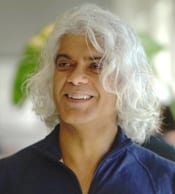 Lessons learned, late night thoughts, and experiences shared.
I’ve trekked to one of the highest base camps in the Himalayas, earned my US Army Infantry patch, walked 550 miles across Spain, lived in Paris, and bungee jumped out of a perfectly good hot air balloon.
I’ve hung out with some of my favorite authors and been the only non-black, non-woman member of the Black Women’s writers’ group. I’ve written a novel about love, forgiveness, and facing our fears.
I’ve danced the merengue on hot nights in the Caribbean, kite surfed (badly), sailed off the West coast of France, watched double rainbows, shooting stars, sunrises and sunsets in various parts of the world.
I’ve driven like a maniac on Highway 1, won a San Francisco-wide modeling contest, gotten drunk on the same barstool as Hemingway, watched Ben Kingsley eat a sandwich in his boxers, felt the smooth marble of the Taj Mahal against my bare feet, held the hands of dying patients, sang in the shower (badly), made love to some beautiful and amazing women (not too badly), co-founded a company with the guy who wrote the first browser, and been fortunate enough to work with some of the smartest investors and engineers in Silicon Valley.
Starting blocks are behind me. Watch out world…..
Click here for Kamal Ravikant’s book Love Yourself Like Your Life Depends On It.
Transcript
Getting Started
Kamal: All right. Is this better?
Tripp: I hear you.
Kamal: Awesome, man. Hear you too. Nice to hear your voice.
Tripp: We finally did it.
Kamal: You made it happen. You really did. I love your persistence, dude. Whatever you do in life, I am going to support you. That's what it takes.
Tripp: I'm a coach. I'm cracking the whip for a lot of guys out there. So getting, lining up an interview is cake. Getting guys to follow through on building businesses and living dreams is the real deep digging stuff.
Kamal: That's funny. How are you? Thank you for reading the book, by the way, man. That means a lot to me.
Tripp: Not only that, I think most of my clients have read it now. My wife loved it. Both of them. It's been a genuine pleasure to recommend it to others. Most of the guys that I talk to don't like to read. That's why they listen to a podcast, so they don't have to. So it's nice that it's just concise. It gets right in there and you did a beautiful job. So thank you.
Kamal: Yes. I wrote the book that I'd want to read.
Tripp: Good.
Kamal: Especially when you're down, you don't want to read complicated stuff. You don't want to read theory. That's the worst thing you can do for yourself.
Tripp: Yeah.
Kamal: Exactly. You just want to say, here, give me the steps.
Tripp: Give me the good stuff. I don't have a lot of time for anything else.
Kamal: That's it.
Tripp: Right on, man. Well, I want to make sure before we get started, the correct pronunciation of your last name?
Kamal: Ravikant.
Tripp: Ravikant. Okay, great. I was just going to introduce you as the author of *Live Your Truth* and *Love Yourself Like Your Life Depends On It*. Is that cool or you want something else?
Kamal: Yeah, that's perfect. And I run a venture fund in Silicon Valley. I've been a serial entrepreneur in Silicon Valley since the first dot-com boom. You can say whatever you want.
Tripp: Okay. All right, I'll just make some shit up then.
Kamal: Yeah. You remember there was this rapper when we were kids, and I forget the rest, but I always remember this line: "Ladies love me, girls adore me, even the ones that don't know me." I thought that was the best bio ever. How old are you?
Tripp: Forty.
Kamal: All right. So I'm 42.
Tripp: That's all you need. Just a few sentences. Who is Kamal?
Kamal: That's what you wish your bio could be. As men, in the end, that's it.
Tripp: Well, let's get a bigger, broader picture of you. You earned your US Army infantry patch. You had a previous job where you watched a lot of people die. You hiked the Himalayas. You meditated with Tibetan monks. And now you're out sweating it out in Silicon Valley. Is that safe to say?
Kamal: Yeah, but now I'm investing. There's no sweat involved in investing, man. That's what you do when you don't want to work for a living. Any VC who tells you they work for a living is full of shit.
Rock Bottom and the Vow
Tripp: Okay. Well, let's talk about the practice then, because it's a practice that's made a big impact on my life. It's made a big impact on my coaching clients. Obviously, it's helped you a lot. But where were you before? What was going on for you that had you land on, okay, I've got to start doing this?
Kamal: By the way, is the podcast going?
Tripp: We're doing it, man.
Kamal: Oh, we are? Awesome. I better get on the ball. Ask me that question again.
Tripp: Where were you? What was going on in your life that would have you arrive at doing this practice? Just paint the picture. I'm hearing that things are good now, but I imagine you didn't just say, "Hey, it's a Friday afternoon, I'm going to come up with this cool practice."
Kamal: Yeah, dude. I was so not the love-yourself guy, and I'm still not. I didn't believe in that stuff. I didn't believe in happiness. I used to scoff at that. Even the concept of love. In the Valley, you're just driven and building stuff, and it's how big your exit is. And it was literally when I hit rock bottom, when everything collapsed. I've noticed that with a lot of successful entrepreneurs, everyone goes through their rock bottom moment, their dark night in the cave, the whole hero's journey thing. I got really sick. My company was falling apart. I had all my money in it. A bunch of my friends had put money into it. I had gone through a breakup. One of my best friends died. It was all at the same time. The doctor was throwing around diagnoses that were very scary. They didn't know. And I was just bedridden. I couldn't go to work. I had to just leave the company, watch it fall apart, and hope that people could take care of it. And I was miserable. Miserable was a good day. I would've wished for miserable. Honestly, I was suicidal, miserable, the works, just locked in my room.
Tripp: And probably not talking about this with other people. This was your own little private world that you were in.
Kamal: There you go. When we need to talk most is when we hide the most. It's a classic male thing.
Tripp: Right.
Kamal: And one morning I woke up and it was just like, I can't do this anymore. This sucks. I refuse. I staggered over to my desk. I have this journal where sometimes I write my thoughts, and I wrote down with my pen, I almost carved it onto my desk, this vow that I made that I'm done. I'm just done with this. And I don't know where it came from, but I'm going to love myself. I'm going to get out of this. I've loved women. I've loved people. I've loved companies. I've loved things. I'm just going to focus on myself and I'm going to get better.
Happiness, Fulfillment, and the Finish Line
Tripp: Why was it a dirty word before then? I heard you say that you didn't like happiness. You didn't like love. What did that mean to you then?
Kamal: It seemed too wishy-washy. Too Pollyanna, where you do that, but you're not creating great things in life.
Tripp: So to create great things in life, you had to not be happy?
Kamal: You almost had to push yourself and work hard and suffer. Yeah, go figure.
Tripp: I bump into this all the time too. It's so silly, but somewhere along the way we get into this: if you want to be happy in life, you've got to be miserable, but then you can't really be happy, because then you're settling. It's just fucked logic, isn't it?
Kamal: It really is. And I think part of it comes from, say, when I was in the army, you push yourself, you're miserable, but you get through it and it's great. You build a company, it's miserable. You're sleeping under your desk, you have no social life, but then you sell it and it's awesome. You're working for the outcome.
Tripp: Some big finish line.
Kamal: Some big finish line that'll solve everything. And then you reach there and you're like, okay, what do I do now? Then you find another one and you find another one. It's the irony in life. Clichés exist for a reason. It's the journey, not the destination. Classic cliché. But all those people have been saying it for thousands of years, and that's the reason why.
Tripp: I wonder how many guys are out there. I can't remember which book it was, I think one of Tal Ben-Shahar's books on happiness. He talks about the happiness we get from creating things. We're already at a baseline and we're building up from there, getting better and better at something and enjoying it. And then there's the other type of happiness, the drowning principle. You take air away from me and I think I'm going to die. Then you give me that breath again and I'm like, oh my God, I'm so happy. Somehow we equate just surviving with happiness, but all we did was go down to the bottom and come back to the baseline. We didn't actually make any progress. It sounds like that's a cycle we could get into. We're just depriving ourselves of the things we really want, and then when we imagine we're going to get them back, that's where we'll be happy.
Kamal: Yeah. I'm actually even thinking, beyond happiness, a deeper thing, and I talk about this in the new book, is fulfillment. Fulfillment is a deeper place. When we do things that fulfill us, or when we live lives that fulfill us, happiness is a natural byproduct. And so are other things. Rather than focusing on happiness, you can take drugs, or jump into a new relationship and have fun with that. But then that fades, or you do this new thing and that fades. If you chase that, you're chasing a moving target. Versus if you really focus on who you are and who you want to be and what you want to create in the world. When I say create, it could be anything. It could be writing, it could be a company, a book, a blog. It could be your children. Whatever you're creating in the world, you focus on that. It's deeper. And I found that people who have a great presence around them, who have an inner sense that just radiates happiness, are doing things that fulfill them. They're living lives that are fulfilling.
Tripp: As we're talking about this, happiness is a peak experience. It happens in a moment. We won something, or she said she'd go out with me, or my baby's born, or whatever. And we don't trust it, because it's transient. It's going to come and go. Fulfillment is the thing we're building upon. It's the foundation. And I think this is where the practice comes in. What are we building the foundation of our life on?
Kamal: Yeah. What do we stand for? If you figure out what you stand for and just decide to live that, life transforms. Reality just warps itself around us. That's what I discovered for myself: figure out what I stood for and make an obsessive commitment, the same kind of commitment I would make to build a company, but make the commitment to being that version of myself.
"I Love Myself" and the Narcissism Question
Tripp: And you chose the phrase "I love myself." So connect the dots. You're going to make this commitment, and the mantra that comes across for you is "I love myself."
Kamal: I don't know where it came from. It came from inside. It came from desperation. It was not a conscious thought. It was me just miserable, staggering around my desk and writing that down. I remember when I finished, I wrote down that I was going to love myself in a way that was going to be complete, truly and deeply, in every thought and every action. Every moment I was conscious, I was going to focus on that for me. And I remember sitting down after that thinking, what did I just write? But I made a vow to myself. A vow to yourself, when it comes from that kind of place, is a very, very special thing. That's where your life transforms. I instinctively knew that. And so I had to do it.
Tripp: You felt like that was the spot. If we've got a pain in our back, that's the spot you rub into. It's a little painful, but that's the one that's tender.
Kamal: I guess. I'd made that vow and I had to keep it to myself, and I didn't know how to do it. There weren't any books around me. And honestly, if there were books with "Love" in the title, I would have avoided them.
Tripp: Well, that's what happened to me. AJ Jacobs sent me your book. I remember my first reaction was, "Love Yourself? Oh, get out of here." And that's when I know I'm onto something. If I have this kind of reaction, check it out. I'm really glad that I did, obviously. But I remember it was a split second: there's something wrong with this. I grew up in a house where my dad was a cowboy and a cop. You don't talk about yourself. You don't celebrate your wins. Otherwise it's arrogant or disrespectful. You don't build yourself up or inflate yourself. Because of that, we're raised to diminish the things we bring to the table. So it just seems wrong. It seems repulsive. How did you start to separate this from narcissism and self-absorption? That's the fear: I'm going to be seen as self-absorbed and narcissistic.
Kamal: Sometimes a little self-absorption is a good thing. Let's be honest.
Tripp: Yeah.
Kamal: I think people misinterpret narcissism in our society. Narcissism is posting your photos in your bikini on Twitter. That's narcissism. Loving yourself in a true manner, where you start to take care of yourself, allow good things in your life, and cut out the negative things in your life, that's not narcissism. That's healthy.
Tripp: That's being an ally to yourself.
Kamal: Yeah. Narcissism really is looking for external validation. Truly loving yourself is for internal validation that comes from just being yourself, becoming the person you wish you could be. And you do that by being gentle with yourself. We beat ourselves up all the time. I'm a classic case of that. I'm very hard on myself, and it took something like this to make me gentler with myself.
Tripp: I think that's a harder thing for guys to grasp. If this negative voice was some guy that lived in your world with you, you'd beat his ass.
Kamal: At some point you'd have to beat his ass.
How the Practice Works
Kamal: Here's the irony: life works easier when you get rid of this. I don't think you can fully get rid of it, because the mind is a rat cage. It's a monkey. But you pay attention to it less. It doesn't carry the same weight anymore, because you build in yourself this other pattern, this other way of being that's gentler, softer, that actually looks for the good inside you and the good outside of you. What you seek is what you get, whether it's inside or outside. I knew none of this when I did that. I actually remember sitting back thinking, okay, now what do I do? I thought of the simplest thing I could do, and I just started repeating, "I love myself. I love myself," in my head. Sometimes in the shower, loud. Then I started to make myself feel it, force myself to feel it. I have a background in science as well, so I know neuroscience pretty well, and neuroplasticity and how the brain works. You lay down thought pathways, and the neurons that fire together wire together. You ever heard that phrase?
Tripp: Right, right.
Kamal: Your strongest neural connections happen with emotional experiences. So I started making myself feel that emotion toward myself, consistently, consistently, consistently. I started meditating. I came up with this meditative practice, because I'm lazy and I hate to meditate. It was a 7-minute meditation that I did to particular music. I was anchoring my mind to that meditation, so that every time I listened to that music, my mind would go into that space, and I would imagine light coming in, and just, "I love myself. I love myself." I just tried things, whatever felt right. I noticed a difference in myself. I threw everything else away and it came down to 3 basic things, which I talk about in the book. And it worked. Within a few weeks, my mind was completely different. Within a month, my life was transformed.
Tripp: You went from a slobbering, crawling mess across the floor to write something down, to actually feeling more empowered. And it came from the inside out. I think everyone's looking outside. If I have more money, more Facebook likes, more status, then that's going to be the thing that buoys me up. And you found a way to self-generate.
Kamal: The problem with money and Facebook likes is they give us that little dopamine release, but then you crave more. It's a drug. I equate all of those to meth. You get a little dopamine release, you want more.
Tripp: Without the weight loss, though.
Kamal: Yeah, your teeth fall out. Whenever you seek external validation, you will then seek more of it. You will never reach the point where you say, this is it, I have enough, I have arrived. But if you go from within, here is the irony: you go from within, and that stuff comes to you.
Being in the Zone and Staying There
Tripp: That is what I wanted to talk about, because what we're really talking about is a sense of wholeness. The world can be a place where I try to get something to fill me up, or a place where I'm here to give, to contribute. It's an inside-out thing. And I think we've all had moments where we're just in the zone. Girls are looking at me, work opportunities are coming in. It seems mysterious, but if you track it down, it's not so magical. We've landed in that sweet spot where we're generating a place of wholeness. A lot of guys say, "I don't know what happened there." But I think we're onto it here. When we start to generate that, we're always coming back to this place of I'm already okay, I'm already lovable, I love myself. Then we're not grasping for things out in the world. Is that your experience too?
Kamal: Yeah. And one of the very important things I learned, this is key, is that we think, okay, I've learned my lesson, so I'll just be this way. That's crap. Given our ages, we have decades of our minds being a certain way. We think when we learn a lesson, it'll shift completely. No. Minds have to be trained. It's all this weight of years of thinking that you're going against. It's like going to a gym. I love to work out, so I took that philosophy. If I work out tomorrow and then I don't work out for 2 months, my body's going to show it. I do the same thing with the mind. That's where I came up with trying all these things, and then whatever worked, making it a practice and doing it day in, day out. Then my mind showed it, and because my mind showed it, my life showed it.
Tripp: But you had a visceral experience. You talk about it in the book, when things were good: "Oh well, I don't have to do this anymore. I found the solution."
Kamal: That's it. I figured it out.
Tripp: I figured it out, so I'm done. I can just go back to beating the shit out of myself.
Kamal: Yeah. And life shows. I get emails from people all the time who've read the books, and it's amazing, the transformations they get. I keep telling them, listen, the one key thing is don't slide when things get better. Trust me, I still do it in my life. Life shows, and that reminds me, hey, step up, buddy. I don't know why we're inherently lazy when it comes to taking care of ourselves, but we're great when it comes to beating ourselves up.
Tripp: It's this idea that there's exoneration, that life is a series of finish lines, and not a continuous do the work, get in there and do the work. We really believe there's going to be a place where I can finally relax, and finally have the life that I really want, because I took care of all that shit. I've been waiting to do this and now I can finally do it. And it's like, no, it's now. This is all you've got right now.
Kamal: Life is just do the work. And do the work on the internal and the external will blow your socks off. That's what I've learned. I worked so many years on the external, and now I'm doing the work on the internal. The things that I always wanted that weren't happening are happening so easily. It's almost silly. I walk around tickled sometimes.
Tripp: You, Mr. Anti-Happiness, and now Mr. Tickles.
Kamal: I'll be honest with you, I still go through crap. I still go through moments of feeling really down. I went through a really bad breakup at the end of last year, someone I really loved, and it was hard. You feel these things and you go through them, and you come out quicker and you come out better. A friend of mine, a very wise guy, gave me the best piece of advice I've ever heard. I always mention a wise friend in all my books, and it's him. He told me, life is from the inside out. I've really come to believe that. You work on your inner self, and the outer self will naturally take care of itself, because you will be better. And because you're better, the people around you will be better. Like you said, when you're feeling a certain way, all of a sudden girls notice it. You didn't dress any differently or whatever. We're far more intuitive beings than we are logical beings. So if you're being a certain way, the world around you will respond.
Confidence, Resilience, and Life Not Falling Apart
Tripp: Let's talk about that, because I think some guys are waiting until they feel confident. They want to go into a scary or risky situation and feel strong or sure as they go into it. But I think the mistake is in thinking that confidence comes from feeling certain about an outcome. It comes more from that foundational fulfillment place, that wholeness, than from the outcome itself. It's the knowing that I'll be okay. So shit still happens, even though we're doing this practice. Is it helping you become more resilient?
Kamal: I've always been resilient, but what it does is make me more open. Life still works. One thing may be off, but the rest will be going gangbusters. The whole thing doesn't have to fall apart. If that makes any sense.
Tripp: I don't know if it does. What do you mean?
Kamal: For example, when I was going through the breakup, I was really hurting. Yet I was building a venture fund, and people were throwing themselves in front of me to give me money for my fund. It was a new venture fund, and that doesn't happen. Something I always dreamed of. And all of a sudden this little book I'd written was a huge bestseller. It's self-published and it sells as much as New York Times bestsellers. All these big external things I've always wanted, to be an author, blah, blah, blah, just happened so naturally. So one thing may be off, but as long as I'm working on myself, other things are happening great. You'll get through whatever the painful experience was and you'll be better for it. And then it'll draw other better things to you, other better people to you. Life doesn't sideline me anymore.
Driven to Succeed vs. Driven Not to Fail
Tripp: Absolutely. Let's talk about the fuel of what drives us. What can be driving me is to get something, to get somewhere, or to avoid something. It could be fear of failure. That can be what's driving me, versus what do I want to create, what do I want to give, what do I want to contribute. You talked about when you were struggling with your business and you realized what was driving you. What was that?
Kamal: This was actually after I did the practice. It loosened up my mind a lot, and I got some great insights on myself. The best insights are the ones that come from within, not the ones that people tell you, because you can't rationalize them away. This is when I realized that everybody thought I was driven to succeed. I wasn't driven to succeed. I was driven to not fail.
Tripp: Two different things.
Kamal: Two opposite things. You will end up with two very different outcomes.
Tripp: Paint the picture. What does driven not to fail deliver?
Kamal: Driven not to fail means you're always saving the day, but you're always having crisis. That's not sustainable, man. No wonder I got so sick and worn out and things fell apart. That was after 3 years of doing that nonstop. I had no idea that was what was driving me. I had to actually start taking care of myself emotionally, from the inside out. Then I realized that was the driving motivation, and that shifted. Self-knowledge is the first step, and the second step is actually creating something new. That just logically happens once you realize it, because you realize I can't be this way anymore. So you choose to be different.
Tripp: So if the old idea was to not fail, what's the new thing? What do you call it?
Kamal: I'm looking at the copy of my new book. It's living my truth. It's being the best that I can be, being my best self. And trust me, I fail spectacularly.
Tripp: Failure is now an option, where before it wasn't. And that's what has us live small.
Kamal: Yeah. Failure is okay. I fail spectacularly and I just get up and move forward. Maybe I'll beat myself up a little bit, but I'll get up and remind myself, oh yeah, that's part of the process, and step up, step up, step up every day. If you're working at stepping up, a month later you'll be on top of a mountain.
Tripp: I just love that, because I don't think guys realize there's a real difference between being driven not to fail and living our truth. What I've found is that when I'm creating from fear or shame or lack, some kind of scarcity thing, it just breeds more of that. More of that shit shows up in my life, instead of my being able to say, what is it that I truly want, and let's work on that. But that always takes us into uncertainty. With the other path, it's always about what the threats are. I'm always looking for the threats and trying to pick them off. But if I focus on what I want, I'm not sure where that path is going to lead.
Risk, Uncertainty, and What You Really Want
Kamal: And that's where all the great things are. I gave a talk on entrepreneurship once and I said, to be an entrepreneur, you have to be completely comfortable with uncertainty. To be great at anything in life, you have to be comfortable with uncertainty. Anything worth doing involves risk. Love involves risk. Creating a company involves risk. Writing a book, you name it. Anything that'll put you on the map for what you want involves risk. Risk to your ego, especially. What if it doesn't go the way you planned? Especially as men, we're driven to go out and do things. And if you can realize that the feeling of fear and risk is actually part of the process, you feel it and think, oh good, I'm on the right path. Step up. The things we do will blow our socks off.
Tripp: The picture I'm getting is a flowchart. If I really drill in and do this practice of loving myself, that's what has me become more able to take risk. I'm more willing to take risk because I'm already okay. Things will come along and I'll get bumped around, but I'm a lot tougher and a lot more capable than I think. It really is dependent upon that practice and grounding ourselves in that place. And if I'm willing to take risks, then I don't have to play this game of what failures am I avoiding. I'm able to go for what I really want. Is that the little flowchart you've got on your whiteboard right there?
Kamal: My internal whiteboard? What's interesting is, as you do this, you discover that the things you thought you wanted are not necessarily the things you want. You also discover more about what you really want when you work on yourself from the inside out.
Tripp: What shifted for you? Give me an example.
Kamal: I really thought I was going to go build another company. For all the lessons I'd learned, I was going to build something great and have a great exit, and all that blah, blah, blah. I realized, no, all I want to do is help people that I love and work with people I love, on my terms, when I feel like doing it. A venture fund was perfect, because I get to invest in very talented entrepreneurs. These are all people I care about. And the people who invest in my fund trust my ability to invest their money wisely, and they're very excited. So I'm helping them. I'm just the lucky guy in the middle.
Tripp: Beautiful.
Kamal: It's perfect. And I write, and I have publishers approaching me, but I self-publish because I control my voice. I can put out to the world exactly what I want to say, be honest. And it's actually really helping people. I go out and advise companies. I get asked to advise and consult all the time. I turn most of them down and take on only the things I care about. The money just comes on its own. It's weird. I stopped worrying about money and it just happens.
Tripp: It sounds like we've got these paths. I want to feel fulfilled, but from the place of not failing, life becomes this Rube Goldberg machine where all these things have to align and this craziness has to happen, and then at the end of the machine, I will feel fulfilled. Because that's ultimately what I want. But if we create from this place of what fulfills me, it's much closer. What I'm hearing, and what I've experienced, is it's a lot closer. It doesn't have to go through all this stuff and be dependent upon all these external factors. The experience we ultimately want is much closer.
Kamal: Yeah. Start with the outcome. Imagine that.
Tripp: But I think for a lot of guys, their outcome is the money or the thing, and they haven't brought it back to the experience, which is fulfillment.
Kamal: And the irony is the money and the things will come, if you start from that. They'll come far easier. There'll be far less struggle. There'll still be struggle. No one's banging on my door with a suitcase full of unmarked 20s. I'm working for it. But it's from a very relaxed place. There's no desperate intensity. It's kind of nice.
Tripp: Imagine that. And it's the old guy, the old idea that things have to be suffering and tough.
Kamal: Dude, that was me. Oh my God, that was so me. I was so proud of myself. There was pride in there: look at what I'm doing, what I'm overcoming, blah, blah, blah. That's such nonsense. We can overcome things, but we don't have to consciously make that part of our path. The things I'm overcoming now are far more fulfilling than the things I was overcoming before, which I could have actually avoided.
Being a Man, and Real Power
Tripp: Wow. I wonder if this is because you and I are around the same age. I don't know if we could have heard this message when we were 22 and young, dumb, and full of cum. I wish someone had given me this book, man.
Kamal: I kid you not, half the time I realize I write because I'm writing to myself as a reminder. I wish someone had given it to me and smacked me upside the head until I started applying it. I really think the arc of my life would have been completely different.
Tripp: I agree. This is a challenging pill to swallow for guys. It confronts this whole notion of who we think we are. We're the guy that knows how to suffer and be tough and win and all that kind of shit. It goes right up against all of that and challenges a lot of it. For a little book, it packs a punch, man.
Kamal: And this is not namby-pamby, oversensitive BS. I don't buy a lot of that, because I think as men, we have to be men. I'm in the Bay Area. There's a lot of new age stuff here, and some of the men I meet are quite feminine, feminine energy. No. As men, we have to live the world as men. We have to create things. We have to accomplish things. We have to express ourselves. We have this power to create. That's amazing. The way we think and put things together, we build things. And you can do that from a very masculine place. So loving yourself is not feminine and namby-pamby. In fact, it's more empowering. I'm more of a man now than I ever was before.
Tripp: This is the real power. The other stuff is a childish way of going about it: I've got to show, I've got to prove, I've got to get external validation from daddy, from mama, from the world. To me, this is where the real power comes from. And it will require us to get out of that younger mindset.
Kamal: Yeah. I actually had one of my readers, a really good guy, an infantry lieutenant. He came back and gave a talk at West Point, and he loves the book, and we keep in touch. He said, what I did was I took your Love Yourself book, but got rid of words like love, and took the same principles and gave this talk, and it was a big hit. He said, because I kind of militarized it.
Tripp: What's the military version?
Kamal: I don't know. He said one of these days he'll record it. I was like, dude, that's awesome. Go for it.
Tripp: I affirm myself. Check.
Kamal: That's funny.
Tripp: Very cool. Well, Kamal Ravikant, author of *Live Your Truth* and *Love Yourself Like Your Life Depends on It*, thank you so much, man.
Kamal: Oh, it was my pleasure. Thank you.