
Podcast: Download
Subscribe: RSS
Doc G (Earn and Invest) – Is There More to Life Than Chasing Money and Being Important?
Do you worry that you’re on the wrong pa th in life?
Are you focused on goals and outcomes or doing what you actually enjoy?
And what if there’s more to life than chasing money or the need to be important?
Before Doc G became a writer and host of the Earn and Invest Podcast, he was like many doctors. But after years spent chasing outcomes, money, and building an ideal version of himself, he realized he was in a trap. Today we discuss how he reinvented his personal and professional life based on what gave him a sense of aliveness and meaning. We’ll also dive into our fixation on money, safety, and why death can be a wonderful teacher.
In this interview:
- Is life forcing you to change?
- Who are you if you’re not chasing money?
- Joseph Campbell on feeling alive
- Doing things to prove we’re enough
- Why ego gets in the way of meaning or purpose
- Why Doc G got depressed once he was financially free
- Thinking if you were someone else you’d be free once and for all
- Redefining your life based on what brings aliveness and meaning
- Chasing outcomes instead of enjoying the process
- Dealing with resistance and self-doubt
- Searching for “hacks” to avoid discomfort, risk, and vulnerability
- How dealing with death on a regular basis impacts our ability to live
- What is hospice?
- What is the dying process like?
- How does spirituality affect our ability to die peacefully?
- The fear of dying with peace instead of regrets
About Doc G
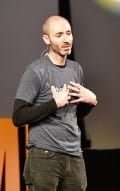 Jordan “Doc G” Grumet was born in Evanston, Illinois, in 1973, his interest in becoming a doctor ignited when his father, an oncologist, died unexpectedly in the prime of life. This profound and life-shaping boyhood loss colors Doc G’s self-reflective writing and manifests as his “genetic destiny” to practice medicine.
After graduating from the University of Michigan, he moved to Chicago and received his medical degree from Northwestern University. He now practices Internal Medicine in Northbrook, Illinois.
He was an Assistant Professor, first at Northwestern University and then at The University of Chicago. He has been a medical director of several nursing homes, started multiple palliative care programs in extended care facilities, and currently is an associate medical director at Journeycare Hospice.
Doc G’s strong leadership stance for responsible medical training permeates many of his stories and essays. He shares from his own experience, advising and plainly addressing the challenges of becoming a physician in today’s political-medical milieu.
Doc G is passionate about communicating. He is a consummate writer and speaker about not only medicine but also personal finance. He started a podcast, Earn & Invest, in 2018 to explore financial independence and wellness.
He has also run several small businesses including a concierge medical practice, an online art gallery, and a blog and podcast on personal finance.
Click here to check out Doc G’s podcast and blog Earn & Invest.
Transcript
The Moment of Being Applauded as a Physician
Tripp: One of the things that stuck out for me when you interviewed me on your podcast, the Earn and Invest podcast, was a story you told about being recognized as a physician. You basically said it spoke to something I had written about in my book. Do you remember that story, and could you tell us a little about it?
Doc G: There was a movie written about what it's like to be a physician, and another physician at the hospital where I worked sponsored a showing at one of the local movie theaters. At some point after the movie, the director got up and said something to the extent of, "Anyone who's a doctor, please stand up." We all stood up, and then she clapped and the whole crowd started clapping. About 50% of the audience was doctors. It was the first time I felt that sense of honor in being a physician. And it was double-edged, because on one side it felt really, really good, but on the other it made me realize I didn't feel that all the time. So it was a very complicated moment for me. It was part of the realization that I liked being a doctor, but it didn't give me that innate pride I always thought it would. In fact, maybe it only did at that moment. I didn't carry that good feeling around all the time. That's interesting, because I work with the dying, and you start really thinking, "Okay, what's important in my life? What really feeds me and nurtures me?" That was one of those moments where I realized the nurturing I thought I'd get from being a physician, I felt for that one moment while I was being clapped for, and it was very short-lived. Maybe this profession really wasn't providing the good feelings I thought it would for the rest of my life.
Why He Became a Doctor
Tripp: I have friends who have become doctors, and the path to that is not a whim. It's not like, "Oh, I'll go get a certificate and try this out." It's such a long process. What were you telling yourself as you went through it? What was the carrot for you as you were becoming a doctor?
Doc G: My father was a prominent oncologist, a really well-known, well-respected doctor. When I was seven years old, he died suddenly of a brain aneurysm. As most young kids do, I felt somehow responsible. I felt like I wasn't good enough, wasn't lovable enough. If I had been more, maybe he wouldn't have died. It was also a time when I really envied him. I wanted to be exactly like him. I wanted to pattern my life after his. So it was really natural to jump on the idea that I could become a doctor just like he was. In some sense, I think I almost thought I could fulfill a role he left when he died, and somehow that could make me whole, or take away the tragedy of him dying. So for me it was never much of a conscious thought process. From the age of seven or eight, I was like, "I'm going to be a doctor. That's it. That's what I'm going to do with my life."
That was interesting, because at the time I also had a major learning disability. I had a horrible, horrible time learning how to read. So I imagine my mother was looking at me going, "Hey, we can't even get you past the first, second grade curriculum. God knows if you're going to learn like everyone else, how much is this going to hold you back?" And then I was this kid saying, "I'm going to be a doctor. This is what I'm going to do with my life. There's no question. This is what I was meant to do."
So I didn't question the hardships of medicine during training, because it felt so innately like my identity. It was what I was supposed to do with my life. That unraveled. There were a few specific episodes during my training and later where I felt that connection to my father starting to fray, and I started questioning the whole idea. "Is this really what I'm supposed to do with myself?" I'd been telling myself this story since I was a little kid, that my father died and I was supposed to walk in his footsteps. Then these little things happened that profoundly made me question that, and it led to a real reckoning of my life. At the same time, I learned about finances. So I had two big things happen at once. I was coming to this reckoning of who I was, what my identity was, and my connection to my father. And I was also starting to look at my financial life and realizing, "Hey, I'm a lot better off than I thought I was."
Tripp: What stage are we talking about? How old were you when this started?
Doc G: Well into my thirties, early forties.
Tripp: So you did become a physician.
Doc G: And then practiced for a good twenty years.
Tripp: You practiced, but in the background you were fulfilling this vision. I think that's what we attach ourselves to. Even the folks with the vision board say, "I'm going to put my head down and do this vision." What's missing is the connection to our subjective experience. What do I really like? What actually has me feel alive? What actually has me feel expansive? And we dismiss that. "No, no, no, it's all about the vision. I've got this identity. This is who I'm supposed to become." And you're on that track. You're well into that. You have fully committed, both feet in. But you had a couple of hiccups along the way that were like, "Maybe I'm supposed to be somebody else." You had a few knocks on the door there.
Doc G: Oh, I had a few of them, and they made me profoundly question what I was doing. I did my best not to think about it. I did my best to ignore those little whispers that tell you maybe you aren't really living your purpose and identity, and maybe you're not making connections that are meaningful in your life. But to do that, I had to question this connection to my father. I had to say, "My father died. I was seven. I've gone on this path to be closer to him. And there are these little whispers telling me that maybe that isn't who I am." That was really hard. It was scary to let go of this childhood vision of my father that I so much wanted to still have in my life. And yet it wasn't fulfilling me.
Tripp: Right. This is what we see over and over again, and it's really common in the people I work with. "I've done well, or I'm on this path to do well, but something's off." I don't know if it's just fear, or doubt, or somebody else's stuff, but there's a rock in my shoe or a hole in my gut. And it's like, "I've already put this much time and energy in. If I quit now, what will people think of me?" What was going on for you there? Was it, "I'm going to betray my father if I even entertain another path," or what was the big fear for you?
Doc G: I think there were two major fears. One was certainly that there were these threads of connection to my father that I was horrified at the idea of losing.
Tripp: So being a doctor was the way you kept your father alive, essentially. You honored your father by becoming a doctor.
Doc G: For sure. And the other part was, as I started realizing there were other things I loved to do. I love to write. I loved public speaking. I really fell in love with the idea of communicating. But I always told myself you can't make a living doing that. So I had this fear of leaving a profession I was good at, that provided a really stable living for me. To just walk away from that is very hard. I always say being a physician is one of the things I'm best in the world at. How do you walk away from that when you realize that no matter how good you are at it, it isn't fulfilling you?
Tripp: I think that's such a big thing: "I'm really good at this, so I should keep doing it," which is different from what actually has me feel alive. We get stuck in performance, which is really what it is. How am I measuring up, how am I performing for the world, instead of how does this actually make me feel? What's the experience of doing this?
Purpose as an Ego Trip
Doc G: I think we also get caught up in this idea of purpose. Being a doctor was really purposeful for me. But sometimes your purpose doesn't have to be something so big or huge. I look back at some of the happiest times of my life, and one of them was when I was a ten-year-old kid and I loved collecting baseball cards. I remember spending years buying baseball cards, going through the packs, and eating the gum. You remember the gum that used to come in the packs?
Tripp: Just a step up from the cardboard backing in that.
Doc G: Exactly. I'd be chewing on this horrendous gum, I'd have ten pieces in my mouth because I'd opened ten different packs, and I'd be watching the Cubs, who lost continuously throughout the eighties when I was that age. And I'd be sorting my baseball cards. I found so much purpose in life doing that. As we get older, we start thinking that something that gives you purpose has to be important. It has to be big. It has to be helping the world or changing things. I really got caught up in that in being a doctor, and I kind of forgot: what do I love? What makes me get up in the morning excited? Playing with baseball cards did when I was a kid. Of course, as an adult your purpose is going to change. You're going to grow up and have different interests. But I lost some of that connection to doing things that really made me feel alive. And when I started realizing things like public speaking and writing made me feel alive, I poo-pooed it. I said, "Well, yeah, but you can't make a living doing that. I'm not particularly good at it. I'm not nearly as good at that as being a physician."
Tripp: Resistance.
Doc G: "I can't change as many lives doing that as I will going to the office every day and treating people's maladies." Like you said, it was all resistance keeping me from becoming what was probably more authentically who I wanted to be.
Tripp: I see purpose as an issue for most folks. It's this thing of, "If I just had my purpose, then everything would fall into place." Most of the time, this idea of purpose is really just an ego trip. Where do I get to be important? Where will I finally be significant? Where will I finally be enough once and for all? And it's a trap, because it's not tied to anything that actually has us feel more alive. I always love what Joseph Campbell said. He believed that the purpose of being alive is to feel alive, to actually experience that. Not in a hedonistic way, where you're all jacked up on cocaine at a beach party somewhere. I'm talking about this sense of really being engaged in life, and when your head hits the pillow at night, it's like, "I'm really living my life." That can come from baseball cards or whatever. But most of the time we get fixated on this image of who we're supposed to be, and whether that's important enough. Then we push down anything that challenges this deep, deep desire to be enough. It sounds like from an early age, you thought, "If I'm a doctor and I fulfill my dad's calling, then I'll finally be enough. I'll be important." You dig that groove in, and it has us poo-poo anything that would challenge it. "I can't go down that road. I won't be important." And then we dismiss that inner knowing: "But I love to speak. I love to teach. I love to write." "No, no, no, you've got to go back to being important."
Doc G: It does. And I love how you say that, that we say, "How am I going to be enough?" As I get older, I realize you can never really be enough. You can just be too little. Every time you think you've hit that enough point, our human nature is to create a new goal and redefine what enough is. But you certainly can be the opposite. You can be too little, which in some ways is what I was doing when I allowed myself to stick with being a doctor and making that my purpose and identity. I was being too little, because it wasn't speaking to my needs.
Tripp: Right. It's a way we can stay comfortable, but it's where we play small. And the weird part is that we look at people and say, "Man, that guy's got it figured out." When we see behind the veil, he knows he's playing small. He knows he's holding back. Even though he's got people kissing his ass and an impressive bank account and all the other things, he knows deep down he's avoiding the thing that would actually have him feel more alive, more true to himself. And it's because of fear. "What will happen to my sense of comfort? My sense of certainty? My identity? No, no, no, I'm going to stick with this thing. This is where I've established who I am and that I matter, and we're not going to mess with it anymore."
Doc G: And I think what you said makes a lot of sense too, that ego really gets in the way of purpose. For me, purpose is what you would do if you had an abundance of free time, had all your basic needs covered, and let go of your egotistical beliefs about what is good and right and just did what you wanted to do.
Tripp: The thing I want to point out is that we're talking about baseball cards and this other stuff, but it takes courage to go down that road. It feels dangerous to our egos to say, "You know what? I'm going to pivot. I'm going to write. I'm going to teach. I'm going to branch out from this thing that feels safe and certain." We're going into uncertainty. It's not the easy road. And I want to point that out because most of us think, "I can't just do what I want. I have to suffer. It's got to be a pain in the ass." I know plenty of people who think the key to life is how much they're suffering, and they like to wear their suffering. But really pivoting into the thing we love is going to present us with, "Man, this is uncomfortable. I've got to learn something, or work at it. This might threaten my financial standing. This is definitely going to threaten my self-image." This way we're talking about is going to steer us into what feels dangerous, and it's not the easy path. But it's the one that has us feel more fulfilled. Let me check in with you. Was that the case for you when you started to pivot away from your medical practice and into other things? What was that process like?
Financially Free and Depressed
Doc G: I got to this point in my career where I'd hit these speed bumps. I had come to terms with having a decent amount of burnout. I even realized I was struggling with this connection to my father. I was looking for a way out. I was looking for a way to redefine myself, to come back to who I am and what I want in the world. And someone sent me a book about personal finance. I read it in two or three hours. It helped me understand a bunch of economic principles that I kind of knew but had never put together. I grew up in a family that was fairly financially savvy. My parents taught me to do all these really smart financial things, but they never gave me the vocabulary to understand how to look at your wealth, decide what you need, decide what is enough. So I read this book, and I realized right at that moment that I had enough money to support myself, and whether I worked or not probably didn't matter. That was the most exciting and scariest moment of my life. And instead of being overjoyed, I actually fell somewhat into a depression for months.
Tripp: What's going on there? Why was it scary? Why was it depressing? I'd think, "Oh, I could retire."
Doc G: I had to face the fact that I had put up all these barriers. I had made all these definitions of things that were goals that defined me, and relieving myself of the monetary worries destroyed them all.
Tripp: So without needing to do it for money, it was essentially a house of cards. If I'm not doing this for money…
Doc G: Yeah, I had no more excuses. I had to look at my life and say, "Okay, I'm in my forties. I've defined my life up to this point by becoming a doctor. I've held on so tightly to this thread of who my father was and my connection to him. And I've been searching for a way out because it was no longer filling my soul, and I just found the way out. And oh my God, who am I? What am I going to do with my life? What has meaning? If I'm not a doctor, what's my importance in this world?" I had a wife and kids and things that really made me feel good. Don't get me wrong, I have strong family and friends. But I think we all strive for something a little deeper and more internal that's not defined by other people. So I had to come to terms with the fact that maybe I'd hoodwinked myself a little bit about who I really was and what my purpose was. I hadn't forged more meaningful aspects of myself. I hadn't built and created things that were more unique and that I identified with more. So then I had to deal with that. It was scary and painful, and I really struggled with walking away from the identity I'd held so tight to my bosom for the last forty years. Who am I going to be now?
Tripp: Right. I've seen this in multiple ways, and I appreciate you being honest about it, because most guys hide this part. They don't want to reveal that once they slay that first dragon in their life, as if there's just one dragon, or one hill, that they identify with… I've talked to guys who have sold millions of books, or created some kind of wealth for themselves, or done something similar to you. And when they reach that, it's this kind of free fall. "Well, who am I? What am I supposed to do now?" Meanwhile, everybody's like, "Wow, I'd love to be in your situation." And there's this hollowness of, "I don't think you would, because I'm lost now." I appreciate you being willing to own that, because some people are going to say, "Really? You're going to pull this shit that you're lost and free-falling, when so many people are struggling with two, three jobs just to get by? Now we're supposed to feel sorry for you?" I can appreciate both. It's great that you're owning that and bringing it forward, because most of us are denying it. I know guys who are staying in careers well past their due date, relationships well past their due date, because it's about identity. It's not really about why they started anymore.
Doc G: Yeah. I only know my reality, so I can't authentically talk about what it's like to struggle in three or four jobs. I can't live that life, so I can't compare it to mine and say, "Oh, I've got it easy, don't complain." All I know is the reality that's been created around me. It is a privilege to be at a place where I have enough money and enough time and enough ability to think about these issues. But I also don't know if we can blame people for questioning their lives regardless of how successful we think they are, because we don't live in their brains. We don't know what they struggle with. This process of trying to figure out who you are and what you're supposed to do in this world is something almost everyone faces, regardless of economic class, regardless of where you are on Maslow's pyramid. Whether you're at the very bottom trying to figure out your basic needs or all the way up at the top, self-actualization, this is a struggle we all face. It's actually a struggle that brings us together as opposed to splitting us apart. The situation may be different. The specifics may be different. But I think we're all struggling with those same issues.
Tripp: It's all human. And I think what you're pointing to is that we look at another person's life and assume that person doesn't deal with the main struggle we're dealing with. So we say, "If I were that person and I wasn't struggling with this specific thing, I'd feel free. I'd have peace of mind. I'd be set." But we don't know what it's like to crawl in between those ears and realize there's another set of challenges that person is dealing with. This is part of the system we get into, where we have a theory. "If I just had that amount of money, lived in that neighborhood, had this status, finally fulfilled my dad's calling, then I'd be set. That would finally have me feel enough. It would finally bring lasting peace of mind. I'd finally feel this sense of aliveness once and for all." We don't realize that we create a theory between that objective outcome and the internal experience we're really seeking. So it's easy to look at that guy and think, "He's set. If I was him, I'd be great." But like you said, we don't know what that subjective experience is like. Everybody's carrying around their own stuff. Everybody's got their own row to hoe. Some are better than others. I'm not going to say it's flat, obviously. But I love to poke holes in this idea that "If I was just that guy, I'd be free from X, Y, Z. I wouldn't have any other worries for the rest of my life."
Doc G: Yeah. And again, I think it comes back to the idea that there really is no such thing as enough. It's really hard to get to this feeling of "I'll finally be there," because most of the time we're really good at realizing when there's too little, but we're not very good at understanding enough.
Subtracting, Keeping Hospice, and Starting to Write
Tripp: Let's come back to that. So you have this awakening. It really is an awakening: "I've got enough, but what do I do now?" So what did you do? Did you hide from that, or did you lean into it?
Doc G: The first thing I did was look at the identity I had already created and try to decide if there were parts of it that still fit. I was a practicing physician. I was working tons of hours. I had my own practice. I was seeing patients in the hospital. I was running to the nursing home. I was answering phone calls 24/7. I was a workaholic. So the first thing I asked was, "Is there anything in this identity that I'm still attached to and feel connected to?" Because I don't think you have to throw the baby out with the bathwater. I started subtracting the things about my job that I just didn't like. First, I got rid of my office practice. It was taking up huge amounts of time. I was stuck in the office from nine to five. You know what doctors' offices are like. There are no windows. It's dark. There's the artificial lighting. It was horrible. So I got rid of that. And then I realized, "You know what? The nursing homes are stressing me out," because I was getting phone calls at three in the morning. I said, "I don't want to get phone calls at three in the morning anymore. I have enough money. Let's get rid of that." I started peeling things away. What I was left with was that I'd been working part time as a medical director at a hospice, and I loved that work. I asked myself, "If I didn't need the money and I wasn't getting paid, would doing this job still add to my life and my purpose and my identity? Would it still help me feel a better sense of who I am?" The answer was yes. So I said, "I'm keeping that." I was doing that about twelve to fifteen hours a week, in addition to all the other things, and I slowly got rid of everything else and kept that one piece of me because I found real meaning and joy in it.
That was part of the process. The other part was starting to delve into, "What am I outside of medicine?" I'd been interested in personal finance and had been reading up on it. So I started writing every day. I started a blog about personal finance, about money and what this realization of having enough money meant to my life. I wrote a blog post a day for more than a year, just philosophically putting down on paper every day what I was thinking and how it related to where I was in life and my plans for the future. It became my accountability diary to myself, where I worked through these issues. This is where I decided I had to start subtracting all the things I didn't like about medicine. This is where I decided I loved public speaking and telling stories and needed to pursue that further. This is the place where I made the connections to the people who convinced me, "You love to tell stories and talk, you should start a podcast." So I did two things. I got rid of what I didn't like in my life, and I held on to what I did. And then I started exploring something I had always been interested in but always been too afraid of, which was writing and public speaking and communicating. I said, "I don't need to make money at it. I don't even need to be good at it, but I need to enjoy the process. And if I can do that, then I'm getting closer to figuring out who I actually am and what this new sense of identity needs to be."
Resistance and the First Episode
Tripp: This is the part of the story where it's easy to look in the rearview mirror. As I coach people through this stuff, there's a lot of resistance. "I can't press publish on this." Just pressing publish on that first post or that first podcast, whatever that thing is, there's a lot that can come up. "I'm going to suck. I'm really good at this thing over here and terrible at this thing, and I know I'm terrible at it, so why would I present this to the world?" Did you have any of that doubt and trepidation? You were doing part of this in public, so what was that experience like for you?
Doc G: I can give you a perfect example. I started writing about personal finance and became part of the financial independence community. Through that, I met all these people I really looked up to, people who were doing amazing things. They had amazing blogs or podcasts or YouTube channels. They were really impressive to me. They were living their life the way I wanted to. And I started a podcast, and for my first episode I had three of these people I highly respected on. My podcast really started as panels where we discussed issues. We were getting ready to go, checking mics, making sure everything's ready, about to hit record. And I had this moment where I almost lost it. Not in the sense that I had to step away, but I thought, "I could really make a huge fool of myself right now. I'm in front of all these impressive people. I'm about to do this big thing I have no experience doing. I could be the biggest fool ever and look silly to them, look silly to the world." It was like one second. Then I thought about everything else in life and I was like, "You know what? You just have to do it." I came to the point where I realized I was never going to get anything I wanted, or anything that felt good, if I refused to try. If I didn't fall on my face once or twice or three times, I was never going to succeed. So I threw myself into it. Maybe it was because I was in my forties, or maybe it was because I had been walking into the rooms of dying people and been the last voice to bring reason or make medical decisions that would forever change people's lives. So I was used to doing some difficult things. But it was the moment of overcoming that resistance you're talking about. I think something just broke. It said, "You've got to do this. This is where you are. You can either go forward in life and take some chances, or you can go back to who you were, which was good enough but wasn't fulfilling my needs to such an extent that it forced me to change." When life keeps trying to force you to change, you can keep fighting it or you can just jump in. At that moment I jumped in, and I think it's a good metaphor for lots of other things. At some point I had to get up on a stage and start talking, knowing full well I could stutter and sputter and be horrible. But what else are you going to do? I've spent so much time with people who are dying, and almost none of them will say, "I regret the time I tried something I really wanted to do and failed." They almost always say, "I regret the time that I had this thing that was so important and I never tried."
Tripp: I want to come back to that. That was one of the things I wanted to talk with you about. But I also want to point out that I see this, maybe especially in younger folks: "I want to find the hack. I want to find the secret sauce, the trick." In their mind, if they can find the hack, they can get the cheat code where they don't have to go into anything that feels vulnerable, uncomfortable, uncertain. They don't have to do anything that might potentially make them look like a moron. They can just find this perfect thing and then go execute it. That seems like the hack. And I want to point out that it doesn't exist. Even for you in your forties, here you are again, in a place where you could fall flat on your face. Whether it matters or not, it's going to matter to you. But the hack is not trying to avoid that. It's being willing to steer directly into it and to move quickly. One of my coaches, Phil Stutz, says speed is a force. If we're going in this direction, then we go. Foot down. Bring it on. And I love that you're speaking to that instead of, "Wait a second. If I'm uncomfortable, or there's uncertainty, or I could look like a moron, I need to press the brakes. Something's wrong. I must be doing this wrong." No. We're going to expect that. When we talk about purpose, many people have made avoiding discomfort, avoiding uncertainty, avoiding any kind of vulnerability the purpose of their lives. You look at what they do on a day-to-day basis, and it's to avoid that stuff at all costs. And what you're talking about here is, "I expect this to come up. Of course it's going to come up. And I've dealt with worse. I've watched people on their deathbeds so many times. I'm going to take this perspective into what has me feel alive."
Vulnerability and the Book Proposal
Doc G: One thing I've learned, which has taken many years to really swallow, is that when you step into the breach and allow yourself to be authentically vulnerable, not pretend, but authentically vulnerable, it almost always turns out okay in the end. Maybe not immediately. Maybe there are uncomfortable moments. Maybe the turn of events goes in a direction you didn't think it would. But it's hard to think of times when that didn't eventually lead to something better in the end.
Tripp: Do you have an example? I'm nodding my head because I'm aware of that. But is there something you could point to in your own life? Because many of us are in this mode of protect, protect. Our whole life is set up as defense, as survive. And you're saying that if you're willing to be vulnerable, that's where all the good stuff is. It works out in our favor. I'm imagining furrowing my brow as I listen to that, like, "I don't know." Can you think of an example?
Doc G: I'll give you an example happening right now in my life. I have been in love with the idea of traditionally publishing a book for years, about a number of things, my medical experiences, my financial experiences, and I copped out so often. There were so many times I copped out in very reasonable ways. One way was that I wrote two books and self-published, because I was too afraid to go down the traditional route, to actually get an agent, go to a traditional publisher, and put myself out there. I knew that if I self-published, no one could tell me it wasn't good enough. It would be out there in the world, and that was that. Recently I decided I was just going to go for it. I had a friend who had published a number of books and been very successful. He said, "You and I have been talking about these issues for so long. You really need to take this and go for it." And instead of poo-pooing it, or saying, "No, I've already done that," or "That won't add to my life," or "I don't need the stress," I said, "This is a moment where a person with this defined skill set and knowledge is coming to me and saying, 'I'm going to help you do something you've always secretly wanted to do but been too afraid to do.' How could I pass that up?" So instead of pushing away, instead of fearing, because it was a big vulnerability… What if I did listen to him, did all these things, and it blew up in my face? What if I finally got that affirmation I was so afraid of, that I wasn't good enough, that this wasn't meant for me? But instead I said, "Okay, let's jump into this." So he helped me write a book proposal. Then I sent that proposal to a number of agents, and that was uncomfortable. I had to figure out how to send it and who to send it to. Some of them didn't get back to me. Some weren't interested. I had to face my failure each and every time. But one was interested. I sent her all this information. I actually spent a few weeks putting all my thoughts together. She looked at it and said, "This is really great, but it's not where it needs to be." And then I had to come back to facing my fear all over again. "Oh my God, I came all this way. I got an agent. I'm finally going where I need to go." And she said, "I think we need to hire an editor and a book coach, and take what you have here and put it together in a more appealing way." At each step, I had to take my expectations and my hopes, and instead of sticking with those, embrace what is. That's something I've been really trying to do in my life lately: stop expecting or hoping for something that isn't. Instead, take what's in front of you, embrace it, and go from there.
Tripp: So this is how it is, instead of "but it's supposed to be this way" or "it should be that way."
Doc G: Yeah. To embrace it and say, "Okay, I feel vulnerable. This is going in a direction that's different than I had hoped or planned. But if I embrace that, if I take my agent and now my editor and book coach and make them part of my team, and I form bonds with them and we work together and create something wonderful or beautiful, all that vulnerability will have been worthwhile." And let's say I don't create something wonderful or beautiful. Let's say we finish off that book proposal, we go to the publishers, and they don't like it, or it, quote unquote, fails. Look at the amazing experience I had meeting these people who've become part of my team, people I forged bonds with. Look at all I've learned about how to get to this place I had been putting off for so long because I was so afraid I would fail. I can't think of any bad outcome here. The book gets published? Awesome. I went past one of my fears. I'm able to get my words out there. The book doesn't get published? I met these amazing people. I understand the process. I worked with a book coach who took my ideas and put them together in a way that's much more salient than before. I don't see any downside. But I couldn't see that before. I had to throw myself into it. I had to become vulnerable. I had to accept my own shortcomings. I had to embrace what is instead of what I want it to be, to get to this good place.
Tripp: It's much different than "I'll only do it if all these boxes are checked." I think a lot of us are playing that. We're bargaining. "I won't even allow myself to want it unless I can see that it's going to be completely safe." Most people end up saying, "I don't even want that thing." It's one thing to say, "I want that, and there's a high likelihood it won't work out, or it's going to be really uncomfortable or a lot of work," and you're saying, "Let's go. What's the downside to going down this road?" To me, that's a truly strong perspective. The other one is, "Only go for things if it's going to work out."
Doc G: Look at how we mangle our goals to try to fit our expectations. I go back to the story of me becoming a doctor and my father. When you come down to it, my story is just a little kid who wanted to feel loved, accepted, and worthy of his father, who died when he was young. And I took all of that and mangled it into this identity, which wasn't bad. Being a doctor was wonderful in a lot of ways. But I kept trying to force myself onto the easy path, the path that felt good for the short term but not for the long term. I think we do it with things big and small. We keep trying to twist and turn and bend reality to our fears, as opposed to facing our fears and then accepting reality for what it is and maneuvering within it.
What Hospice Is
Tripp: I want to come back to your relationship with death, because I can't imagine us having this conversation without discussing it. It's one of the things I talked about in my book, which is, let's practice dying. I actually lead the reader through that practice. Because for me, when I forget that I'm going to die one day, I think I can just continue to bargain and bullshit myself and kick the can down the road as if I'll get around to it. But when we understand that our mortality is for real, for real, for real, it wakes us up. I find it enlivening. It's like, "Okay, tick-tock. Let's use our mortality as a way to cut through what doesn't matter and get to the heart of what does." For those of us who don't understand what hospice is, you've talked about how it's something you've chosen to keep in your life. Just briefly, what is hospice, and what is your role there?
Doc G: Hospice is the care of patients who are expected to live six months or less. When people develop terminal illnesses, whether that's Alzheimer's dementia or metastatic breast cancer or congestive heart failure, we say, "We're at this point where our medical treatments are only going to prolong life so much." We try to focus much more on comfort and making the moments that are left as high quality as possible, as opposed to increasing the number of those moments. If you think about traditional medicine, what we're really trying to do is prolong life as far as we can. But when we get to hospice, we're saying life is limited. We accept that. You're going to die at some point in the future, and we're no longer going to try to make that more or less time. We're just going to focus on the time that's there and make it as wonderful as possible. So it has to do with managing people's symptoms and pain. But part of our job is also to help people with life review, to look at their lives and come to terms with who they've been and who they are, and to create the best environment for them to connect to their family and loved ones. We help them die where they want to be, whether that's in their own home or a hospital or a nursing home. The goal is to help people die. We used to say "die well," and I don't know if that's a great way of saying it, because some people will never die well. The idea of dying will never fit well with them. People tend to die the way they live. If they live chaotic lives, they sometimes die chaotic deaths. But we try to help them die with peace and comfort. My role is that I direct teams of nurses, chaplains, social workers, certified nursing assistants, occupational therapists, pretty much a whole group of people whose whole job is to visit these patients and take care of them. That care runs from managing their medicines, to connecting them to family members, to dealing with their spiritual needs, to pretty much anything we can supply to make that amount of time, regardless of how much it is, better, and to help people feel like they're living until the moment they die instead of in this dying process for months on end.
Living With Death Close By
Tripp: I'm imagining what it's like to come up against the realization that "I'm going to die. This disease has got me. This is going to happen." The Buddhists say that a big part of our practice is to practice dying over and over again, this letting go, letting go, letting go into the uncertainty. So I imagine having that as a frame, being on a regular basis in that environment, in that discussion of "We're going to accept the inevitability of death, and we're going to accept that it's in this rather short time frame." Are you aware of how that's impacted you? I'm trying to imagine how much death you are around on a regular basis. You offered to support me and my family as we recently lost a close loved one. I'm just trying to imagine how this is impacting how you view living, as you are so close to death.
Doc G: Let me tell you two contradictory thoughts that continuously play out in my mind. One is that death is a period at the end of a sentence. What I mean by that is it's not parentheses or quotation marks. You are alive until the moment you die. I think that's important, because it means we have to make the most of those moments as opposed to worrying about dying. On the other hand, that contradicts something I also hold very true, which is that we are dying from the moment we are born. So I'm constantly playing off those two different thoughts. We are continuously losing things in life, whether it's relationships, jobs, or my knees not working the way they used to, so I can't run the ten miles I did when I was in my twenties. We are constantly facing loss. You can fight that loss. You can try to prevent it from happening. You can deny it. Or you can do what I was talking about before, which is accept life as it is. It is happening. There is a beauty in losing as well as a pain in it. Every time we lose something and think back and say, "Boy, I could run ten miles in my twenties and I can't now," you're celebrating what you could do before as well as letting go of it and moving toward the next thing. So I think it's really important to be aware of loss, and aware that we are gaining and losing things all the time in life, because how else are we going to feel that urgency of now? How else are we going to embrace what's happening to us at this moment? We know life is fluid and can come and go as quickly as our thoughts can. So I think it's important to realize we're dying a little bit all the time, because it helps us really enjoy where we are and embrace it.
On the other hand, I think you can't spend all your time worrying about dying. I have been with hundreds of people and families as their family members have died, and dying is generally a fairly peaceful, straightforward thing. Before I did this, I was afraid of the concept of dying. I don't worry about my own death anymore at all, because I found it to be a rather peaceful thing. I think we have to stop worrying about that final end and live our lives.
Tripp: The actual dying part. I think it was Woody Allen who said, "I'm not afraid of death. I'm afraid of the dying part."
Doc G: The actual dying part, to me, most of the time I've found to be fairly peaceful. Not always, but the grand majority of the time people slip away with family and friends around, and that's that. It's not a scary thing. It's a very natural thing. So I'm continuously working against those two ideas. Death is a period at the end of a sentence: stop worrying about it. It is what it is, and it'll happen when it happens. On the other hand, keep in mind that we're dying a little bit all the time and that we need to embrace the comings and goings of our lives. There's a beauty in it. Part of that beauty is that we can be in the here and now and accept it for what it is, and understand some of that urgency of doing things now, of enjoying what's happening in our life now, of holding tightly onto those relationships, because they're going to continuously change. Some are going to come, some are going to go, some are going to expand, some are going to contract, and we probably can't do much about it.
Tripp: Yeah, it is a paradox. We're going to die, so let's not freak out about dying.
Doc G: You know, it's…
Tripp: How do you find that place where it invigorates us to live fully, to not bullshit ourselves on some path that is going to drain us and have us be less alive, but at the same time not live in a constant state of fear and anxiety, because that robs us of our life as well? How do we hold both? You don't live in denial, but you also don't live in complete contraction around it. I'm curious, you've been around so many folks as they've passed on. How does their spirituality affect their outlook on their experience? Is there any difference as they translate their dying experience through their spiritual belief system?
Doc G: I think people tend, like I said, to die the way they generally lived. Spiritual people tend to look at the end of life in very spiritual ways, and non-spiritual people tend not to. Certainly, when you have a finite time period placed on your life, it makes you think about the deeper things. I think that's a big, important part of what we call life review. If people are lucky and have the time and energy and wherewithal, they can take some time to really look at their lives and contemplate what was important, what wasn't. Where did they succeed? Where did they fail? What could they have done better? What did they do just right? Spirituality plays a role in that. People question what spirituality meant in their life. Some cling to it much more tightly as they get closer and closer to death, and others let it go. It's really an individual thing. A lot of it has to do with how you put together the story of your life in those last moments.
Regret and the Process
Tripp: One of the things I try to keep an eye on is that I don't want to die with regret. I don't want to be on my deathbed regretting and turning the blade on myself because I didn't live fully. I want to keep an eye on that because I can get into this contraction piece, which is, "I don't want to live those last few months or minutes or seconds in regret." So I spend my whole life driving myself nuts so I don't have to experience that later. You say dying is largely peaceful. But are there regrets? What do people regret? What do you notice when people are on their deathbed?
Doc G: I think regret is actually natural. Maybe I would say the exact opposite: stop worrying about regret. We're always going to regret things, because things will not work out perfectly in our lives. I think the kind of regret that really burns is regretting not trying. That can deal with both people and things. We regret when we let relationships fall by the wayside and never tried to repair them when we should have. We regret when we had this great want or need and were too afraid to try. So I don't think regret is bad. I regret all sorts of things in my life even now, and that's okay. I don't have perfect control. Sometimes things don't go the way you want them to. But there are also things we can control, especially now, as people who are not dying, looking forward to the point when we will be on our deathbeds. We can say, "Okay, these are some really important things in my life, goals or wishes or, people love to say, bucket list, whatever you want to call it." I don't think the regret is in not achieving those things. I think the regret is in not trying. You and I probably can't control whether we achieve all of our goals or dreams, because some of them will be out of reach. In fact, I often tell my children, "May you never reach your dreams completely." Part of the reason is that I think part of being alive is striving for something that's just out of reach. That's a good thing. So I don't think you have to reach your goals, and if you do, maybe you didn't have enough goals. What you need to do is try. If you put yourself out there, if you're willing to be vulnerable, to come back to our other conversation, if you're willing to put yourself in the breach, I think that's when you sit on your deathbed and say, "I gave it my best and I'm at peace." It's the people who didn't try who really feel, "I wish I had been more myself. I wish I had cemented those relationships that had fallen away. I wish I had been less afraid to try the things that scared me."
Tripp: I love that. I think we can fixate on outcomes, thinking the outcome is going to be the thing that finally gives me that peace of mind. But what you're saying is that it's the willingness to engage it that's enough. We find the peace of mind in "I gave it a shot. I leaned in. I didn't hold back. I didn't wait." I'm thinking of those guys out there listening right now. Where are you holding back? Where are you waiting? And recognizing that the doorway to this lasting peace of mind is knowing, and I've seen this over and over again, "I'm finally doing something about this. I'm no longer waiting." The whole nervous system calms down. It's not "once I accomplish this, I'll finally feel aligned and free." It's "I'm doing it. I'm on this path. I'm not kicking the can down the road." There's this big exhale, and it just feels like, "I'm finally aligned. I'm finally honoring myself. I'm honoring my life." I think about being able to watch my father do things in life, and wanting my daughter to watch me do things in life. I think about that far more than the honors or the accolades or "Hey, you crossed the line." It was always, "Wow, watch him go. He's leaning in," and that was always more inspiring to me. It's more inspiring to be around people who are in that process and trying things. That's where the art is. That's where the juicy stuff is.
Doc G: I spent the first few decades of my life concentrating on product, on outcomes. I can't tell you how freeing it is, now at this place in life, to dive into process. Again, think of the moment I was starting the podcast and felt that catch in my throat and knew I could fall on my face. It's really comforting to realize that being there in that moment with those people I highly respected, having the opportunity to have an amazing conversation, that process, that being there, would far dwarf whatever product came from it. That's something I've really tried to look at differently, especially in this post-medicine life where I'm going more for purpose and identity and trying to figure out what my real connections are to people in the world. How can I be in the process? How can I live in that space? Because to me, that space has become the sweet spot.
Tripp: It's where we experience the flow. Those moments of "This is why I'm alive, this is why I'm on the planet" don't happen when it's done. I get those moments when I'm in it, when I've got my sleeves rolled up and I'm doing that thing. I'm having this kind of conversation right now, and it's like, "Yes, this is why I do this, to have these types of conversations and share them with others." It's never "Okay, once this goes out and X thousands of people listen…" No, that wasn't it. That's great, that's nice, but it's always in the moment of doing the thing. And I think the shift, and we're back to where we started this conversation, is looking at where we fixate on an image or an outcome, and shifting our awareness back, or developing this awareness. Where do I feel more alive? What processes, when I lean into them, give me that expansive feeling? And then having the courage to lean in and do that more and more and more. We might find that's where we get what we're ultimately seeking, that freedom, that aliveness, that love, that deep peace of mind. It opens the door for those a lot more than when we fixate on "I just have to spend twenty years, or thirty years, doing ABC, and then I'll finally be set. I can finally forget it. I can go on autopilot." So, Doc, I'm just appreciating this conversation. I'm appreciating you and the wisdom. There are so many things we could talk about. I didn't even get into the financial independence stuff today. Maybe we'll have to do that another time. But I love being able to go deep with you and feel your sense of humor. I'm glad you're you, and I'm glad you're bringing that to the world.
Doc G: Yeah. I feel it's an amazing privilege to be at this point in life where I can spend my day having these types of conversations.