
Podcast: Download
Subscribe: RSS
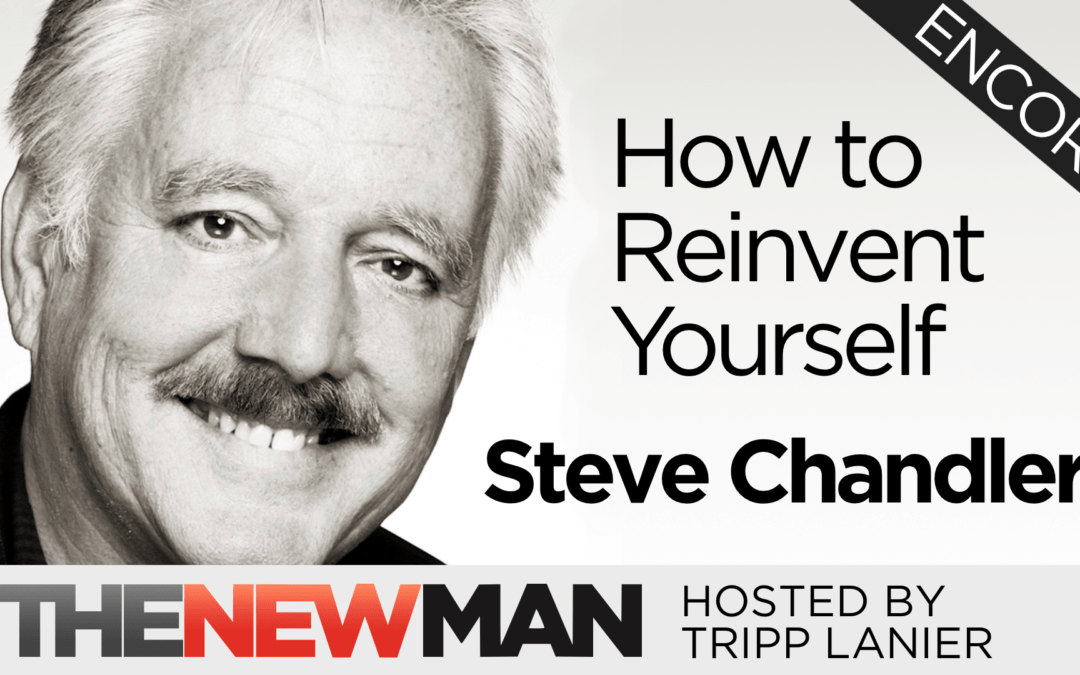
Steve Chandler – How to Reinvent Yourself
Are you struggling to get paid, to get a job, to get money?

Are you drifting along, waiting to find your passion or play full out?
And do you think you’d have to abandon whatever safety you’ve got in order to do what you really want to do?
Drugs, alcohol, failure, water boarding, psychological warfare — In this encore episode, author, speaker, and coach Steve Chandler tells us that if he could start from nothing and become insanely successful, then you can, too. If you get easily rattled, you may want to sit this one out.
In this interview:
- Steve’s battle with drugs, alcohol, and failure
- Why we undermine our own positive change
- Why trying to “get” clients, women, money doesn’t work
- Quickly getting over depression, apathy, malaise
- Why people pleasing is not serving you or anyone else
And…
- How we play the victim unconsciously
- Why your past does not decide your future
- Stop navigating your life like you’re still in junior high school
- Why you don’t need to feel passion before making a change
- Why the guy who uses his family as an excuse to play it safe is a coward
Click here for Steve Chandler’s book Wealth Warrior: The Personal Prosperity Revolution.
About Steve Chandler

Steve Chandler is a world-famous personal success coach to people from all walks of life, including bestselling authors, public speakers, CEOs and media personalities, small business owners, university faculty and leaders, major account salespeople and the world’s top business and life coaches.
As a corporate trainer he has worked with over thirty Fortune 500 companies and more than 600 other organizations in the areas of goal achievement, ownership culture, and sales and leadership. He has also served as a fundraising consultant and trainer to non-profits and is the co-author of the bestselling Relationshift: Revolutionary Fundraising.
Chandler is also a nationally recognized keynote speaker with over 1,000 speeches given throughout the U.S. and Canada. He is the creator and leader of two year-long Steve Chandler Mastermind groups and five Steve Chandler Coaching Schools for top-level business coaches, marketing consultants and life coaches. He has also served as a visiting teacher and lecturer at the University of Santa Monica graduate program in Soul-Centered Leadership and as a special guest coach on the award-winning TV reality program Starting Over.
Chandler is the author and co-author of dozens of books,
including the bestsellers, Time Warrior, 100 Ways to Motivate Yourself, Reinventing Yourself, 100 Ways to Motivate Others, 17 Lies That Are Holding You Back and Fearless. His books have been translated into more than forty foreign-language editions. He is the creator and writer of the popular blog www.imindshift.com.
Chandler is a graduate of both the University of Arizona (Creative Writing and Political Science) and the elite Defense Language Institute, Presidio of Monterey, California (Russian language). He is a Cold War veteran, with four years of military service at the U.S. Army Security Agency in Berlin, Germany, and Psychological Warfare at Fort Bragg, North Carolina.
Chandler lives outside of Phoenix, Arizona, and can be reached at www.stevechandler.com.
Click here for Steve Chandler’s book Wealth Warrior: The Personal Prosperity Revolution.
Transcript
Where Steve Started
Tripp: Today we're talking with Steve Chandler. He's a personal success coach, business consultant, and public speaker. He's also the author of over 30 books. Steve, thanks for being here.
Steve: Well, thank you, Tripp. Thanks for having me.
Tripp: I've been reading your stuff and following your stuff. Wealth Warrior has been really powerful. And also, as a coach, I've been enjoying your work with Rich Litvin and the Prosperous Coach. There's a theme in there about the service and giving versus getting. A lot of the guys that I talk to, and a lot of the guys that are listening to The New Man, are in this place where they're struggling to find success, they're struggling to earn good money, and they're struggling to do something that they feel good about doing. And so the cost is that they end up feeling like crap. They're drained. And even underneath that, they start to tell this story about themselves that they're a failure, and this affects their confidence, and it affects every area of their life, their relationships especially. So you weren't always the guy that people turn to when they wanted to do something extraordinary in their life or their business or their world. Where did you start? Tell us a bit about that.
Steve: Well, that's a profound understatement. I was the last guy anyone would ever turn to if they had success in mind. I failed at everything, and for many, many years, really deep into my 40s, I failed at everything I touched, and it was really pretty profound. It was everything. It was school. It was military. It was anything you could name, and I just had a basic inner rebellion going on where I didn't feel much like doing anything and nothing really lit me up. You said there are a lot of guys out there who are struggling and trying to find something they love, and then feeling like failures. That was most of my life, feeling that way. And so it took me a while to turn that around, but once I turned it around, it happened overnight. So it really didn't take me a while to turn it around, but it took me a while to see, I'll put it that way, that I could turn it around and I could turn it around quickly.
Tripp: Let's talk a bit about where you were. I want to get more of the mindset that you were in at that time. So how were you approaching life, things that came to you or things that didn't go your way? What were some of the things you were saying in your mind between the ears?
Steve: Well, looking back, it was basically a rebellion. I was on strike against life. I didn't want to participate in things other people did. I didn't want to do the things grownups did, so half of it was just rebellion, not wanting to, and the other half was a secret fear that I would never figure out how to. You know the old story of everybody else got an instruction book on how life works and they didn't give me mine.
Tripp: Okay.
Steve: And that was my mindset. That was my feeling on the inside, that not only do I not want to do much of anything, but I probably couldn't do it if I tried. That was a hard place to come from, because people would ask, "Well, what kind of job would you love to do, and what would be your dream, and what's your passion?" And I didn't have any. It wasn't that I was clinically depressed or anything like that. I just couldn't think of anything. People would say, "What would you really love to do? You could just do anything." And I would say, "Probably just sit here. That would be it. I'm already doing it, so see you later." So that was it.
The Overnight Turnaround
Tripp: I heard you say it was overnight, but I don't quite buy that. So what was the thing that had you go from that mindset to suddenly starting to see that there was another way?
Steve: I'm glad you're not buying it, and I recommend you not buy anything I say today, because that'll keep you grounded. Okay. So it spiraled down and I got into real trouble with alcohol and drugs, and that became the new problem in life. How was I going to deal with that? When I went through recovery from that, it was exciting to recover. It's like you make a horrible mess of your life and then you're excited that you're going to get out of the mess and get back to normal again. I'm always amused at all these people who go on talk shows and everyone gives them a standing ovation because they're not falling down drunk anymore. That was kind of where I was. I was back to normal, but I didn't have any guideline on what to do from here. What was exciting to me was, if I can change the fundamental thing about me, which was that I'm drunk all the time, I can do anything. I can create anything. So it did kind of happen overnight. And right in the middle of that recovery, somebody gave me a copy of Think and Grow Rich, which is real old school, rah-rah, you-can-do-it motivational stuff, but it just hit me at the right place at the right time. It had the message that your mind is yours, nobody else's, and you can create what you want with your mind. It's a biological computer. It is designed to get you what you want. When I realized that, that was the overnight thing I had. It was like, wow. I can start all over. I can start from zero. And then I was just on fire. I went from one book to another, from one mentor to another, and it was exciting from that point on.
Tripp: So you went from this place of, "Well, this is it. I'm stuck, this is the program, and it keeps repeating itself," to, "Wait a second. I can change this. I've got control here. I've got some power." And then it sounds like your curiosity kicked in. What else can I learn? What else is available?
Steve: That was it. Exactly. All the old victim stories, like, "Oh, I'm a victim of this, and both my parents were alcoholics, so that makes me an adult child of an alcoholic, and I didn't get these breaks. I didn't have that circumstance break my way." Well, all that went away. It was like, okay, but that's in the past. Right? And the past is over. Correct? Yes? Yes? Okay. What do you want to create?
Tripp: What do you want to do now?
Steve: Exactly. And when I saw that you could drop the past and create from the future… Later I heard this from Werner Erhard, and I'm going to claim that it occurred to me first and he stole it from me. Of course. And that is, the future can be created from the future. It doesn't have to be created from the past, but 99% of the guys you meet and I meet are trying to create their future from their past. In other words, they're picking up their past like real thick lenses and putting them in front of their eyes and trying to create a future by looking through the past. Even companies do this.
Tripp: This is how I've always done it. This is how we just continue to do it.
Steve: That kind of thing. Like, "Here's what we did last year, and we want 12% incremental growth in these markets." So they're taking the past and putting it up on the whiteboard and they're just improving it a little tiny bit. Well, individuals do this too. "Here's what I did last year. Here's what I did the year before, and so I want a little more of this and a little less of that." So they don't really have a future. No wonder they're depressed. They have a warmed-over past, or a slightly touched-up, Photoshopped past. You ask them about the future, it's a Photoshopped past, but just barely Photoshopped. Not radical, like Meg Ryan.
Tripp: Well, if they don't like where they've been and they don't like where they are, then they're sure as shit not gonna be excited about where they're going.
Steve: That's right. That's the problem with it. That's the Groundhog Day deal. It's like, here it comes again, another year. So 2014 is gonna be like 2013 with a little change here and there.
Tripp: So what is it? A lack of imagination? What's the little linchpin there that keeps us putting those lenses on every day?
Steve: It's a lack of understanding. That's all it is. Years ago, not too many years ago, if you said the word "Google it," people wouldn't have any idea what you meant. But today, you say it and anyone will know what you mean and they'll go do it. So the difference isn't that we have better willpower now. It's just that we have more understanding. The brain is a biological computer, and what happens to people is they don't understand how to use it. It isn't that they don't have willpower or character or inner strength or anything like that. They think that's the problem, but that's not the problem. The problem is they have stopped somewhere along the way in their understanding of how this thing works, and they just don't get it. They don't see it.
Competing Commitments
Tripp: And where does the idea of the competing commitment come in? Because I talk to some guys, and they're like, "I just can't commit to this. I just can't commit to that. I'm just a commitment-phobe." And I'm like, you're actually committed to something else, like staying on your ass playing video games. So describe to me the competing commitment in here.
Steve: So the best work on that has been done by Robert Kegan, who's a really incredible psychologist and research scientist, and he has done work on our immunity to change. Why do we have such an immunity to change? Why do people have an intention to do something and then not do it? You have an intention to do something. I'm gonna make twice as much money. I'm gonna find a good job. I'm gonna lose 40 pounds. And then you don't do it. What's going on? What's going on is that inside of you there is a competing commitment to your intention, and the competing commitment is stronger than your intention, and it's actually healthy. It's in there to keep you safe. Like, if you step out in the street and a truck is coming and you feel the fear and then you jump back, that fear system in you is designed to keep you safe, and it helps you survive, and it's a good thing. It's healthy.
Tripp: It's more powerful than your intention to get across the street at that time, so it saves your life.
Steve: Yeah. That's perfect. Thank you for saying that. I'm gonna start saying that now. So it's more powerful than your intention of crossing the street. Exactly. Well, let's say you're in sales. You're a guy who's in sales and you don't like to cold call, and you have what the sales trainers call call reluctance. You don't like to prospect.
Tripp: Mhmm.
Steve: Well, there's something in you that feels unsafe. It feels somehow like that's kind of a threat to your well-being to talk to strangers and try to get them to buy something. That doesn't feel right on the inside. And so, therefore, you procrastinate and you don't do a good job doing it, because this competing commitment keeps holding you back from it. But you say there's something wrong with you. Here's the biggest problem. People think, "Well, there must be something wrong with me. I must be a procrastinator, or I must be bad with people."
Tripp: I'm broken. I need to be fixed.
Steve: Yeah. But that's not true. There's nothing wrong with you. That's part of the understanding that isn't there. There's nothing wrong with you. You just don't understand what you're doing.
Tripp: So how do we turn that around? Now that I've got a better understanding, and I get that, okay, I've got this competing commitment and it's trying to help me stay safe, this is what I know, my little comfort zone here, is it just as simple as identifying, okay, given that I want to stay safe and I want to cross the road, what's the next step? How can I cross the road and stay safe?
Steve: It's a matter now of, all right, I'm gonna step back, and I'm gonna take a look at where there might be a crossing bridge. And I see a crossing bridge over this freeway, so now I'm gonna go walk over the crossing bridge. That way, I get across the road and I don't get hit by a truck. And so my competing commitment is now in alignment with my intention. So for me, when I was afraid of sales, afraid of cold calling, afraid of people, afraid of communication, I had to figure out a way where it was safe to do it. In a funny way, I had to kind of trick my mind into doing it, and I had a great coach, and he said, "We're gonna call it selling without selling. You don't like selling. Selling doesn't feel safe to your well-being, so we're gonna sell without selling." And that sounded great to me, and then we came up with ways to do that. There are always ways to do that.
Tripp: You just gotta get creative. But I like how you bring both of them in there. I like what you said about having them in alignment, because I think of Jonathan Haidt's The Elephant and the Rider. How do you get the elephant on board to go where the rider wants to go? Because the rider can only beat that elephant so much, but once you get that elephant on board, man, it's so much easier to go where you want to go instead of this push and pull and constant struggle.
Steve: Yeah. You're right. That's true.
Serving Instead of Getting
Tripp: Okay. Let's go back a bit, because we're talking to the guy that is out there and he's feeling like crap. He feels like a failure. His confidence is low. And so he's got this mindset that I've got to get a job or I've got to get a better résumé or I've got to get this guy to think I'm worthwhile. He's in this kind of getting mindset. What I've gotten from your work is this real sense of bringing value and service and not holding that back. And it seems like that's where things are falling apart for this guy: he's in the job of trying to sell something or convince somebody instead of actually finding a way to serve or bring something to the table. Is that correct?
Steve: Yeah. That's it exactly. You got it. Rather than how do I manipulate this person, how do I persuade this person, I want to stay in the inquiry of, how do I help this person? How do I make a contribution to this person's life? Even inside a company. Let's say I have a boss I don't much care for. Well, my personal feelings about my boss are not relevant to what I really want in life, which is to make good money, to be promoted, maybe even find a better job somewhere else. Now if I stay true to what I want, I'll drop those personal feelings and I'll realize that it serves me to serve him. And I'm not being fake about it. I'm just saying, "How can I serve you today? What can I take off your plate? What is it that I can help you with?" And when I'm in service, and you'll notice this, anytime you're really helping somebody, you're never depressed, you're never upset, you're never annoyed or worried, you're always engaged. And by staying engaged throughout my day, all of a sudden I get promoted, or all of a sudden somebody comes along from another company and says, "Hey, I want that guy. Anyone who would serve at that level in that small position, I want him in a larger position." So the key to service is that it unlocks your creativity. Now the reason people don't do it is they're worried about whether the person deserves it or not. So they're playing this junior-high-school-level emotional game all day of trying to figure out who deserves my good treatment. Who's treated me well? Who do I like? Who do I trust? If you really understand the mind and the brain, that's a complete waste of time. That's the worst use of time management in the world, trying to figure out who to trust and who should I be good to and who should I serve. Serve everybody. It's easier.
Tripp: I'm just imagining my experience of the guy. Right? On one hand, he's withholding that or he's sizing me up to see if I'm worthy or whatever, doing the junior high school thing. And so my experience of him is his wariness. There's something kinda cloaked and he's working behind the scenes. And on the other hand, if he's bringing it and asking me questions, "Hey, what's your biggest challenge? Who can I introduce you to? Is there something I can help you do?" Now I get this sense of, wow, this guy's a contributor. He's a good guy to have around. He's gonna help us do something and move things forward. So I get a completely different experience of those guys. And I experience this with people that want to be on The New Man. I get the guy that's like, "Here's why I'm so great. You should have me on your show." And it's like, okay. And then there's the guy that's like, "Hey, this is what I found that really helps men. Here are some other things that help men." It's like, wow, thank you. That's exactly what we're looking for. So I really appreciate that. I also appreciate the second part of this, which is where we feel more engaged and more present. We also just get our head out of our ass and it's more enjoyable because we're not so focused on ourselves.
Steve: You're right. That's the whole problem. The biological computer jams up when it circles back and focuses on itself. It gets all jammed up. But when it's pointed outward, when it's focused on who can I help, what kind of a difference can I make elsewhere, how can I help someone else, now it's flying high and it's using all of its imagination. It's using all of its creativity and it's really sailing. And that's where we want to be if we want to make money and we want to really have a great life and career out in society. We don't want to be in that curled up, introspective, self-pitying, self-obsessed, emotionally repressed place, like I'm 12 years old emotionally going through every day. "I'm feeling a little down, and somebody didn't return my email and I'm feeling disrespected." These people go through the day with an anal thermometer in them, and they're checking their emotional temperature every ten minutes to figure out what to do next. "I don't feel like doing that. Let me check my temperature. I don't feel like doing this." No. I only called it an anal thermometer because of your earlier imagery about getting our heads out of our ass.
Tripp: You're a victim. I got it. I've pushed you into that. I take total responsibility for that.
Steve: Well, I take no responsibility for anything I say.
Tripp: It also helps me. I can imagine for the guy out there that's trying to get a job, when I talk to a guy, instead of "Hey, what do you have for me?", it's "How can I show up and just start to make myself indispensable?" There wasn't even a job to begin with, but they go and find one for me because I've figured out a way to bring value to this guy or this organization that I'm trying to help.
Steve: Absolutely.
Tripp: All right. I just love that. This is where we could start to get into ass kissing. So what's the difference between pleasing somebody and really helping them or serving them?
Steve: Well, you know right away when someone's sucking up to you and trying to impress you and trying to please you and win you over. You can feel that, and that's a creepy feeling, and that doesn't feel like you're being served. It doesn't feel like you're really being helped in any way. You can really feel that that person wants to be noticed and wants to be appreciated. But if the person jumps in and really helps you, it feels completely different. And so I don't want to look around for who I can suck up to and win over and please and all that stuff. That's why there's so much tension these days around how to get noticed, and how do I improve my personal branding, and how do I get my name out there, and all that, as if that's all you have to do for people to send money your way. And people who do that all day long really aren't serving anybody.
Tripp: They're not actually making a difference in somebody else's life. They're just still focused on themselves.
Steve: That's it. And it looks like they're focused on themselves to other people. People kinda roll their eyes like, "Oh my god. That's pathetic. Look what he's doing."
Reinventing Yourself Without the Cover Story
Tripp: Got it. Let's talk about the other guy that I want to address. The guy that's been doing okay, he's on a plateau, and this is the end of the cycle of whatever this creative part of his life is. So the term is, "I want to reinvent myself." He says that. But he's afraid to transition. He's got that competing commitment to stay safe. He's got a lifestyle, he's got kids, et cetera, et cetera. But he's also not doing something that lights him up or that he really feels engaged in. So how can we help somebody navigate that, where he can reinvent himself and work with this competing commitment?
Steve: Well, first of all, I want to show that person how big a role cowardice and self-pity are playing in his life. How huge a role those things are playing in his life. Just abject cowardice. Now, you don't want your children to see that, and you cover it up by saying, "Oh, I want to keep my children financially safe. I want to keep my family safe, so I'm not going to do what I would really be daring to do and really want to do." And you cover it up with that story. Well, I never buy that story, because you can always do both. You can always keep everybody safe and go for it if you really understand what's going on. But the real problem here is the person's afraid to go for it. It isn't that they're afraid that if they went for it, they would lose all this mature security they've built for themselves. That's the cover story. That's not the real story. I had a client who always wanted to do a certain kind of writing, but he was so afraid to leave his day job, and I said, "Well, why do you have to leave your day job? Don't tell yourself the story that the only way to write is to leave your day job, because you're lying to yourself. If you wanted to write, you'd be a writer. You wouldn't have some story about why you haven't been able to do it." So I have people come to me all the time and say, "I want to be a public speaker. I know that you give a lot of talks, and so I want to learn how to be a public speaker." And I say, "Okay. So where are you speaking now?" "Oh, that's my problem. I don't know how to get speaking engagements, so I'm not speaking anywhere now."
Tripp: Mhmm.
Steve: So I say, "Well, then you don't want to be a public speaker." So don't say you want to be a public speaker when you don't want to be one, because anyone can talk anywhere. If you really wanted to be a public speaker, you could speak every day of the week. If you have even a moderate-sized community…
Tripp: Yeah.
Steve: They have meetings all over the place, and if you went in and said, "I have a fifteen-minute talk on goal achievement, I'd love to give it to your group as part of your upcoming meeting that I noticed you have Friday morning," they'd say, "Sure." I know they'd say sure, because I used to do that. I spoke every day once I chose to be a speaker.
Tripp: So it's really just a small mindset thing. They paint this picture: "I can't be that guy, whoever that is, whether it's Steve Chandler or whomever, because I've got this thing over here." But they're not looking at what's the next step. What's the thing right in front of me? What's at the core of it? What's the essence? I want to speak. I want to find a way to give a talk. Okay, well, how do I start doing that? So it's like, just bring it back down to what's the thing that I can do today.
Steve: Exactly true. It's what's the necessary required action. Everything that you picture in front of you has a necessary required action for you to get there. That's point one. Point two is, you know what it is. Even if I have to beat it out of you or use waterboarding.
Waterboarding, Depression, and the Want To
Tripp: Waterboarding. That's good. I've heard that's good.
Steve: Waterboarding is a great thing to help people reinvent themselves.
Tripp: Is that why you like to work in person with people? You've got a crew and you get to take them in a dark room and do that?
Steve: Well, no. I won't say that I've done that, but I got my start in psychological warfare. And it really woke me up to how people change quickly. My hero is the British philosopher Colin Wilson, who's written over 50-some books. He's really brilliant. The one thing he says about depression that I love is, if a person's problem is depression, the fastest way to get them over it is to throw them down a flight of stairs. I promise you, by the time they reach the bottom, they're no longer depressed. Now, they might not be feeling positive about things, but depression is no longer what's occupying their mind.
Tripp: They've shifted that mindset.
Steve: It's shifted, and it's probably a better mindset, because it might be revenge, it might be fury, it might be a character Vin Diesel can play now.
Tripp: It's got some range.
Steve: It's better.
Tripp: Okay. What's one thing a guy could do today? Even if he's in this place and he's been looking around, like, "What can I get? Why isn't anything coming to me?" These types of things. What's one thing that he could do today that's gonna help him get that anal thermometer out and start to make a difference?
Steve: The first thing is to start pretending you don't know what it is. When I know that the people I coach are really not telling the truth is whenever they say, "I don't know how to," or "I don't know what to," or "I don't know who to." "I'd like to do this, but I don't know who to call." That's one lie. Or "I'd like to be that, but I don't know what to do." That's another lie. Or "I'd like to do this, but I don't know how to do it." Lie number three. So those are all lies. And that's weird. The problem isn't the how-to or the what to do next. The problem is the want-to. It's the choosing mechanism where I'm choosing to do it.
Tripp: Does that have to be greater than the fear? Is that what tips the scale?
Steve: No. Because it can be cultivated. It can be tiny. Let's say I have just a tiny desire to become a professional golfer. I just sort of have a fleeting desire. On the passion scale, it's a two, but I'm willing to experiment. Okay. So if I choose to become a professional golfer, it's just a choice, then I can move the two to a three and I can increase my love of the game and my passion for it, and I can move the three to a four, and if I stay on the path, I can bring my love and passion for the activity way up there. But most people believe they have to have that first. They think, "I don't have a passion for anything. Therefore, I can't go into any field." Well, I had it backwards. The reason I didn't have a passion for anything was I hadn't gone into anything. I had it backwards.
Tripp: I'm just getting that you haven't invested in it. You haven't risked anything. You haven't stuck your neck out. You haven't done the work.
Steve: Yeah. You're right.
Where to Find Steve
Tripp: Okay. Steve Chandler, this has been a lot of fun. I've really enjoyed this. I don't know that we've had anyone this direct, and especially anyone that's alluded to waterboarding on the show. So I appreciate you bringing it. I appreciate you sharing where you've come from. It's not just some idea. This is something that you've lived, and it inspires me to cut the shit in my own life and be more direct too.
Steve: Excellent.
Tripp: Where can we learn more about you and your offerings?
Steve: Well, stevechandler.com. Just go there and there's a whole bunch of free stuff I give away. I don't really want anyone to buy anything of mine. That's foolish. You can read my blogs, and there's all kinds of free audio and messages you can sign up for, and you'll get everything I teach if you do that. Don't buy anything unless you have to or unless it's a tax write-off.
Tripp: Okay. All right. stevechandler.com. Steve, thank you again.
Steve: All right. Thanks, Tripp.