

Podcast: Download
Subscribe: RSS
David Emerald The Power of TED

Could you be a drama queen without even knowing it?
Are you focusing on your problems or the outcomes you want?
And how does playing the blame game kill your passion for life?
In this encore episode, The Power of TED author David Emerald is here to talk about drama, victimhood, and how you can stop pointing fingers and empower yourself in any situation.
In this interview:
- How knowing the Drama Triangle can change your life
- The difference between victimization and victimhood
- The key to creating passion in your life
- The simple way to create empowerment
- The small steps to a big vision
- When being a supportive friend doesn’t help
- One thing you can do today to shift your mentality
Click here for The Power of TED* (*The Empowerment Dynamic) by David Emerald.
About David Emerald
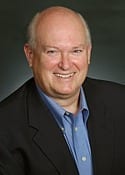
David is the author of the best-selling The Power of TED* (*The Empowerment Dynamic) and 3 Vital Questions: Transforming Workplace Drama. He is also Creator-in-Chief of the Center for The Empowerment Dynamic and works in close collaboration with his partner, Donna Zajonc MCC.
Drawing on over 30 years of experience in personal growth, leadership education, executive and organization development, David is highly skilled at translating his frameworks into simple-to-understand language for practical application in work and life.
His TED* (*The Empowerment Dynamic)® and 3 Vital Questions® frameworks are widely used around the world by individuals, teams and organizations to transform everyday drama and facilitate teamwork, change and productivity.
He is a master speaker, teacher, facilitator, and storyteller who brings enthusiasm and clarity to speaking and facilitating workshops and team retreats. He delights in supporting companies and individuals in transforming drama into empowered ways of thinking, relating with others, and taking action to create sustainable outcomes. David is conversational, entertaining, and approachable as he shares his simple, yet profound philosophies.
David lives on Bainbridge Island, WA, where he finds refuge to recharge, reflect, and create before heading back out into the world (or, these days, to the “virtual world”) to offer his gifts.
David earned a master’s degree in Applied Behavioral Science from Wright State University (Dayton, OH), where he was the 2016 alumnus of the year for the School of Social Sciences.
Click here for The Power of TED* (*The Empowerment Dynamic) by David Emerald.
Transcript
Why the Empowerment Dynamic matters
Tripp: David, thank you so much for being on the program today.
David: My pleasure, Tripp. Great to be with you.
Tripp: So first off, when I tell people about this book, they say, "The Power of TED? Oh, I watched the TED Talks." But it has nothing to do with the TED Talks. TED is an acronym for The Empowerment Dynamic. So just right off the bat, why should the guy that's stuck in traffic right now care about the empowerment dynamic? What's it going to do for him?
David: Great question. First of all, yes, there's a little bit of brand confusion between the TED Talks and The Power of TED, and I have a great deal of respect for the TED Talks. But for the guy who's stuck in traffic, you're probably not feeling very empowered, probably feeling victimized. And the reason he should care is that you're in the current reality that you're in. What's your choice? How do you choose to respond to it? Do you choose to respond from what I call a victim stance or a victim orientation? Or do you choose to make more resourceful and empowered choices, given the limited number of choices you might have at that moment?
Tripp: Okay. He might say, "Well, I don't have any choice, I'm stuck in my car." But one of the choices we've got is the attitude or outlook, the orientation, that we bring to this. Tell us more about that.
David: Well, yeah, it is our orientation toward life. Let me take a step back and make an important distinction here, which will also give the listener a broader frame for what TED is about.
Tripp: Okay.
Victimization versus victimhood
David: To me there's a very important distinction between victimization and victimhood. Victimization is something that happens to all of us. It's part of the human condition. That guy stuck in traffic is in that moment feeling victimized. What defines victimization to me is when there's a dream or desire, something we want, that's being denied or thwarted. In that moment, my wanting to get home or get where I'm going is being denied. I often think of victimization as being on a scale of one to 10, with one being mundane. Being stuck in traffic, depending on the situation, might be a two or a three. And then there are people who live most of their lives at the nine, 10 end of the victimization scale. But victimization is distinct from victimhood. Victimhood is a source of identity. It's an orientation to the world. It's a way of being. So there's a choice for that guy stuck in traffic: seeing and choosing a response, even though he's being victimized, without falling into victimhood. The victimhood would be, "Oh God, here we go again. I'm stuck in traffic again. This always happens to me." That's the woe-is-me. So TED stands as what I call a challenger to victimhood, while acknowledging the reality of victimization. This is not a Pollyanna-ish way of thinking and being.
Tripp: It's not about sticking our head in the sand and saying, "Hey, there's no traffic, this is fantastic, I wanted to sit in my car on the freeway today." It's not about acting like there isn't a challenge here. It is about choosing how I want to go about it. And when you talk about victimhood, I imagine a guy with these glasses on, and he sees the world through this lens of "poor me, I'm screwed again, life is kicking me in the ass again." Is that a fair way to describe victimhood?
David: Yeah, that would be victimhood. And going through life that way, there's a frame in the TED work that I refer to as an orientation, and I call it FISBE, which stands for Focus, Internal State, and Behavior. What we focus on engages an emotional response, which then drives our behavior. In the victim orientation, we put our focus on problems, on what we don't want and what we don't like. So I don't like being stuck in traffic. A guy going through life with that lens sees problems all over the place, and they engage some level of anxiety. It could be anywhere from "this is a hassle" all the way to out-and-out fear and terror. And what that drives is reactive behavior. We tend to react in one of three classic ways: fight, flight, or freeze. We aggress against it, like I want to honk my horn and try to get this traffic moving. Or we freeze, not knowing which way to go. Or flight: we try to get away, try to get off the highway. So the guy going through life from that victim orientation is constantly reacting and sees life circumstances as persecutors, with himself in that victim place.
Tripp: It seems like it's personal, right? It's the meteorite that landed on my house. Definitely it was meant for me. Somehow this is an attack upon me, poor me. But I like what you said about what we focus on. When guys start to actually do a gratitude practice, it's like, "I've never used that muscle." It's this flaccid little puny muscle of gratitude. But they start to realize that they're focusing on the one or two things that didn't go well during their day instead of the 25 to 30,000 things that went well. And it's those one or two things that bring up the anxiety and the suffering that we put ourselves through, is that right?
David: Right, right. Very well said.
Focusing on outcomes and choices
Tripp: I want to go through the dreaded drama triangle in just a second. We'll talk about how to go from being a victim to the creator, which is a little preview of what's coming up. It's not about ignoring our problems, but we have to recognize that there's something else out there. It's shifting our focus to the outcomes. Is that what you're saying?
David: Mhmm. It's putting our focus on the outcomes, and even more important, I would say, Tripp, it's putting our focus on choice. What choices do we have? What's flashing in my mind, because you started with being stuck in traffic, is that I lived in Southern California for a little while. One day I was traveling from LA to San Diego, and anybody who knows that area knows there's basically one route along Camp Pendleton, with no access roads. The traffic was at a standstill. The trip usually would take about two hours. It ended up being a six-hour trip, with literally no place to go other than to sit off the side of the road. So I pulled over and got out a book and read. I thought, okay, I have limited choices here. I could let my blood pressure really go up, or I could call ahead to tell a person that it didn't look like I was going to make it. I listened to the radio and found out that there was a bad accident that had the highway closed. I had a narrow range of choices, and yes, I felt victimized, but I put my focus on what choices I had and what kind of outcome I wanted, given the hand I'd been dealt in that moment.
Tripp: All right. So we're not ignoring the problem. There is a challenge here, but the focus, instead of on the problem, is on what I can do. What's available to me? I can choose more suffering and pain, or I can enjoy myself and read a book.
David: Right.
The Dreaded Drama Triangle
Tripp: Let's talk about the dreaded drama triangle. When I first heard it, it was one of those ideas where I just felt my brain pop, like I had suddenly seen the world in a new way, and I could see, oh my gosh, this is happening everywhere. There wouldn't be Hollywood without the dreaded drama triangle. In a real nutshell, what is it?
David: Sure. First of all, what you just beautifully described, Tripp, is what I call a blinding flash of the obvious, a BFO. You've experienced the BFO when the brain just pops and things are gloriously clear. It's also interesting to me that you used Hollywood as an example, because the drama triangle was first articulated by a psychiatrist by the name of Stephen Karpman, who also happened, back in the past, to be a part-time actor. He saw that there was a pattern that repeats in the human experience, that gets captured in movies, and it involves three characters. The primary character is the role of victim. And in order to be a victim, one must have a persecutor. He articulated it simply in terms of interpersonal relationships, but I've come to see that the persecutor could be a circumstance, like being stuck on the highway. It could be a condition, a health challenge. The persecutor is a problem to the victim, and the victim reacts by fight, flight, or freeze. What completes the triangle is that the victim often goes looking for a rescuer, someone to come in and save the day, fix it, make the persecutor go away. I've also come to see that the rescuer does not have to be a person. It could be a substance. It could be zoning out in front of the television. The rescuer is what I call the pain reliever. It's anything that helps the victim distance from, or frankly numb out from, the sense of powerlessness that comes from being in that victim place. What's also important for all of us to really get is that all of us play all three roles in different situations, different scenarios.
Tripp: And we even do that within ourselves. I've noticed that I'll wake up in the morning and I'm the victim, and then in the evening I'm the villain, the persecutor, and I'm hoping that one day I'll say, "Oh, you know what? I'm going to listen to this podcast, and then I'll be the rescuer. I'll be able to come in and fix it."
David: Yep. Absolutely, it can be intrapersonal as well as interpersonal. I can be my own biggest persecutor at times.
Tripp: Yeah. So we can play this within ourselves, but we also start to see the dynamic on the outside, and how quickly we go, as I read in your book, from being the rescuer to the villain. Someone comes along, "I'll save the day, I'll take care of you, I'll fix this," and then when we don't meet an expectation, "You're a jerk, you didn't follow through." It's amazing how this continues, the finger pointing, and we just get stuck in this place. So if all we're doing is pointing fingers and focusing on problems, how do we rise above? How do we get out of this drama triangle?
Shifting to the creator orientation
David: That's a great question. One of the things I found as I really dove into this and did research is that there are a number of good books and articles that have been written about the drama triangle since the late '60s. And virtually everything I found basically would come down to, "Now that you understand it," to use a little bit of a Brooklyn accent, "don't do it no more. Now that you see it, just stop it."
Tripp: Stop it.
David: What I know in terms of human experience is that there's no way out from within the triangle. It really does require a shift of mind, an upgrade in our personal operating system, is language I often use. It begins with shifting our focus and really claiming for ourselves our desire for, and our capacity to step into, what I call a creator orientation.
Tripp: So the creator orientation, instead of "poor me," is "what do I want to create?" We come back to what we were just talking about. Is that right?
David: Right, exactly. I'll do the FISBE for the creator orientation. Where I put my focus is on what I want to create. To me there are really two aspects of being a creator, but it starts with putting a focus on what I want rather than reacting to what I don't want. What is it that I want to see happen in my life? What is it that I want in this moment, if I'm dealt a lousy hand like sitting in that car? As I focus on what I want in my life, what it engages as an internal state is a passion, a desire, maybe even love for what I want to manifest or go after. That passion and desire then gives me the energy to go for it. And we go for it via what I call baby steps. The behavior is whatever the next step is that's going to help me move toward, or get clearer about, that vision or outcome. A baby step can be "I need to have this particular conversation," or "I want to listen to that podcast," or "I want to go get this degree that's going to help me in the work life I want to create for myself." That is a much different orientation to life. One of the other things I'd say about adopting a creator orientation is that it's a conscious choice, whereas so much of the victim orientation and, frankly, the DDT, the dreaded drama triangle, is less than conscious. We kind of go through life sleepwalking, thinking that a day without drama is as good as it gets. And what I'm here to say, and I know it's what you're all about too, is that a day without drama is not at all as good as it gets. It can be a heck of a lot more fun, a lot more energizing, to live life focused on what we want to go after.
Tripp: I love it. There are so many points I have to underline here, because a lot of guys that listen to this want more passion in their life. They're tired of feeling like they're sleepwalking, that walking-dead sensation. So if I want to feel more passion in my life, I stop the finger pointing, stop the blaming, stop figuring out what's going wrong, who's right, who's wrong, and start to get into the mindset of what I want. When I ask guys that question, a lot of times their jaw just drops. "Well, I don't know. I've just been… She's the problem. If my wife would just do this, then I wouldn't have to blah, blah, blah." But what do you want? Stop the finger pointing, because that tells me you're not working on a solution or in that creator mindset. Then the other part of it: to feel passion, start taking action, start taking baby steps, not huge, monumental things, just very small steps. You underline that. I don't want to assume that everybody understands the importance of baby steps, because once we get into a creator mindset, we start to see the vision we want for ourselves. We might go big. So why baby steps?
Why baby steps
David: Great question. Our visions may be big. What we want to go after may be big, but the way we get there is a baby step at a time. I'll tell you where I got the notion of baby steps. Part of my background, Tripp, is quite a career in leadership and organization development. I won't go deeply down that path, other than to say that in a leadership development program that I used to manage and co-facilitate, we did a process that in the book I call dynamic tension. It builds off of Robert Fritz's creative tension. We focus on vision, we tell the truth about current reality, and then we take whatever next steps are going to begin to move us from our current reality toward our vision. The reason I'm bringing that up is that I found, and this is not exclusive to men by any means, but I think particularly for men, that if we set a vision, there's a part of us that says, "I've got to figure it all out before I take that first step." We spend so much time, especially in organizational life, planning the work, as in the old saying, plan the work before you work the plan. A lot of us have spent a lot of time in organizations doing detailed planning, and we get to step D and it's void because of something unanticipated. So I started introducing this notion of baby steps after having watched the movie What About Bob?, because baby steps are a key point in that funny movie. I introduced the notion into the program, and we started getting feedback from people saying that it was one of the biggest takeaways for them, that they didn't have to have it all figured out.
Tripp: Just takes the pressure off.
David: It does take the pressure off. And here's what I can tell you about every time we take a baby step: one of three things is going to happen. I absolutely guarantee you. Most of the time it's going to be just that, a baby step forward that adds some momentum. Sometimes you take a baby step and it's a misstep. It's a step back, it's a mistake. And with a creator orientation, even those steps back can be important data points: What did I learn from that? What does it tell me about how I can move forward? So maybe a step forward, or maybe a misstep. And then the third possibility, Tripp, is that you never know when a baby step is going to be a quantum leap or breakthrough that would not have happened had you not taken that step.
Tripp: Right. And I just love that. If I stay in that creator mindset, then even a misstep is something I can find something in, versus "See, I shouldn't have done that. I'd better just go back to being numb and checked out." If I stay in that creator mindset, I keep focusing on where I want to go and what I want to create, versus "Oh, here we go, this is another thing that's not going right in my life." And you talked about dynamic tension, because in my coaching practice, when we start to create a vision for somebody, there's a moment of "holy crap, we're actually doing this now. I was a lot more comfortable just pointing fingers. I was a lot more comfortable pointing out what was missing and what was wrong in my life." I understand why it's preferable for us to hang out in the victim mindset, because in the creator mindset, we're big kids now. We've got to deal with that tension between where we are and where we want to go. But the baby steps seem to take that pressure off, or at least answer it a little bit. Hey, you don't have to have it all figured out. You just do a little bit at a time.
David: You got it.
Supporting a friend without rescuing
Tripp: Coming back to the rescuer dynamic: how do we be supportive to somebody without being a rescuer? Because I can hear this in my mind: "Do I just ignore my friends when they're going through a tough thing?" How do we know if we're being a good support or we're actually playing into the drama triangle by being a rescuer?
David: Yeah, a great question. A couple of things come to mind. First of all, I have to be honest and say that there are times when it is appropriate to be a rescuer, or even appropriate to be a persecutor, exercising tough love for someone. I live on Bainbridge Island in the Seattle area, and the image I use is: if I'm walking along the beach and I see somebody out flailing in the water, that's not the time for me to go to the creator orientation and say, "Hey, how'd you get out there? Would you like to come up on land with me?" No, it's appropriate to jump in and help get them back to shore. And then I may go into what is the antidote to the rescuer, which is the role of coach. Assuming, to make the story palatable, that the guy is okay, I might say, "So, dude, how'd you get out there? What might you do in the future so that you don't find yourself in that situation?" I also want to acknowledge that, especially with a friend, you show compassion, but you do it in a way that doesn't play into the second point I want to make, which is what I call the kinship of victimhood. We enter into the kinship of victimhood when we find ourselves in an "awful conversation": "Oh, boy, you think that's bad? Let me tell you about the time this happened to me." That's not supporting the other person in being a creator. What happens is that as we make the shift and really choose to adopt the creator orientation, it opens up the possibility of a very different set of relationship roles and dynamics that I call TED, The Empowerment Dynamic. TED is the antidote to the toxic nature of the DDT relationships. So let me just briefly overview the three roles in TED, which again is the antidote and offers an escape. This goes back to your question a few minutes ago: how do we get out of the DDT?
Tripp: Right.
David: It's to make that shift to a creator orientation. The antidote to the role of victim is the role of creator. There are two aspects of the role of creator. One we've hit on a lot, which is being able to answer the question "what do I want?" Equally important is that a creator takes on the responsibility and really owns their capacity to be at choice no matter what their situation. In the book, one of my deep influences was Viktor Frankl, who wrote Man's Search for Meaning, which came out of his experience as a young psychiatrist interned in four different Nazi concentration camps. And in the midst of that, on a scale of one to 10 of victimization, probably a 12 or 13, he came to the realization, he said there was one final freedom that my captors could not take from me without my permission, and that was my freedom to choose my response to the circumstances I found myself in.
Tripp: It's so powerful. We've talked about that here on the show before. I was just thinking, you're in a concentration camp and he has this insight: "These sons of bitches can't take this away from me."
David: That's right. I am at choice. That's at the heart of being a creator. In adopting a creator orientation and being a creator of my life, when I am victimized, rather than reacting to the persecutor, I can see that person, condition, or circumstance as a challenger in my life. Challenger is the antidote to the role of persecutor. Challengers come into our lives, sometimes invited, many times uninvited and unwanted, but it's about learning and growth. Challengers spark learning and growth.
Tripp: It's that little kick in the butt, right? That little tough love sometimes.
David: Sometimes tough love, you bet. Then the antidote to the role of rescuer, which I've already alluded to, is the role of coach. There's no weakness at all in saying "I could use some support in my life." In fact, to me it's an active strength as a creator. Whether it's working with a professional coach like you are, which is great, or just a trusted friend, it doesn't have to be a capital-C coach. It could be anyone who will support us. Let me go back to the rescuer for just a moment. What rescuers are inadvertently doing, whether they know it or not, is reinforcing the powerlessness of the victim. Coaches know where the power resides, and they know it resides in the person they're supporting. They interact with the other as ultimately capable and resourceful, whether the person is acting like it or not, whether they know it or not. They hold them big and are of support, helping them clarify what they want to create in their lives, or what choices they have given the circumstances they find themselves in.
Tripp: It's so powerful, because now I can start to see the switch. If I was the victim, now I see myself as creator. I'm going to focus more on what I want. And now I can look to the outside: what in my life is challenging me to go for it? What's the opportunity here that's pushing up against this, that I can rise to and use? And then what's in my life to support me? What relationships are in my life? Do I live in an environment that supports that? If I like being warm, do I live in a cold place? It's like looking around and seeing where the wind is at my back instead of the things that are holding me back. Now we've got a new lens to look at challenge and support, and to see how we can, as a creator, bring that into our lives.
The story behind the book
David: Yeah. I've got to say, and I usually don't bring this up in interviews, but with the quality of conversation we've had here, I was very honored when I published the book and went looking for endorsements. I remember my editor calling and saying, "If you could have anybody endorse your book, who would it be?" I said, "Okay, Stephen Karpman, but I have no idea if the guy is still alive or not." Long story short, I tracked down Stephen Karpman, who still lives in the San Francisco area, and sent him the book. He first turned me down. He said, "Oh, this will stand on its own. You don't need my endorsement." And he came back to me several weeks later and offered his endorsement. He calls it the empowerment triangle, but the empowerment dynamic, he said, is a highly original and effective escape from the drama triangle. What he shared with me is that it was the first effective escape he had seen articulated.
Tripp: Beautiful.
David: And I've got to say that this came out of my own experience. A little bit of the story behind the story: even though the book is a fable, what the David character is experiencing was absolutely part of my life at a certain point in time. My dad, with whom I had a very healthy relationship, had passed away, I found out that I couldn't produce kids, and as a result of that, my marriage dissolved. That's when I got introduced, working with a therapist, to the drama triangle. One morning I was sitting doing what I call my quiet time, kind of prayer, meditation, contemplation, a lot of times journaling, in kind of that peripheral space. And I said, "Okay, God, I'm ready to surrender my victim stance in life, but I need to know what's the opposite of victim." And the word creator just popped into my mind. It wasn't like I heard a voice, but it was right there. That really began a literally couple-decades-long journey of thinking about these things off and on, and then starting to wonder: if creator is the opposite of victim, is there an antidote to the rescuer and persecutor roles? So that's a little bit of the story behind the story.
Tripp: Thank you for sharing that. For those that haven't read it yet, it's a story, a fable, as you said. It's short, and that's one of the reasons it just gets in there and relays this information in a beautiful way. But I was wondering how much of it was really true for you. So thank you so much for giving us a little insight into what inspired you there.
David: My pleasure.
One thing to do today
Tripp: Let's bring it back to the guy that's listening. He's going to go get the book. Okay, go get it. But what's one thing he can do today? One little practice or nugget he can take away to empower himself?
David: Well, great question. What immediately pops into my mind is: what range of choices do I have in this moment? What range of choices do I have in this moment? That becomes kind of a mantra, or if we're going to make it a statement, "I have choices in this moment." And repeating that, sitting in the traffic: I have choices. I can choose to react. I can choose to pull over and read a book. When I get home, if my wife's upset with me, I have choices. I can react to her, and we'll get into the DDT, or I can ask her what she wants. I can try to stay in a coach role, or see her as a creator. So I think it's: what are the choices that I have in this moment?
Tripp: And just start to get out of "what's wrong?" and "where's the blame?" A lot of times when something crappy happens, we go, "Why is this happening?"
David: Why me?
Tripp: Right, why me. But now you're saying flip it: wait a second, what are my choices? Reminding ourselves first that we have choices, and then diving in. What are my choices right now? I love it.
David: And again, I want to be realistic here. Sometimes it may be a very narrow range of choices. Viktor Frankl had a very narrow range of choices, but he still had a choice. And sometimes we're overwhelmed by the number of choices that we have. So again, I don't want to be Pollyanna here. Sometimes the choices are limited, but we're always at choice.
Closing and where to learn more
Tripp: I'm inspired by this, and I know some of your work goes into organizations as well, in leadership training. I can't wait till this starts to get into Washington, D.C., and our state capitals, because they're really good at pointing out what went wrong.
David: They are.
Tripp: And we're not hearing, "Hey, what's the outcome we want to create and how are we going to do it? What are the baby steps?" I really appreciate you taking the time. David Emerald, The Power of TED, go pick it up. What's the best place to learn about you and to pick up the book?
David: I would have people go to the website, which is simply powerofted.com. The book is frankly available everywhere, certainly on Amazon, and you can order it at any bookstore. I can't guarantee that you'll walk in and find it at every bookstore, but it's out there and available. We'll ask people to come check out the website. We've got a lot of information, some videos, a lot of freebies, as well as the opportunity to buy the book. We also have a companion workbook that goes with it.
Tripp: Beautiful. David Emerald, thank you so much for taking the time to talk today. I know you've got an appointment real soon, so I want to get you off here, but thank you so much.
David: My pleasure, Tripp. Take care.