

Podcast: Download
Subscribe: RSS
Mark Manson Interview — Why is the World Going Crazy?
What happens after you make all of your dreams come true?
What if hope is just another form of evil?

And are we making life harder than it needs to be?
Mark Manson sold millions of copies of his last book, The Subtle Art of Not Giving a Fck, and he’s back with a new one called Everything is Fcked.
In this encore episode, we talk about slaughtering our sacred cows, why hope makes us fight one another, and why success tends to make us weak.
In this interview:
- Why selling millions of books created a big problem for Mark Manson
- “What is happening to our world?”
- Being desperate to hear that everything will be okay
- Why hope creates conflict
- Why everyone is religious to a certain extent
Plus:
- Why we’ll never truly escape pain
- Why we need enemies to unite us
- Self sabotage and why we make life harder than it needs to be
- Why guys get more fragile as they get richer
- Why we don’t have a masculinity problem – we have a maturity problem
- Mark’s past issues with women
Click here for Everything is F*cked: A Book About Hope by Mark Manson
About Mark Manson
From Mark’s website…
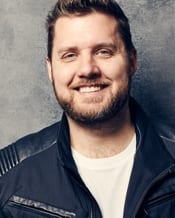
I am a three-time #1 New York Times bestselling author whose books have sold over 14 million copies worldwide. My work has been translated into more than 65 languages and hit bestseller lists in sixteen different countries. According to Amazon Charts, my book The Subtle Art of Not Giving A F*ck was the most-read non-fiction book worldwide in 2017.
I have been published or featured in over 50 of the biggest newspapers, magazines and television/radio shows on the planet, including: NBC, CNN, Fox News, the BBC, GQ, the Guardian, Time Magazine, Larry King, Dr. Oz, the New York Times, New York Post, USA Today, Buzzfeed, Vice, and Vox, among many others.
Click here for Everything is F*cked: A Book About Hope by Mark Manson
Transcript
Why Mark wrote the book
Tripp: I gotta ask, why'd you write this book? Like, what was going on in your life? Because you break out the 50 cal and just go to town on a lot of sacred cows. It's a Tarantino movie with sacred cows everywhere. I'm familiar with this stuff from my own background in Zen and a lot of reading German philosophers back in the day, but it was like, okay, what's going on in your life that had you take this subject on?
Mark: Oh my God. Yeah, I might steal that, the Tarantino and sacred cows. Three things happened. Subtle Art came out maybe two months before Trump got elected, and I really feel like 2016 is the year the Internet broke. Social media just fell apart. Everybody started realizing all the negative effects it was having on our culture. And I don't even mean that specifically with Trump. I just mean the election in general. It was such an ugly cultural moment, and it hasn't really recovered. That same cultural moment has happened in a lot of countries around the world. So that was kind of the background to all this. It's just like, my God, what the fuck is happening? And I feel like everybody kinda feels that way right now regardless of what your politics are. So that was one.
The second one was Subtle Art blew up in 2017 and just started selling an obscene amount of copies and basically put me in a dream financial situation. On top of that, pretty much every goal that I had for my career as an author, I knocked out in like three months. The shit that I imagined myself doing when I was 50, like, all right, I'm gonna work on this for twenty years and then in my fifties hit these milestones. No, no, no. Three months, you just bang them all out. First book. It was actually really disorienting, because nobody tells you that when your dreams come true, you don't have dreams anymore. And you don't know what to hope for. So it became a little bit of a personal crisis. 2017 was strangely one of the darkest and most confusing years of my life since I was a teenager, which made no sense because everything was amazing. And the worst part was I couldn't complain to anybody about it, because they're like, well, fuck you, you just sold a million books. What do you have to be upset about? So that was very disorienting, and I think I needed to sort through it. What was it that I lost, what pulled the rug out from under me emotionally and psychologically with that amount of success?
And then the third thing was, I always go through this period when I finish a book where I feel very empty. Intellectually, I don't know what to think about. I kinda lose curiosity for a period of time. And strangely, the thing that got me excited again intellectually was philosophy. I read some philosophy in college and I enjoyed it, but I didn't really understand a whole lot. Somehow I ended up buying one of Kant's books, the one referenced in my new book. I think I got in an argument with a friend over something really stupid about ethics or morality, and he was just shitting left and right on Kant. And I was like, well, shouldn't we read the guy before we start shitting all over him? So I went out and bought Groundwork of the Metaphysics of Morals. It's like an 80 page book and it just blew my brain wide open. I was like, holy crap, this is so deep. So philosophy kind of strangely carried me through this period and reignited my passion and my curiosity and my excitement for writing again. You just finished the book, so I'm sure you can see all three of those things coming together in it.
Tripp: I can, and it really helps to hear this from you. Hopefully this message gets out more, because what happened to you personally that led up to the book doesn't get revealed. It is a deep book. It's really heavy, and it does take the gun to the sacred cows. Without that, it can kinda be like, oh, what's going on here? It's much more human to me to hear your humanity, like, hey, I got everything I ever wanted and then life turned into its own dark night. It turned into its own challenge. I don't even know if I could talk about this without sounding like a dick. I've experienced versions of that, and I work with people that experience versions of that. It's this private club of, I can't talk about this, but why the hell am I not feeling better about what I've created? And then we start to question everything. It's like, wait a second, I thought if I got to this spot, it was gonna be a lot different. Is that kinda what it was? You had an imagination that it was gonna be a little bit different once you got there?
Mark: Absolutely. Well, I think that's the thing with dreams. We never think about what happens after them.
Tripp: In my book, I say dreams are assumptions. It's like, once this happens, it's gonna be this way. It's not even explicit about what it is. It's just gonna be different. Right?
Mark: Yeah. But it's funny, when I finally did start talking about it, I have a number of friends here in New York in the startup world, and that's where I found a lot of people who were like, oh yeah, I totally get it. Guys who had a startup, busted their ass for eight years, and then exited with millions of dollars. And they're like, yeah, the year after I exited was one of the darkest periods of my life. Because I was 33, I was a millionaire, and I had no reason to get up in the morning. It's a very weird thing.
Tripp: I'm a dragon slayer, and there's no more dragons.
Mark: Exactly. And it's interesting to hear you say that about humanizing the book. In a very early draft, I actually wrote up that personal experience in the first chapter. Maybe it's just my insecurity, but I removed it because I could just foresee all the one star Amazon reviews saying, like, this guy sold…
Tripp: Dickhead, right?
Mark: Yeah. This guy sold 5,000,000 books and spends the first chapter complaining about it. So I'm kinda walking into the firing squad on that. But it's true, that is where it came from. Success kind of fucks with you a little bit.
Tripp: Yeah. You're confident and you're straight in the title. You don't mix things up. It's Everything Is Fucked, and it is a book about hope. But there's a sense of, oh, it's gonna go somewhere and it's gonna bloom and blossom. It's more like a French film. But like I said, it's nothing new if you've read into some of this stuff before, and I appreciate how forthright you were. I emailed you yesterday when I finished it and I was like, Jesus fucking Christ, man. It was a punch in the gut and a punch in the chest.
What's wrong with hope?
Tripp: Let's go down this road a little bit, because there's not much we can really pick apart here in twenty, thirty minutes. But I do wanna go down a couple of roads and explore some of the pieces. The first one is, what's wrong with hope? I remember Fernando Flores saying, his famous quote, hope is the raw material of losers. But in your book, you take it a step further. You say, what if hope is not the antidote to evil? What if hope is just another form of evil? So, okay, let's go. We got a cow in the sights. Let's knock it down.
Mark: I pull a little switcheroo on people. I open up the book with a Holocaust story, and I did that for a few reasons. One is that I feel like the Holocaust is the most universally accepted narrative of evil in our culture. If you ever meet somebody who doesn't think the Holocaust was evil, that is an awful fucking human being. So we all agree on that. The whole book wades into the waters of ethics and morality, what is good and what is valuable, so I wanted to start somewhere grounded, on solid earth, where we can all agree, this is bad. And I use that to frame the introduction of the concept of hope, and why we need hope, and why hope gives our life a sense of meaning. And then about halfway through the book, I pull the rug out from people and I say, it's not just hope that defeated Hitler. Hope is also what created the Nazis. Hope is what created Stalinism.
Tripp: Their hope for a world without Jews. Their hope for a world without the enemies that they had.
Mark: Exactly. Hope is like anything else in life. There are healthy forms of love and destructive forms of love, and there are healthy forms of hope and destructive forms of hope. The argument I try to make in the first half of the book is that all of us are in this place in our culture right now where it feels like everything is fucked, everything's going to hell, and we're desperate for some piece of hope, some news. Tell me things are getting better. Tell me things are gonna be okay. And I wanted to make the point that that's part of the problem: that desperate desire for some piece of news or some event that affirms your beliefs of what is good in the world. That desperation is part of what is driving us apart and creating all these problems in our social fabric.
Tripp: How so? How do we identify that? I think we can all understand, okay, that's bad hope and this is good hope. But what does it look like in our own life when we're treading into this unhealthy form of hope?
Mark: Basically, the more desperately we cling to our hopes, the more certain we feel and the less open we are to alternatives. If you truly believe that the country is going to hell and we're on the brink of civil war or political crisis, you are going to be a more fervent supporter of whoever your side is. And you're gonna be less amenable to dialogue with the other side, because to be open to that is to let go of that hope, to hold that hope more loosely. Which means basically just letting more fear in.
It plays out on a social level, and it plays out on a personal level too. In personal relationships, one of the most damaging things is having this unrealistic fantasy about your partner. You have this fantasy that they're gonna fix you or make you happy, or that you're gonna fix them and then you'll be happy. And it's that sneaky hope that gets injected into your decision making and how you evaluate your life, and it causes all these problems. You don't know if your partner needs to be fixed. You don't know if you need to be fixed. All you know is that you're together and you either feel good or you feel bad in each consecutive moment, and you can make a choice. You can do a good thing or you can do a bad thing. Hope doesn't even have to enter the equation if we don't want it to.
Hope as expectation
Tripp: I wonder how much this overlaps with one of my coaches, Phil Stutz. He talks about exoneration. He says we're all buying into this expectation that if we follow the rules and do what we're supposed to do, we get the money, we get the power, we get the women or whatever that is, then we'll be free. We'll be free from uncertainty, pain, and effort. So we keep thinking, as long as pain keeps showing up, we must be doing it wrong. So we double down, and we keep pushing, and we make ourselves more miserable. Something must be wrong with me. Something's wrong with life. Something's unfair. And it robs us of the ability to actually enjoy who we are and what we have. The keyword there is expectation. Are you swapping those words, hope and expectation? Like, in the future, I expect it to be this way because I buy into these beliefs and these behaviors?
Mark: Absolutely. The way I define hope in the first chapter is that it is an expectation of a valuable future, of a future that is better than today.
Tripp: So I hate today, but I'm banking on tomorrow. I'm not really happy today, but I'm banking on a better tomorrow.
Mark: Right. A very simple, superficial example is, man, I really want a new car. A new car would make my life so much better. That is an expectation of something of better value in the future. Everybody knows it's those simple hopes and expectations that get us into trouble. It's the same thing with, man, if I was just married, or if I had kids, my life would be so much better. You can apply it to anything, because it is the fundamental process of our psychology. We have to have some sort of vision of a better future in our mind, but how attached we are to that vision, we get to decide.
Tripp: And we attach our well-being to that. We can still play for stuff. I wanna write my book, I wanna get a car, I wanna have kids and everything, but we gotta watch out for where we attach our well-being to that expectation or that hope.
Mark: Yeah. It's basically where we attach our meaning. A new car is great, but it's not gonna make you a better person. It's not gonna make you a happier person. We just have to be realistic about that. And if you extrapolate that across all human endeavor, you could say the same thing about our economy, a business growing, a political system. When the right is in charge, everybody on the left is like, man, if we could just get rid of these righties, everything would be better. And it's vice versa when the left is in charge. It doesn't actually fix anything. I mean, things change, but like the title says, everything is fucked. There's always gonna be a sense of problem and a vision for a better future no matter what we do.
Religion, faith, and the need for conflict
Tripp: Okay, let's take on another sacred cow. Let's talk about religion. You talk about three different types here. From your perspective, what qualifies something as a religion?
Mark: I basically expand the definition of religion to be so broad that it encapsulates almost anything. My argument is that a religion is a faith based belief that something matters. Most people find that faith based belief through some belief in a God or Jesus or Mohammed or whoever. But even secular and atheist people do this too. They have a faith based belief that a certain moral code is better for humanity. A lot of people have a faith based belief that they love their family and their kids, and if they're a good person, then they will live the good life. All this stuff is based on faith. You can't prove or disprove that you're a good father. You can't prove or disprove that you made a difference in the world. All these things are just invented in our own minds. In that sense, I argue that we're all religious to varying degrees. It's just that some people base their religion on supernatural beliefs, whereas most of our religious beliefs are actually not supernatural.
I classify capitalism and communism as religious systems. We have evidence that capitalism has been superior, but ultimately it's the belief that it's the best system for society. It's a faith based belief. And the same thing with interpersonal relationships. My love for my wife, the idea that this relationship is important and gives my life meaning, is a faith based belief. I could be single my whole life and live an important life. I could be married six different times and have a fulfilling life. I've chosen to commit to this person, and my belief is that if I stay committed to her, it will fill my life with value and meaning. So even on an interpersonal level, there are these little mini religious beliefs that we have.
The reason I frame it that way is that I think it's much easier to talk about human systems in general when you see that it's all kind of the same thing. Whatever we have faith in, we tend to look for other people who have faith in the same thing. We gravitate towards one another. And once we come together, we form our own little religious cults. We all decide, hey, these are the good guys, those are the bad guys. We all share our hopes for the future and how we want the world to be. It can be something as simple as a family. It could be followers of a sports team. It could be political parties, or Buddhism, or Islam, or whatever. It's all kind of the same thing no matter how you slice it.
Tripp: So I find something that gives my life meaning and purpose, and then I find my tribe around that. But it sounds like the shadow side is that I stop looking, I stop being curious about others. I can start to demonize others. I can have a bias against others, and I wanna confirm my own beliefs. What happens when we start to play that game?
Mark: We need conflicts. This is one of the things I talk about. One of the criticisms of hope is that to have hope for something implies there's something wrong with your present state.
Tripp: That there's a problem here and now. Why have hope for a better future if right now is just fine?
Mark: By definition, to hope for something in the future, you have to reject something that's currently happening today.
Tripp: Is that true, or can I just hope that it maintains? Things are good today, and I want to maintain that.
Mark: Well, to hope for that, you would have to reject everything that's not today.
Tripp: Okay. I don't wanna go too deep here. I can see where this turns into a week long conversation.
Mark: Yeah. This is when we become like stoner kids in a dorm room.
Tripp: Like, do police dogs freak out other dogs? Like, oh shit, it's the cops.
Mark: By definition, to maintain hope in some future something, we need to reject something that exists today. And it's by that rejection that conflict becomes something we need as humans to feel we have a meaningful and purposeful life. And that's really fucking depressing.
Tripp: Well, it is. If you've meditated for any amount of time, when I watch my brain, it creates conflict. It needs conflict to exist. Because the whole threat in meditation is you're gonna drop into formlessness, and the ego doesn't have any place there. So it freaks out. It's like, let's create some drama, some kind of thing to play out in my head so that I can exist here. Death is like, without conflict, I cease to exist, or our group ceases to exist. It seems like there's an externalization of that. Without somebody to fight against, we've got nothing to unite against and we don't exist anymore.
Mark: Yeah, absolutely. I grew up Christian, but I studied and practiced a lot of Buddhism in my younger years. There's an endnote in that chapter where I point out that this cycle of hope and conflict is pretty analogous to the Buddhist concept of samsara, this cycle of attachment, conflict, destruction, new attachment, and it just never ends. So the sad and upsetting conclusion is that some sense of conflict is built into us. We need some sense of conflict to feel as though our life is meaningful and purposeful. And that really sucks. It puts us in a really tricky situation, where you need to choose that conflict very, very carefully.
Tripp: Or just recognize that when we hope for things, we set ourselves up to create conflict. That might be new news to us as we read this book. I didn't know that when I hoped for a better future for X, Y, Z, I suddenly created a polarity. Now I've got an enemy, or now I'm working against something, and I've invited conflict into my life when I set out to harmlessly hope for this better future.
Mark: Yep. Absolutely.
Pain as a universal constant
Tripp: You talk about pain being the constant. That's a real fun one.
Mark: Let me find this section. I went on a podcast the other day, and it's funny, man.
Tripp: You do manage to make this funny, I gotta say. My new favorite term is "douche canoe." I hadn't heard that one before. You somehow make constant pain seem really enjoyable and fun.
Mark: Yeah, it's like a fun pessimism. If you don't mind, I'll read an excerpt really quick. I went on a podcast the other day and the first thing the guy did was read these couple paragraphs. "Look, time out for a second. Let me be the one to break the bad news to you. Human pain is like a game of whack-a-mole. Every time you knock down one kind of pain, another one pops up. And the faster you whack them, the faster they come back. The pain may get better. It may change shape. It may be less catastrophic each time, but it will always be there. It's part of us. It is us. A lot of religious spokespeople out there make a lot of money claiming that they can beat the pain of the whack-a-mole game for you once and for all. But the truth is that there is no end to the pain moles. The faster you hit them, the faster they come back. And that's how all the douche canoes in the religion game stay in the business so long. Instead of admitting that the game is rigged, that our human nature is so fundamentally designed to generate pain, they blame you for not winning the game. Or worse, they blame some nebulous them. If we could just get rid of them, we'll all stop suffering. Pinky swear. But that doesn't work either. That just transfers the pain from one population to another and amplifies it."
Tripp: Right now, Robert Smith is jerking off. He's getting the lotion out. He's like, oh yeah.
Mark: But yeah, I go on this guy's show, and he read that. And he's like, why even talk to you? We can't do anything. Why are we even having this conversation?
Tripp: Yeah. In your mind, there is something you're hoping for, and you talk about that at the end of the book. I don't wanna reveal that. But I think you're pointing to the idea that we can have a different relationship to pain.
Mark: Yes.
Tripp: Instead of seeking and buying into people's manipulations to escape it, and, hey, I must be doing it wrong if I'm not escaping it. You're offering another path, and we gotta be careful here because it can turn into another fucking trap. So without turning it into another path, what is this alternate relationship to pain that you see? Why is the pursuit of happiness something we really wanna keep an eye on?
Mark: The funny thing about pain is that the more you avoid it, it doesn't lessen. I have a chapter called "Pain Is the Universal Constant." It's because when your life gets more comfortable and secure, your pain doesn't drop at all. You just become more sensitive to it. The amount of pain you felt from losing your job, say, if your life was a total mess, versus once you get your shit together and get more comfortable, something like your Seamless order arriving incorrect will upset you just as much as losing all your money used to years and years ago.
Tripp: You don't know how many 55 year old fragile rich guys I talk to. They've reached this level of success, and I gotta watch out, I can turn into that too. It's like, okay, I've arrived. I've got all this power, all these resources, all this reach, and now I'm just turning into this fragile wuss. I'm so afraid to take chances. I can't tolerate any kind of discomfort. I won't do anything that might make me look like an asshat and a failure. We get fragile as we get older instead of, wow, I've become this powerful person. No, no, no. You're just gonna sit on that couch and rot now.
Mark: Yeah, absolutely. The pain level remains the same all the time. The more comfortable we get, the more sensitive we become. And the opposite is true as well: the worse things get, the more pain we experience, the more resilient we become. There's a million examples of this. I mentioned in the book, I got a big tattoo on my right arm and it took like eight hours. When I first sat down, the needle hurt so much that I was like, I can't believe I just signed up for eight hours of this shit. What the hell was I thinking? And by the third hour I was dozing off and taking a nap. Both our body and our mind adjust to keep us at a level of mild dissatisfaction and mild discomfort no matter what our circumstances. If we as a population and as a culture get too comfortable and too spoiled and entitled, we will start seeing large degrees of pain where they're actually very small. In a nutshell, that's what I think is happening in our culture today, which is another reason why I opened the book with a Holocaust story. A lot of people who see the title and buy the book are buying it under the assumption that everything's completely fucked today. Everything we know and care about, we're losing. Please tell me how things are gonna be better. And you open up with a Holocaust story, and it's like…
Tripp: Wake up.
Mark: Perspective. Yeah, it's a little bit of perspective.
Tripp: Quit bitching and have some appreciation for where you are. So we don't wanna run away from pain. We've gotta be smart. I like how you said we gotta choose our pain wisely. But let's give up this hope or this expectation that a successful life, a meaningful life, a purposeful life, whatever you wanna call it, means that we're going to finally escape pain. When we try to escape pain, that just invites more pain, and it makes us more fragile. What I've noticed is we just stop engaging the things that actually mean something to us, because all of those things are outside of our comfort zone. All of those things require effort. All of those things mean we're gonna step into uncertainty. All of those things mean we're gonna fuck up from time to time. And if we're not willing to go through those experiences, then shit, we just go backwards. We shrivel up. Is that right?
Mark: Yeah. Absolutely.
Deserving, and the thinking brain versus the feeling brain
Tripp: You talk about deserving. You talk about this desire to equalize, and I don't know how deep we need to go into that. But I was talking to my coaching group this morning about this notion of deserving, and how if we don't feel that we deserve X, Y, Z in our life, whether it's pain or a reward, then, especially if I'm working with a client and we're creating something, they're going to invent struggles. They're going to invent obstacles, things to put in the way so that it doesn't happen. I see this a lot with guys who think life needs to be hard. Like, if it was easy, then fucking everybody would do it. There's this kind of addiction to difficulty. It needs to be difficult, and somehow difficult means that I deserve it. So what's your take on that? How does that fit in here, when we need to equalize things so that we don't believe we deserve shit in our life? I just see that creates a lot of pain and a lot of unnecessary suffering.
Mark: Yeah. One thing I talk about in the book is a distinction between two parts of our brain. I call them the thinking brain and the feeling brain, but you could call it a lot of different things. Our thinking brain is in charge of making logical connections between events and experiences. And our feeling brain is what decides what is valuable and what's not valuable. So my thinking brain understands that a baseball thrown at me is going to hit me in the head, based on the trajectory. But my feeling brain is the one that decides that because that hurts, it is a bad thing, and the person who threw it is a bad person. Or my feeling brain might decide that I'm a bad person and I deserved it.
Tripp: I had that coming.
Mark: Exactly, I had it coming. The problem with the feeling brain is that it makes all these decisions about how valuable we are, how valuable the people in our lives are, how valuable the world is, but it's illogical, it's irrational, and it's unconscious. So we don't have direct access to it. This is why this sort of work is so difficult. We're all a bunch of conscious thinking brains, very rationally, logically trying to sort out all these evaluations that our feeling brains have made about ourselves, in relation to women, our career, money, family, whatever. It's extremely difficult to untangle.
And like you said, this is from my personal experience: my feeling brain, because of shit that happened in my childhood, decided that I didn't deserve love from women. So pretty much through my adolescence and most of my early adulthood, every time a woman would start to get close to me, I would start having these emotional outbursts that were really irrational and self sabotaging. I would just become a huge dickhead and sabotage my relationships. It took a lot of therapy, a lot of introspection, a lot of dealing with my shit, talking things through with the women I was with, to sort that out in myself and realize that I had this wound. Because of the wound, my feeling brain had decided that either women were not deserving of me or I was not deserving of women. It created this very ugly dynamic in all my romantic relationships for many years.
Tripp: It seems like there's a tie-in here with that desire for conflict. If I don't feel like I deserve X, Y, Z, whether it's financial success or love or recognition, appreciation, or just security in life, I'll create the conflict. I may say I want those things. I may even be actively trying to make it happen, but there's the saboteur saying, wait a second, you can't actually have it. And I see this a lot, where guys just can't figure out why this isn't happening, why it isn't working. You can call it shame, low self esteem, whatever, but there's this aspect in there. It's really hard to work around if you don't get it out in the open and take a look at it and see just how hard we make our lives, how much we work against ourselves. Life's already difficult enough, but how much we can become our own obstacle.
Mark: Yeah, absolutely. And like you said, that process of bringing it into the light, talking about it, is basically the thinking brain taking that experience and rewriting the meaning behind it to create a new sense of value, a new sense of self worth. The way I frame it, the way to heal ourselves is to get a dialogue between these two brains, to integrate our logical, conscious self with our illogical and irrational self. And it's not easy. It's really complicated.
Tripp: It's really messy. We had Jonathan Haidt on here a while back. We talked about the elephant and the rider, a similar modality. You referred to that in your book too. How we think we're all rational, but really the rational is following the feeling. And you call it the clown car, when the feeling guy overruns the thinking guy, then we're off. It's clowns. It gets nuts. We can certainly see that in others. It's kinda hard for us to recognize when we're in our own clown car.
Mark: Oh, absolutely. I actually poke fun at this in one section of the book. I tell the reader, you are the thinking brain reading this right now. Of course you think you're in charge, because you think you're just fucking great. But all of our conscious minds overestimate ourselves. The analogy I use is that most of us think our thinking brain is driving and our pesky feeling brain is like a loud, obnoxious child in the passenger seat, and we're telling them to shut up. But it's actually the opposite. The feeling brain is driving and the thinking brain is sitting in the passenger seat, imagining that they're in charge and deciding where the car goes.
What Mark wants readers to take away
Tripp: This book is definitely a treat for the thinking brain. It's one of those, like, hell, I'm fucking smart, man, I'm reading this shit. You've got a lot of good stuff. We've been playfully talking about how dark this book is, and I don't wanna give the impression that it's that difficult. It just deals with some difficult stuff. It deals with some sacred stuff. Especially if we're banking on a lot, if we've invested a lot into these religions, as you say, whether it's money or whatever it might be, it can be very challenging to consider that we might wanna look in a different direction. And you bring a big stick to those things too. So when somebody reads this book, what do you really want for them? It's one thing to lay waste to these sacred cows, but what's the thing you want them to realize or start to practice on the other side of reading this book? I know you want something else. What is it?
Mark: Sure. I think there are practical lessons sprinkled throughout. I have a different take on self discipline and willpower than most people. My take on resilience, and how to build it, is a little bit different too. But even though I get classified as self help, that moniker always bugs me a little bit. I don't like being in the prescriptive business. I like being in the descriptive business. I like pointing out how our minds work, how our brains work, and where we get into trouble with ourselves. And people can take that and use it however it fits their life. Especially with a book as broad as this, and that's the other thing that was influenced by the success of Subtle Art: I was super surprised after it that a lot of Christian people, pastors, ministers, a lot of Muslims, loved the book. They see their religion reflected in some of the messages. My politics lean left and most of my readership is left wing, and I started getting invited on conservative talk radio shows, which really surprised me, and they loved the book. They absolutely loved the book.
Tripp: Well, a big message of personal responsibility.
Mark: Yeah, absolutely. I really wanted to write it, because I feel like we so need a book today that is able to talk about what's going on in our culture without taking a side. Very few people are in a place to do that. I wanted to take a stab at it because I think it's important that people, no matter what they subscribe to politically or religiously, get something that makes them reflect on their beliefs, their behaviors, and their assumptions about others.
Tripp: I was really appreciative of that. I get asked about this masculinity stuff a lot, just for the nature of having a show for men, and I don't see the issues being about masculine and feminine. It's more about who's mature and immature. That was a huge part of your book, and I was like, thank fucking God. You brought a real rigor to that conversation. You backed it up with research much more than I would have. When we act like kids, we're dickheads to each other. It doesn't matter what you have in your pants or who you identify as. When we can be adults, we can hold a lot more perspectives, and we can treat each other from a better stance. You clearly point out that when we bring some maturity to these things, there's a whole different thing. It's not about left, right, up, down, whatever. It's a matter of, let's bring some maturity to these conversations and everything will take care of itself much more easily.
Mark: Absolutely. And the connection I made, which to my knowledge I haven't seen anywhere else, is that everybody rants about social media and about how terrible the news media is these days. What is missed is that it's not necessarily the platforms themselves causing the problems. It's that the nature of the technology, and the amount of comfort it has been developed to provide, makes us all juvenile. It encourages juvenile behavior and juvenile thinking, because juvenile thinking is comfortable. Being an adult is difficult.
Tripp: It's also the lowest common denominator. It's like, okay, we can all meet here.
Mark: Yeah. And it's scary, because on the same level you can't really blame the people for developing the technologies either. It's cool now for everybody to shit on Zuckerberg and Twitter and all these people, but they thought they were doing a good thing too. They were operating under the assumption that if you make connectivity easier and simpler and more comfortable for people, good things will happen.
Tripp: For adults, let's be clear. You make it easier for adults, it could be a good thing.
Mark: What they didn't realize is that, A, pain is a universal constant, so the more comfortable you make things for people, the more they'll find problems in shit that doesn't matter. And B, the nature of how we interact with each other today encourages a juvenile level of thinking. Nothing works when we're all a bunch of fucking kids throwing food at each other.
Tripp: Yeah. Well, I love that you brought that challenge to look at things more vertically, like, okay, where are we taking our stance there? To me, that's the big key. It's a huge, huge step. So, beautiful. The book is Everything Is Fucked, a book about hope. Thanks so much, man.
Mark: Thanks for having me.