

Podcast: Download
Subscribe: RSS
Putting Yourself Out There — Coaching Call with Tripp Lanier
Are you stuck professionally because you’re afraid to put yourself out there?
Why do we sabotage opportunities to be more successful?
And is it possible that doing scary stuff can ultimately feel fun?
Today we talk with someone who’s limiting his opportunities because he’s afraid of criticism. We put his fear in perspective, find his courage, and even have fun taking action.
In this conversation:
- Feeling stuck professionally
- Self sabotage
- Holding yourself back
- What do you want to demonstrate for your kids?
- Having fun by leaning into our challenges
Note: What you’re about to hear is an actual coaching call. The person being coached volunteered and gave explicit permission to have our conversation recorded for this podcast.
About Tripp Lanier
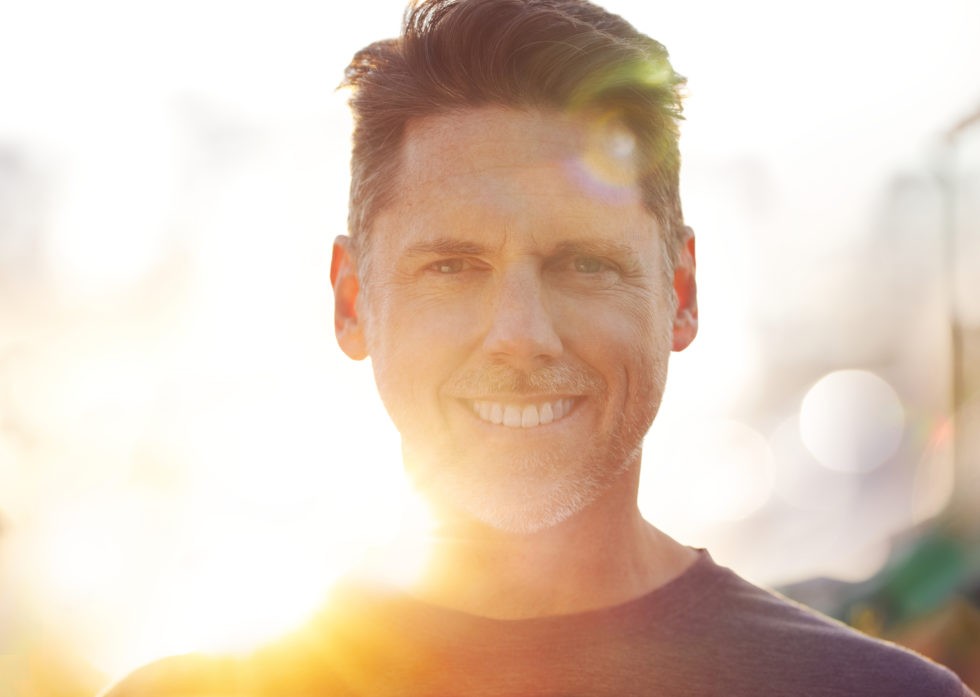
Tripp Lanier is a professional coach, author of This Book Will Make You Dangerous, and host of The New Man Podcast: Beyond the Macho Jerk and the New Age Wimp which — for over a decade — has been downloaded millions of times.
Since 2005, he has spent thousands of hours coaching people all around the world to get out of the rat race, become an authority in their field, and make a great living doing the work they were put on this earth to do. Over the years he’s designed several businesses to support a simple lifestyle focused on freedom, ease, meaning, and fun.
Transcript
Where the Guest Feels Stuck
Tripp: The email that you sent me was a little brief. So I'm curious if there's anything that is top of mind for you, an opportunity, what feels like a trailhead for you to start our conversation. Who knows where it'll go? But what feels like a place to start?
Guest: Okay. So there are many pinpoints, I would say. I feel stuck professionally, sort of. Sometimes I self-sabotage because I feel like if I'm asking, it's just taken from someone. I have that feeling sometimes. On the other side, one thing that I heard you say when you were on Jonathan Stark's show, when you were talking about courage, is one thing that I kind of rationalize, but it's really hard to implement in either day-to-day life or business life. Those would be the highlighted points of what's going on now. Two or three years ago almost, I got a facial paralysis. My body shut down, half of it at least. And it was sort of a wake-up call. I'm feeling it took some of my self-confidence in socializing, or doing things more socially, right?
Tripp: Okay. And you mentioned something about courage in there. I don't recall the interview that I did there. So if you could briefly summarize what the point was, or the thing that stood out for you.
Guest: You were talking about how courage is not not having fear. It's taking an action despite it.
Tripp: Right.
Guest: And the way you were phrasing it, sometimes it was like he used to work with boys that are still boys in their sixties. That change of mindset really impressed me also.
Tripp: Okay, great. Thanks for giving me a little more clarity there. So there's an element here of feeling stuck professionally, and maybe there's a little bit of self-sabotage there. There's a challenge of asking for things, at least professionally, even feeling like you're taking something away from somebody if you do that. Is that right?
Guest: That's the closest I could articulate it. So I have this newsletter that some people are finding really interesting, but I'm still not pushing it to other people, or even to some friends, saying, "Hey, this is what I'm doing." And that same pattern, I've started to recognize lately. It happened also with my work. And I feel the catalyst or accelerator of it was this health issue I had a couple of years ago. It made me feel so uncomfortable to work, kind of diminished from what I used to be. And I was like, okay, that doesn't make any sense.
Hiding Out and Wanting More Choice
Tripp: So what I hear is there's an element of it's not really okay to show yourself, or to show up, or be out in the world. There's a tendency to want to hide a bit. You didn't use those words, but that was the impression I got. Does that…
Guest: Yep.
Tripp: This can be related to the facial paralysis that you had a couple of years ago. You're tying a line between those. But were you that way before the facial paralysis, or were you more outgoing?
Guest: I think I was pretty much outgoing. Now I'm thinking way back in time to when I was in high school, and there's a story I have. My mom told me, "Hey, why aren't you getting all these really good grades? Because I know you can." The kids who got all the good grades were labeled nerds, and I didn't want to be a nerd. So I knew I could do it, and I was just trying to keep a low profile. As you were saying, trying to hide. Years later it changed, because I was doing several things and I was very open. I felt definitely more open. And after this facial paralysis, it drew me back into this, keep a low profile, don't make a lot of noise. It's working less, but it still feels a bit there.
Tripp: Just in the little bit that you've shared with me, the impression I get is there's a lot possible for you. You have a skill set that's great. But the thing that's getting in the way of you really being able to stretch and have more opportunities is this part of you that's afraid to show up in the world, or be more seen in the world?
Guest: Yeah, exactly. I've been told I have these really great skills for thinking or saying things in a different way, but all of it is still on a very small scale, or really behind the scenes, without being outside.
Tripp: Okay. Just because we can do something doesn't mean we have to. But do you want these opportunities that would be available to you if you had more choice to extend yourself, be more visible in the world? Do you even want those opportunities?
Guest: Yeah, I think so. I feel like it would improve the quality of life that I currently have. And also, for my kid, it would improve the quality of work that I could do. And from there I have this feeling that I might be able to pick better whatever opportunities are out there. It doesn't have to go all the way from one to a million, right? But going from one to a few thousand, and from there start choosing what's the right amount of water to fill the bucket, let's say.
Tripp: The real powerful concept here is that you are in a place of choice. If you want an opportunity, you can choose to engage it. Whereas if I'm unwilling to do X process, I'm removing that choice from myself. I'm saying that's not for me. So I want to make sure we're on the same page here that it's within your power, and it is a choice, to engage those opportunities. There's also a cost: it's going to require energy, it's going to require effort. But I think the big one here is that it's going to require some kind of vulnerability on your part. Does that land?
Guest: Yeah.
What Being Seen Would Cost
Tripp: Okay. And I want to understand what this vulnerability is for you. When we talk about you being seen, what does that mean for you? What happens if we see you? What happens if we read your email? What happens if we get your marketing, or we're aware of what you're doing in the world professionally? What might happen to you? What's the negative thing that you're trying to ensure doesn't happen?
Guest: So the question is what happens when I am able to be seen?
Tripp: What do we want to make sure doesn't happen? Which is why you're hiding out, essentially. If I hide out, X can't happen to me.
Guest: Okay. So one of the things is being called out on this contrarian thing.
Tripp: Can you explain that? What does "called out" mean?
Guest: There was a point in time when I was against the concept of personal branding, and there was this other person posting about it. I said, "Hey, I was just asking questions. I don't think that people can be brands," and blah, blah, blah. And the answer I got was, basically, calling me an idiot in different words, with more people behind it. It's showing me that I'm not good enough when I think I am good enough. Those would be the worst-case scenarios, I think.
Tripp: Worst case, okay. So I have opportunities available to me, but I'm going to choose not to engage them, all of that possibility, because some people might think I'm an idiot, or some people might not think I'm good enough, or I might not feel I'm good enough. Is that what you're saying? How would you change that?
Guest: The rational part would say, just do it and don't give a crap about it. That's the rational part, but being outside completely still gets me stopped, even in my brain right now. I sort of got paralyzed.
Tripp: Okay. Got it. I just want to make sure we're clear what the threat is. So this worst-case scenario is that…
Guest: It was three. Being called an idiot, and at this point I'm like, okay, who cares? That people think that I'm not good enough, or that I find out that I'm not good enough also. Those last two resonate more than the first one.
Tripp: I find out. I like that. I find out I'm not good enough. And what happens if you find out you're not good enough?
Guest: What I've usually been doing is that I work really hard to be really good at it, or I move into something else, because it doesn't make sense to spend that much time and effort on something I won't be that good at. For example, at university I used to play basketball, and I wasn't the tallest, the fittest, anything. And this coach showed the other guys on the team, "Look at him. He's not the best shooter, but he forces himself into it."
Tripp: So you persist. So you actually know how to persist even if you're not the best?
Guest: Yeah, I know.
The Father's Perspective
Tripp: So you do have a child?
Guest: I do have a child. Yeah.
Tripp: Great. And how old is the child?
Guest: Turning three next week.
Tripp: Okay, great. How would you want your child to respond to challenges? Do you want your child to shrink away from challenges?
Guest: Absolutely not, no.
Tripp: What's different for your child?
Guest: That he's…
Tripp: So you get a free pass, you get to shrink away from your challenges.
Guest: I totally get where you're going. Yeah, the difference is… It's like you're saying that I'm giving myself a free pass when it's a choice, right? There's nothing different.
Tripp: Well, I want to make sure. You might be entitled. There are some folks who are like, "You know what? I get a break because I had X, Y, Z happen in my life. So I shouldn't have to work hard. I shouldn't have to be vulnerable. I should get a free pass." And you might be one of those people. I want to check it out.
Guest: Definitely don't feel that way. And it's so good that you questioned it, because it's something I've done before. I see a challenge, I overcome it, or find a way to go around it. And I would love my child to have that capacity of, if there's a challenge, just find a way. It doesn't matter if it's straight through, around the edges, or figuring out a way to overcome a challenge.
Tripp: What if your child never learns things based on what you say? He only learns based on what he can see you do. Meaning, he sees you in the face of a challenge and he can learn by watching you. How do you respond when you're challenged? "Oh, I saw my dad. He was afraid of being called an idiot, so he stopped. I saw my dad. He was afraid of finding out he wasn't good enough, so he stopped." Or is there another story? What do you want him to learn?
Guest: I want him to… Well, children definitely learn from what they see, not from what they're told. So that's a fucking nice way to just… Oh, sorry. I swear sometimes. It's a really amazing way of seeing that the only way he can see through these challenges will be if he sees me doing them myself. Because otherwise, it's going to be me telling him, "You have to go through that fence," and I just stay here in the back, safe.
Tripp: And imagine how great it would be to see his dad, who was even afraid. He felt afraid, but he did it anyway.
Guest: Now in this conversation, it's about, okay, these are the worst-case scenarios. And two of them, the first two, have nothing to do with me per se. And the third one, there's always a solution to it.
Tripp: I sensed something shift in you when you started thinking about your role as a father. Not that it's our job to prove anything to our children, because that's a trap. They smell that. But it is our job to demonstrate things. And I felt something shift in you. It was as if, early on in the conversation, I was talking to the younger part of you, the young man, the boy. Obviously afraid. And you know what? I'm just going to avoid, because that's what we do as kids. We just avoid shit. And then I felt you step into, "Wait a second, I'm a father. I've got a job here." And I noticed I trusted you more in that. If we were on my team, working together, I want to know you're going to do the thing even if it gets uncomfortable. I can depend on this guy, instead of… I can depend on him up until the point where he starts worrying about what other people think of him, and then he's no good. So I just want to reflect that to you. I felt this shift. I was like, "Oh, wow. Who's this guy?"
Guest: Thank you, man.
Tripp: So the question then becomes, which one of you is going to show up and lead your business, essentially?
Getting Over Yourself
Guest: After the shift, it has to be, because otherwise, who's going to do it? Even if I dedicate myself to something and happen to not be the best at it, I can choose either to be good enough at it or to find something where I can be really good. As you were saying, it's a choice on which path, instead of just being, as I was feeling a while ago, paralyzed. Without being able to think or talk, because there were just too many thoughts in my head, or just pure fear that didn't let me go through any of it.
Tripp: Yeah. I don't know if you're like me, but there are definitely a few voices in there that just want to resist everything. They can always find a reason not to do a thing. So it's good to come back to what it is that I want to do. I don't know if this is true for you, but I find my self-assessment to be pretty off most of the time. "Oh, I'm not this or that, so maybe I shouldn't do it." This is a pretty terrible reason.
Guest: Funny thing, that's what I do for my clients, right?
Tripp: Right. So if I want to do a thing, then I can get into a creative mindset. What do I need to learn? Who can help me?
Guest: Yeah. I can ask for help or whatever. And that's the thing, it makes absolute sense. I didn't put myself out there or ask for anything because I was afraid I was going to be called an idiot, or "Hey, you're not good enough." And then it's like, "Oh, shit. I'm actually not good enough."
Tripp: What if that happened every day? If you were good at that? What if you were good at taking that punch? What if that didn't have its power anymore? The other reason I ask is there's a finality to the way you talk about it, as if somebody said that and it was proven. There's just, "Well, that's it."
Guest: Yeah, I'm done. No, no. That's what I feel, that was the boy, you know, in your terms. But now it's absolute nonsense. Because if it happens, it's like, okay, I want to understand what's making you say that or think of it that way. And from there I can make a choice and step into, okay, I'll find another way. Or maybe I was absolutely fucking wrong, and I need to change my perspective on things. Still move forward, not stay paralyzed.
Tripp: Yeah. What I'm sensing here is, it's like, "I'm willing to go into this as long as I can't be proven that I'm not good enough." Well, then we're always going to stay stuck, because who's got it all together, really? We always have room to grow, and we can always be our own worst critic. But if you know going in that you're vulnerable to that judgment, well, we don't have to take it personally. In fact, we might even seek it out. Why would I seek this out? Because it could help me improve. It doesn't have to be personal. Me not being good enough at X, Y, Z doesn't mean I'm a jackass or a terrible person or a piece of shit. But it could mean, "Oh, I've got an opportunity to get even better at this thing. This is great information." So there's a highly technical term for this process, where we go from worrying about what other people are going to think about us to engaging the process and getting good at it, and eventually even enjoying it and having fun. And this technical term is "getting over yourself."
Guest: Very technical.
Tripp: Very technical term. But that's usually where we find that the fun and the creativity has been sucked out of whatever we're doing. When things feel narrow, when things feel really freaking serious, when we have to get it right, there's no room for error, all of that kind of stuff, that's usually an indicator I'm taking myself too seriously. I'm not even really focused on the task at hand. I'm making this about me. And so the skill is, how can I relax this need to make it about me? Don Miguel Ruiz talks about this in The Four Agreements. One of the first ones is don't take anything personally. Another one is don't make assumptions, like, everybody around me is thinking I'm an idiot. So if we know that going in, and we just start to relax that a bit or be playful with it, okay, I'm probably going to worry about what people are thinking and saying, okay, it comes up, I can relax it. Get back to focusing on what needs to happen here. And that's what I want to help you with right now. Imagine being able to recognize that you've been focusing on yourself and what others might think or say. What could you pivot to in that moment instead of worrying about your self-image and these imaginary judgments from others? Or even if they send a comment, whatever it is, what would help you pivot to instead?
Guest: It's actually about the action itself, right? And what I'm thinking of is this story of learning how to surf by yourself when you're 18 or 19. It feels just like that. You don't need to stand on the board and fucking rip it. You just need to stand and see, okay, what's the first tiny little thing that I need to do? Great. That's going to move me forward.
Taking Action Right Now
Tripp: Beautiful. Is there a specific challenge or situation in your daily life right now, maybe with some of the work stuff you've talked about, where you've been in that paralysis? There's a thing you've been wanting to do, but you haven't been doing it because of these fears we're talking about. Is there a specific thing that comes to mind?
Guest: So I've moved countries. One of them was not really applying for jobs, because I was just like, "Oh, yeah, I'm afraid of this." And the other one was, if I'm writing, I'm not asking other people for help. And I felt paralyzed, and it was really, really simple, I feel, to get over.
Tripp: Okay. Which one of those… Or maybe both, we could address both. What would be the simple actions that would get you out of paralysis?
Guest: Just doing the thing.
Tripp: Just do the thing. Yeah. Do you know who you would reach out to for help?
Guest: Yeah, I could come up with 10 people at least, if I'm talking about my writing thing. And on the other side, applying isn't even hard, because now I'm seeing it could lead to different opportunities.
Tripp: When do you want to do that thing?
Guest: Right after our call, man.
Tripp: Great. Will you send me an email right after our call, when you've done it, confirming that you've done it? Let's make an agreement that I'll get that today.
Guest: Oh, yeah. Absolutely. This conversation has been absolutely eye-opening.
Tripp: And then you mentioned that there were probably 10 people that you could reach out to for help on this other challenge you've got. Would you reach out to them via text or via email? How would you contact them?
Guest: Text.
Tripp: Okay. I have an idea, and you can say no. Would you be willing to contact three of those people right now and ask for their help while I wait? It's your choice. But what I want to help you do is pivot right into this action that you know…
Guest: Already doing it.
Tripp: Okay. I'll take a break while you do that.
Guest: Done.
Tripp: Excellent.
Guest: No replies yet.
Tripp: What?
Guest: They haven't replied yet. It's not about the urgency, but I'm pretty sure it's going to be positive.
Tripp: Okay. Great. What do you notice about your energy now compared to where you were, say, an hour ago?
Guest: I'm having fun, man. I'm just taking this as, "Hey, yo, this is what I'm doing now," and it's not about me. That's the thing you said a while ago, right? It's not about me. It's, "Hey, do you want to help me or not?" If you don't help me, it's not that I'm a terrible person. It's just that you can or you can't, and it's absolutely your choice. And it's fine.
Brains Are Terrible Forecasters
Tripp: What I loved in there was "I'm having fun." Right? So think about how our brain can come up with crazy shit. Here's my challenge. "Oh no, I can't possibly do that, because what if X, Y, Z happens? We'd better just sit here." And then my energy goes low and I start to feel bad about myself, or whatever it is. I just kind of stew in my own stagnant pool of, you know, crap. And then I engage my challenge. I get over myself. I think of the next step that would move the needle forward. I engage it, and look what happens. Now I'm feeling energized. I'm actually having fun. The bottom line is our brains are terrible at forecasting what the experience will be like. They can usually only see the bad thing.
Guest: Humans are terrible at forecasting.
Tripp: Right. So I don't know if I want to let that part of me steer things. It's like, let's see. What's really at risk here? Let me just bite off the smallest amount and then build on that, versus I have to stay until it's completely safe, or whatever this crazy fantasy is that our fear-based brains want to come up with. The path to the aliveness that we want, the path to the freedom that we want, the path to the peace of mind, knowing that we have opportunities and we can engage them, everything comes down to this. It's that willingness to engage these challenges.
Guest: You know what? I also just noticed through this conversation that it's totally okay not to have my shit figured out from the start. It doesn't have to be the whole thing. There are these small steps, one thing at a time, and from there we'll see, as you say. So yeah, that's okay. I just got a reply saying "absolutely."
Tripp: Oh, wow. Congratulations. What's possible for you by adopting this shift? Remembering, I want you to count on your brain coming up with dangers and fears always. That's not going to go away. But the practice, the work, is to pivot out of that fantasy of fear and "oh my gosh, what if" into "okay, what's the smallest step I can take? What's the smallest experiment I can create?" What's possible for you when you start to live your life this way, day after day after day? What do you see possible?
Guest: Yeah, mainly now I'm just saying, what if I could help more people get what they're after? What if my kid has more opportunities? What if something greater comes out of it?
Accountability and Wrap-Up
Tripp: What I hear is, I could focus on what could go wrong and actually believe that I wouldn't recover from that. There's a finality to it. Versus, "I might go a little sideways, but what do I want? What do I want more than trying to just avoid this discomfort?" And then all of those opportunities are available to you if you're willing to engage them, instead of "What do I gotta do to make sure nothing uncomfortable happens? What do I gotta do to make sure nothing risky happens? What do I gotta do to make sure nobody thinks I'm a moron?" That's a tough way to live. So here's what I'm taking away: after our conversation, you're going to take care of this other work thing that we discussed and knock that out. And you reached out to three people here, but you mentioned there were probably 10 total. Do you want to…
Guest: I'm doing it today. Absolutely.
Tripp: Okay. So follow up with…
Guest: If I wait, there's the chance of going back to the old days. So better to just crack it up now.
Tripp: Okay. Great. So the agreement we can make is that you will follow up with me that, all right, you took these steps. And then the process is rinse and repeat. Where the coaching process comes in is having these conversations. What's the next thing that needs to be done? "Well, I'm scared to do X, Y, Z." Great. Let's go do it. And then we just keep chunking away at it. So that's where the structure is in place, so that we can't hide out and so that we have accountability. You just keep working those steps over and over and over again. And that's what creates that transformation. That's what creates that lasting change. Okay? But you're taking the first step here. It's beautiful.
Guest: Who else is going to take it? Not me, right?
Tripp: Good. Okay, my friend. Well, I'll be on the lookout for your emails here, and I'm very excited to hear how this continues to unfold for you.
Guest: Absolutely. Man, I immensely appreciate this.
Tripp: You're so welcome. It was so fun watching you make that shift. And I'm excited for your son too.
Guest: Thank you. Yeah, that excites me the most.
Tripp: Imagine those two different fathers, right? The father that shrinks away from challenge and the father that learns to lean into it and guides his son to do that as well. Not to be perfect, but this is what we do. This is how we live life. We lean into our challenges.
Guest: Man, this has been amazing.
Tripp: Beautiful.
Guest: I absolutely appreciate you and your time and your help. It's been great. Awesome, man.
Tripp: Great. Well, I look forward to hearing from you.
Guest: I'll get back to you in a few hours before I go to bed.
Tripp: Okay, man. Take care, brother.
Guest: Thank you. Bye.