

Podcast: Download
Subscribe: RSS
Making Sense of Science and Spirituality — Alyson and Tripp Lanier
Do you know any white guys with dreadlocks?

Could you be in a cult without even knowing it?
And is it possible for science and spirituality to co-exist?
My wife Alyson and I decided to have a coffee date…with microphones. This means I got to ask her silly questions, and she did what she normally does — dig down to find the deepest, grittiest stuff she can find.
In this conversation:
- White guys with dreadlocks
- Shameful teenage walls
- Playboy centerfolds in the fort
- Cults and creepy group think
- Drinking with zen masters
Plus:
- Tripp’s spiritual path and practice
- Finding overlap between science and spirituality
- Ken Wilber’s Marriage of Sense and Soul
- The 3 Faces of God
- Surrendering and asking for help
Referenced in this conversation:
About Tripp Lanier
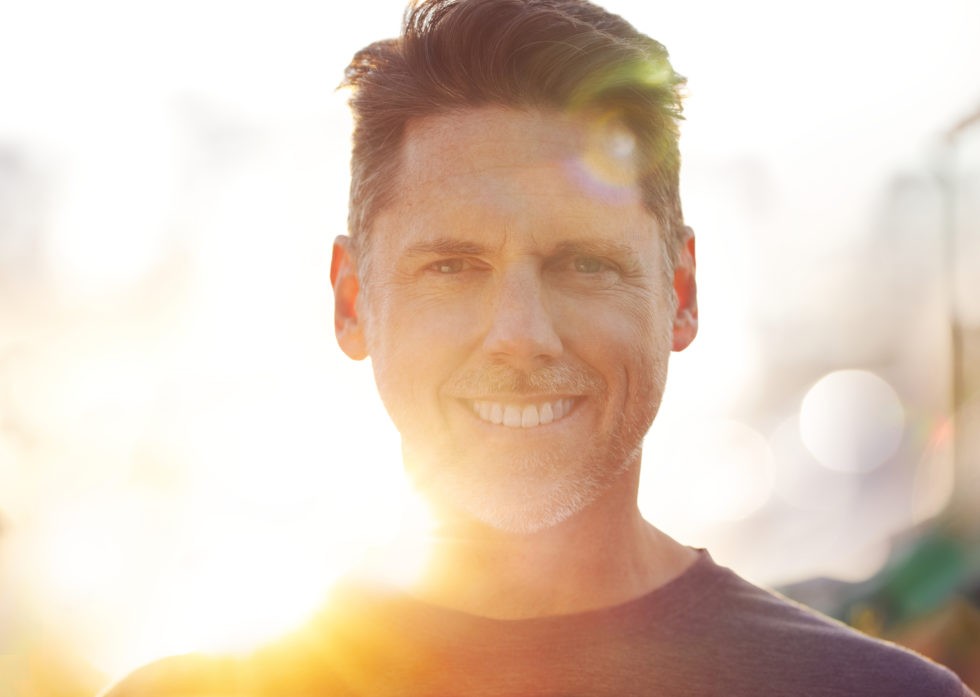
Tripp Lanier is a professional coach, author of This Book Will Make You Dangerous, and host of The New Man Podcast: Beyond the Macho Jerk and the New Age Wimp which — for over a decade — has been downloaded millions of times.
Since 2005, he has spent thousands of hours coaching people all around the world to get out of the rat race, become an authority in their field, and make a great living doing the work they were put on this earth to do. Over the years he’s designed several businesses to support a simple lifestyle focused on freedom, ease, meaning, and fun.
If you’d like to learn more about coaching with Tripp Lanier visit TrippLanier.com.
About Alyson Lanier

Alyson Lanier is a multifaceted expert at the intersection of psychological and spiritual healing. With a 30 year career in Psychotherapy that includes a BA, MA, and LPC in psychology, Alyson supplemented her education with extensive training and certifications in attachment work, Gestalt therapy, Transpersonal psychology, Shambhala Buddhism, internal family systems, and Psychedelic assisted psychotherapy. Her professional journey encompasses over 50,000 hours of therapeutic experience working with individuals, couples, families, children, and adolescents across clinical and private settings.
If you’d like to learn more about working with Alyson Lanier visit AlysonLanier.com.
Transcript
A Date with Microphones
Tripp: I think it's just a date. It's an opportunity for us to just hang out, and sometimes we are hanging out and we have conversations, and they're way more fun than what we've done in the past and probably more insightful. An opportunity for us to not have to be teachers or coaches or guides, and we can just kinda show how damaged and screwed up we are.
Alyson: That'll be really entertaining for some. Anybody that has lots of positive projections on us can get set straight. Right?
Tripp: So yeah, I wrote some things down just as places to start a conversation, but it looks like you have some things to start.
Alyson: I do. I just read my first one, it made me…
Tripp: Well, I was gonna talk about white guys with dreadlocks, but it sounds like you've got something else.
Alyson: What would I have to say about white guys with…
Tripp: I've always been curious about your… Well, we don't have to go there. That's a big conversation.
Alyson: It's really deep.
Tripp: Alright. What do you have? I see your list over there. I know yours is better.
Alyson: It's not necessarily better, but the first one made me laugh. It said, "What's it like knowing you're married to a woman who's gonna get Alzheimer's?"
Tripp: Going to? Yeah.
Alyson: I've started down the path with my cognitive decline, my memory problems.
Tripp: What is it like? It's stressful. It is stressful. I do worry about your brain.
Alyson: How do you worry? Is it more rooted in your own "Oh, my life is gonna suck," or do you actually worry about me?
Tripp: Unfortunately, I just worry about me. The assumption is that if you have Alzheimer's, you're not really worried about much. Or you kind of forget it every few minutes or something. I don't really understand Alzheimer's in that way.
Alyson: You're starting to.
Tripp: I'm starting to. Do you think you're really gonna have it?
Alyson: I think I'm a good candidate for it. I actually do. My grandmother had it, and I've heard that it's hereditary. I haven't studied it, so I don't know. I'd have to learn, but I'm pretty sure if you have somebody in your family that had it, you're more likely to have it.
Tripp: Well, great.
Alyson: Yeah. So let's kick off the conversation strong. Why don't you pick one of your questions?
Posters on the Wall
Tripp: I've never asked you what posters you had on your wall growing up.
Alyson: Posters I had on my wall growing up.
Tripp: Did you go through a boy band phase or anything like that?
Alyson: I never had a boy band on my wall. I had a BMW M3 on my wall.
Tripp: Did you really?
Alyson: Yeah.
Tripp: How did that get on your wall?
Alyson: No idea.
Tripp: So it wasn't even by choice? Somebody gave you a poster?
Alyson: I was like the restore of the family. If they didn't want something, they'd be like, "Here, isn't it great?" So I had an M3. It was kind of all I had on my wall.
Tripp: What about when you're a teenager and you think, "I am my own person. This is my room now and I'm gonna claim it"?
Alyson: Well, when I was a teenager and at home, the BMW M3 was the only thing I had on my wall. One whole wall of my room was bookshelves, and there was a bunch of stuff on them. It wasn't just books. Whatever, horses and old dolls.
Tripp: That was totally you.
Alyson: You know me. I don't take my phone anywhere.
Tripp: I think you just leave it wherever I am, and I have to hear all of your…
Alyson: Your phone is right there.
Tripp: It wasn't it though. That was somebody else. Alright. So you had a boring wall.
Alyson: I had a boring wall.
Tripp: You didn't go through puberty.
Alyson: When I was a kid, I put stars all over my ceiling, and that just stayed when I was a teenager. Then when I was an older teenager, I thought, "I'm gonna have my own identity," and I went away to boarding school. The walls there weren't drywall.
Tripp: Yeah. Concrete.
Alyson: So you really couldn't hang anything. They had those sticky things, like gum, and you could use that to hang stuff. I do remember, I had ski magazines. I was really into skiing. I would tear pictures out of the ski magazines, beautiful mountains, big deep snow, deep carvings.
Tripp: So no John Stamos? I just figured you had boys on your wall.
Alyson: I never had anything like that on my wall. Anybody who knew me from boarding school, please call me out if I'm missing something, but I'm pretty sure it was all downhill skiing.
Tripp: Wow. BMWs and skiing sounds…
Alyson: Sounds like a dude.
Tripp: Pretty privileged.
Alyson: Sounds pretty privileged. I guess so, when you spin it like that. I was a big fan of skiing. Skied a lot.
Tripp: Alright. I thought that would be more interesting.
Alyson: I'm sorry. You can't tease me about boy bands or anything.
Tripp: Moving on. What's your question? Your turn.
Alyson: Well, what did you have on your walls? You had Ferraris on your walls, didn't you?
Tripp: I was definitely into cars.
Alyson: Women on your walls too.
Tripp: Well, that was the thing. Cars, and I got into surfing, so there's a lot of pictures of surfing on the wall. And I was unashamed to have pictures of girls on my wall. When the Sports Illustrated swimsuit issue came out, I just plastered my wall with girls in bikinis.
Alyson: Was it Kathy Ireland or…
Tripp: Yeah, her.
Alyson: Or was it the older ones? Cheryl Tiegs was kinda older.
Tripp: No, I think she'd moved on by that point. Elle Macpherson.
Alyson: Who did you jack off to the most?
Tripp: I don't know. I was never looking up at my wall and pleasuring myself.
Alyson: Oh, come on.
Tripp: No. It wasn't like that.
Alyson: So you walk in your room, and with all those nude women it just helped you get aroused and then you were like, "Hey, I got an idea"?
Tripp: It was just a wonderful place. Listen, this is a great place. We've got cars and surfing and beautiful women, and this feels right.
Alyson: You know, the more I hear of this story, the more I think of how hard you've tried to align your life to be like this.
Tripp: It wasn't like it needed to be arousing. It was just, "Yeah, this space feels good."
Alyson: You say that every time we drive to the beach and you see women in bikinis. You're like, "This is just right."
Tripp: Well, isn't it? It just feels right.
Alyson: You know you're in the right place when people are willing to be naked and comfortable walking around without clothes on.
Tripp: We've talked about mirror neurons. When we've lived in places like Boulder, there's this high-achiever energy of never enough, never rest, get going, more, more, more. Even the spiritual side of it was like, suffer more. You must sit and stare at the wall longer.
Alyson: How long can I do it? How much can I?
Tripp: You're just trying to relax and have a nice afternoon and you're watching everybody grind away, and it's like, "Oh, this sucks." Then you move to a place where there's a beach and you're like, "Oh, yeah. Let's just get naked and hang out. This feels much better. My people." Even at a young age, I remember a buddy of mine whose dad had Playboys. He pulled the move where he didn't think his dad would notice if he stole all the centerfolds. And we had a "fort" out in the woods.
Alyson: You said "fort." What was it really?
Tripp: It was really just a fallen tree, but somehow it gave us something to lean up against. And we had it all lined up with the centerfolds.
Alyson: Oh, wow.
Tripp: I remember he just kinda stood there like, "This feels good. This is nice."
Alyson: But we all now know your sexual preference.
Tripp: Well, the parents obviously found out about it. I was baffled when my mom said, "So I heard, what's going on at your fort? There's pictures of girls?" And I was like, "How did you know?"
Alyson: Was it really only like 20 feet from the house to the street?
Tripp: No.
Alyson: I love how kids think, "No one's ever been here. Nobody's gonna see me."
Tripp: Which had to be humiliating for the dad to know. It was his stash. But it wasn't just me. It was two or three of my buddies, and we all just thought, "Yeah, this is the fort. This feels right." There was no culture beating us into that. It was just, "Yeah, we should be around beautiful naked women." It's just testosterone, baby.
Alyson: Alright. How's this going?
Tripp: It's going alright. How are you doing? I was just looking at the walls in here. It's got a whole lot of your spiritual stuff.
Alyson: Well, yeah.
Tripp: We could take some totems down and put up some images of racetracks and bands.
Alyson: That's what you have in your office and in your bedroom now, racetracks and bands. I don't have any, just a little bit of Alex Grey.
Tripp: I don't have any naked girls though. Just pictures of you. I have pictures of you naked.
Alyson: On the wall? For our daughter to see? I wanna see that. I haven't seen that. Is it on the inside of your closet door?
Tripp: I just wanted to see if you'd freak out. Alright. Your turn.
Car Chases
Alyson: I really want you to do this. When you watch police car chases on TV, you narrate them like Top Gear, where you talk about the car. You really get to know how a car can handle when you watch a police car chase.
Tripp: You do. You learn a lot about a car.
Alyson: I really wanted you to play a car chase, now or at some point, and then describe what's happening and what the car is. You do it all the time at home.
Tripp: I'm always amazed. You think you're gonna get away in that? You think that's gonna work?
Alyson: You watch the vehicle react…
Tripp: It's just wrong. The horsepower, you got no torque.
Alyson: Except you've watched those videos and also been like, "Wow. That's a pretty good car."
Tripp: Yeah. There've been some good cars.
Alyson: Cars that you're really impressed by. I thought that could be kind of a fun series. Today we're gonna get the Ford Frontier…
Tripp: I mean, they should have beat the shit out of this guy when they pulled him out of the car, but that car did really well.
Alyson: Yeah.
Tripp: I'm not gonna do that. I don't think it'll be anywhere near as funny.
Alyson: Oh, it would be so good though.
Cults and Group Mind
Tripp: How many friends do you have in cults?
Alyson: How many friends do I have presently in cults?
Tripp: Do you know any friends?
Alyson: Yeah. I know people that have been in cults.
Tripp: Me too.
Alyson: Is that one of your questions? You need to ask it in a different way so it creates a conversation. That's a yes or no question.
Tripp: No, it was a number question.
Alyson: Oh, man. Well, do I include clients? The number jumps if I…
Tripp: I'm trying to think if I've coached anybody in a cult. I've coached people that have been in cults for sure. It's a lot more common than you think.
Alyson: Well, I think cults are… Here we go.
Tripp: Be careful with my words.
Alyson: I was getting ready to say I think cults are cool in that way. What I meant to say is that all of them typically offer something to the person that is genuinely helpful in some way. Or at least it starts out that way. Really rad self-development or something genuinely helpful. And a lot of what gets offered is genuinely good material in terms of personal development. But then it gets…
Tripp: It goes off the rails.
Alyson: Yeah. And it gets really weird and creepy and ugly.
Tripp: The whole Fight Club thing. The first two acts, you're like, "Yeah, let's fight. Let's take our lives back." Wait a second.
Alyson: Wait a minute. What's happening?
Tripp: We lost the plot.
Alyson: Yeah. Exactly.
Tripp: Have you ever come close to getting sucked in?
Alyson: Never. Maybe that's the luck of being an introvert. I'm not sure. But if people get into groupthink, gaga over a thing, I start to lean back. There's just something about that that starts to creep me out. Ken Wilber was like that. All respect to him and all that he's done for many, many folks, for their intelligence and understanding of things. But I remember working for him, and the people that would come around him and want to be in his proximity felt cult-like. He wasn't actively doing anything cult-like. He just used his smarts and shared that.
Tripp: It's amazing that people want to step into that. It's not like they have to be coerced to do it. They want to.
Alyson: Well, I'm sure people have done loads of studies on this. I have not studied it much, but there's gotta be a thing around proximity. If somebody's offering something really good, think of it as light, like a moth to a light. They wanna be close to that source or the power or the thing that makes them feel good, or makes them feel so special, or helps them feel like they're really evolving. In Ken's case, there was a lot of smugness around the people that knew and understood Integral and the people that didn't.
Tripp: You're talking about me at this point, but go ahead.
Alyson: Maybe. I'm talking about you and a lot of other people.
Tripp: I remember that. That was part of the hook.
Alyson: "Look how smart we are. We get to hang out with the genius."
Tripp: Yeah. I always get a little wigged out around folks. When you talk about groupthink, I'm the same way. It's difficult to go through a conversation without them saying, "Teacher X says this, she says that." And it's like, okay, what happened to your thinking? What happened to your autonomy? It's okay to be referential, but it's another thing when it's like, "So-and-so says X," and it has a weight of "this is the word, this is the way." I get tingly around that, like, "Uh-oh. We're heading down the road here."
Zen Masters Who Drink
Alyson: I feel that way about everything that's not even cult stuff too. I think about Buddhism. I went to a Buddhist university. It wasn't a primary reason I wanted to go there, but it was a Buddhist university, so I was gonna be doing some mindfulness and learning about some shit.
Tripp: You guys need to back up. This Buddhist…
Alyson: After practicing a certain number of days or years or whatever it was, and having enough of the Buddhist teachings in my field, I really got, "Oh my god, this is actually so helpful." But I also remember trying to have conversations with people who essentially just wanted to be a meditation teacher in the moment. Think of how Pema Chödrön would talk to you about anything going on in your life. She would turn it into some sort of teaching, like, "Yeah, it's all groundless, and you're gonna have to work with your discomfort around that." And I remember feeling like, "This sucks. I just wanna talk."
Tripp: Where's the person?
Alyson: Where's the person? And none of that's wrong. Whatever they were sharing was accurate. It would be genuinely helpful.
Tripp: Well, I think what you're speaking to is that it's kinda creepy when the more we get into something, we lose ourselves. We lose our essential self, the part of us that is genuinely us, and we just become a parrot. We're parroting what we've heard or what we've read. And it's like, where'd you go? I always appreciate that we've had a few Zen masters in our lives. We've had them into the house and they drank with us.
Alyson: Those are the best ones. Zen masters drink.
Tripp: Look it up. I guess they go through that phase and maybe they drop it and come back to being a regular guy on the street and drop the whole ascensionism thing.
Alyson: Yeah. I wanted to speak to what you were saying before you talked about having Zen masters in our home. When it's happening for a person, and you talked about them losing their core self or essential self, I think these are the tools that help them come back to their essential self or find their true self. So they wanna share it because it's really helping them, or even as they're actively talking about it, they're actively trying to work it in themselves. So maybe it's not their loss. Maybe it's more nuanced. They're not always completely lost, although there's plenty that are. Maybe they're just actively practicing whatever they've been inoculated into, in the name of finding themselves. You think about Jun Po. He was somebody that could totally dish it out, but he was so street. He just landed. I feel like that must have come on the other side. And this is why I think cults are what they are: "If I do this enough, then on the other side I'll find myself, or enlightenment, or peace, or whatever it is." But he was a great example because he was very much himself all the time, and he could still throw down some good teachings too.
Tripp: Yeah. I remember on a retreat with him, you'd have time with the teacher. I walked in there just kind of expecting this to be a pretty stiff ordeal, because he could be such an intimidating guy. I sat down and was just looking at him and he's like, "What's up, man?" And I was like, "Is this a trick? Are you gonna hit me again?" He'd already hit me once that day with the stick. I was like, "I don't know how to act right now. I don't wanna get hit."
Alyson: I loved him.
Tripp: Yeah. He was great. Alright. Well, it's your turn.
The Arc of Tripp's Spiritual Faith
Alyson: I really would like to know about your arc. Are you paying attention to me? You're looking at your…
Tripp: I'm looking at my questions. You wanna know my arc?
Alyson: The arc of your spiritual faith, because I don't see you as a person that has "faith" in pretty much…
Tripp: What is that? That's a big word. What's faith?
Alyson: How would you define it? The question is for you.
Tripp: I think the essence of faith is that it requires us to believe in something we can't see or touch, something we can't use the senses to validate. So it's a sense of "I know it's there, but I can't show it to you. I can't prove it."
Alyson: Right. And how would you define your spiritual beliefs or theology? I say "belief" because there's a camp of folks out there who say belief has nothing to do with it. And I think you might be one of those people. It's not about believing in a thing or not.
Tripp: I think that's changed.
Alyson: Well, that's what I'm asking. I'm asking about the arc of where you started and what happened, because you have had an arc in just the twenty years that I've been with you. To define a couple of anchoring points: you have been a practitioner of sitting meditation, mindfulness or Vipassana. I don't know if you wanna call it a particular lineage, but you have a sitting practice. You've meditated pretty much every day for the entirety of my knowing you, including the very first weekend I met you. You still do that. But you don't call yourself a Buddhist.
Tripp: No.
Alyson: And I've had experiences of you where it occurs to me that you're sort of toying with, not atheism, but this thing of "What the hell? It's all science." And then there's the one of you that I've always known and fallen deeply in love with, who has a deep devotion to something greater. Call it great mystery, call it divine energy. I don't know what you would call it, because you think a lot of those words are fluff and silly. But for a while it was like either science or spirit. And now it seems like you've evolved into being willing to acknowledge that there's more than just living human to human.
Tripp: Well, if I go back, from a very early age I had a sense of an otherness. I can look back and see that it's always been there. But I grew up in a southern rural town where there were almost more churches than houses, and we didn't go to church. So I grew up with kids telling me I was gonna go to hell.
Alyson: Punitive.
Tripp: Yeah. That notion of a world like that was just foreign and crazy to me and also really confusing. But that was what spirituality was. I didn't know anything else. I didn't know about Buddhism or any other kind of practice. If you were spiritual, it meant that you believed in heaven, hell, and a guy with a white beard up in the clouds who judged you or gave you salvation. So I was just ignorant, and that didn't fit for me. I had trouble with it. My mom took her life, so that meant she was in hell.
Alyson: If you subscribe to that.
Tripp: If I subscribed to that. And also, I was really scared of an afterlife because I didn't wanna see her again. I was so pissed off at her and so hurt by her. So it was like, how about we don't believe in an afterlife? That worked. But it was also condemning of anything "spiritual." I felt this huge hole in me and I struggled with it. As a musician, in my artsy-fartsy ways, I worked with that. That was a lot of what I talked about. I always envied people that had that. I was like, "God, that would be fantastic. But I can't get there. I can't do the algebra in my head to get there."
Alyson: When you say you couldn't do the algebra in your head to get there, you're talking about lyrics, so this is when?
Tripp: I'm in my twenties.
Alyson: So when you say you still couldn't get there, was it still rooted in that early propaganda, like "I'm gonna see her again and she'll be in hell"?
Tripp: I let go of that part. I think it was after I dealt with a bunch of that grief and did a bunch of therapy and had a huge-ass kicking that I got really curious and started reading things. I started on this path. I don't know if I would call myself a seeker at that point, but I was definitely into metaphysics. "Okay, there's a whole other world here, and I've been living in a tiny shoebox, and I don't wanna live in a shoebox anymore." And we're back to Ken. I think it was Ken's book The Marriage of Sense and Soul. Essentially what he was pointing out is that a true spiritual tradition is anchored in seeking the truth, and science is anchored in seeking truth. He healed that in that book. He was like, there are healthy versions and unhealthy versions on both sides. What does a healthy version look like? They're both seeking truth, in our interior world and also in the stuff we can measure. I think I finished reading that at one in the morning and I couldn't sleep that night.
Alyson: That's amazing, because that's a thick book.
Tripp: Well, SES was a monster. But Marriage of Sense and Soul was like, "Okay, I don't have to do this algebra anymore. There's room for all of this." He talks about the three faces of God. There's God in creation. We see a beautiful sunset or the ocean or the stars in the sky, and of course that's divine. It's the "It" of the world. Then there was room for it in the "I," what I might experience sitting on a cushion, going into an altered state and experiencing God in that realm. But I didn't have a "Thou." Who do I pray to? That's largely our culture: we pray to a god and we have a relationship with God. So there was still a hole there.
Alyson: Even after reading that?
Tripp: Absolutely. Because that was still where all the cultural garbage was. There was a guy, and you're gonna do it this way.
Alyson: And you're gonna do it right, and he's gonna make all your wishes come true if you get it right.
Tripp: It was kind of a drama triangle thing, which I hated too. You were the bad guy if you did this thing, or he was gonna save you if you did that thing. It just felt awful to me. I just didn't buy it. That's me. So I think for a long time my spiritual world gave room for the I-It and the I-I. The divinity within me, the divinity within you and all the people that we meet, the divinity in all of creation. That was it. But I still really missed the actual relationship with.
Alyson: The unseen.
Tripp: The "Thou." Yeah.
Death, Rebirth, and Asking for Help
Alyson: Well, you just stopped. What happened?
Tripp: This is a big part, and it's relatively new for me. I don't know how much I wanna share.
Alyson: I respect that.
Tripp: But you and I had an experience a year ago. It was death. Rebirth. And I got my ass handed to me big time.
Alyson: How did that impact your relationship with the I-Thou, versus I-It or I-I?
Tripp: I'm gonna tell this, but I might not share it.
Alyson: Totally fine.
Tripp: That experience rippled, as you know, for weeks.
Alyson: Months.
Tripp: In the first few days I really struggled, even with what was real, what realm I was in, even though I was able to drive a car and whatever. I'd close my eyes and it was like, "Oh, whoa." There was some crazy shit happening in my experience, and I asked for help. I got down on my knees and asked for help. And I got it. It was there.
Alyson: What happened for you in that moment, after all those years of "I can't do this part," and then suddenly needs must?
Tripp: I think I was so afraid that I would be let down if I asked for help, which is a core wound. So to expose myself and say, "Please help me," and not even know who I'm asking… You were available to help me, but that wasn't the help I needed.
Alyson: That's not what you needed.
Tripp: But having that and actually feeling it, and I had an experience of this even the other night, having an actual experience of being held and loved and cared for…
Alyson: A direct felt experience.
Tripp: A direct felt experience shifted everything. And I don't know how to make sense of it, and I have to just be okay with that. I'm not an atheist. I don't think I'd ever call myself an atheist, but I can't make sense of the experiences I've had of being supported there. And I'm speaking as somebody who doesn't feel like I can be supported. I get accused of this by my friends.
Alyson: And your wife.
Tripp: So it's mind-boggling to me to feel supported.
Alyson: That's usually what mystical experiences are for people. It's awe-inspiring and mind-boggling.
Tripp: Yeah. It doesn't make any sense. And it's like, "Well, it's gonna go away at any moment. It's gonna disappear and I'll be abandoned again." But I had that experience, and it was shocking how close it was the whole time, if that makes any sense.
Alyson: That makes a ton of sense to me.
Tripp: That experience was right there all the time. And then I felt like such a moron. I bawled, I cried my eyes out, and I just was like, "I'm so sorry." And there was utter forgiveness and acceptance, and just laughing, like, "That's totally cool. You're not hurting me."
Alyson: Time is a construct on our end.
Tripp: "You just kinda fucked yourself." That's exactly right. But it was really just my own sadness that I'd pushed it away. I don't know if there's anything I could have done differently. But I think my intention going into that brutal experience was "Open me up to love. Open me up to live with an open heart." And boy, do you…
Alyson: The means by which you got there were pretty brutal.
Tripp: I think I was expecting love and light, just to be blasted with it. And it was like, "No, we're gonna shove you into the deepest, darkest, most horrible place you could go, so that the only way out is to crawl out on your knees asking for help."
Alyson: Because you're you.
Tripp: I can look back on that experience now, but at the time it didn't make any sense and it was confounding for weeks. "What the fuck did I do?" Now it can make sense through that lens: that I would have an experience so intense and so horrible that there was no way I could get out of it by myself. Not with all of my ways, all of my friends, and you. Even working with professionals to help me integrate after that session, it was still "Nope, we're not getting there." Then it was, "Nope, the only way out of this is you're on your knees." Not in a punitive way, but I'd tried everything else.
Alyson: You have to go through love.
Tripp: The only door was being on my knees. And I was like, "Man, I cannot believe this." It was so unbelievable. And still is. I just laugh. It was 180 degrees from what I thought was where things were going. Any ounce of hubris just gets squashed.
Alyson: Amen to that. Thank you, Jesus.
Tripp: Are you speaking about my hubris in particular?
Alyson: I'm speaking about your hubris in particular. Thank y'all.
Tripp: Whoever did that.
Alyson: So do you still practice? When you say you still practice, you mean you practice relating with the unseen?
Tripp: Yeah. That's part of my practice now, that relating. I just have to manage these parts in the boardroom of my brain that are eye-rolling. But it calms my system. It calms my being to have a relationship with the unseen. I talk to you and I listen to you and we relate, even though it's so uncool to these other parts of me that wanna have all the answers and all the rational stuff. I just can't deal with that. It's like, whatever, I don't care. But it was shocking that that was the doorway that presented itself. Very dark room.
Alyson: What do you think would happen if you did that experience again?
Tripp: Fuck. I don't know. I've been thinking about it a lot, because it was a year ago this week. It's actually spooked me. Do you go through things on anniversaries, where you kind of relive them?
Alyson: Yeah. Somatically.
Tripp: I've been doing that. Been going through that this week. I don't have any desire to do that again.
Alyson: The question is what do you think would happen, based on your journey, where you've been?
Tripp: Fuck no. I have no idea what would happen.
Alyson: Would you want the love and light experience again?
Tripp: I'd know better than to ask for it. That was just complete surrender. Who the fuck am I to ask for anything?
Last Night's Dream
Tripp: I had a dream last night where I was part of a group of men, and it felt like we were going on a men's retreat to another country. Before we were supposed to go off somewhere, we met in a restaurant. Then I was isolated from the rest of the men for some reason. Nobody spoke English. I was sitting at a bar in the restaurant, and somebody came in front of me and placed a container in front of me, a little bit bigger than a pint of ice cream. Somehow it had little windows, and it had this creature in it. It wasn't a snake, but it was like a giant bug, like a giant centipede or something, with all of these things. Somehow the container was getting bigger and revealing more of the creature inside. And he's just looking at me like, "Here we go, motherfucker." And I was like, "Goddamn, again? Are we going through this?" Somebody in the back was talking about separation and rite of passage, the lingo I'm hearing in the background. And I just remember being like, "Oh my god, we're doing this again." I don't know what this bug meant, this freaky thing. But it felt like whatever this group was, they were trying to intimidate me, maybe even menace me a little bit. But I didn't feel a defensive part of me. In the dream I was just relaxing, like, "Okay."
Alyson: Even with the bug.
Tripp: The bug was so freaking weird. It was the size of a snake, but it was a bug with all these crazy things, and it was gross. But in the dream I was working with my nervous system, like, "Okay, this is what's happening. You've been isolated. You've been singled out. You're being kind of menaced and these guys are intimidating you, and this is part of whatever's happening."
Alyson: How did the dream end?
Tripp: I think the next thing I knew I had a job somewhere and Tucker Carlson was wearing a wig.
Alyson: Seriously.
Tripp: I had his job. I don't know why I had a job, but I had all these model airplanes on my desk and I was trying to take care of them. He was in the next thing over, in front of a mirror, putting on a gray wig, and people were tending to him.
Alyson: This is like the truth, the things around what you need to navigate to get to the truth, and then there's the world.
Tripp: And then there was a leggy… I will say this, there was a young woman with beautiful long legs. She was blind and she was helping me carry my model airplanes out. I was leaving. That was the end of the dream.
Alyson: That was last night?
Tripp: That was last night.
Alyson: How did you feel when you woke up?
Tripp: Confused. I woke up again and was like, "Is this just weird shit happening because of the anniversary of that event?" Another part of me was like, "Fuck, is another thing coming at this point?" I don't know how to make sense of it, or if I should sweat it. But that was this morning. And then going downstairs and getting bit by a puppy.
Alyson: Getting bit by a puppy. That's right. Did that answer your question about the arc?
Alyson: It's interesting to hear. I love what you said, and I hope you don't edit it out, because it's really beautiful and powerful. What you just named about the dream sounds so much like what you were saying: is this just somatic, psyche leftovers from a year ago, or is something coming down the pike? And that ruthless… it almost sounds ruthless, like you're on your own, you're isolated, some rite of passage, you're gonna get potentially annihilated again. The thing that feels integrated is that in the dream you were like, "Alright, okay," and a year ago you were like, "No."
Tripp: Well, it was not peace in the dream. It was more like, "Damn it. I really don't wanna go through another." I wasn't like, "Okay, here we go." But it was like, "Alright."
Alyson: Are you interpreting that, making meaning in some way?
Tripp: I don't want to. I can look at it and just say, okay, that happened.
Alyson: If you had to interpret it though…
Tripp: It sounds like you wanna interpret it.
Alyson: Well, I'm curious. You were like, "I don't want to."
Tripp: I just have a lot of respect for… I don't wanna fuck around. I don't wanna poke the skunk. I've realized my hubris could get me into trouble.
Alyson: I wondered if that was how you were interpreting it, like, "I've separated enough from all that happened that I need a reminder."
Tripp: No. I feel like that ass-whipping is around every corner.
Alyson: Okay. Do you wanna…
Tripp: No, I really don't like interpreting people's dreams. I don't think that's fair to them. I don't presume to know anything either. It's your dream.
Alyson: I guess my question is more this: when you connect with this other energy, this otherness, whatever you wanna call it, that you had no relationship with and now, on the other side of the experience you had a year ago, you do have a relationship with, and you're feeling your connection to that, if the dream meant something, how would you want to turn towards it with that backing or holding or support?
Tripp: I feel like I am supported through that, even through annihilation. It's not gonna save me. The Thou is not gonna save me. The Thou is not gonna protect me. That's the part I don't feel like I can do, call on this entity and say, "Protect me, save me from this." It would be more like, "I'll be here with you."
Alyson: Through it.
Tripp: As you are annihilated or whatever. Maybe. I don't know. I felt completely alone when I was in that. There wasn't even a me. It was gone. That's why I'm hesitant to talk about this, because it's so unclear and so unrevealed. And it feels like it could be gone. Even though I've felt it my whole life, it feels like it could be a snap away from being gone somehow. It's so new, and so hard to describe, and that's why I don't really like trying to describe it.
Alyson: Well, you're also in territory that can't be described.
Tripp: That's why it feels ridiculous trying to put words to the experience, or even to this. I knew you were gonna ask me that.
Closing the Date
Alyson: Well, that's just part one. I wanna ask you more.
Tripp: Okay. But this is supposed to be kind of fun. I forgot how you do dates. It's like a grill.
Alyson: I wasn't trying to grill you. It's just what's interesting to me. What am I gonna talk to you about? What brand of shirt do you like? What model airplane do you wanna build next? What wig do you wanna get?
Tripp: What girls did you have on your wall growing up?
Alyson: What girls did you have on the wall growing up? Well, you're stuck with me. You married it.
Tripp: Alright. I love you.
Alyson: I love you too.
Tripp: Don't have dinner or lunch with Alyson unless you're willing to go there.
Alyson: I'll think of ways to be more…
Tripp: You get to be exactly as you are. I don't want anything to change.
Alyson: Well, I don't have to answer anything.
Tripp: You're right.
Alyson: Okay. Good date.
Tripp: Good date.
Alyson: Bye.