
Podcast: Download
Subscribe: RSS
Sebastian Junger’s Near Death Experience — Sebastian Junger (In My Time of Dying)
What’s going to happen to you after you die?
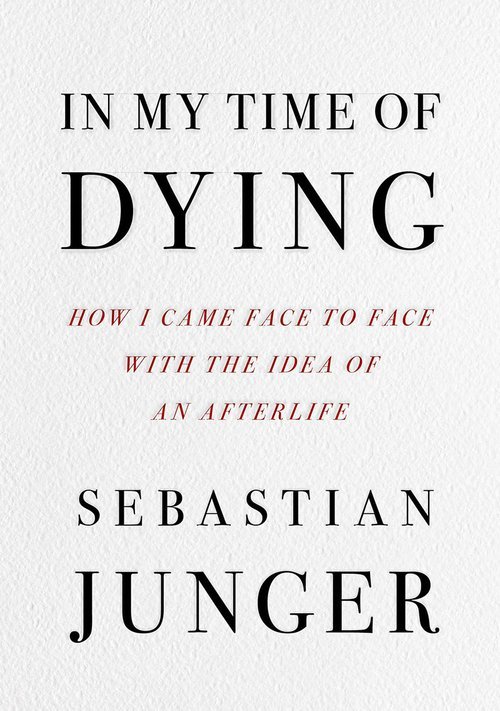
Is death something you ignore or something you use to enjoy your days more?
And are near death experiences proof of an after life or just the brain going apeshit because it’s losing oxygen?
Sebastian Junger is no stranger to death. As a war correspondent he survived an IED attack on his vehicle and spent a grueling stint in the treacherous Korengal Valley of Afghanistan.
But in 2020 he came face to face with his own mortality in a very different setting. At home. With his family. And this brush with death shook him much, much deeper because of what — and who — he saw at the threshold into the unknown.
In this discussion, Sebastian shares his amazing story and most importantly how his near death experience has shaped the man he is today.
In this interview:
- Seeing war as a poker game
- The illusion of safety, certainty, and control
- The dream foreshadowing his death
- Is there room for the unexplainable in your life?
- Can quantum physics explain an afterlife?
Plus:
- The mysterious nurse story
- What if death wasn’t scary but sacred?
- What is it like to see into the abyss of death?
- The Denial of Death, Ernest Becker
- Tripp’s disgusting bull shark story
- The (very dark) Casimir Lizinsky story
About Sebastian Junger

Sebastian Junger is the #1 New York Times Bestselling author of THE PERFECT STORM, FIRE, A DEATH IN BELMONT, WAR, TRIBE, FREEDOM and IN MY TIME OF DYING. As an award-winning journalist, a contributing editor to Vanity Fair and a special correspondent at ABC News, he has covered major international news stories around the world, and has received both a National Magazine Award and a Peabody Award. Junger is also a documentary filmmaker whose debut film “Restrepo”, a feature-length documentary (co-directed with Tim Hetherington), was nominated for an Academy Award and won the Grand Jury Prize at Sundance.
“Restrepo,” which chronicled the deployment of a platoon of U.S. soldiers in Afghanistan’s Korengal Valley, is widely considered to have broken new ground in war reporting. Junger has since produced and directed three additional documentaries about war and its aftermath. “Which Way Is The Front Line From Here?”, which premiered on HBO, chronicles the life and career of his friend and colleague, photojournalist Tim Hetherington, who was killed while covering the civil war in Libya in 2011. “Korengal” returns to the subject of combat and tries to answer the eternal question of why young men miss war. “The Last Patrol”, which also premiered on HBO, examines the complexities of returning from war by following Junger and three friends–all of whom had experienced combat, either as soldiers or reporters–as they travel up the East Coast railroad lines on foot as “high-speed vagrants.”
(Sebastian Junger author photo by Christopher Anderson)
Transcript
Picking Up Where They Left Off
Tripp: Well, I'm going back to October '21. That was the last time we spoke, and we were talking about somehow making a sacrifice, how important sacrifice is. And then you went on some kind of tangential story about blood donations. And then you told a story about being in the emergency room facing your death, this near death experience. And then we just kinda wrapped up. I remember we left that call and I was pissed off. I was like, why didn't you push him on that? Am I ever gonna get a chance to talk about this again? And now you've released this new book, and I couldn't be happier that we got a chance to come back, because what you briefly shared that day impacted me greatly. I was like, how could we just leave that hanging in the air like that? So I'm so glad.
Sebastian: Oh, well, thank you very much. Yeah. That was before I'd even started writing the book. Like with every book I've ever written, I had real questions in my mind about how I was gonna pull this off and whether there was a good book in the topic. Now I've more or less answered my questions and fears about it, and the book is out, and I'm very psyched to talk about it.
Tripp: It was riveting. But I just wanna say, is there anything you wanna get out of the way now instead of later, like kind of an alien abduction or something like that?
Sebastian: Right. No. No. That's the most extreme thing that's happened to me, and hopefully will remain so. So no bombshells at the end.
The Rupture and the Black Abyss
Tripp: Alright. Well, you've had a lot of extreme things happen to you, but let's go back to June 2020. Let's catch everybody else up. What happened?
Sebastian: Yeah. So my family and I were living in a remote property in Massachusetts at the end of a dead end dirt road. No cell phone service, landlines that didn't work when it rained because they'd short out. In other words, paradise. One afternoon, we had a couple of babysitters from a family that lived up the road aways, so my wife and I were able to go out and spend a couple hours together, which didn't happen very much. We went out to this little cabin that's even deeper in the woods, and we were there spending some time. In mid sentence, I felt this pain shoot through my abdomen. I was like, oh, that's strange. What is that? I stood up to try to walk it out. I thought it was some kind of indigestion. And I almost fell over. I sat back down on the bed and I said words I never thought I'd say. I said, honey, I think I'm gonna need help. I don't know what's happening. I've never felt anything like this.
What I didn't know was that I was dying. It was that sudden. I'm an otherwise healthy man. I'm not a walking heart attack. I'm in really good shape. All those metrics are good. But I had an undiagnosed aneurysm in my pancreatic artery, in my abdomen. An aneurysm is a sort of unnatural ballooning in a blood vessel because of a weak spot. It's a random, freak, rare thing, and they're asymptomatic. When they rupture, there's a pretty good chance you're gonna die. If you were stabbed in the stomach and bleeding to death, the doctors would know where to put their finger to plug the leak. But with internal hemorrhage, it could be anywhere. They have a terrifically hard time figuring out where it is and getting to the rupture, deep in your body. I was losing a pint of blood every ten or fifteen minutes. It took me an hour and a half to get to the hospital. There are ten pints of blood in the human body. I was literally a human hourglass. Once you've lost two thirds of your blood, there's really no coming back from that. That's the amount that I lost.
I finally got into an ambulance, and they took off for the hospital. I was feeling a little better at that point. Your body goes into something called compensatory shock, which is sort of misleading. I regained my clarity of mind, and I was no longer going in and out of consciousness and mumbling and going blind. I was pretty normal except for the pain in my abdomen. As soon as we got to the ER, I went off a cliff. The body can only stay in compensatory shock for so long, and that moment came for me right as we pulled in. The doctors knew immediately what was going on, not where the hemorrhage was, but massive abdominal hemorrhage. They rushed me into the trauma bay and did some imaging. I was in end stage hemorrhagic shock, convulsing with cold. They started to push blood into my system to keep me alive, and they did that by pushing a large gauge needle through my neck into my jugular to transfuse directly. I needed 10 units of blood, basically a full body's worth of blood. Initially I got three units, and then I kept needing more.
While they were prepping my neck and working on my neck, this big black pit opened up underneath me. Now I should say I'm an atheist. I don't believe in God. I certainly don't believe in heaven and hell, and I'm a rationalist. My father was a physicist and a rationalist and an atheist. And this big black void, this abyss, opened up underneath me and slightly to my left. I was getting pulled into it. I had no idea I was dying. None. But I was ten minutes from dead, and I was terrified of going into this black abyss. Of course I would be. I was like a wounded animal. I just wanted nothing to do with it. As I was feeling this terrifying feeling of getting pulled in, I thought, I've got a wife, two little girls, a lot to live for. And I know that if I go into the pit, I'm not coming back. I sort of sensed that.
And my dead father appeared above me, and he communicated with me. It was like his essence, this energy vision of him. It's hard to describe. And he communicated with me: it's okay. You don't have to fight it. You can come with me. I'll take care of you. And I was like, go with you? You're dead. I'm not going with you. The idea was grotesque. We have nothing in common. You're dead. What are you doing here? I was really horrified. And I said to the doctor, you gotta hurry. You're losing me right now. I'm going. Eventually they saved my life against all odds, and I've since learned how tiny the odds of survival were.
Why This Hit Harder Than War
Tripp: I've followed your work for years. Death is a common attribute to the things that you talk about. You being in combat, you were in a vehicle that ran over an IED, if I remember correctly, and you were almost blown up and killed. Something about this experience seemed to hit much, much harder. Is it because you're a family man at this stage of your life? What was it about coming so close to death this time that seemed to impact you so much? You talk about that at great length in the book.
Sebastian: Yeah. Well, for war reporters, and maybe for soldiers as well, going to a war is like, alright, I'm gonna sit down at this poker table. I've got these chips, and I'm gonna wager them that I can win a few hands. In professional terms, for a journalist, that would mean advancing up the professional ladder and coming back with credibility and credentials and experiences that I just can't get stateside. That's what you're winning in the pot if you win a hand of poker at that particular kind of table. So I'm gonna play a few hands, hopefully win a few, and then I'm gonna leave. And that's what happened after my friend Tim Hetherington was killed. I made the documentary Restrepo with Tim, and he was my colleague and friend and brother, really, a comrade in arms, from a year, off and on, that we spent in a small American outpost in Eastern Afghanistan. When he was killed in Libya, on an assignment I was supposed to be on with him, he took a mortar fragment into his groin, and it severed his femoral artery, and he bled out just like I almost bled out. Except he was in the back of a rebel pickup truck, and he didn't get to the hospital in time, and they couldn't save his life. So I got out of war reporting after that, because I didn't wanna devastate everyone who loved me like I was watching Tim devastate everyone who loved him, including myself.
Tripp: Did you wake up to something? Like, this isn't just about me at the poker table, this is about something bigger than me?
Sebastian: Yeah. I saw the consequences in Tim's life. Maybe had I been 25, I would have been like, you know what, this is what I'm doing, I'll try to be careful. But when Tim died, I was almost 50. And I just thought, I can't. My parents were still alive. So I stopped war reporting. And in great part it was because of my wife at the time, who I'm still good friends with, though we divorced. We got the news about Tim on the landline, the phone in the apartment. And she said, even if nothing happens to you, every time you're gone, whenever the phone rings, I'm gonna think it's the phone call we just got about Tim. Every time I pick up the phone, I'm gonna have to brace myself for the worst possible news. You can't do that to me. She was absolutely right. So I got out of war reporting, and there were a lot of consequences for me in the next year or so. Among other things, the marriage ended. Then I remarried and had this beautiful family. I have these two little girls who are now seven and four. When I almost died, they were three and six months. They just meant everything to me.
I thought I could walk away from the danger, and then I'm good. I'm a healthy man. I don't smoke a pack a day. I'm not a walking heart attack. Of course, we can all get cancer and what have you, but I'm not gonna be dead by dinnertime. I'm not gonna wake up some morning and not make it till dinner. That's not what's gonna happen. Right? That's exactly what can happen. And I didn't anticipate that the front lines can come to you. It was this sort of violation. I was in a safe place. It was my home. The violation of the imagined safety of that world was what was so troubling. If you're worried about getting killed in a war zone, don't go to war zones, and then your troubles are over. I said to someone, it's like I owed the mafia money. Sorry, there's nowhere you can go where you won't have to pay this back. That's sort of what mortality is. You borrowed sixty years from us, we're gonna come collect one day, and there's nowhere you can go where we can't find you. That's what it felt like, and it was an absolutely devastating feeling. It was way more traumatic than anything that ever happened on the battlefield. It took way longer for me to recover from.
Fear, a Chilling Dream, and Near Death Experiences
Tripp: Interesting. And this happens every day in emergency rooms all around the world. I'm curious, because people have these experiences, and sometimes they have an awakening. They have some kind of new realization. They feel liberated. For you, at least in that period shortly after, as you were writing the book, it seemed to be a burden. It seemed like you were carrying something. You even said that you would be the pet of death, if death had a pet. What was going on for you? Was it just this shift in worldview, that you were vulnerable and maybe you didn't think you were?
Sebastian: There were a number of things. First of all, I wasn't convinced that there wasn't some other aneurysm lurking in there, because this had happened out of the blue, and that could blow too, so this could happen all over again. For a while, I didn't dare be too far from a hospital. I wouldn't take an airplane flight. I mean, all the things that, had I been doing them, I would have died. I wouldn't go camping in the woods. I love the wilderness, but I wouldn't go near it, because I just thought, I'm not going on a six hour hike with my family, and three hours in I rupture another artery, and they gotta sit around while their husband and father dies in front of them. I'm not doing that.
So it took a long time to believe that my vasculature was actually safe and okay. And it's not like a heart attack or a stroke, where it's a function of a poor level of health. It's a completely random thing. If I'd had a heart attack and the doctor said, we're putting you on statins, you gotta lose 30 pounds, I want you walking three miles every day, and a year from now, if you do all these things, you will be safe from a heart attack. It wasn't like that. It was completely random, so I couldn't make myself feel safe from it.
The other problem was that thirty six hours prior, I'd had this terrible dream. I had no idea that I had a health issue that was preparing to kill me. I had this terrible dream that I was hovering above my family, and they were crying. I was trying to get their attention, waving and calling to them, and they couldn't hear me. They couldn't see me. And I was made to understand that I had died and that there was no going back. Sorry, man, you're outbound right now. It's over. I was a spirit. I was absolutely devastated. I was so anguished in my dream that I woke up. We sleep together as a family on a big mattress on the floor, and I woke up next to my older daughter, who was three at the time, and I clutched her like she was a stuffy. I was like, oh my god, thank god that was just a dream, because it felt real. It felt like I died. Chilling dream.
After I almost died, I came back from the hospital and started researching NDEs, near death experiences. First of all, in NDEs, people often see the dead. The dead come to escort them across the threshold. It's a very common thing in many different cultures through the ages. And another common element is hovering above your family, unable to communicate with them as you get taken off into wherever we go. So I had this fear that maybe I had actually died in my sleep, and the dream I'd had was my actual experience of dying. And that everything else, including waking up in the bed and the rupture and the ride to the hospital and coming back from the ICU, all of it was a dying hallucination. That I had actually died, or in some other dimension I did die, whatever that even means. I was just seized with this terror. So not only was I anxious about it literally happening again in this world, in this life, but I was worried that I had died and was only imagining that I was in this life. I know it sounds abstract and a little silly, like a what-if thought experiment, but I was so traumatized and so anxious that it felt entirely real. Worrying that you actually died is a very, very common psychological consequence of almost dying. So I'm in good company. I didn't know that at the time, but those are the two things I really struggled with.
The Rationalist Meets the Evidence
Tripp: Yeah. It's that sense of, what is real? What can I latch onto? I'm looking for certainty, for stability, for something I can really lean into, and I don't have that right now. You mentioned seeing your father, and your father was a strange candidate for this appearance for a lot of reasons. Being a scientist, a rationalist, an atheist, not somebody you would expect. It sounds like your mother would probably be more the person you might see in this kind of realm. There's that tension throughout the book, your father's rationalism: if it's not observable, maybe it's not there; if we can't explain it, then it doesn't exist. And then the effort you're going through to try to make sense of what happened. Is it still going on for you? Are you finding some peace that there's room for the unexplainable?
Sebastian: Well, I'm a journalist. When I wrote this book, which is technically a memoir, I'm writing about myself extensively and mostly about what happened to me. But that doesn't relieve one from the obligations and the standards of journalism. So I also reported the whole story as if I were someone else. I interviewed all the doctors who would talk to me. I interviewed my wife. I kept notebooks in the days following this, in a sense interviewing myself, to keep track of what I was thinking, what my reactions were, as I grappled with this. So I did a proper journalistic treatment of the topic as well, and the book is a blend of those two things.
One of the things I did, of course, was research NDEs. There's extensive literature on it, thousands and thousands of cases of people who had experiences similar or almost identical to mine. Some very smart, well credentialed people, doctors and so on, feel that the thousands of NDE stories from around the world amount to evidence of an afterlife, that there are things in these stories that can't be explained through conventional scientific means. And then, of course, there are the party poopers, the naysayers, the haters, who are like, no, no, I'm a neurologist, and people hallucinate all the time. The dying brain is under extreme stress, and we know that it releases gamma waves as it's dying, and the sites of the brain that light up when someone dies have to do with memory. So it all makes sense. Even though I'm an atheist, I sort of got my hopes up a little bit when I was reading the NDE stuff. I was like, whoa, maybe there's nothing to be scared of. This is pretty convincing. How do you explain that? And then people like my dad weighed in and were like, no, no, this is easy. This is neurochemistry. And I sort of went with that, because I'm of that sort of mind, except for one thing.
There was one thing that never has been adequately explained, in my view, which is that it seems that only the dying see the dead. That's true in hospice. Around the world, hospice nurses will tell you that as people die, in their last days even, they'll be very clearly interacting with someone they see in the room that no one else can see. An uncle, a parent, a dead child, whatever it may be. It's extremely common. And it's extremely common when people have proper NDEs where their heart stops. If they're brought back to life, they recall encountering this dead loved one who's like, it's okay, you can come with me. Or, I'm here to tell you to turn back, it's not your time. And sometimes the people that show up were not known to have died by the person who's dying, because they were killed in a car accident the day before. Mysterious things like that.
My book is divided into two sections, "What" and "If." "What" is what happened to me. "If" is, what if there were some kind of post death existence? I prefer that to the word afterlife. What if there were some kind of post death existence in the physical realm? This isn't some mystical thing. It's a matter that could be understood by science, just isn't yet. How would that possibly work in physical terms? That thought experiment leads pretty quickly to quantum physics and some of the deep mysteries of the quantum world. As I say in the book, if there is some kind of post death existence for the individual, it's probably at the quantum level, and probably as mysterious and impossible to understand, beyond our ken, as some of the most profound contradictions and mysteries of quantum science. I don't prove or conclude anything, of course, because I'm a journalist, and I can't. But I have the conversation about how, theoretically, this could possibly work in a knowable world of subatomic physics.
Tripp: It's very thorough, and I like that you leave room for it. It could live in this neighborhood over here. There's a possibility there. I was fascinated, because I'm not very familiar with near death experiences. Things like life review, the flashing before our eyes, and you propose an evolutionary reason why that might be there. But one thing that also stood out is choosing to go back. People meet the loved ones there, and then they make a choice: no, I'm going to go back and live. I thought that was fascinating too. What do you think is going on there? It's not, oh, I was brought back. It's, I chose to come back.
Sebastian: Many of these accounts have been co-opted by a kind of Christian voice that proposes these experiences point to not just an afterlife but to heaven. Because some of these experiences are extremely expansive and blissful, akin to the kind of psychedelic trips that people have had on mushrooms and ayahuasca and LSD and all kinds of other transformative drugs. The dying person recounts being irresistibly drawn toward this place of light and lightness and complete wisdom and knowledge, all these transcending feelings that people have had on drugs as well. And that amounts to heaven. In the analysis of a few Christians who have volunteered their opinion to me, the black abyss that I experienced underneath me is the pits of hell. And I've had people say this to me: Sebastian, if you don't come to God, if you don't find Jesus, that's where you're going. And your dead father showed up to show you the way to Christ. Follow him, or you're gonna go to hell. We can talk about why I think it's all nonsense if you like, but suffice it to say I don't give much credence to that.
But the experience of many people with NDEs is often an ecstatic one, and then the dead loved one is like, stop. No. Turn back. You have a family. It's not your time. You must turn back from this moment of bliss into your pain wracked body that's been cut wide open by the surgeon, who's desperately trying to fix your shredded aorta. Go back into that body. It's your duty, and we'll see you in twenty or thirty years. That's a very, very common experience. And again, is there some evolutionary programming in there? Darwin would have us survive at all possible costs. Darwinian evolution selects for the individuals that are the best at survival and procreation. So maybe that's what's going on there. I'm not quite convinced by the Darwinian argument either, but there's something to be said for the conversation.
The Nurse in the ICU
Tripp: Yeah. Alright. Let's talk about the nurse. There's a nurse that shows up the day after.
Sebastian: Yeah. So I wake up in the ICU, enormously confused. There's tubes all over the place. I'm incredibly weak, and machines are beeping and bleeping, what an ICU sounds like. We've seen them in a million movies. And this nurse shows up, and she says, good morning, Mr. Junger. You're awake. Congratulations. You survived. You almost didn't make it. You almost died last night. In fact, no one can believe you made it. It's sort of a miracle. And I was utterly shocked. I had no idea that I almost died. None. The only thought I had in this twilight zone I was in the night before was, I've got a lot of pain in my stomach, and these people seem awfully concerned. Maybe I've got some terrible tumor that ruptured, and they'll operate, but I'm gonna wake up tomorrow morning with the news that I've got three months to live. Even in my twilight zone, I was sort of aware of that possibility. I had no idea that my life was on the block at that moment.
So I wake up in the ICU, and she tells me that, and then she walks away. She was a middle aged lady with a Boston accent, sort of heart of gold, tough as nails, that kind of lady. She seemed like she'd buried three husbands. And she came back an hour later and said, how are you doing? I said, not that well, frankly. I'm terrified by what you told me. I can't stop thinking about it. I had no idea that I almost died. I have two little girls and a wife. And she said, try this. Instead of thinking about it like something scary, try thinking about it like something sacred. And then she walked out.
Even though I'm an atheist, I claim access to that word. The word sacred can have some perfectly fine secular meanings that I'm happy to use. For me, and this is just the meaning I've given it for my own purposes, sacred is anything that allows people to live with more dignity, more courage, less fear, more love. That's sacred. In my mind, I thought, I've been going to front lines my whole life. I went to the ultimate front line, which is my own mortality, my own death. I was allowed to peer into the abyss, and allowed to come back. Did I come back with any sacred knowledge? What did I come back with that could help people live more dignified, less fearful, more loving lives? What did I learn at the edge of the abyss?
Eventually I got out of the hospital, after about a week. As I started to make inquiries into whether I could write a book about this, I reached out to the doctors and experts, et cetera. I thought, I wanna talk to that nurse. I made good use of what she said, but what did she mean by it? I tried to find her. I called the hospital. I called the public affairs office. I called the ICU. I described her. No one knew who I was talking about. No one here by that description, sorry, sir. There are some non woo woo explanations. It could be she just didn't wanna talk to a freaking journalist. They're all press averse, and maybe she was like, tell that guy to go away. Or, as one person suggested, and I have to assume they're Christian, that woman was my guardian angel. She had come down, and she didn't exist for other people, but she was there to help me. And I'm like, you know what? I don't know. I'm not at all convinced that there was something weird going on, but at the end of all this, I have to say, I'm not sure of anything. Was it my dad? I really have to be, and it's not a word I'm crazy about, sort of agnostic about it. If there were proof of God, I would believe in God. And right now, I'm not sure what there's proof of, because I don't know how to explain all of these things. So that's where I'm at.
Terror, Reverence, and Not Wasting Your Attention
Tripp: That was a fascinating story. This keeps coming back to Ernest Becker's book The Denial of Death and all the mental gymnastics we go through to push this away. Let's think about the Kardashians so we don't have to really face that we're gonna die one day, and everybody else is gonna die. Coming back to how much we don't know and how out of control we are, it's daunting if we really stare into that. It's terrifying to be in that place. And I appreciate that we can leave room for it instead of saying, okay, I'm gonna plant my flag firmly in this certainty of something, because I think that's just another coping mechanism. Is that what happened? Your shell of certainty, this is how the world works, it's a poker game, and now I do this and now I'm fine. Is that what you lost as a result of this? And now I'm wondering if you're sitting more comfortably with this uncertainty and unknowing. That's the story that I got.
Sebastian: Well, the experience terrified me, and the flip side of terror is reverence for me. Wow, we could die any day? Terrifying. Oh, but then what does that make today feel like? It makes today feel like I'm so lucky that at least I have today. I don't know that I'll have tomorrow, but I know I have right now. And right now, I'm at the playground with my daughters, who I love more than I knew love was even possible. So what are you gonna do right now with this bounty? Are you gonna scroll through your Instagram account? I don't have one. But am I gonna do that, or am I gonna watch my daughter play and interact with her and just soak up this treasure that is life? An unlikely treasure. The odds of the universe existing, let me see if I can get the numbers right, are 10 to the negative 230. That's one chance in a number that has 230 zeros after it. Virtually impossible, and yet here we are. So are you really gonna scroll through Instagram? Is that what you're using this universe for? And I should say, I'm an atheist, and I have a flip phone. So when I say scroll through Instagram, it's just things I see other people do, and I don't do that, because I can't, and I can't on purpose.
So it gave me a kind of reverence for today, for now. We're social primates. We're mammals. We evolved in a dangerous world that required our full attention. Dangerous animals who will attack us, and other animals we had to kill to eat to survive, and shelters we had to build, and young women giving birth, et cetera. That was our reality, like it is for all mammals. If you're too preoccupied with the fact that when the clock stops ticking you're dead forever and none of this means anything, you're not gonna function very well at the things you need to do to keep yourself alive and keep your children alive. So there is a built in level of denial that is completely adaptive and necessary and healthy and ordinary, and we experience that all the time. We all know that car accidents kill people every day. When we get in the car, we deliberately don't think about that, because frankly, I have to go to work this morning, which is a death trap for some people. So we need that kind of denial in order to function. And function we must. That's what life is.
But what I would beg people to do is to not distract yourself from life. When there are things you need to do, do them with your full concentration, and then carve out some time to be just amazed that we get to do any of this, and that your daughter is on the monkey bars right now. Just plug in, man. Just dig it. This is incredible. But please don't avoid thinking about life and death and consciousness and the universe and all that stuff. Don't avoid those uncomfortable thoughts by losing yourself in inconsequential things like social media. Just don't do that. I'm not religious, but that, for me, is what my religion would be: do not waste your time.
Tripp: Is there a way that we can prepare for death? You seem to be leaning in that direction, but then there's also a reverence for death, an appreciation for death, and acceptance that it's inevitable. And it seems like, by and large, we all just run away from it, even with your father saying, come on, and you're like, hell no, I'm not coming. What does it look like to prepare and accept but not be giving up, not resigned to life? There's a beautiful sweet spot in there.
Sebastian: Even before you die, someday, hopefully, you'll be old and you'll think, wow, I wish it was thirty years ago and my knees worked, and I was running around that playground with my six year old. And I didn't realize at that moment, I kept thinking, I wish I could get home because I got some shit to do. And now here I am, 85 years old. What I wouldn't give to have five minutes as a younger person running around with that beautiful little girl, the treasure of my life. What was I thinking at that moment, wanting to be somewhere else? What I wouldn't give to be back there right now. Instead, I'm in an old folks' home. So I wouldn't recommend thinking about death, in a way. What I would think about is loss. We already lost yesterday. That's already beyond our reach. Forget about thirty years ago. A minute ago is beyond our reach. It's fleeting. The only thing you have is the experience you're having right now. So really have it. And it doesn't mean sitting in the lotus position in the woods all day long. It means doing stuff, but being conscious you're doing it, and not wishing you were doing something else, because this is all you're ever gonna get to do. So stop the complaints and stop the distractions.
I see parents in the playground who might as well not have a kid, because they're eyeball deep in some algorithm. They've been completely captured by some algorithm. These tech companies that develop this stuff, it's evil. You wanna get a teenage girl's attention? Give her the technology to take a selfie and put it on Instagram. And while she's waiting for the likes to come pouring in, because she wants her friends to think it's a nice photo and she's pretty and whatever else, withhold the likes, which is what Instagram does. Withhold the likes until the poor girl has gone an hour thinking that no one likes her or cares about her, and then give her all the likes all at once, a little dopamine rush. You wanna keep a 15 year old girl checking her phone every twelve seconds, that's how you do it. And that's how they did it. Tell me that's not evil. When I see people do this, I'm like, they have seized your attention. And when they take your attention, they've taken your life. Attention and life are the same thing. They're interchangeable. They're making a claim on your life, and they're monetizing that claim. They're turning your life into their money. Are you kidding? We're all going along with this. What have we done to ourselves? I'll stop ranting about that now. I'm guilty of distractions also. It's a human thing, but just at least be cognizant of it.
Tripp: Yeah. I think what you're pointing to is that sometimes we think life is the extraordinary stuff. Life is the thing I'm gonna do one day, I'm gonna get around to it. And the mundane moment, like you said, would be priceless if I could come back to it. I don't know where I heard this, but it was a mental exercise: imagine you're on your deathbed, or you're far out in the future, and there's a time machine. You don't get to choose when you go back. It just plops you into a moment. And it might be the moment when you're doing the dishes and your back doesn't hurt, and there's your young daughter, and you're just like, holy shit, I can feel this, I can taste it, I can smell it, and I can hear her voice. I play that little trick with myself often, especially when I'm like, shit, I don't wanna do the dishes. It can snap me out of that, and I'll grab her hand and really feel it. She's right here right now. So it's finding those little tricks to come back to this moment and not wait for the big extraordinary thing to come along.
Sebastian: Right. And it's hard to get there without really understanding what the stakes are, and the stakes are terrifying. If you wanna really live your life, you've gotta acknowledge something quite terrifying, which is that you're going to die and death is permanent, as far as we know. But what you get back for that psychological payment you make on death is a new tool for really living your life fully. The first times I went to wars, I had the feeling that real life was happening in a war zone, and life back home in the comfortable, safe United States wasn't really real. Now I realize how silly that was. Of course it's completely real.
You can lead lives that aren't that meaningful. I would argue that a round of golf is maybe pleasurable for some people, but it doesn't have a lot of meaning. By meaning, I mean consequences. The consequences are almost zero. And meaning comes from consequence. There are huge consequences in war, which is why it feels more meaningful, which is why it feels more real. But at the end of the day, sitting on a park bench with your daughter, tell me there's anything more meaningful than that. Certainly not getting mortared. Are you kidding?
Humor Among Men
Tripp: One thing I'm curious about is your take on humor here, because I grew up in a house where my dad was a homicide and narcotics cop. He was a Marine before that. Humor was how those guys dealt with it. And I know people who are first responders, and humor is the thing that helps them get through things. I imagine you sitting in foxholes, and there was a lot of joking around to help with that. Did humor help you through any of this? Did it play a role? Beyond just deflection, I think it helps us not take shit too seriously. But what's your take on humor?
Sebastian: Well, I've been around a lot of all male groups. The soldiers I was with were all men. It was combat infantry, which by definition is all young males. And I've been on construction crews, generally male, with the occasional exception of a woman, and on through the various dangerous industries, the ones that get people killed all the time: logging, commercial fishing, commercial diving. One thing that men are quite good at is collecting in a group to do a dedicated task that's very unpleasant and very dangerous. Every society in the world uses men in general to do those things. Not that women never do it, but on average, it's male groups that do that stuff. A roofing crew in Tucson, Arizona, in 110 degree temperature, working class males, almost invariably.
One of the ways that men function in groups, in order to deflect the miserableness of being on a roofing crew in Tucson in 110 degree temperatures, and I'm happy to be corrected, but I don't think it works this way for women, is they use a lot of humor, and a lot of insulting humor. They insult each other. Young men love taking the piss out of each other, in ways that are inconceivable, I think, to a lot of women. It's a way of affirming their bonds. It's basically: if anyone else said that to me, I'd punch them. But because we're brothers, because we're on this crew together, we're a tribe, you're gonna say that, and I'm gonna bend over laughing hysterically. And then I'm gonna tell you what it's like to bang your mom. That's how males communicate to each other. Listen, man, we're in this together, and you could say the most insulting thing to me and I'm just gonna laugh. And if some other guy did that, he'd be dead. That's how I know we're in the same group, because we have that humor. That's what men are very, very good at. So the soldiers that I was with, not only are they an all male group in a miserable situation, they're also in combat. So that's times a thousand. I tried to do that a little bit with this, but of course I'm not in a platoon anymore. I'm in my family. I'm sharing a foxhole with my wife and children, and the norms of humor I'm used to with other men aren't the same. Gentlemen, don't try this trick at home sort of thing.
Tripp: It reminds me of a story. My father and another cop friend were in the Bahamas spearfishing, and the other guy's family was there. Long story short, a bull shark attacked a friend, took a big chunk out of his leg. They get him out of the water. They've got a good thirty minute boat ride to get him back. The two adults in the room know that this could be really, really bad. And it's not like you're going to a Florida hospital, you're going to a Bahamian one.
Sebastian: Right.
Tripp: So my dad is trying to help calm things down, and he's cussing, saying, Jay, come on, man, you got my boat really bloody, could you cut it out? And there's another joke, which was, afterwards I saw the shark go lick his ass to try to get the taste out of his mouth. Trying this kind of stuff. But afterwards the daughter came up and laid into my dad. How could you be that way? And he goes, I was trying to keep your dad alive. I knew if I could keep him staying positive and not spiraling into that place where it could get really bad really quick. They were just two different ways of dealing with it.
Sebastian: It's a way of keeping the group together and making everyone feel included. If I was in an all male group and no one insulted me, I'd be like, damn, they don't like me very much, do they?
Tripp: Right. That's how you know you're in, as soon as that first shot comes. You fire one back, and then, brothers. We're good.
Sebastian: You get insulted and you get a somewhat mocking nickname, and you're like, oh, the love. I'm feeling the love. It's a very male thing, and it happens in all kinds of circumstances and clearly is adaptive, clearly helps groups of young men navigate things that will get them killed or at the very least really don't feel very good. Firemen, I live in New York City, and New York City firemen, and I'm sure all over the world, are great. This is their sweet spot. Their gallows humor about their own job is totally extraordinary. I was in a firehouse at one point, and one of them had almost been killed. They'd been busting into a fire, at the front entry about to go into this raging fire, and a big chunk of cornice, cement or granite or whatever, fell off the top of this four story building and hit one of the guys in the shoulder. This chunk of rock just nailed him. It almost killed him. He was in the hospital for months, and they didn't know if he was ever gonna fight fire again. He finally got back to the firehouse, to his locker that he hadn't seen since before the accident. And he looked up, and above his locker, the firemen had attached the piece of cornice and bolted it to the wall. Oh my god. That's the boys. That's the way they roll. And of course the guy just burst out laughing. Oh, you do love me. You do love me after all. It's a totally extraordinary thing.
Tripp: Yeah. I think there's something in it. It can be terrifying and the most reverent thing, and also, if you can't find the cosmic joke in it, if you can't find the humor in it, it's very difficult to hold both of those things.
Sebastian: Also, men can really damage each other. If they get into a physical fight, they can really hurt each other or kill each other, which is maladaptive in a small scale tribal society where every hand is needed. Men are, on average, so much stronger than women, so you don't want men in a group coming to blows with each other. Humor is a way of getting rid of the tension, deflecting things. One soldier said to me, there's guys in the platoon who straight up hate each other, but we would all die for each other. And one of the ways you make that happen is with this humor and this mockery. If someone gets butthurt because someone made a joke about him, you're out, man. Now I don't trust you. If you have feelings, actual feelings, you don't belong here. It really is an adaptive thing.
I know a woman, an anthropologist, who did this extraordinary study. She was convinced that men are more affectionate with each other than women are. And of course we're like, oh, that's nonsense, women hold hands and all this stuff. She said, no, no. In situations of conflict, how do the sexes act? She found that in boxing matches and other sports competitions, the victor and the defeated opponent are way, way more likely to hug if they're male than if they're female. The women are more likely to just walk away from each other. With the men, they're like, alright, we just had a moral contest, I won, you lost, let's signal it to each other, we're back to being allies now. Because women don't often function in single sex groups that are tasked with defending the society, they don't need to repair that fracture. That's not an important part of the process. So the numbers are in. Men do that way, way more than women do, which is really interesting.
Tripp: It is fascinating. It reminds me of growing up, getting into a scrap with somebody. Usually there's a few tears at the end and then you're best buds. Something got worked out in that skirmish, whatever we had to work out, we worked out, and now there can be a real strong bond. Sometimes.
Sebastian: I knew a guy who was the son of a bar owner, an Irish bar in Central Square in Cambridge, Boston. It's long gone, but it was a really tough Irish bar. And the rule was, fighting was allowed. No problem. You guys wanna get into a fight, get into a fight. But afterwards, the guy who won has to buy the guy who lost a drink, and you have to drink that drink together. Of course you buy two drinks, one for each man. But it's on the guy who won to buy the drinks, and then you sit there and have your drinks together, and then that nonsense is over with. It's the same sort of mechanism. Keep the group together.
Poor Lyszczynski
Tripp: That's beautiful. Well, let's talk about somebody who probably didn't have a very fun day. I wanna wrap up with this story, if you're open to telling it, about the Polish Jesuit, Casimir Lyszczynski.
Sebastian: Yeah. Poor Casimir.
Tripp: I don't know why I was laughing out loud at this. I shouldn't be laughing out loud.
Sebastian: But maybe.
Tripp: Maybe, you know, tragedy plus time equals comedy.
Sebastian: So yes, poor Lyszczynski, as I've come to think of him. He was a lapsed Jesuit priest in the early sixteen hundreds who wrote a sort of tract that he kept at home, and he went into a lot of theological stuff. A very developed argument that God did not create man, but it was the other way around, that man created God in man's image. And I mean man in the old sense of humans. And Lyszczynski, being a generous sort, loaned a neighbor of his some money. When the payment came due, the guy didn't wanna pay it. So he snuck into Lyszczynski's house, stole the manuscript, and handed it over to the church, who promptly arrested Lyszczynski, charged him with blasphemy and heresy, found him guilty, and condemned him. Not just to death. Keep in mind, this is a church body. These are religious people, people who have found Jesus, who have made Jesus' love the center point of their life, forgive your fellow man, et cetera. We all know. They condemned him not just to death, but to have his tongue torn out with red hot tongs for having spoken against God, to have his hands burned off while he's still alive for having written against God, and then to be burned alive, and then have his ashes shot out of a cannon. That last touch is the part that…
Tripp: That was artful there.
Sebastian: So these are the church fathers coming up with this. People ask me, why are you not religious? Alright, have you heard about poor Lyszczynski? That's why. You all have some apologizing to do. There's a couple of things you gotta make right, and Lyszczynski is one of them. Then someone intervened and did him the great favor of saying, you know what, you're just gonna be beheaded. We're gonna take it easy on you. We'll just behead you, which is what happened. But I bring him in not to just attack religion, which is not something I do in my spare time. I know a lot of religious people who I love and adore, and religion can be a very good thing in many people's lives. The history of religion is not for the faint of heart. But I bring that story in because there's a direct parallel in the world of quantum physics, where the observer creates the reality they're observing rather than the other way around. It's the central mystery of the subatomic world and possibly of all existence. Lyszczynski, in his own way, was ahead of his time, and the physicists eventually came to their quantum version of what he declared to be true. And what Lyszczynski said is quite brilliant. He said that when you ask God to be something that's impossible, which is self creating, you make a laughingstock of yourself and you deny the world the benefits of reason, of rational thought. That was his problem with religion, that you're stripping the world of the benefits of reason. And you're making a mockery of God, because you're asking him to be something that nothing can be, which is self creating.
Tripp: Great stuff. Sebastian, thanks for this. It's really powerful. I'm so grateful you're back. You're here, first and foremost. But number two, that you wrote this book and shared this experience, because what you shared last time left an impact on me. So that you followed up is fantastic, man. Thanks for your work.
Sebastian: Alright. Thank you, man. Nice to talk to you.