
Podcast: Download
Subscribe: RSS
Is Therapy Frustrating? — Alyson and Tripp Lanier
Has therapy ever been frustrating for you?

Is the purpose of therapy to just dig up junk from your past?
And is it possible to find healers that can really help you move forward?
Today Alyson and I talk about why many folks — including therapists we know and love — find the conventional form of therapy to be limiting. We discuss why she forged her own path instead of continuing as a licensed therapist. And we discuss ways to find healers that can serve you best.
In this conversation:
- What’s the purpose of healing?
- Why conventional therapy can be frustrating even to therapists
- Where and why conventional therapy is limited by regulations
- Fixating on our wounds vs moving forward
- Psychedelics and therapy
About Tripp Lanier
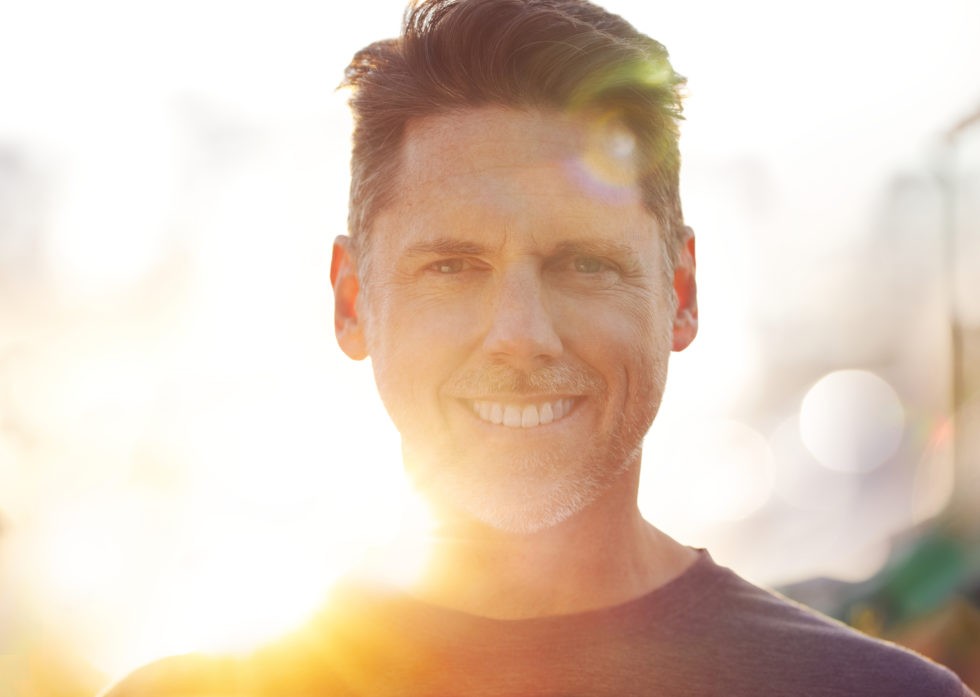
Tripp Lanier is a professional coach, author of This Book Will Make You Dangerous, and host of The New Man Podcast: Beyond the Macho Jerk and the New Age Wimp which — for over a decade — has been downloaded millions of times.
Since 2005, he has spent thousands of hours coaching people all around the world to get out of the rat race, become an authority in their field, and make a great living doing the work they were put on this earth to do. Over the years he’s designed several businesses to support a simple lifestyle focused on freedom, ease, meaning, and fun.
If you’d like to learn more about coaching with Tripp Lanier visit TrippLanier.com.
About Alyson Lanier
Alyson Lanier is a multifaceted expert at the intersection of psychological and spiritual healing. With a 30 year career in Psychotherapy that includes a BA, MA, and LPC in psychology, Alyson supplemented her education with extensive training and certifications in attachment work, Gestalt therapy, Transpersonal psychology, Shambhala Buddhism, internal family systems, and Psychedelic assisted psychotherapy. Her professional journey encompasses over 50,000 hours of therapeutic experience working with individuals, couples, families, children, and adolescents across clinical and private settings.
If you’d like to learn more about working with Alyson Lanier visit AlysonLanier.com.
Transcript
Morning banter
Tripp: Hi.
Alyson: Hi. Good morning.
Tripp: Good morning. You're freshly watered.
Alyson: I've been irrigated, I've been flushed.
Tripp: Have you ever thought about finding exercises to make your bladder bigger?
Alyson: No. Actually, I was told by the doctor, however many years ago, that at this age, I hold it way longer than I should. The instant you have to pee, you should go pee.
Tripp: You would never get anywhere.
Alyson: Well, I do, because I hold it.
Tripp: What doctor said that?
Alyson: It's just in the morning. It was when I thought I was having a bunch of UTIs, and she was like, don't hold your pee.
Tripp: Probably also change your sexual habits, right? All the randos you're with when I'm going out.
Alyson: Hold the rando. Yeah, because that's just what I do.
Tripp: I'm like a tomcat. I go to the beach and you're like, oh, I got a UTI. The fucking yard crew across the street.
Alyson: You didn't go anywhere.
Tripp: The yard crew, the guys all in the high-viz stuff. What are you guys doing in my house? No, nothing. Gotta go. Stay for a beer, man.
Alyson: I was given an estimate. That's what I was doing.
Tripp: Yeah, was given an estimate. Alright. We got a question.
Alyson: You got a question.
Tripp: From Mitch Hedberg. Not the late great comedian Mitch Hedberg, but this guy.
Alyson: I think it should be from the late great comedian.
Tripp: Why is he late?
Alyson: Did he die?
Tripp: Yeah. He's late. He's very late for everything.
Alyson: Did he suicide himself?
Tripp: No. It's not a verb.
Alyson: Well, it is today.
Tripp: He self-drugged. I might be incorrect, but I don't think it was intentional.
Alyson: Like fentanyl or something.
Tripp: No, this was before fentanyl. Years and years ago. All right. His question is… This is not the Mitch Hedberg that died.
Alyson: Who's the comedian Mitch Hedberg?
Tripp: Mitch Hedberg told one of the greatest jokes of all time, where he said, "I don't have a girlfriend, but I know a girl that if she heard that, she'd be very upset."
Alyson: The late great.
Tripp: He was great at just these little one or two lines. He's kinda like a Steven Wright guy.
Alyson: Alright. We'll listen to Mitch. Maybe I'm good without him. I don't know.
Tripp: But that wasn't a misogynistic joke. It was just him being honest. Alright. We're getting way off track here. We've got shit to do. Let's do it.
Alyson: You have a question. How much caffeine have you had?
Tripp: That's scary.
Alyson: Green tea and vitamin B. That's it. It's the equivalent of less than one cup of coffee, but it has vitamin B complex.
Tripp: Is that right? I think I could see through that door.
Alyson: Did you also have coffee?
Tripp: I did.
Alyson: That's your problem. How many cups of coffee did you have before this?
Tripp: Does this have stevia?
Alyson: It does have stevia.
Tripp: Oh, jeez. This makes me itch like I'm a crackhead.
Alyson: I noticed you're scratching your head like a monkey.
Tripp: I drank one of these a few years ago when I was interviewing Brian Johnson, and I remember I looked up at the camera and I could see my video while I was looking at him, and I was just itching the whole time. I was like, dude, get it together.
Alyson: Like full-body poison ivy. You're doing it right now.
Tripp: I know. I'm feeling it. Better have another cup.
Alyson: Now you're gonna have another sip. The things we do.
Mitch's question
Tripp: Alright. Mitch is asking. First off, he's a big fan. Long-time fan. He says, "Listen, man, I got some things I'm trying to work on, but every time I go to a therapist, it doesn't work out. I don't like going to see a therapist. It feels like a waste of time. It's really frustrating. But you guys are very positive about going to therapists. What am I missing?" Like, why is it so frustrating? And I forgot to mention, he's an AI.
Alyson: Oh god. He's AI.
Tripp: He does AI candles.
Alyson: What the fuck?
Tripp: You didn't know this? They have AI candles. You do a prompt and it makes a candle for you.
Alyson: What's the prompt?
Tripp: Make me a candle.
Alyson: Like, I want a candle in the shape of a feather.
Tripp: I think at this point it's just "make me a candle," and that's what you get. You get one in the mail.
Alyson: Did he say anything about the type of therapy he was getting? Because there are lots of different kinds of therapy out there that aren't always a good fit for people.
Tripp: He's getting unfavorable therapy. So that's the type he's getting.
Alyson: So we don't know anything about the kind of therapy he's getting.
Tripp: He's getting one-star therapy.
Alyson: We're gonna have to make a lot of assumptions about what's going on with him. I think I know why he's a fan of yours. You tend to shit on therapy too.
Tripp: Not true. I recommend therapy.
Alyson: How about this? Throw shade.
Tripp: Let's talk about this. It's a complex thing, because even therapists that I know, that are clients, that are friends, are frustrated. So let's just say this is a nuanced conversation. Therapy itself is not bad. I totally don't have a problem with that. I see therapy as a necessary and very valuable way to help with healing.
Alyson: Mhmm.
Tripp: And I think there are some things about the therapeutic industry, let's just say, that limit its potential. And then I think there's another thing, probably for men, that makes it more challenging too. There's a lot we can unpack there, and I think it keeps a lot of guys from getting help. But it's not true that I dislike therapy, because I actually prefer to work in conjunction with a therapist sometimes if I'm working with a client.
Alyson: You're absolutely right, and I'm glad I said what I said so you could speak to it, because I'm in total agreement with you.
Tripp: Okay. That said, I get really frustrated if a client of mine goes and sees a therapist that I don't know anything about, and then…
Alyson: Especially if they're hesitant to go initially. It sucks. You really want it to be helpful.
Tripp: Yeah, and then they tell me what happened and I'm like, man.
Alyson: Yeah.
Tripp: So that would be the version of me throwing shade: that frustration, like that person missed something. But there are some good ones out there. I'm thinking of a couple of clients I work with right now who also see therapists, and it sounds like they're getting great help and it accelerates the work I'm doing with them.
Therapy versus coaching
Tripp: By the way, what's the difference between therapy and coaching? In my world, I see therapy as a way to heal things. If I injure my knee and I wanna get back into whatever activity I like to do, then I'm gonna heal my knee so I can get back to baseline. And coaching, in my view, is a creative process. We're here to build something or move toward something. I want my knee to be healthy so that I can function at a high level and move toward it. But if this knee keeps holding me back, I'm gonna have a more difficult time creating or moving or doing the thing. So that's how I see those two things working in conjunction. Alright. So I think you were like, yeah, therapy sucks. You were telling me that's your position.
Alyson: Is that what I said?
Tripp: As a therapist, you're like, fuck therapy.
Why Alyson gave up her license
Alyson: Yeah, I do. It's a huge part of why I gave up my licensure, actually, because I was so frustrated.
Tripp: What frustrated you as a therapist? You were a licensed therapist, you got the letters after your name.
Alyson: Got all the letters. Well, I didn't get all of them, but I got my master's and LPC and all the advanced certifications, all of that.
Tripp: In Colorado, you can call yourself a therapist and not actually have to have any licensure. So I just wanna name that some people can call themselves therapists and not actually be.
Alyson: It depends on the state you're in. Some states will allow that and other states won't. Colorado was a state where, I think at the time you had to have a supervisor and acknowledge that you weren't licensed, but you could still be a mental health counselor and help as a counselor. I can't remember the terminology they used. This has been so long.
Tripp: But what was frustrating for you?
Alyson: Well, I went through all the hoops with the degrees and the licensures and all the tests for certification. It started, I think, initially with sex education and sex and intimacy issues. I put in all this time and all this money, and created massive academic debt, to get these letters behind my name. And then once there, there were places where, in the therapy session, actual sex, issues with sex, needed to be brought up. And under that regulatory agency, it may have changed now, but at the time they said, "You can't talk about that as a therapist. You can't address that, because you need these special letters behind your name in order to even talk about that."
Tripp: So there are conversations that are off limits.
Alyson: There are conversations that are off limits. And that's fucked up. Even nutrition.
Tripp: Like, stop eating that shit because it's making you anxious and crazy.
Alyson: You can't say that. Anything to do with supplements, anything to do with eating. Suicide is a huge one that is off limits for therapists. I could speak for a while on that, but anyway.
Tripp: This isn't for all therapists, but this might be for many.
Alyson: This has been my experience. You asked me about my experience, and this is what it was like in the state I was licensed in, under the great supervision that I had, adhering to the state statutes and the National Licensing Board, everything they require in order for me to hang a shingle as a licensed professional therapist. So all those things were off limits: suicide, nutrition, how they take care of their body, what they do in their bedroom or outside the bedroom with their bodies, if they needed help there. Spirituality was pretty much off limits. I had a degree in transpersonal psychology, so I was closer than most. But essentially I had to be a blank slate. I couldn't bring anything to them as a spiritual care counselor, because I'm not licensed or certified or degreed as such.
The reason I have a beef with it is… I wanna acknowledge that all of these regulations and restrictions come from a good place. There was some fucking yahoo that fucked it up for everybody else, and so now they have these rules.
Tripp: Steve. Dave. No, it was Darren. Darren fucked it up.
Alyson: Whoever it was, a few somebodies screwed it up for everybody else. Just like psychedelics back in the day. The point is, they're there for a reason. When you're somebody that doesn't know how to work with people, these are good hoops to jump through and good training. It gives you a really great ethic. And it's fucking restricting. It's all about covering your ass.
When it comes to the room that you're in, I felt so bound up that I had to pay for special supervision, because I wanted to be the person who could say the things that everybody else was afraid to say.
Tripp: That's service.
Alyson: That's service. And I was so bound up from all the programming and licensure and rules and regulations that I felt like I had to go learn how to do that all over again, in a way where I wouldn't get my license pulled or get grieved, the whole cover-your-ass culture. So I think the reason people get really mediocre, disappointing, one-star therapy is because they're stuck inside this.
Tripp: There's a lot that's not being said.
Alyson: There's so much not being said. There are so many aspects of our wholeness that the profession isn't allowed to touch. And it has nothing to do with the care and feeding of that client. It has nothing to do with their wholeness.
The emotional laundromat
Tripp: I've coached quite a few therapists over the years, therapists that were very sick of this dynamic and wanted more span and depth, and so they were gonna become coaches. One of the things I hear is that they're just kind of an emotional laundromat. People come in, lay out whatever was frustrating that week, and that's kinda it. There wasn't any challenge, there wasn't anything like "why don't you try this?" There was no offering of doing something differently. It was like, great, see you next Tuesday at three. And nothing changes.
Alyson: Yeah.
Tripp: And I've heard the same thing with couples. Everyone's got their shit, but one person is really shitting the bed, and the therapist is not able to hold that person to account. To really be like, hey, you're fucking this thing up.
Alyson: Yeah, shitting the bed.
Tripp: You gotta clean this up or the whole thing is gonna fall apart. So I can see why it's so frustrating, including for the therapist, to realize they're not really making a difference here.
Alyson: In my early days, before I went for all the letters behind my name, I was a social worker, and what you're doing is teaching coping skills. The goal is crisis prevention, crisis management, and coping skills. Those are the three big ones. In your notes, it's like, what are you doing? You're either managing a crisis, teaching basic coping skills or basic living skills, or doing crisis prevention through the coping skills.
Tripp: But nothing about how to grow.
Alyson: Right.
Tripp: Okay. This helps me understand why a lot of therapists break out of that place. They genuinely wanna help people heal, and they can't do it within the confines of that structure. The structure's there because it wants to be helpful, but it's also incredibly restrictive. And there are probably people who do really good work within that structure.
Alyson: Absolutely. For sure. I was a Gestaltist at heart and as trained, because Gestalt is all about wholeness. So inside the structures of licensure and degrees, I was still able to do good work on behalf of wholeness, in the privacy of my office. But when it came to the regulatory people and the cover-your-ass people, those things were off limits. You can't integrate sex, spirit. You can't integrate health, any kind of doctor's advice, physiology. You're not a physiotherapist. You can't do any of that.
Tripp: Bring it up.
Alyson: You can bring it up, but you have to say, "I'm not a doctor. This is not medical advice. This is not nutritional advice. This is not advice from a sex therapist." You have to tell them to go see somebody else, so you essentially undermine your own opinion with all those liability disclaimers. And then you get to say, "I think you should stop eating marshmallows and caffeine as your sole diet all day. That's not working for your moods, your mind, or your body."
Tripp: Right. Get some movement. Make some friends.
Alyson: Get outside. Yeah, you can say make friends. But there's a lot of things you can't say. There's a lot around spirituality you can't do. There's a lot around sex you can't touch.
Tripp: Maybe that's where we can lean in, because we're talking about wholeness. Maybe I'm someone who's had some stops and starts with therapy and it's not working. That might be the only lens I have, and I might not be considering how spirituality, sexuality, nutrition, money, all of it, feeds into the whole picture.
Alyson: For sure.
Tripp: And all of it is impacting me. I can just be like, oh, I'm allowed to talk about mom and dad, and how somebody punched me in the nose in fourth grade. And that's kinda it, instead of all of these other things that are having a huge impact.
Alyson: And in fairness, sometimes all of the trouble we have with God is rooted in mom and dad and attachment stuff. There are issues in life where, from a therapeutic perspective, if you just get to the root of it, it can resolve. For me, it's more the integration. That tends to be off limits.
What integration means
Tripp: Integration? What's that word mean?
Alyson: As a concept, you were saying that from your perspective, coaching is, in my words, not yours, kind of top-down. You're gonna be creative and see how you can make your knee better so you can go do this thing. And therapy… correct me.
Tripp: Well, I see it as listening to essence. What's trying to be created through me and as me. I might need to heal things and get some of my limiting bullshit out of the way so that I can go and…
Alyson: But it's still about getting the limiting bullshit out of the way just so you can go do the thing. And in therapy, going and doing the thing might be what brought you into the office, because you can't go do the thing. But the time spent is on what has you not going and doing the thing. Let's get to the root of that. That's what I'm saying.
Tripp: Yep. Got it. Appreciate that.
Alyson: So I forgot your question.
Tripp: I asked what integration means, if somebody's not familiar with that word. You threw it out.
Alyson: Yeah. I'm a big fan of getting to the root of things, because it handles so much. Somebody can really heal a big trauma in their life, or repeated traumas or adverse experiences. And they still need help figuring out and creating for themselves what that wholeness, that new healed, post-traumatic growth, looks like in their day-to-day lives. What does it look like in their relationships with others? Usually it gets focused on their relationship with themselves, and then maybe slowly it gets to relationships with others, for many therapists. Many clients tell me, "Well, we never got to that part." So the integration is: how are you gonna do this in your family of origin system? How are you gonna do this in your work? How are you gonna do this in the bed? How are you gonna do this with God?
Tripp: Where the rubber meets the road.
Alyson: What's sacred to you. Right. It's where the rubber meets the road. And how do we bring that healing and wellness forward everywhere?
Tripp: And there's discipline to that, there's accountability to that, there's what are you gonna do, let's go try a thing. That's very much my world of helping people.
Alyson: Yeah. You're excellent at that. But that doesn't always get to happen in conventional therapy. It's almost like that's not what you're here for. You're here for the mess. So that's great that you just healed that part. Where else do we need to look? What other shadowy places do we need to look into?
Tripp: So always looking for more.
Alyson: It can be. I think that's one of the things you get tired of. Correct me if I'm wrong, but I think that might be what you've heard from other people you've worked with who have said it's like a laundromat. You're just stuck in a place where you continue to look for what needs to be healed.
Tripp: Yeah. Instead of what do we create.
Alyson: And you're the best person at analogies I know. You were like, "You're a hammer right now and all you're seeing is nails. What's the hammer and nail for?" I remember that moment where I was like, my god, there's a fucking house here.
Tripp: Yeah. Go build some shit.
Alyson: Let's build stuff. Or there's a wall we could hang beautiful art on and make the whole space more beautiful. I remember feeling that relief, like, yes.
Wound worshiping and men's groups
Tripp: This is what's been… mining for shit. Which, I mean, is a big part of it. I remember being in Boulder and being in that men's group culture. The group I was in had, I think, 12 of us, and 10 of them were professional therapists. So it was really swampy. Love all of those guys to death, and it was a good group. But there was just this sense of, that's what we do. We're not here to create, we're not here to build houses, we're here to fucking hammer nails, and then we're gonna find another nail and hammer that nail. If you didn't bring a nail…
Alyson: That's actually a nail, if you don't bring one.
Tripp: If you don't bring a nail, you gotta do it. That was a kind of wound worshiping, a way that a lot of men in those groups, not particularly this group but other men's groups at the time, operated. It was rarely if ever about what are you here to create, what are you here to give, what are you here to share, what are you bringing to the world actively, and then how can we hold you to that? It was more, no, let's come in here and take our clothes off and hit a drum and get naked and cry.
Alyson: That was your men's group?
Tripp: That was not my men's group. We did get naked.
Alyson: You got naked a lot?
Tripp: Not really. Uncle Ed would… if he was leading, he'd drop it. I wrote about that in the book. Anyway.
Alyson: So you had a dude who, whenever he led, would make you guys get naked?
Tripp: That was his thing.
Alyson: So how many times were you getting naked in the group?
Tripp: I don't know. We rotated leadership, so it took a while. But you just knew if he was leading, you're like, yeah.
Alyson: Oh boy, time to drop trou.
Tripp: It's a cold basement. Didn't wanna do it around the fire, you get a little spark flying out. Anyway, that swampy feeling. I meet a lot of guys who are coming from that men's work world. Hopefully it's different now. I haven't spent a lot of time there. But it very much was like, we're here to find shit that's wrong, that's unhealthy. I appreciate where that's coming from. But I think you're right. If it's not in service of what we're creating, we might not feel that deep sense of satisfaction. We might always feel like we're just finding more shit on the way down, and it's turtles all the way down. You're just gonna keep finding wounds.
I think a healthy way to look at it is to not brush it aside and be like, yeah, I'm just beat up and I'm always gonna have problems. But to ask, when is this problem getting in my way? Is it damaging or slowing me down with my sex life, my relating, my spiritual life, my health? Where is this getting in the way of what I'm trying to do?
Alyson: Can't see the forest for the trees.
Tripp: Yeah. If it's getting in the way, let's take care of it. And sometimes doing the thing in the world can heal it. I've seen that so much. Creating money, or creating the thing you've been scared to do, getting out on the dating scene, will heal something. You're like, I'm not broken. I'm not fucked up. You don't have to go sit for hours in a room somewhere. Sometimes going and doing the thing is very, very transformative.
Alyson: Absolutely.
Answering Mitch, and finding a good therapist
Alyson: What was the question that Mitch had?
Tripp: His question was, what am I missing? Why do you guys talk about therapy and recommend it? And then I'm realizing now that we also have a hard time with it.
Alyson: Yeah, we definitely have a little soapbox about this.
Tripp: I think what he's revealing is that we see a certain type of therapy that is not conventional, and we know it's possible if you're willing to step outside of that convention.
Alyson: Absolutely. I actually think that's one of the reasons the psychedelic movement is so big right now, because people are tired of the conventional form, and they're like, there's got to be more, and a different, another way. And it's not just about the magic bullet.
Tripp: And there's some magic bullet stuff, like I've heard, "Oh, me and my wife are gonna go do psychedelics together." It's not gonna stop her from screwing the gardener. That's still probably gonna happen.
Alyson: Yeah, for sure.
Tripp: I feel a little exposed here, that we've been very therapy-positive and we've been missing the part where we have a bias toward a certain type of therapy. So if someone's listening and wants a more unconventional therapist, I'm hesitant to just say, yeah, find an unconventional therapist, because you might find some jackass who just learned to do some breathwork.
Alyson: That's why it's so tricky. And that's exactly why all the regulatory stuff is so valuable. It's a bind, it really is. My experience is that word of mouth is really, really helpful. I haven't really ever promoted myself that much, so that's one piece. Another piece people don't take into account is that they are hiring someone for a service. So they get to essentially interview them. Usually when people are looking for a therapist, they're just focused on the help they need. They kind of don't care who's helping them as long as they think they can get the help. And that can be great, because you're open to it, you're willing to be vulnerable and just be like, just fucking help me, man.
But for people who are wary because they haven't felt a lot of success, they can really dig in with somebody in a consultation and ask, what about this? I care about this. I want that. Is this something we can cover, or will we only be wound worshiping or navel gazing? What's your jam? I think it's okay to ask a potential therapist their philosophical views, even though what we're told and taught from early days is to be a blank slate and not reveal that stuff. If somebody asks you, you're supposed to be like, "Well, what has you asking that?" or "What do you think is important?" You just completely deflect. No actual human in the room. No authentic connecting or relating.
Tripp: I used to run this.
Alyson: For me, a therapist willing to answer is an indicator of someone who's willing to say, no, this is about being real. This is about wholeness. I'm a human. I might be a little bit ahead of you in how to teach you to be human too, or relational too, so I can help you here, but I get to be in the room also. When you're somebody who's had mediocre therapy and you want something great, you want something more, you gotta go for it. You gotta ask for it. You gotta see who could maybe give it to you. Talk to them, ask them. Ask them about your wildest dreams and what would be the best help ever.
Tripp: Yeah.
Alyson: Not just heal this thing, but then you could have this kind of life and do this with it. How would your wellness look? How would your awesomeness look? Your essence fully expressed. Who will meet you there and support you there and give you the sense that they can help you with lots of those pieces of that pie?
Building a network and helping therapists
Tripp: This is revealing something we've known for many years, and it challenges me to want a better network of folks I can refer to. That's usually pretty tough, because some people need to work within a certain state because of insurance, so my network's pretty limited there. If you're a badass therapist who's jiving with what we're talking about, please contact me and let me know.
Alyson: Let me know too.
Tripp: So that we have plenty of people we can refer to, because Alyson can't see everybody. But yeah, it would be very helpful to develop a network of like-minded folks. And again, I wanna own that we have our agenda, what you were just talking about.
Alyson: Not to mention, I wanna be really clear, I didn't name it, but I have an agenda from this year forward. I wanna be somebody who can help other therapists with this. There are plenty of therapists living in quiet desperation, low-level depression, because they've been stuck inside these cover-your-ass realms, and they're actually burning out. I've made the decision. I'm committed to helping actual practitioners with this.
Tripp: Yeah. I've gotten to see behind the curtain with you. Like I said, I know a lot of therapists personally, and I see how much they struggle. They don't feel the satisfaction of, hey, my clients are making really good progress. That doesn't happen a whole lot. And then there's feeling like they've gotta cover their ass all the time. It can be a pretty grueling…
Alyson: Suffocating.
Tripp: Unrewarding job. So I love that you were on that path, and now, through your own work of integration and working with others, you wanna help other therapists in that way too. It's kinda how we do things, right? We tend to help a previous version of ourselves.
Alyson: Yeah. Alright. Good luck, Mitch.