
Podcast: Download
Subscribe: RSS
Avoiding Vulnerability Leads to Feeling Empty — Alyson and Tripp Lanier
Is our drive for more money, more status, or more stuff really just an attempt to fill a God-sized hole in our lives?
Do you ever feel awkward when expressing love to others?
And how does our need for safety block us from having satisfying relationships?
Today Alyson and I try to understand why love can be so challenging to receive. We discuss the ways we armor ourselves to avoid vulnerability and how we can still feel alone even when we’re with others.
In this conversation:
- Steve Hardison, The Ultimate Coach
- Fearing our light and wholeness
- Being afraid to express love
- Is the ego really the enemy?
- Why we push love away
Plus:
- How do we get emotional needs met without being vulnerable?
- What is the small self?
- What is the soul?
- Armoring ourselves to avoid vulnerability
- Christ consciousness, love, and forgiveness
About Tripp Lanier
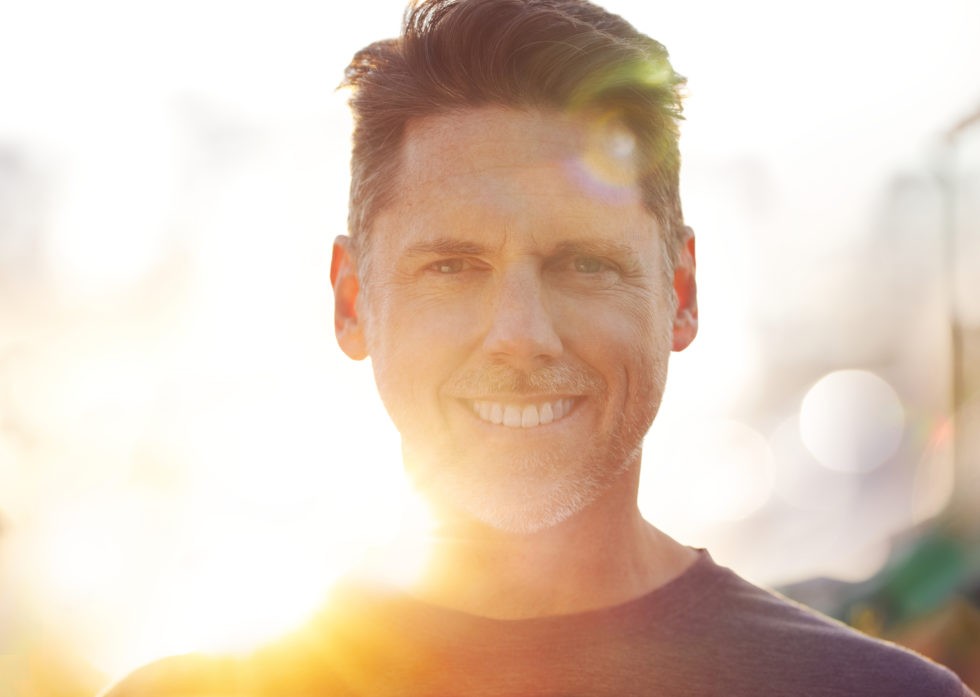
Tripp Lanier is a professional coach, author of This Book Will Make You Dangerous, and host of The New Man Podcast: Beyond the Macho Jerk and the New Age Wimp which — for over a decade — has been downloaded millions of times.
Since 2005, he has spent thousands of hours coaching people all around the world to get out of the rat race, become an authority in their field, and make a great living doing the work they were put on this earth to do. Over the years he’s designed several businesses to support a simple lifestyle focused on freedom, ease, meaning, and fun.
If you’d like to learn more about coaching with Tripp Lanier visit TrippLanier.com.
About Alyson Lanier
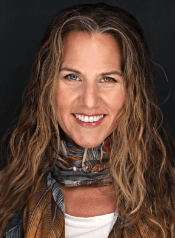
Alyson Lanier is a multifaceted expert at the intersection of psychological and spiritual healing. With a 30 year career in Psychotherapy that includes a BA, MA, and LPC in psychology, Alyson supplemented her education with extensive training and certifications in attachment work, Gestalt therapy, Transpersonal psychology, Shambhala Buddhism, internal family systems, and Psychedelic assisted psychotherapy. Her professional journey encompasses over 50,000 hours of therapeutic experience working with individuals, couples, families, children, and adolescents across clinical and private settings.
If you’d like to learn more about working with Alyson Lanier visit AlysonLanier.com
Transcript
Confronted by light
Tripp: You're just gonna have to menopause your way through this.
Alyson: Just gonna menopause my own business.
Tripp: Is that what you just said?
Alyson: What does that look like?
Tripp: We're gonna find out.
Alyson: You're so in your world today.
Tripp: What if it was a woman in menopause? Hot flashes, I mean, swinging moods.
Alyson: Okay. Well, do you know what we're talking about today?
Tripp: No. I asked you that downstairs.
Alyson: Why are you already recording?
Tripp: So I don't forget to record. Because if we get rolling…
Alyson: We have to kinda work it out first.
Tripp: It's alright. We can work it out.
Alyson: I did write something down that I thought, oh, one day this would be a really cool video or a blog post, but I'll probably never do it.
Tripp: So maybe we should talk about that. What's that?
Alyson: We are confronted when we're in light. When light is beaming on us, we get confronted. It's confronting to our small self. And so I wrote down how it's confronting, and the fact that what light does by nature is shine a light on our shadows. It shines light in dark places.
Tripp: Mhmm.
Alyson: And so…
Tripp: There's the being afraid of light, and then ultimately being afraid of our own light.
Alyson: That's a good hook, but I don't think that's what it actually is. I think it's, are we afraid of our wholeness? Because the world works really hard to be light all the time. Think of the Instagram, what do they call it? Photoshopping your life. Like, I'm gonna make everything light. I'm gonna make my life awesome instead of, no, I might be grumpy today or I might be an asshole. I might have really bad diarrhea today.
Tripp: I'm just not an Instagram influencer, like, oh no, today's the day for my photoshoot. Oh no, I'm getting really bad diarrhea.
Alyson: And we're in the ocean.
Tripp: I haven't even had any fizz yet. Anyway, my point is… I just wanna point out, you are the one that's laughing at the poop joke. I didn't come up with the poop joke, and I didn't egg you on about it. I was trying to think of a really clear example of…
Alyson: Well, that would be wholeness. That's a whole person. There's nothing wrong with having to poop. But if a person's like, no, no, no, I have to be perfect…
Tripp: I like this guy. I like where this conversation goes. There is that. That is the thing. I can't be all the things. Can't be all the pieces of myself, because then these terrible things will happen.
Alyson: Yeah.
Tripp: So I'm up for…
Alyson: I won't be loved. I don't love myself. There's all sorts of possibilities there.
Steve Hardison and practicing love
Alyson: Okay. As the story goes, I was on a call with Steve Hardison, and I invited you to listen in. He's been a coach for decades. He lives out in Arizona. He's a kind of eccentric guy.
Tripp: Calls himself the ultimate coach.
Alyson: Well, I don't know. He probably calls himself that. Definitely other people have called him that. And there's a lot of spin around that. I can get into what he's about, but I'm not going to too much. Essentially, I had the privilege and the pleasure of being on a call with him. One of the things that I really loved about him is that every day he practices loving. Really loving. He's super extroverted, and he pretty much won't go anywhere outside of his house without talking to people and sharing love in some way. So for example…
Tripp: Which looks different.
Alyson: It looks different. Yeah. One of the examples he gave actually brought me to tears. He was like, I have to go to the grocery store later today and I'm excited to go, because the time of day that I usually go is when all the old people go. And these old women there, they get up in years, and all they have really left is getting their hair done.
Tripp: And…
Alyson: He's like, I can't wait to go find someone in the aisle and look her in the eye and say, your hair looks beautiful today. That was so dear. Just simple things like that, all the way to fiercely loving things in his coaching.
So one of the things that happened for this group was, after he was a guest lecturer and interacted with us, he jumped off. And then the group was asked what was going on. The first person that spoke said that felt really confronting for them. It wasn't all unicorns and rainbows for them. They were really stirred up and uncomfortable. That led me to believe, which is something I know happens all the time, and it's one of the reasons transformational workshops tend to be so transformational: think of a flashlight in a room. When you shine a light on anything, it confronts the darkness. It shines a light on what you can't usually see. So when we're confronted in light, I think it's confronting to what we would call the small self. And it's not necessarily a bad thing.
Defining the small self
Tripp: Let's just define the small self here. I would call the small self the collection of our stories and our identity. This is who I am. And usually, without really realizing it, it's a defensive posture. What am I proving to the world and to myself, and always looking out, always guarding against things. It can manifest itself as being impressive. Here's what I do to make sure that I'm accepted and safe. But largely it's an identity or a story that we like about ourselves and we latch onto.
Alyson: Yeah, and we don't even have to like it. It's just something we could be used to. So if we have a really harsh self-critic…
Tripp: Right, but that's what I mean. It's comfortable. I've grounded myself in this identity. Even if I'm miserable, I lock into it.
Alyson: Yeah. The psychobabble word for that is neurotic process. But what I liked that Hardison said was that they're lies. These are the things that we lie to ourselves about. And so we get fully absorbed.
Tripp: Let's go into that, because what's the lie, from that perspective?
Alyson: Like, I'm not enough. I suck at this. Nobody will love me. If anybody loves me, they'll leave. If this, then that.
Tripp: I have to be this person or else.
Alyson: I talked to somebody last week that was like, if I fully open my heart up to spirit, I will be physically disabled. That was the story they were telling themselves.
Tripp: Physically disabled.
Alyson: Physically disabled. I will get some sort of illness or some sort of problem in my body where I will be disabled.
Tripp: Wow.
Alyson: Because it happened to their mother. When their mom had a spiritual awakening, it also came with some illness. And so they're convinced that it would happen to them. The point is, these are things that we tell ourselves, like, I can never love too much, because I can't possibly risk losing like that one time that I lost so much because I loved openly. It's kind of infinite what we tell ourselves.
Tripp: It's all rooted in safety, though.
Alyson: Typically rooted in safety. Yeah. It could be something simple. Like, I took a walk in the woods and got bit by a snake once, and now anytime there are conditions similar to that, the woods or high grass or whatever the conditions were when that happened, I'm convinced there's a snake out here.
Tripp: I feel like you're bringing me a lot into this conversation, and I'm lucky to tone it down. Just because I saw a copperhead in the garden the other day.
Alyson: And you won't stop looking now for copperheads every time you go out there?
Tripp: I don't want the dog to get bit.
Alyson: Yeah. I understand. Copperheads aren't like… Well, never mind.
Tripp: Here we go. Okay. So, rooted in safety. I appreciate you doing this, because I think so many of us have no idea that our identity is the small self and that there is an other. If we're gonna go into this conversation of wholeness, it's a strange concept. And usually it's the small self that can co-opt it and say, oh, I'm wholeness, and put on an act. There's a bypassing that happens there, which is, I will put on this thing in order to present myself as wholeness, or as big self, as I like to call it. But it's just another mask. It's another ruse that we do. And I wanna say all this not in a condemning way. This is just the shit we do.
Alyson: It is what we do. I appreciate that you said that. It's really important to hear that this is the egoic process, you know, ego. That's how we get on. That's how we don't wear all our nerve endings on the outside of our body. You're right. It is often how we learned to navigate things. When something happens and we contract or get defensive, usually it's pretty formative in early years, but whatever happened there saved our asses then.
Tripp: Yeah.
Alyson: That was a really creative adjustment back then.
Tripp: We have to have the small self to some degree.
Alyson: I don't know that we have to have it, but…
Tripp: No, I would say that we do. I was listening to Ken Wilber yesterday, and he was talking about self, or small self. I'll keep our language simple: small self, soul, and then actual self, big self, spirit. And he said something really beautiful. The small self is what we learn in this lifetime.
Alyson: And…
Tripp: The soul is what we learn and carry between lifetimes. So the small self is the vessel that we land in. It's the brain and the body. It's the corporeal, gross area that the soul lands into. It needs that vessel. It comes with a brain and all the things to survive, and it's necessary. Then if you believe in reincarnation, or the never-ending soul, it moves in that way. I appreciate that, and I like that they can go hand in hand, but there's a point where the small self becomes limiting and it can eclipse the soul. It can eclipse the big self.
Small self, soul, and spirit
Alyson: I actually wanna make a further distinction. I'm curious if he did. Did he make a distinction between soul and spirit?
Tripp: Yes.
Alyson: What did he say?
Tripp: Spirit would be more the nondual causal state. The soul is the more subtle realm.
Alyson: Okay.
Tripp: But I think just for the sake of this conversation, we could talk about small self and wholeness, which is the soul having a seat. And one of the things I'm reading is that soul is the part of us that remembers spirit.
Alyson: That's nice. I like that.
Tripp: Right? And remembering means it reattaches, it recombines with spirit. It doesn't split away. The small self has a tendency to split away and be isolated. It's the wave that is separate from the sea. It's like, I'm all alone in this. It's me against the universe. Whereas the soul is the one that recognizes, no, I am an expression of something much larger. Yeah, I wanna bring this back to where we started, which is what has us shrink or contract when we experience light, or somebody else's light or somebody else's wholeness. And then there's a, oh shit, I don't think I'm okay there.
Alyson: Yeah. I like this. Thanks for bringing it back on track.
Tripp: Good morning.
Alyson: So you were saying, should we talk about, like, we can't be with our enlightenment? I was like, no, I think we can't be with our own wholeness. So if we talk about wholeness in terms of small self, soul, and spirit, what happens when light, let's say spirit, shines on us? If we feel the presence of spirit, or we feel light, love, let's just use the word love to keep it simple. When love really just blasts us, what makes it uncomfortable is that it shines that love on the places that are convinced they don't deserve love, or they can't be loved, or they don't trust where the love's coming from until x, y, or z. Right?
Two kinds of confrontation
Tripp: I have a different take, but go ahead.
Alyson: Well, I think it's shining a light. I think what makes us uncomfortable is that we are confronted with the parts of ourselves that we ourselves can't be with. We ourselves can't love. What's your take?
Tripp: I think all of this lives in the same neighborhood. I think when we start to practice wholeness, it's a willingness to look in the mirror and have our selves reflected back to us, including the bits that we don't like to see. Confronting. And that can have us feel like, wow, I really am unworthy of love. I really am unacceptable. To go through that process can be really challenging. When I think about instances in my lifetime, in therapy and men's groups and psychedelics or whatever, it's usually that mirror right in my face. It's like, fuck, I don't wanna see this. I don't wanna have to come to terms with that. This is me too.
Alyson: How is that different from what I was saying?
Tripp: Then, I think what can be confronting, because this happens for me too, is when experiencing somebody's love. That requires vulnerability. It requires accessibility to be loved, to allow that love in. And there's usually armor in place to keep that from happening, to avoid that accessibility. It's not easy to love some people, and I'm raising my hand. It's very hard. Like, I'm not gonna let this in. If I let this in, I have to open the gates up. And it's not so much that I don't want you to see me. It's more like, I don't wanna open the gates. I don't wanna let down the defenses. If I let down the defenses, I can be hurt. I can be disappointed. I can learn to rely on you and depend on you, and then you'll betray me. So I see these things as living in the same neighborhood, but they're very different. One is about coming to terms with who we are, and then accepting and forgiving those parts and integrating those parts.
Alyson: Okay.
Tripp: And then I think the other aspect of the light that you're talking about is when that light comes at us and we're being loved, it can be incredibly uncomfortable, because it challenges the gates and the defenses that we've put up. And I don't know if I wanna let that in. Maybe I've been hurt by the opening being so open in the past. It's a raw nerve.
Alyson: I wanna make sure I understand you, because I'm still hearing kind of the same thing. The one shines a light on all these things, and all of these things are the gates.
Tripp: I can appreciate that. I think it's more that one is, I don't wanna see these things. I don't wanna accept these things. I don't wanna integrate these things. I've been trying to live my life in a way where you don't see these things and I don't see these things about me.
Alyson: And…
Tripp: So I go and create this other image of myself so that's not there. Wholeness is the aspect where I get to bring all of those on board. Then, through acceptance and forgiveness, I know I can relax all the defenses a bit more. When confronted with somebody who is loving, like a Christ consciousness, bringing love and forgiveness, that could be really confronting because it requires our accessibility. I don't think it's so much about you're gonna see me different, or you're gonna see who I am. That may be part of it. But it's more, shit, if I let this in, I'll be annihilated. And we're back to what you were talking about earlier, which is, if I allow this thing to open, there is a sense of annihilation there. And that happens in spiritual awakenings. The small self gets annihilated sometimes. It gets put back together as part of the integration, but that's often what can happen. It just crumbles, and then we find more of our true identity.
Alyson: But that's also through love and forgiveness.
Tripp: Exactly. That's what I'm saying. But that's the fear, that the small self gets annihilated in some way. The small self gets threatened for its existence in that love.
The women's group massage
Tripp: I don't know if you remember this, and I don't know why I'm thinking of it, but you were leading the women's group, one of the authentic circles. This is when we lived in Boulder. You like to fuck with me. And I left the house and I came back, and of course you guys weren't finished yet. And you had me…
Alyson: I don't think I remember what you're talking about.
Tripp: You were like, come on in. And I was like, okay, I thought you guys were done. And there's a room of like ten women.
Alyson: Beautiful. Minimum ten. Amazing women.
Tripp: And you're like, lay down. What the fuck's going on?
Alyson: That's right. I know exactly what you're talking about.
Tripp: I thought you were gonna talk about this. You invited them to massage…
Alyson: Oh, I've completely forgotten about this.
Tripp: You invited them to massage me.
Alyson: Their hands all over you.
Tripp: Not in a sexual way. There was no sexual thing. That was confronting as fuck. That was really confronting, to just receive that. And that had nothing to do with you're gonna see this or you're gonna see that about me. There was nothing for me to say.
Alyson: Yeah. I was just loving you up.
Tripp: It was just, here comes the love. I'm gonna die. Here comes all of this light. All of this love force. I haven't done anything to deserve this. I didn't put on a show. I didn't perform. I didn't impress. I walked in the door. We want to love you, Tripp. It was so confronting. That's what I'm speaking to. It's like, no, I think I'll just go upstairs and leave you guys alone. That was the thing, to go back and retreat.
Alyson: So I…
Tripp: Even so, I did lay down and I did get hands on me.
Alyson: You did lay down. You made lots of jokes. I remember that. The whole group was erupting in laughter and giggles, but they didn't stop touching you.
Tripp: Deflecting. Right?
Alyson: Yeah. Totally trying to deflect.
Tripp: That's what I'm pointing to.
Alyson: Yeah. Well, the thing that you're speaking to, it occurs to me, is the distinction between what I said and what you're saying. What I said is more like, oh shit, I just got a spotlight on me. And now I'm looking at all of it. I can see my armpits, and I can see…
Tripp: That wasn't happening.
Alyson: Correct. And the dirt under my feet and all that. It's like you're just noticing the things that are here. You might see that they're on my feet, whatever it is. And that's a person with themselves. That's being confronted with themselves. What I'm hearing you speak to is being in relationship. What is it like when someone, or something, some vibration, literally it could be the freaking UV rays of the sun that you're willing to actually give gratitude for, that's a relational moment where you're taking that in.
Isolation as safety
Tripp: Isolation. We create isolation for safety. We live on our island for safety. And we can live on an island even if we're married, even if we have kids, even if we have friends. We can still be an island. And I know many of us are living as islands even though we're surrounded by people all the time. That isolation is a safety. So when light and love comes in…
Alyson: It's threatening.
Tripp: It's threatening as fuck. It can be.
Alyson: So from this side of things, what you're saying is, not only are we confronted with ourselves and all the shit that we're seeing in the mirror, but we're also on the spot, in the hot seat, with what do we do in this moment, relationally. Not just with ourselves, but with the love that's coming at us. Is that what you're saying?
Tripp: Right. That isolation is one of the defenses that we have. If I can keep people away, they won't see these things. If they don't see them, then I don't have to see them either. I don't have to be reminded of them either. And so we're trying to get our needs met, but at the same time, it's this clunky thing of how do I get my needs met without being vulnerable? And we're starving for that. So when actual love and acceptance comes along, it can be very confronting. And even when I practice love in a tough-love way, with tears in my eyes, bringing that love, it can still be construed as fuck you.
Alyson: Yeah. Well, I don't know. You have had lots of clients say fuck you, Tripp. But they say it with loving smiles, because they know that they're being loved in that moment. As with my clients. They're like, damn, you just brought your sword and I'm fucking grateful for it. And holy shit, it's hard to be with this.
Tripp: And it's very hard for me to do that. But that's what I mean. It's, I love you so much, I'm not going to allow this masquerade to continue. At least with us, I see you.
Alyson: Yes, exactly.
What we'd want for someone being confronted by love
Tripp: Think about it for a second. What do you want for somebody that is wrestling with this idea of being confronted by love? Or if you come back to the guy on your call that was really confronted by what he experienced.
Alyson: I want that mirror for them, and I want love to be able to permeate through all of it. But usually it has to be slowed way down. What I would do is slow way down and identify what is looking for the exit, which parts are looking for the fire escape, and talk to them first. Not bombard them with love necessarily, but see if they can just stick around a little longer to understand that their life's not in danger and that they're not gonna be annihilated. There is a bit of a bombardment of love, but more like water filling up from the ground floor instead of being showered with a fire hose. It's more like, what if we can marinate in the fact that everything is okay? Every aspect of you is okay. Even the parts of you that you don't feel are okay. What if we could bring love to those parts, and they're just doing the best they can?
Tripp: Yeah.
Alyson: And that's where they are. That's just where they are. There's nothing more to it. If that's just the ground we're in and we can start from there, then it's like, okay, cool. You wouldn't do that to a kid that's struggling with learning their vowels, or learning how to read, or a speech impediment, or learning certain words. You wouldn't be like, oh my god, you're not allowed here, and you suck. No. You would just be like, okay, let's work from here. This is where you're at. So let's work on it. With love. That's what I would want. What would you want?
Feeling empty and the God-sized hole
Tripp: None of the stuff that we're talking about with the small self or wholeness is a problem until it is. And I think it manifests itself as a "problem" when we are feeling empty, we're feeling trapped, we're feeling drained, we're feeling isolated, we're feeling bored, we're feeling overwhelmed. And usually when we get into those places, the small self only has one game, and it's more. I must not be doing enough. I must not be doing it right. So if we don't know that there's anything other than the small self, then the small self doubles down…
Alyson: Yeah.
Tripp: And goes and does more of the shit that it thinks is gonna work. It keeps doing that.
Alyson: Sure.
Tripp: It keeps seeking more comfort, more certainty, more safety, more acceptance, more impressiveness, whatever, which usually just has us spiraling. We're getting more and more removed, more and more isolated.
Alyson: Like an OCD person right now.
Tripp: When that starts to become apparent, it can be devastating to see that. And we know it's that when we're buying shit we don't really need. We're trying to fill, as you say, this God-sized hole with something. We're just dumping little trinkets into it. Maybe this will fill me up, maybe this will do it, maybe this will do it. We're seeking something, but it's only through this lens of the small self, so we get a hit of something and then it's back into that stuff. And I would just say that if or when we find ourselves in that place, that's a great time to consider that we are larger than that. We're not just the small self. We're not just the things we do to be impressive and included and acceptable and belong and be safe. There's another aspect of ourselves, and that will feel confronting to the small self. Allowing that love, allowing that acceptance, allowing that forgiveness, because the small self is all about locking that shit down and locking it away. Isolating ourselves from that. Attention is not the same as love. I might seek tons of attention, but that's the junk food version. It's a safe thing. I get to be over here, you give me a little attention, and I can't be hurt in that way. So we might think we're seeking love, but really we're finding these contorted ways to get our needs met. It's not nourishing for us.
Alyson: Yeah. As you were talking about all this, I was thinking, we fill the hole because… You're gonna laugh at me because I'm gonna talk about our culture, being conditioned, whether it's through social media, through marketing and advertising, through whatever. We get conditioned for that because everybody's doing the same thing.
Tripp: It's normal.
Alyson: So it's the water around us. This is what is. This is what it's like. This is what we do.
The longing to come home
Tripp: Right. And so when we see or experience somebody that is maybe in touch with more big self or soul or some of the other aspects, it is really confronting to the small self, and the small self usually, for me, is just like, fuck this. That's uncool. There's usually a defensiveness to it. That doesn't jibe with this self-image that I have. That actually seems dangerous. But I've also felt at the same time like, god, I would really love that. There's a longing.
Alyson: Yeah. That's what I was gonna say. Everybody actually wants more love in their life.
Tripp: Yeah. There's a longing to come home. Like, I'd love to give up this coat that I wear in order to get through life.
Alyson: I don't know that they actually can think that way.
Tripp: No.
Alyson: But that feeling is there. There's no question that that would be the core message that comes from that feeling.
Tripp: And that can be a beautiful experience in, let's say, psychedelics, or longer terms of meditation, where you get a glimpse. You get to relax that for a moment.
Alyson: Absolutely. Like contact with people and animals and all that.
Tripp: Well, also just, oh wait, that's not all of who I am. There's another game other than just being small self, just being in this protecting and pleasing and improving stuff. And that's where learning to turn toward the things that we can't accept about ourselves has us find our wholeness, has us find our forgiveness, and then opens us up to that more nourishing experience of love.
Alyson: Yeah.