

Podcast: Download
Subscribe: RSS
The Trap of Trying to Reach Your Full Potential — Alyson and Tripp Lanier
Do you feel like your life is supposed to be bigger than it is?
What would it mean if you weren’t exceptional?
And why do so many successful folks still feel like they aren’t enough?
Today Alyson and I explore why some people feel pressured to reach their full potential. We discuss the expectation to be exceptional, how fixating on the future kills our satisfaction, and why having what we truly want may be much simpler than we think.
In this conversation:
- The pressure to reach your full potential
- The checklist life
- The fear of dying with regrets
- “Is this all there is?”
- I’m not doing enough or not doing it right
Plus:
- The fear of slowing down
- What we do to escape discomfort, uncertainty, and vulnerability
- Is love something you have to earn?
- The need to get over ourselves
- The role of awe and wonder
About Tripp Lanier
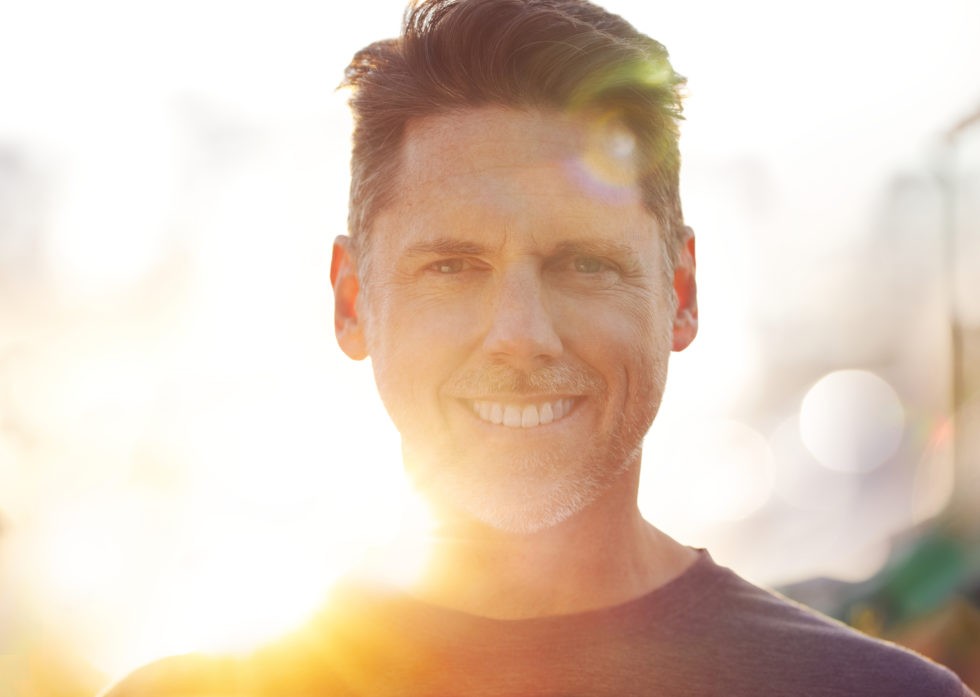
Tripp Lanier is a professional coach, author of This Book Will Make You Dangerous, and host of The New Man Podcast: Beyond the Macho Jerk and the New Age Wimp which — for over a decade — has been downloaded millions of times.
Since 2005, he has spent thousands of hours coaching people all around the world to get out of the rat race, become an authority in their field, and make a great living doing the work they were put on this earth to do. Over the years he’s designed several businesses to support a simple lifestyle focused on freedom, ease, meaning, and fun.
If you’d like to learn more about coaching with Tripp Lanier visit TrippLanier.com.
About Alyson Lanier

Alyson Lanier is a multifaceted expert at the intersection of psychological and spiritual healing. With a 30 year career in Psychotherapy that includes a BA, MA, and LPC in psychology, Alyson supplemented her education with extensive training and certifications in attachment work, Gestalt therapy, Transpersonal psychology, Shambhala Buddhism, internal family systems, and Psychedelic assisted psychotherapy. Her professional journey encompasses over 50,000 hours of therapeutic experience working with individuals, couples, families, children, and adolescents across clinical and private settings.
If you’d like to learn more about working with Alyson Lanier visit AlysonLanier.com
Transcript
Warming Up
Tripp: What's your question?
Alyson: I wanna watch you drink something.
Tripp: You have the microphone. How do I drink? Like this? But I don't have the gulp thing that you do.
Alyson: Yes, you do. I heard your gulp.
Tripp: I was exaggerating. You gulp like you're knocking down some moonshine or something.
Alyson: I silently swallow.
Tripp: Some of that mash.
Alyson: Oh, I swallow. This is the kind of thing like a married couple that's been together for fifty years and they're sick of each other. It's like…
Tripp: "I'm gonna kill her because I can't stand how she swallows."
Alyson: It's gotta be something there's no control over.
Tripp: You know what drives me nuts? Her swallowing. She can't swallow, right? How are you this morning?
Alyson: Apparently throaty.
Tripp: I don't know. It's not a problem.
Alyson: No. I'm okay. I'm alright.
Tripp: You alright? Just alright?
Alyson: Yeah. I got some work to do.
Tripp: You got some work. Okay. I appreciate that. I'm scared the child's gonna get us sick for the third time in the last few months.
Alyson: I know. Especially these two weeks that are so busy.
Tripp: Why do they wanna kill us? They've done so much for her.
Alyson: Germ factories. They just go hang out in germ factories.
Tripp: I think it's personal. "Let's kill this son of a bitch."
Alyson: I don't think it's personal.
Tripp: You don't think so? I do. Okay. Well, do we wanna chat about anything else? Or you just wanna get into it?
Alyson: I think we should get into it. I don't think we have a ton of time. I have to start my work sooner than you.
Tripp: Okay. Let's get down to business.
Tom's Question
Tripp: We got an email from Tom De La Cruz.
Alyson: I don't know who that is.
Tripp: Tom De La Cruz?
Alyson: Oh, you like Tom Cruise?
Tripp: No. This is Tom De La Cruz.
Alyson: Okay. Got it.
Tripp: He is an AI powered stunt performer. In parentheses, he put, "I perform all of my own AI powered stunts." So I don't know.
Alyson: I don't know what that means either.
Tripp: I don't know what AI stunts are. It's gotta be the future of stunts.
Alyson: It's the future.
Tripp: Gotta be the future. Okay. Here we go. "Hey, Alyson and Tripp. I've had an amazing life. I've accomplished so much and I'm determined to make sure I live my life to the absolute fullest." This guy, he's geared up. He says, "I wanna squeeze every last bit of juice out of this lifetime, and I have goals I plan to pursue for years to come." Man, he's just on fire. "That said," uh-oh, here comes the but. "Something feels off. You could say I have a lot of friends, but I can't say that I really feel close to anyone. A while back, I was married, but that fizzled out. She seemed okay to just settle for a normal life, and I didn't want to allow myself to be held back. I always thought that when I got to this point in life, I would be on top of the world, but I'm afraid I may be missing something. Even though I'm determined not to waste my life, it seems like my life has become a giant checklist, but the more boxes I check, the emptier I feel." What do you guys think?
Alyson: I think he's got a complex about being exceptional.
Tripp: Let's be compassionate.
Alyson: He was raised by a narcissist?
Tripp: Let's be compassionate.
Alyson: Okay. Sorry. Is that what you meant?
Tripp: Yes. Let's try to bring some understanding.
Alyson: You asked me what I think, not what I would say to him.
Tripp: In a professional setting. Jesus. So Tom De La Cruz, he's struggling.
Alyson: Yeah. He does seem really committed to having an exceptional life. And almost in a black and white way. Like, there's no other choices.
The Trap of Reaching Your Potential
Tripp: Yeah. This is really common. It's a big part of the book that I wrote too, which is this fixation on outcomes and accomplishments and performance, and that that's the recipe. There's a formula for getting life right. For many high performers and high achievers, there's this weird idea that they're wasting their life if they're not reaching their potential. That's a weird term for me. I never used that term, reaching our potential. It's like, how do you know? It's always just right beyond. It could become a trap. This idea that, "Oh, I'm not reaching my potential," and therefore we turn the blade on ourselves. Right? For a lot of these folks, life is about something to accomplish or to perform. It's not really about "we're here to experience anything or give anything or create anything." It's this game to play and win.
Alyson: Do you think it comes from this massive fear of death? Like, I have to squeeze everything out of life possible before I die.
Tripp: I think we can get into what's underneath it here in a minute. But I could definitely relate. I relate to that bit. I don't wanna regret my life.
Alyson: Right.
Tripp: You know? And so there's this idea of, okay, well, if I checked all these boxes, then I will have lived my life right. I will have lived my life in an extraordinary way. But I just wanna come back to this, because it does reinforce this checklist life, right? There's a lot of checklists in this way of living. It's like an itinerary on a trip. We're gonna go to Europe, and we're gonna see all of these landmarks and museums and stuff, and it's, okay, check that box. But it's not, did I experience anything? It was just get up at six, meditate, eat X amount of grams of protein, do this. We're just rolling through all the things to get done, and then the next day, do it again and just kinda get through it. And there's this pressure to get it all done, especially before time runs out at the end of our lives.
Alyson: Yeah. It occurs to me that you become a bit of a machine. It's less about presence, or, like you said, experiencing it. You're in the idea of what needs to happen, and you're just playing out some idea or some framework that you learned.
Tripp: Yeah. And I think for some folks, especially if somebody's on the other side of this, where they're not going anywhere and they're stagnating, there's a healthy version of this. There's a healthy version of being organized and saying, "Here's what I want for myself, and here's what I wanna get done, and here's what I wanna move towards." Absolutely. There's nothing wrong with this. But like anything, it can get out of balance.
Alyson: Right.
Tripp: And I think the cost for this is… For me, I've seen really highly capable, really driven people who look like they have it all, but they feel empty and disconnected. They've done everything that they set out to do and were, quote, supposed to do, but it's not quite what they were hoping for. Something's off. And to me, that's the experience part. It's not checking some box internally. So there's this "Is this it? Is this all there is?"
Alyson: You think that's what's going on with Tom?
Tripp: I don't know what's going on with Tom, but I think the thing that shows up is, "Well, I must not be doing enough or I must not be doing it right." So there can be this "I need to do more." There's a moment in this, especially as guys get later in their thirties and forties or maybe even a little bit beyond that, of "I thought it would be different here." That's what he said. "I get to this point, I feel different, so I must not be doing enough or I must not be doing it right. So shit, I must need more," and there's this doubling down. And then when that doesn't work, there's this real "Oh, fuck." There could be this big existential thing, and maybe they go buy a Porsche or start dating a 22 year old woman or something.
Alyson: But do you think that's where it tips over, the life of a Porsche?
Tripp: If I buy a Porsche, or when I buy a Porsche, it's not gonna be for these reasons.
Alyson: Oh, okay. So it'll be different for you. Is that what you're saying?
Tripp: I wanna keep it at the track and I'll drive it at the track. It's not gonna be about that.
Living in the Future
Alyson: Well, you said something just before that piqued my curiosity. You said if it gets to that point, it can become existential.
Tripp: Yeah.
Alyson: So you have seen that in your work, that it actually does tip? Because it seems like just mechanistic up to that point. It seems like they're just kind of a machine living into a machine's ideas or whatever.
Tripp: Well, this is their faith.
Alyson: Programming. And so how does it flip to more of an existential crisis?
Tripp: I think for someone in this mindset, the excitement is always about the future. It's what the future could be and what the future can be and will be.
Alyson: Who they will become.
Tripp: Right. And there's this excitement about the future. I'm not really here in the present. That's why I don't really get to experience things now. It's because I'm really excited about what could be. That's why these are visionaries. These are people all about what's possible, and "if we just did this, we could do that." And then before they've even gotten there, they're moving on to the next thing. Like, I know a woman that when I'm having dinner with her, she will sometimes talk about the next meal or another meal that she wants to have.
Alyson: That is so odd.
Tripp: We're eating this meal, but she's getting excited about the next meal. Have you ever heard of anything like that?
Alyson: I've never heard of anything like that.
Tripp: Strange.
Alyson: It seems like it would be about pleasure, if she's a foodie. But if you're in this context…
Tripp: Like, thinking about the future meal makes this meal even better.
Alyson: Okay. Well, I get where you're coming from now. In this context, it's like she's lost her presence.
Tripp: She's not present for this meal.
Alyson: For this meal.
Tripp: She's getting juicy for the next one.
Alyson: Getting juicy.
Tripp: I'll introduce you guys sometime. I won't say who it is on the mic. So I'm curious if you have any thoughts on why this is happening.
Where It Starts: Early Programming and Temperament
Alyson: I have some thoughts about how this begins to happen, which is, I think it starts really early in life. I think it starts with needing to feel like you can do a certain amount of things or you can do them really well.
Tripp: So you're looking at it through a developmental lens?
Alyson: I look at it through a developmental lens, and then I also layer on consumerism around that. If anybody in the world today is really paying attention, if they're on social media or anything, you're just peppered with ads. You're peppered with something that you need or something that you could do more of or something that could be better in your life. And so I do think that if you're not in touch with something deeper in yourself that is beyond those things… How much can I do? How well can I do it? And also, I must need all these things. Even if it's just checking the boxes, like, I need to be successful, whatever that means for that person, or I need to have a good job or a house or a car or a wife or kids or whatever it is. I wanna live in this part of town versus that city. There's just always a thing. And that comes from somewhere.
Tripp: Well, I would say that it's innate in us, and it's innate in some more than others.
Alyson: I know.
Tripp: And I'd argue with the consumerism thing. It's there for those that are influenced by that. You can learn and not be influenced by that, but for some, it really does hit those buttons, those parts of the brain that light up and say, "Yes, that's exciting." But I think it points to something deeper, and we can get into that in a little bit. Like I was saying, this is kind of the faith. This is how life works. This is my recipe. For some, it's "If I check these boxes, I go to heaven at the end of this thing." And if I check these boxes here, this is what's gonna have me feel safe. This is what's gonna have me feel like I belong. This is what's gonna have me feel like I'm enough and I'm extraordinary and I'm special and I'm significant.
Alyson: Yeah. But to me, that's all early programming. That's not them really being in touch with themselves. That's not them really being in touch with what really matters.
Tripp: I agree. That's why I say it's a faith. It's a script. We grab it early on. It works for us. We were raised in a certain environment, and maybe we learn early on, "Hey, this is my thing. Getting good grades is my thing. Hitting home runs is my thing." Whatever it is. This is where Dad pays attention to me. This is where Mom pays attention to me. So it's just like, this feels amazing. This feels right. How could this be wrong? And so I'm gonna continue to do this.
Alyson: I think you ditched this. You threw this out when you were doing the drafts of your first book, but you were doing sort of personality types in animals, and you had the turtle and the lab and you had other things. Did you keep it in your book?
Tripp: Read my book.
Alyson: I was thinking it's a Labrador. I can't remember. It's been a few years since I've read it. Anyway, it reminds me of the dog that's like, "Hey, throw the ball. Throw the ball."
Tripp: There's a group of bikini models that have a book club, and one of my books is one that they like to come back to.
Alyson: I hope that's true.
Tripp: I'd like to believe it is.
Alyson: What would you do if they sent you a poster or a calendar of them in their bikinis?
Tripp: Yeah.
Alyson: I think these days it's just pictures of your book.
Tripp: I think it's just on the phone.
Alyson: Well, you know what I mean. If they were like, "This is your book, but next to my string bikini."
Tripp: It'd be awesome. I like this conversation. I'm gonna aspire to this. I'm gonna write a book for bikini models.
Alyson: Okay. I think you should.
Tripp: Let's brainstorm that one.
Alyson: How did we get here?
Tripp: I don't know. You were talking about the animals and you didn't read my book.
Alyson: No, that's not true. I did read it. I just don't remember the animal details. It's not meant to be a dick. I swear. I didn't mean to go into this negative zone.
Tripp: Well, that's what we call this… Alright, let's get back to complimentary.
Alyson: You're talking about temperament. It reminds me of a dog that's like, "Gotta go get the ball." There's a temperament.
Tripp: We're not just shaped by nurturing. Right? We're also shaped by nature. And so I think you're speaking to nature. It could be within our nature. I think this is true. There's just some folks that come out of their mamas and they're just like, "I'm here to crush it."
Alyson: Yeah.
Tripp: And life is something to crush.
Alyson: Yeah. Or "I'm here to work," or "I'm here to have babies," or…
Tripp: "I'm here to hunker down and not get killed."
Alyson: Stay safe.
Tripp: "I'm here to just get through this." Right?
Alyson: So there can be a temperament thing, but through all of this, I kinda wonder, what happens to presence? What happens to the ability to be present with yourself, with life, with self reflection, with self awareness, with others, and what might be happening in any given moment?
What Presence Means, and What Tom Is Feeling
Tripp: Let's drill into presence for a second, because that word gets thrown around, and it's got several different meanings. But in this context, presence is the ability to actually be here, to be here for what is here. We're coming back to this idea that if I'm really future focused on what's the next hoop to jump through or what's the next thing to accomplish, then I can really train my brain to never be here. Even if I'm with you, I'm talking about what we're going to do. I know people like this. "Hey, how are you?" "Great. We're working on this and we're going and then this, and then, you know, Q3, we're gonna do XYZ." It's just like, yeah, but how are you? How's life right now?
Alyson: Right now.
Tripp: "Yeah, it's good. I'm excited. We're really gonna turn things around and get things going over here." It's really hard to get them to actually be right here. So they don't necessarily have a life below their jawline.
Alyson: Mhmm.
Tripp: They don't really experience what's in their body right now. If we're coming back to Tom De La Cruz, he's having a hard time.
Alyson: You like his name. I see you chuckle every time you say his name.
Tripp: It's Tom De La Cruz.
Alyson: De La Cruz.
Tripp: Yeah. He's feeling something. He's feeling emptiness. He's feeling lonely. And that experience is becoming so loud now that it's getting in the way of his ability to focus on the future. That's what's present for him. It's a big enough rock in his shoe that it's distracting him. If we were to just help anybody going through this, just recognize that it doesn't necessarily mean something's wrong, but it is information.
Alyson: Yeah. It's important information to listen to.
Tripp: Right. And I think for Tom De La Cruz and the folks that are like him, he is unsure about what to do next if he's feeling this loneliness and this emptiness, because his formula, his recipe, his game plan was always "do more." That's been his faith. And he's running out of faith. It's not working anymore. And that is terrifying to get to that place.
Alyson: Yeah. If you don't know what to do, and you're used to not being in your body, and that starts surging up in you, then yeah, that could be really unsettling.
Facing the Feeling of Not Enough
Tripp: Yeah. And then it comes back to, "Well, jeez, what do I do to be enough? What do I do to be safe? What do I do to belong? I'm not gonna regret my life." All of those fears that he's been trying to outrun by performing and accomplishing and crushing and grinding. He's now gotta face that stuff, whereas before, he was gonna escape it as long as he had more shit on the list of things that he was gonna check off.
Alyson: So what are you suggesting? How would you coach him to face it?
Tripp: I think the first thing would just be to listen to those experiences, to get more in touch with that, because chances are he's trying to get out of his experience. He's gonna be trying to find things to do, whether he's numbing himself or distracting himself. But it's to turn into it. What is it telling you? What's the information? If you feel empty, what does it…
Alyson: If it's constantly through this filter, the only filter he's ever had, of "not enough" or "gotta do more," then if he feels that, the most immediate interpretation is "I gotta do more."
Tripp: Yeah. I would even just… What's it feel like to be not enough? To go into the places that he's been trying to avoid probably his entire life. "I'm only enough if I do X, Y, and Z." And the freedom we're really seeking, if we think about that safety and that freedom and that deep sense of peace, it's not from outrunning something.
Alyson: It's definitely not. But it's counterintuitive to the people that have been outrunning things.
Tripp: Yeah. But that's the exhaustion. It's "If I slow down, I'm gonna waste my life. If I slow down, I'm gonna be a piece of shit." A lot of these people wake up every morning and they start from the level of "I'm a piece of shit." You can hear in their voice, "Oh, I missed my workout. I'm such a bitch this morning." There's a real harshness to their way of being. And so it's just like, it doesn't matter what I did yesterday, today's another day I have to prove.
Alyson: It can be really tough.
Tripp: And so, can you motivate yourself without having to use that stick, without having to use the blade? What would life look like if you could be with that aspect of yourself, essentially confronting "Am I really a piece of shit? Am I really not enough unless I'm always doing XYZ?" That doesn't mean we stop it, but I think there's this huge fear that if I do slow down, it's all gonna go away. It's this weird logic of "If I slow down, it falls apart, it all goes away." It's fragile.
Alyson: Yeah. It occurs to me this is a great place to introduce someone to Byron Katie's work, where they can really just examine, is that really true? Is that really gonna happen? Are you gonna fall apart? Are you a piece of shit, actually?
Tripp: And if you started doing this at a really young age, you never got a chance to confront it. You've just been building on it since then. So it's a rather young part of us that is convinced there's a monster under the bed.
Alyson: For sure.
Tripp: Because if I'm lazy or I don't do X, Y, and Z, then this is where I'm not loved. This is where I'm not safe. This is where I waste my life.
Alyson: Yeah. Developmentally, it definitely roots back to the early, early, early.
Tripp: So to come back, I would wanna help them find a healthy relationship with their future. Their future isn't an escape from who they've been and who they are. It's not the promise of everything that they're hoping for. But if they are feeling empty now, if they are feeling lonely now, I would wanna help them turn into "Well, what would be really satisfying?" Not way down the road and not once you've accomplished all these things, but what would be satisfying today. And that might look different than doing something extraordinary or being exceptional or whatever it is that they hang their hat on.
Alyson: There is a huge identity piece that they're gonna have to evaluate here and now. Who do you wanna be today is so tied to who they think they need to become. And if it's so deeply programmed, then the thing that they could do now would be tethered to "Oh, well, I just need to get up at 4 a.m. again and do my four hour meditation and my two hour workout and eat my greens." It can go right into that all over again. So I do think there needs to be an examination of what's uncomfortable and what's cropping up, that dissatisfaction, that "not enough" place. And then, is it possible that they can be that too?
Tripp: So it's "Who am I if I'm not doing X? Who am I if I'm not doing Y? Who am I if I'm not doing Z?"
Creating Space and Telling the Truth
Alyson: Yeah. From my perspective, I think it starts with learning that they're okay, the world's okay, and they're okay if they're not exceptional, or if they're not enough. Learning to be with that discomfort and just hang out in that place. That's a brand new relationship. If they've only lived from the neck up, then there's a whole bunch of information waiting for them if they can drop down into their sensations and their feelings and just be with what's there. Maybe they find out that they're exhausted. Maybe they find out that they've had this pulled muscle for seven years that they haven't done anything about because they had to keep going, going, going. I remember I had a client who ran with a broken foot. She was so dedicated to her goals that she broke her foot on a run and she ran another seven miles.
Tripp: That's the tell. To me, that's the tell that whatever I'm doing is actually not about strengthening me. If I was really focused on what strengthens me, I wouldn't be damaging my body. I wouldn't be damaging my mental health.
Alyson: There's not a connection to the body to even register "Ow, this hurts," or "I'm tired," or "I need some more sleep."
Tripp: And I would say that can extend out into relationships. For someone in this mindset, relationships can be "Well, how are you gonna help me accomplish what I'm doing?" It's very transactional. And so it's like, no wonder you feel empty and no wonder you feel lonely. You've only really included people in your life if they were gonna help you accomplish or be more exceptional, be more significant, or whatever. And so you're right, everything can be disposable. My body is disposable. I don't really care about my body. I just need to accomplish my goals. I don't really care about my community or the people around me. They're just here to help me or get in my way. Tom De La Cruz was talking about that with his wife, like she was in the way in that regard. So it starts to make sense. Of course it would feel empty if you're disconnected from the intrinsic value of other people and your own body and your own experience. If you're bending the knee every day to your future and your accomplishments and your need to be extraordinary, then yeah, everything else is just in the way. You know?
Alyson: Well, that's why I was saying it starts with being able to go neck down and reckon with what's there. And then from there, you have to reckon with this concept, this identity that you formed.
Tripp: You've gotta create space to do this. You have to have space. I can remember years ago, this was really early on in my coaching practice, I was flailing to get things going, trying like 10,000 things at the same time. I was fighting for safety. How do we get this going? I could not fail. Failure was not an option. I was just terrified, and the person I was working with was like, "You're gonna stop everything." I think she said ninety days, or thirty days, I can't remember how long. But it was like, "You're not gonna do shit. You're gonna do the bare minimum that needs to be done. And then the rest of the time, you're listening. You're walking in nature, you're meditating, whatever." And that felt terrifying. Had she said, "You're gonna call a hundred people a day and do all this other stuff," my ego would have been like, "Yes, let's go. Let's crush it." But what she was doing was helping me see that the flailing and everything I was doing was not really effective.
Alyson: Mhmm.
Tripp: It was just coming from that fearful "not enough" place. And I've since helped other clients do this, where you sense it: all the busyness and all the shit that we're cramming into our day isn't rooted in our well-being. It's coming from that "not enough" place, and it's just exhausting. Creating space feels like the most counterintuitive, dangerous thing we can do, but what it opens up is the ability to listen and actually be with ourselves and realize, "Oh, wait a second. Maybe there's some more information here, and maybe I don't need to do the hundred things. I just need to do these three things really well."
Alyson: Yeah. And I think for people like this, in terms of what they can do today, we're talking about the process of change, the bigger transformational stuff. And here, it might just look like starting to tell the truth on themselves. Literally, tell the truth.
Tripp: What do you mean?
Alyson: No one in particular. If they feel tired, to say that out loud. If it's too terrifying to say it to someone else, instead of "I'm great. I'm doing it. I just gotta get back on that ninety day whatever." "I just didn't wake up at four today, but I'm waking up again at 4 a.m. every week." Instead of that, they could get to the present moment, feel into what they're feeling, and then tell the truth on themselves there. And if it's too scary to do that with another person, they can just simply say it out loud in the room by themselves.
Tripp: Yeah.
Alyson: Journaling, I actually would stay away from with these people, because that can turn into a thing. A journaling practice. "Journal every day."
Tripp: Yeah. I do sixteen pages every day.
Alyson: And they're not actually listening to what they're putting down. It's about getting a certain amount of words on the paper. But if I was working with this person, I would definitely be looking for what matters more. I would probably be taking them to their deathbed, actually. I would have them write their eulogy.
Tripp: Mhmm.
Connection, Love, and What Really Matters
Alyson: And that would hopefully get them in touch with regrets, if they were actively dying. If nothing changes, and you look at how you're living, where have you betrayed yourself? If you start actively dying tomorrow, are there places where you might feel regret? There will probably still be "I haven't done enough," but it's probably not gonna look like they haven't done enough reps, or they haven't achieved enough, or they haven't worked enough. It's probably gonna look more like "I should have repaired that rift that I had with my brother four years ago." Or "I miss my wife." Or "I really appreciate the barista that always treats me with so much care even though I'm kind of a dick every day because I gotta get to work and I'm on my thing." There's just this invitation for places that might be brand new, concepts like deeper connection, actual connection and love, an authentic connection where there's a feeling of being seen and met and cared for and caring for others, and not just appreciated. Suddenly that becomes meaningful.
Tripp: I think, again, I wanna have compassion. If I grew up in an environment where the only real sense of, quote, love I got was "Good job. That's amazing. You crushed it," that's an appreciation. That feels way better than nothing.
Alyson: Yeah.
Tripp: And so if I were to take that away, I might feel invisible. I might not feel like I'm worthy of love. And so I just get on that train of "Well, this is what love is. Love is something I earn." But if we can come back to taking ourselves out of the spotlight and realizing that maybe to some extent, maybe to a large extent, I'm doing this in order to feel loved, in order to feel worthy of love, even if I'm alone. Because chances are, if we've ever been around somebody who is just about themselves and their accomplishments, there's not a lot of room. There's not a lot of oxygen for a relationship to actually happen. The relationship is "Let's talk about how great I am."
Alyson: Yeah.
Tripp: So if we're so hungry for that and we're feeling empty and lonely, to hop off of that is to shift the focus from ourselves to "Who do I wanna connect with? What's it like to be in their lives?" I might have to learn some relationship skills. And I might need to get over myself a bit. "Let's talk about me" is not the way to build relationship. It's not the way to create the depth and the sense of connection that I really wanna have with somebody.
Alyson: That's right. And if we're talking about somebody who might want real connection, then the steps look like, I said tell the truth on yourself, and that can also look like telling the truth to another person. That could be even just sending a text, making a call, sticking around in a conversation a little longer and practicing listening, or practicing reflecting what you hear, or practicing saying something you appreciate about the conversation. Those little moments are retraining, to help them get even just a couple of percent, one to five percent closer to an experience that's different than achieving a thing.
Tripp: I did write about one thing in my book. There was one guy I was working with. He was in the music industry out in LA, rubbing shoulders with all these important people and artists and that kind of stuff, and he was incredibly empty and frustrated. That world is just like, no matter how good you do, there's always another level and you're missing out. You're not being invited to this or whatever. And he was in this perpetual state of "meh." I just said, "I want you to track the most satisfying things that happen in your day." Because in his world, what was gonna be most satisfying was doing something where he got acknowledged for how amazing he was.
Alyson: Yep.
Tripp: He went to Home Depot one day, and a lady walked up to him and asked, "Will you help me find a light bulb?" And he did. They just sat and chatted for a while, and he helped her find the light bulb. And he goes, "That was the most satisfying thing of my week." And he was like, "It's really sad." I was like, "Maybe it's not." You don't have to go make a Grammy award winning album to find satisfaction. You just need to connect with anybody and help them out, and they can be appreciative of you. And he realized, "Oh, it's a lot simpler than I thought for me to have the experiences I really wanna have," where in his brain, his devotion was "You've gotta be extraordinary and exceptional to do XYZ, and then you'll be loved, and then you'll be enough."
Alyson: Yeah. One of the things that I have said to people that I've worked with in this way, because it's a little bit like merging with their code or their language, is "We're gonna make it a game. Try not to optimize any decision that you make today." Or try to just relinquish your control of optimizing in one way or another. Just see what it's like to not do that for fifteen minutes, or for an hour, or for your whole day. Notice what that's like and then be with what shows up.
Tripp: Yeah. I think there's a line between optimizing and maximizing. Maximizing, I've heard, is like "I'm gonna squeeze every last drop," like what Tom De La Cruz said. "I've gotta find the absolute best deal on the TV set or the stereo system. I've gotta research everything and I'm gonna save three dollars." And it's just like…
Alyson: But still, that's control managing.
Tripp: Absolutely. That's the thing that drives us nuts, where it's just like, "Hey, this works well for me. Let's keep it going. There's gonna be some errors and that's part of it, but let's get going. Let's get on with our lives and experience some things." But I wanna come back to the connection and love piece, because I wanna just throw something out. What if the measure of a great life is ultimately about how much love we give and how much love we receive? Not that I'm accumulating it and counting it, but how much of my day can I spend in that place of loving and receiving love? And that's just helping people out. It doesn't have to be "Oh, I love you and you love me."
Alyson: There should be a distinction between love and attention.
Tripp: Yeah. But just in that place of "Hey, I care about this person. I wanna support them. Hey, I miss my friend. I'm gonna reach out to them and say hi." It occupies a different place in our brain. It occupies a different place in our body. It's more of a giving sense. And obviously, if we wanna receive… The thing with love is it's a practice of giving. Give love, even if it's not gonna come back, but just that practicing of that. And this reminds me of the conversations I've had with Jordan Grumet. He's the hospice doctor, and he's written some great books about interviewing people at the end of their lives. And like you said, it always comes back to the relationships piece. Even for these super high achievers, it's like, "Oh, that's what it was really about."
Alyson: Yeah. It's always the things they didn't try, or the steps they didn't take, that would create more connection or authenticity or more love. It's always that. It's always "Oh, I should have repaired that relationship. I should have kept in touch with those people. They were really true friends of mine, and I just let that drop. I never made the effort to actually get together with them or continue to keep that friendship up." And of course, family: there's always a thing around "I never said what I needed to say to my children. I never told my children I love them," or my parents, whatever.
Awe, Perspective, and Freedom
Alyson: For people who go for the exceptional, extraordinary, wow, whiz bang stuff, I think finding a whiz bang for them is to have them spend time with things that are greater than them. Throwing someone into a hospice situation where they're volunteering, where there is shit going on that is definitely not about them, and is greater than them. They will see fear. They'll see huge amounts of faith. They'll see incredible amounts of love. They will see an active process of death and dying that will help them get out of their own way and confront what's in their way. I also think just being in nature is a great way to explore experiencing and then practicing not managing or optimizing it or making it exceptional. So just watch the sunset. Don't call it beautiful. Don't come to any conclusions about what's happening. Just be with it. And then another one that you found, which is so beautiful, and it does it to you every time, which I value here, is, I think he's called the Epic Spaceman. Is that right?
Tripp: Yeah.
Alyson: He does these really amazing videos on YouTube. And one of the things that you've shown me is it's always about putting life and existence into perspective. And this perspective of "It's not about you, dude. At all."
Tripp: At all.
Alyson: Just a speck of dust.
Tripp: I think this is the beauty, if someone were gonna have a, quote, more spiritual life. It is just having a perspective that we are part of something that is much larger than us.
Alyson: Yes.
Tripp: And that can be terrifying to the part of us that is seeking control and significance. That goes against it all. It's like, "Well, I need to be in the frame. The frame is me." And I love the experiences of awe and wonder, whether it's out in nature, or in the process of death, or watching Epic Spaceman. Just watching Epic Spaceman will put me into a state of awe for hours. I'll just be like, "Oh my fucking god."
Alyson: Yeah. Totally.
Tripp: And it minimizes the importance of ourselves, but I think it does it in a good way. It's like, "Oh, me and my life are a part of this?"
Alyson: Just a really, really, really, really small part of it.
Tripp: Yeah.
Alyson: I think that's why psychedelics are having such a renaissance now. We've gotten into this place where there's this organic trying to move back towards some sort of connection with something greater.
Tripp: And I would say that spirituality is about putting us into perspective. If it's something we're using to make ourselves more significant, if it's something we're using to prop ourselves up, red flag. These experiences are usually devastating in the way that they point out how small we are.
Alyson: Well, they're certainly humbling.
Tripp: Humbling. That's what I mean. It's devastating to that part of us that really wants to be it, wants to be the center, and is like, "I'm really gonna leave my mark." It's like, you're not. Doesn't mean you can't be loving. Doesn't mean you can't have this amazing experience in this lifetime. That will feel like an ego death to a lot. If you really start to put yourself in those situations, it'll be confronting to that part of us that needs to be so significant and so high performing and get it right and whatever that is. But there's your freedom. There's this beautiful freedom that comes from that, and then we gotta find our ways. Okay, well, I still need to wipe my ass and brush my teeth and get things done in this life, but it fits within this much, much larger frame.