
Podcast: Download
Subscribe: RSS
How to Stay Calm and Focused in Uncertain Times
Are you worn out by the circus of uncertainty and anxiety?
Do you find yourself wanting to check out, numb out, or just give up?
And is it possible that all of this craziness is an opportunity to go deeper into what makes life truly meaningful?
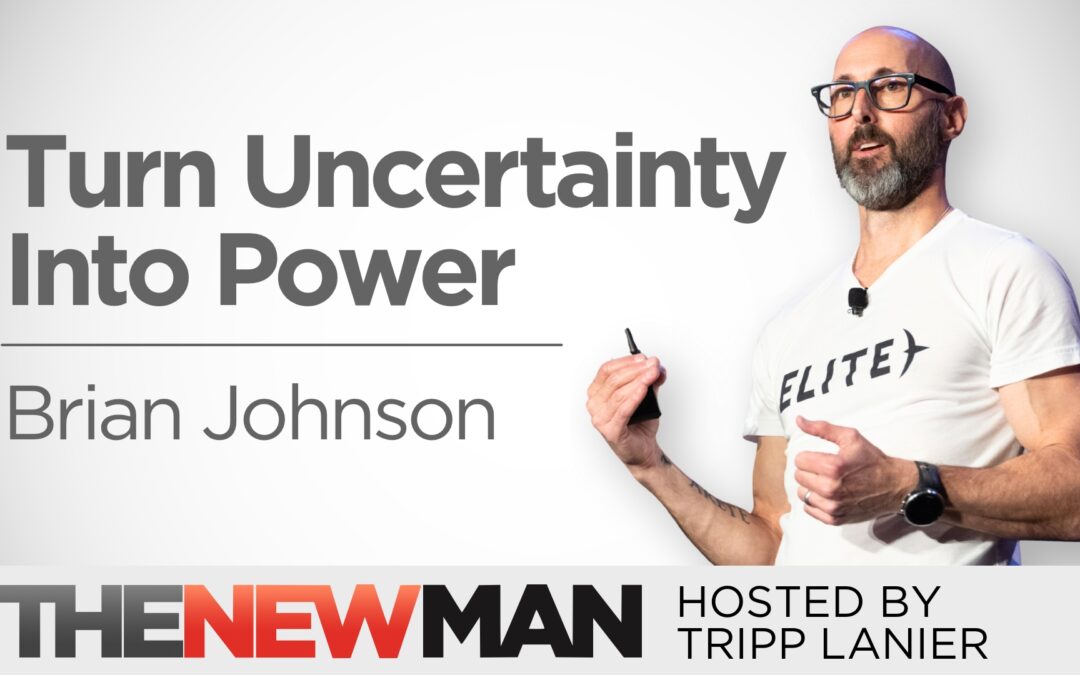
Philosopher and CEO Brian Johnson returns to discuss how we can break free from the forces distorting our thinking and draining our reality. We talk about how to reclaim a sense of control and why now is the perfect time to get out of the shallow end of the pool, tap into your calling, and create a life aligned with meaning.
Click here to learn more about Philosophers Notes.
In this interview:
- Uncertainty, anxiety or opportunity?
- Getting high from drama and bad news
- Being informed vs being poisoned
- Don’t conform yourself to a sick society
- What can we control?
Plus:
- Recognizing what you’re really craving
- Being a protector of your mind and emotions
- Can we use these challenges to grow and become who we are here to become?
- The importance of being connected to Source
About Brian Johnson
Brian Johnson has spent half of the last 25 years as a Founder/CEO and the other half as a philosopher.
He’s studied Socrates in Athens, Jesus in Jerusalem, Marcus Aurelius near the Danube in Hungary, and Rumi in Konya, Turkey—and integrated that ancient wisdom with modern science into a scientifically proven protocol that changes lives.
Brian is featured in the documentary Finding Joe and is the author of Areté: Activate Your Heroic Potential. He has trained elite performers—from 4-Star Generals and Naval Special Warfare commanding officers to Marcus Freeman’s Notre Dame Football Team and Luke Donald’s European Ryder Cup Champions—alongside tens of thousands of everyday Heroes from every country in the world.
Click here to learn more about Philosophers Notes.
Transcript
Finding opportunity in a time of uncertainty
Tripp: Alright. Good to see you, man. So I was sitting this morning. I was waiting on the gal to cut my hair, and I'm reading Jamie Wheal's newsletter. And I love Jamie. He's an interesting guy. But he's also a bit of a "the sky is falling" guy. Today the newsletter I was reading was essentially that we're in the end times, and he goes down the list of why we're in the end times and why X, Y, Z is the Antichrist and all this kind of stuff. And I'm like, I wonder if there's another way to look at our current situation through a different lens, maybe one of opportunity. But the reality is there is a ton of uncertainty, and it is breeding a lot of anxiety. I talk to a lot of people whose sectors and livelihoods are at stake because of AI. People are nervous about how the governments are being run, and wars, and all this kind of stuff. I'm wondering if we can find something useful here in between burying our heads in the sand and avoidance, or going the other way and just being in nihilism and going, "Ah, screw it. Everything's screwed up." So I'm curious if you'd be willing to play in that.
Brian: I always look forward to our conversations. I think the reality we're facing today, culturally and individually, certainly gives us an opportunity to practice our philosophy. Looking at the options between avoidance and nihilism, the question is, how do we use this as fuel? How do we use all these challenges as a catalyst to show up as our best selves? And if this doesn't get us moving, what will? But immediately, I think we have to control the controllables in a world in which so much is uncertain and there's so much chaos. We need that wisdom, the discipline, driven by love, to have the courage to show up and create that freedom, aliveness, love, and peace I see behind you. These are all not easy, but properly framed they become opportunities and catalysts to practice our philosophy, hopefully at that next highest level.
Tripp: I'm curious where this sits for you, because ever since I've known you, you've been leaning into challenge after challenge. Where does the world challenge that we're in right now fit in your seasons of challenge?
Brian: My bigger challenges are personal right now. Just making Heroic work, which we talked about a little bit last week, and finding that integration of what we're offering to the world. So I look at what's happening in the world as, frankly, a signal that I gotta do my job. We are called to hopefully share some wisdom and some embodiment of these ideas, and the worse the world gets, the more I feel called to do my best to serve. That's my frame. And the compassion for all the suffering that exists in the world right now is more profound than ever. I've always been sensitive and attuned to that. And then you know me, dude, where I'm gonna go, which is, all right, how's your eating? How's your moving? How's your sleeping? The most basic fundamentals. It's easy to chuckle at that and say, "Oh, that's not important." But if you're not getting that right, and if you're constantly allowing these inputs in, the science is unequivocal. The more you're consuming this negative information, the more likely it is that you're gonna suffer and have a really difficult time showing up in the world. So it's about finding the systematic things we can do that we have control over. The higher the uncertainty, the greater the need to focus on what is within our control.
Controlling inputs and protecting your consciousness
Tripp: And one of the things within our control is how much of this kind of information we allow to come in. How much of this is actually useful? How much is something I can use in my life to some degree? And how much is just spinning a flywheel that generates greater anxiety? How do you approach that line between being, quote, informed and recognizing when you're just drinking poison?
Brian: There's always a virtuous mean, and we need to find our own expression of that. If anything, I'm gonna have a slight bias toward deficiency. I'm more committed to doing my best to solve the problems than I am to inundating my consciousness in them all day, every day. I can't think. I can't be creative. I can't do the things that I aspire to do when I'm consuming digital news. That isn't even a source of my information. I get The Economist every week. I'm a little behind, but I can keep track of what's going on. And, dude, I don't think we have a shot at showing up as our best if we are constantly exposing ourselves to those inputs. To me, that's the first thing we have to do. It's just not possible. Thich Nhat Hanh says everything that you consume you have to digest. Obviously the food you consume you have to digest, and the same is true in your consciousness. The rate at which we consume such challenging, anxiety-provoking information is very difficult to digest properly.
Tripp: We're not built for it.
Brian: Dude, we're not built for that. The amount of stimulation we have in a single day exceeds what we had a thousand years ago in our entire lifetimes. And I'm not minimizing the challenges. These challenges are real. But then the question is, what do you want? Do you wanna be overwhelmed by that, or do you wanna do something about that? It's that victim to creator to hero frame that we've talked a lot about. So I radically reduce those inputs such that I can do my best to create solutions to the challenges and serve people profoundly. In times like this, I'm more focused on my fundamentals than I've ever been. To me, there's no other logical way to respond to it. The old me would do the opposite, and I think most people are doing the opposite right now. They're allowing the flood of information, which is encroaching on their sleep, on their time with their family, on their ability to create what they want. And then how are you moving? How are you consuming not just the information, but your nutrition? All these things become opportunities, from my vantage point. I'm curious how you're approaching the same thing.
Tripp: For me, it's kind of like, what's, quote unquote, real? And that's a big, dangerous question. But there is a reality that we live in on a day-to-day basis, and if you remove, like you said, the digital inputs, that existence is largely fine. We're coming back to what we can control. And then there's how these distortions of reality distort our own reality in the world that we actually live in. What assholes are doing thousands of miles away is shifting how I experience and live here in my tiny little beach town. So it's about setting up boundaries around how much I let that affect how I perceive my world. I think that's first and foremost really important. And then also recognizing that there probably is a part of me, I think of Eckhart Tolle and the pain body. There's also a book called Existential Kink, which is pretty fascinating, where there are aspects of us that are drawn to that suffering. We need it, we wanna drink that. It's enjoyable to us on some level, on a shadow level. And I have to recognize, do I wanna continue to feed that aspect of me? Because there's a high that we can get from it, this feeling of excitement and danger and whatever, even though the overall effect is dread. Maybe it's more of an emotional intelligence thing, just recognizing, what am I really getting from this? And is this really serving me?
Brian: That's an answerable question. Now, again, we're not saying put your head in the sand and ignore reality. The world is what it is. Find your own calibration, but is it conscious? Is it deliberate, or is it addictive and compulsive? I mentioned to you that Arthur Brooks' new book, The Meaning of Your Life, just came out. I read it in a day yesterday, and it's phenomenal. He talks about the inputs that I just mentioned. There's no debate about the neuroscientific reality of drowning yourself in information. And then he says one of the ways out is to see beauty, just to go to where you were saying. There's moral beauty, and then there's moral depravity. What we're doing is choosing moral depravity almost every moment of every day. And not just the news, even things like crime shows, these murder movies. I look at these movies that are out, and it's like, just step back a foot from that.
Tripp: Well, that's the existential kink. It's like, I've gotta have it.
Brian: Right. Then you have the even more acceptable version, the quote-unquote news that you need to stay up to speed on. But basically, we're obsessed with nonmoral beauty, beauty in nature, beauty in music. Arthur was a professional musician in his past. But rather than looking at moral beauty, at the exemplars who showed up heroically in moments like this, who were their most noble, virtuous selves, why don't we focus on those individuals? Turn off all that stuff. Read some biographies or autobiographies of people who inspire you. Soak your consciousness in what's possible in moments like this. My whole thing is, dude, if you and me and everyone who's taken the time to be with us today isn't among the crowd of people moving from victim to hero, we're in even more trouble. So that's a really important shift. Arthur Brooks says you should be angry about technology and how it has saturated our consciousness, what it's doing to our children, what it's doing to ourselves. And step out of that, Ralph Waldo Emerson style, and trust yourself. Don't conform to a profoundly sick society. Krishnamurti said it's no measure of health to be well adjusted to a profoundly sick society. So I think it just takes that courage, the wisdom, the discipline, the love, to step back just half an inch. All these things are pretty obvious when we slow down, but I think we get in that spin cycle, and we get overwhelmed and uncentered. Then find that freedom. Find that aliveness. Find that love. Find that peace by stepping out. And again, practice your philosophy, whatever it is for you right now. We need you to do that more than ever.
Tripp: For me, it's a lot like food. You were talking about the fundamentals earlier. Well, this is food too. What am I ingesting? What am I digesting? There are certain things that I eat where it's like, that was fun for a minute, and now I feel like crap. I wanna take a nap, or I've got some other issue where my skin breaks out or whatever. It's recognizing that it's all of it. It's not just the high, there's a sickness that comes along with it, and it's like, okay, I have a choice here. I have a choice whether I take this on or not.
Brian: Let's go back to Tolle for a second, because he actually says something beautiful about that. He says at some point we need to move beyond acceptance. If you're eating food that doesn't work for you, that kind of poisons you, you stop eating it. Same thing with the thoughts you allow, the inputs you allow, the behaviors you engage in. At some level, we need to move beyond just acceptance and say, look, if I want to feel differently, then I've got to do different things. So ultimately the question is, what do you want? If you want to feel the way that you're feeling, keep on doing the things that you're doing. If you want to shift that and start feeling more of however you define your aliveness, then what might you be able to do to experience more of that? To me, this isn't ultimately that complicated. The challenge is you gotta step out just that half an inch to see that now's the time to take back some more of that. Again, it's your freedom, dude. Stimulus, response, and choose a better response.
Anger, emotion, and the call to be a hero
Tripp: You mentioned anger a little bit ago. I think anger can be very healthy, especially when we understand that it's often rooted in deep concern, deep care. If I really care about something, then I'm gonna protect it. I'm gonna be fierce around it. And I think that's the message here: I've gotta protect my state of mind. I've gotta protect my nervous system. I've got to protect whatever junk is coming into my brain and having me distort my own reality. So if I'm angry, maybe it isn't to lash out and do stuff that doesn't really matter, but to turn it and say, it's up to me to protect myself here and to honor myself. I love that word, honor. The fundamentals that you preach over and over again are really about what I do to honor myself because I value myself. And part of that value is carrying a big freaking sword.
Brian: You've heard me say it before, but the word hero means protector. So the shift from victim to creator to hero is about protecting. Protect your consciousness. Protect your family's consciousness. Protect your community. Protect the values that you cherish. These are the moments that heroes are destined to become that which they're capable of being. Abraham Lincoln isn't Abraham Lincoln without the Civil War. We can use these challenges to become that which we're destined to be, but we have to step up, and we have to start by protecting our consciousness and doing all the things that you just rattled off, right now. It literally is the call that the hero must respond to. Nothing happens until the hero, which is each of us, responds to the call to adventure. And then to go to your anger, a guy named Angus Fletcher wrote a book called Primal Intelligence, and he talks about the importance of your emotions. Anger, fear, they're just signals that something's off. And stress goes with meaning. You care. Okay, well, then what are you gonna do about it? Quit pulling back and avoiding. Step back, look at it, and say, you know what, this isn't right for me, for my family, for the society. What am I gonna do about it? But on the mundane level, we don't need to do anything heroic in the sense of now all of a sudden you're the famous person doing this. To me, it's heroic the moment we make that decision to live with integrity, to close the gap just a little bit more, a few more moments today, a few more moments tomorrow. That's how change occurs, and we get out of the overwhelm to a place of more equanimity.
Tripp: I'm glad you brought up emotional power, because I work with a lot of leaders in high-power positions, and they don't typically fail or have things fall apart because they lack the knowledge or the strategy. That stuff's ubiquitous these days. What they lack is an internal guidance system, or the ability to read the room, to connect with people. They lack that deep intelligence and also that deep power, and they're essentially a V8 engine running on four cylinders instead of eight. So I love bringing this curiosity into, what's the information your body's giving you? It doesn't mean it has to take over or hijack you, but it is vast amounts of information. If we learn to pay attention to it, we can tap into it and maybe find the direction that we're truly seeking. A lot of us are stuck in our heads: what should I do here? This book says this and that book says that, and that guy says this. But it's like, what is it that I'm really called to do? Then we can find our own way. I love that part of the work, really answering the calling question, but it's an internal one. It's not outside of us. So I love this call to get more into our emotional selves and make friends with it, not to abandon our heads or our thinking, but to bring that power on board. What are your thoughts on that?
Brian: A hundred percent. You said it beautifully. And then I just go back to what we were talking about with the inputs. If your entire consciousness is focused on all the things going on out here, there's no room to process that. Often it's the internal pain we're experiencing, where things just aren't working in our lives the way we want, whether it's our health or relationships or our work, that leads us to wanna numb ourselves with all the stuff that's going on out here. Then that's all we're talking about, and there's no space left for true creative insights for how we're gonna show up and address whatever pain may be present in our own lives.
Going deeper, getting the foundation right, and the power of community
Tripp: To me, this now dovetails into our tendency to hide out, to numb, as you said, when really this is an opportunity to go deep. What is it that I really stand for? What really moves me? What wants to come through me? What makes me unique, rather than what do I need to do to fit in? All the people that you were talking about, the examples we could look toward to lift us up, were willing to listen to this aspect of themselves and willing to stand out in that regard. I'm always beating the drum of, who is it really in you? I don't give a shit about who you think you should be. I'm more interested in who you genuinely are and drawing that out. I think now's the most amazing time to tap into that, when in actuality everything's getting ready to be flattened out, and we won't be able to tell the difference between so many others.
Brian: Preach it. And for me, it's like, dude, okay, cool. Let's be a good animal first. You wanna be a good spiritual being? Perfect. Be a good animal. We gotta eat. We gotta move. We gotta sleep. We gotta breathe. We gotta focus our minds. Get that part right, because that's a lot easier to get right than the complex "Oh my God, who am I? What do I wanna do?" Those are obviously such important things, but let's get that foundation built. And then we do the hard work that allows us to ask that question: what do I want? That's the question I always ask. Targeted thinking. What do you want? The patron god of philosophy in the ancient world was an archer. Take clear aim. You can't hit a target you haven't taken the time to get clarity on. Then set the small goals right now, if it's getting in the best shape of your life. And again, control the controllables. Find the little things you can do that will set up the next proxy goal so you can knock down the next bigger domino and all that good stuff.
Tripp: Let's talk about something we've already hinted at, but I wanna underline it. There's the information we're taking in, but there's also who we are surrounding ourselves with. What's the community? That can be who's influencing us, the minds we're reading about from the past, who become part of our lives in that regard. But isolation is the killer, and it's easy for me to get isolated in the work that I do, even though I talk to people. Actually having colleagues, people who challenge the way I think, is so rich and so needed, and it's so common, especially with men, that we get more and more isolated. What that does is lower the center of gravity in our thinking and what's possible. And if you think about what's right there in our pocket, that'll drag us all the way down if that becomes our center of gravity and our sense of community. You've been able to build amazing communities of people, and I'd love to hear more about going from isolation into really surrounding yourself with amazing people who lift you up and challenge you to be a better version of you.
Brian: Well, you know me, dude. There's the community we're striving to create, both online and virtually. And then, to go Jim Rohn on it, Tony's mentor, you're gonna be the average of the five people you spend the most time with. But I've always framed that up as a bit of a hermit. Can I connect to whatever higher power you may or may not believe in, whatever is beating our hearts right now and keeping the planets in line? Spending time with that ultimate creator, however you define it, is the ultimate averaging up. Then for me, it's feeling blessed to be in conversation with you, or I read books. One of my core spiritual practices is that I literally feel like I'm hanging out with an incredibly wise human being and tapping into their wisdom, which I feel really levels me up. And then we already talked about the reduction of inputs and the enculturation from all the news coming at us and the things we choose to consume. Then, of course, finding those people who light you up, who, after interacting with them, whether virtually via podcast or in person, leave you with that deep, meaningful positivity resonance that just changes everything. That's extraordinarily powerful. So do that inventory across the board. The exciting thing is that it's a little more work, or a lot more work, than you may want to do, but it's not as much as you think you need to do. There are a few key decisions that can free up so much energy. If we find ourselves addicted to the compulsive consumption of this stuff, okay, we've got to do the work that's unpleasant for X days, but it isn't that hard. You're not that far away from significantly unlocking an energy boost by getting rid of the kryptonite. Superman can have all the power he wants, you put kryptonite in front of him, and all that power is gone. So remove the kryptonite, find those sources of inspiration via connections with people, authors, whatever it is for you. And then your higher self, dude, showing up as your best more and more consistently.
Tripp: I love that you went real big picture, because in my experience, that hunger, that emptiness, that thing around just trying to fill it up, that hungry ghost kind of thing, isn't wanting the next thing on the other side of the buy-now button or the play button or whatever drama might be in the news that day. I've recognized it to be like, I wanna connect with source, and this is a proxy. It's a hit. It's a substitute, but it never feeds me. What does feed me is when I connect to source, through whatever practices, but also through other people, genuine conversation, genuine interactions where we really see each other, we really love each other. And the feeling of that is satiating. I'm actually receiving here. My nervous system is receiving. My heart is receiving. And I noticed that it completely shifts how I see and experience the world on the other side. If we've never had that, if we prefer to stay in isolation, we could think we're just gonna get it from more and more clicking. But for me, my nudge to the listener is to come back and look for that depth, look for the thing that really feels satiating. It lives in the land of discomfort. It lives in the land of uncertainty and risk. It lives in the land of vulnerability. So it's not gonna be in that safety place where you're sitting on your couch scrolling. You've gotta get out there and put yourself in situations to really get the good stuff.
Meaning: coherence, purpose, and significance
Brian: A hundred percent. And this is the theme of Arthur Brooks' new book, The Meaning of Your Life. He defines meaning, and I think it's what people are seeking. There are many different pathways through which we can get it. He doesn't use the word kryptonite, but the number one way to make sure you don't get the meaning you want is to… Connection to source, connection to others, connection to yourself, that's meaningful. You will never, ever, ever get that compulsively scrolling. In fact, it will take you as far away from that as you can possibly get, because you know you shouldn't be doing that. You know it isn't the time to go doomscroll some more. It isn't the time to go watch some more TikTok videos when you could be hanging out with your kids or reading that biography. You know all these things. So his thing is meaning, and the science says there are three components to it: coherence, purpose, and significance. Significance is more the relationship side, knowing that you mean something to the people around you, and there's a connection like the one you're describing. First, you need a coherent narrative. You need a story of your life: all the things that happened, where you are, where you're headed. In a world like this, you're constantly in your left brain, saying, "This is my life." You need to get out of that. Life is complex, not complicated. We spend all of our time in the left brain analyzing things, looking at news, looking at all this stuff. Get out of it. Go for a walk in nature. Turn off your phone. Connect with a loved one. Do anything but that all day. And then create a coherent narrative for your life where you integrate all the challenges and have a vision. Purpose is, who are you? What are you here to do? What matters for you? Set some simple goals. It could be running a marathon or a half marathon or a 5K or whatever it is for you. Set a goal that gives you attention focused on something important. And of course, stack that up into following your calling, as you said. It's the word he uses over and over again: we're all called to do something. That's a deep source of meaning. And then there's significance, creating those relationships with shared meaning. You mean something to me, I connect with you, and we don't connect often enough, but when we do there's a level of, oh, okay, cool. Soul to soul, I feel connected to my best self and expression with you. I get so much out of our interactions, and I hope you get some inspiration. That triad leads to deeper meaning, and I would offer that's the thing people crave, and the thing that's missing in our society that's leading to the anxiety, the depression, and all the other elements that we wanna move beyond.
Tripp: I love that. If you can recognize what the craving is and what's really underneath it. Many years ago, I worked with a nutritionist, and I was a sugar fiend. Fuck, I love sugar. But…
Brian: While you're watching the car chases, I got you, dude. Let's go.
Tripp: Dude, I wanna turn you on to some car chases. It's really good. It blows F1 out of the water. No comparison. But what she was telling me, I was like, I've got all these sugar cravings, how do I make them go away? The more I fight them, the worse they get. And she was like, your body says it wants sugar, but it's really wanting protein. When I learned to decode that, to flip that code, I didn't have the cravings issue. There's a similar thing here, which is, I'm looking for that dopa hit. I'm looking for that thing even if it's gonna scare me and make me feel like the world's falling apart. But I'm really wanting that deeper connection. I'm really wanting something that taps into the sense of source or love or the meaning that we're talking about. If we could flip that and develop a skill and an ecosystem in our life where that's available to us, then the rest of the stuff, I believe, starts to take care of itself.
Brian: A hundred percent.
Tripp: But we've got to recognize that the thing we're trying to turn down is gonna always be loud unless we start to put the real, satisfying, nutritious stuff in.
Brian: A hundred percent. And it's funny, because Arthur, going back to him one more time, uses the metaphor of macronutrients. Literally the same thing. So your nutritionist did what he would say, oh, you just need more protein. Absolutely. And by the way, if people aren't eating well, they need more protein almost certainly. And then you need to train a little bit more. You need to make sure you're getting the seven or eight hours of sleep, because there's no way you're gonna be able to deal with your compulsions unless those three things are pretty well lined up. But I think that's exactly right. The sugar is a very poor substitute for the deep protein you need to actually sustain your well-being physically. Same exact thing. It's almost perfectly analogous. We know these things, and then it's just having that wisdom and discipline. And again, the hero's secret weapon, the protector's secret weapon, is love. Do it for something bigger than yourself. Think about the people in your life, that you want to be a better husband or father or mother or daughter or whatever it is. Be that best version of yourself. Choose to make these small little decisions that, when aggregated and compounded over a certain period of time, are gonna lead to the transformation that you're craving.
Simplifying: the one thing to start and the one thing to stop
Tripp: Beautiful. And I just wanna acknowledge, we've talked about a lot of stuff in a relatively short period of time, and it could be overwhelming. So let's underline it: let's baby-step this, not overwhelm ourselves, come back to the fundamentals, and then build and stack things on in a smart way, rather than "Okay, I'm gonna make all of this click within a few days." I've watched people give themselves existential hernias trying to implement all this stuff. Then they fall into that nihilism: "Well, I tried it and it didn't work out." It's like, no, this is a lifelong path, and let's bring some acceptance and forgiveness and love into this, and play. That would be my thing: let's play with these ideas and bring them into our lives.
Brian: And, dude, just to go practical on it, knowing that we just did a lot, a fire hydrant of "okay, this idea, that idea." There are certain things you do when you're at your best, and certain things you don't do when you're at your best. One of the metaphors I use in times like this is that you spin yourself around and get all dizzy. There are two things you can do. You can actually do the exercise and feel it, if you can do it safely. Get yourself dizzy, and if you look around the room at the end of it, you're gonna get more dizzy. But if after spinning yourself around you just stare at your fingertips, you regain your equanimity and your equilibrium almost instantly. It's astonishing. So in moments like this, when we feel a little bit spun around, I like to encourage people to think about who they were at their best. What were you doing? What were you not doing? Just make a quick, simple inventory. One or two or three things. You can even bypass that and simply ask yourself, what's the one thing I know I could start doing that would most change my life? I don't know how many of these conversations we've had. I've probably said this in most of them. But it's an earnest question that simplifies the battlefield. As Mark Divine would say, in the fog of war, simplify the battlefield and have a front-sight focus. One thing. So what's one thing you know you could start doing that would most change your life? And even more importantly, what's one thing you need to stop doing? Get rid of the kryptonite. That's paradoxically the fastest way to regain your equilibrium such that you can show up. And then, to your point, just systematically repeat that exercise. I've asked myself that question thousands of times. Anytime I'm wobbly, which is often, and I wanna reassess and reassert that equanimity, I ask myself the question, or when I just wanna go next level: what is it that I really need to consider doing, stopping doing? But I love your focal point of, let's simplify this thing. If there's any practical utility to this conversation, I hope that can offer some simple guidance.
Philosopher's Notes and following your calling
Tripp: Yeah. Beautiful. Alright, let's talk about Philosopher's Notes, because I wanna go back. I don't know how many gazillion years ago it was, but I think it was the first time I had you on The New Man, and you had moved to Bali with a trunk of books and you were gonna do the outlandish, crazy thing of reading a hundred books and doing notes on a hundred books. I remember just thinking, whoa, man. A hundred books. Holy crap. And where are we now? What number are we at now?
Brian: Dude, 750. Let's go. Time flies. We're talking about the gray whiskers that have evolved since then.
Tripp: At what point do we have an intervention, though? Is there an aspect to it where it's like, hey, let's put down the book, Brian?
Brian: It's funny, because that's actually been part of my challenge. Part of my challenge has been owning that for whatever reason, dude, that's my calling. I just love it, man. It was 06/08/2001. I read a book called How to Think Like Leonardo da Vinci, and he has an exercise: how do you get paid to do what you love to do? He has you contemplate it. I can vividly see it, I wish I kept it. I wrote it down on a journal page, ripped it out, put a hole in it, put dental floss through it, put it on the showerhead, and took a bath. TMI. Took a bath and just stared at it.
Tripp: How can
Brian: I get paid to do what I love to do? Twenty-five years ago. And the answer was, I wanna get paid to become a better version of myself, to optimize my life, and to help other people do it. Then that evolved, as we've discussed, where I had this epiphanal moment: people are doing business book summaries. I'm on a flight from Tokyo to LA, opened the SkyMall back in the day to a two-page ad for that. And I said, you know what, I'll be the guy that does that for self-development books. A hundred books later. But, dude, reading a book for me is an intimate spiritual act. Joseph Campbell was asked by Alan Watts, hey, what's your spiritual practice? And he said, I underline books. Goosebumps. Dude, for whatever reason, my happy place is…
Tripp: As you're doing.
Brian: I read a hundred books in a hundred days last year. I'm like, yeah, this is great. It's an intimate conversation. You enjoy more of the interview and the conversation like that, for me.
Tripp: I like the creativity. I like the process that they're making.
Brian: And you love being interpersonal. I can be extroverted and all that stuff, and we're all a little bit of everything. But for me, reading a book is like hanging out with someone who might be two thousand years dead, but it's a sacred thing. For whatever reason, I've been told I have a gift for taking those big, life-changing ideas out of a book that someone might have been too busy to read. When I'm writing my notes, I feel like I'm hanging out with one person. I hope that this idea that transformed my life enough to pull it out of the book, I can share it with them in a fun, practical, quick way, knowing they're busy and they may or may not read the book. So it's become a spiritual act for me. My biggest challenge has been that story that I should be doing something else, that I should be doing this or doing that. For me, there's a humility to coming home and realizing that for whatever reason, man, it gives me so much joy to be able to do what I just described. And I'm so hungry right now to get to a thousand. I'm like, dude, if I'm lucky enough to do one a week for the next thirty years, can I get to 2,500? It feels like a sacred opportunity. And then there's the other stuff I do with the Plus Ones and one-on-ones, but those notes are hard to put into words, man. I fall in love with them the more I play with all these different ideas.
Tripp: I think it's inspiring, because I come from a creative background, and genuinely creative people are gonna create regardless. I hear people say, oh, AI is ruining music and all this kind of stuff. And I'm like, no, it's not. I could pick up my guitar and go lose myself for several hours and write a song. It's the process. Something happens when we get into this process. Something shifts within us and we find more of ourselves, and something comes out of it that wasn't there before. It's beautiful. And the idea of taking that away from somebody is insane. Why would you take that away from someone when it's such a part of them to do this thing? So, yeah, of course, there's no way I would try to take that away or discourage you from that. It is your thing. And even if the world went the other way, you're still going to do this.
Brian: My little passionate thing was in response to the intervention, but I think that's right. And I think it's the craft. The tagline we have now for Philosopher's Notes, because when I created it, it was 2008, is "more wisdom in less time," the big ideas from these great books, but handcrafted since 2008. So, yeah, you can get a two-second summary, which is frankly a great overview of the main ideas of a book. ChatGPT can do it. Blinkist can do it. There's a bunch of people doing the AI or ghostwritten kind of summary. But meaning, and we were talking about AI and what AI can and cannot do. Meaning: do you wanna create a good, noble life? In my context, it's the ideas from the best books on ancient wisdom and modern science. There's a level of what we were talking about, dude, of communion and connection soul to soul. That is what I think people are hungry for more than ever before. And that's what I'm now more committed to giving via this context I've chosen as one of my art forms.
Tripp: Well, you also weave a tapestry. This is one of the reasons why I love reading your notes: I feel smarter. You don't just give me a summary. You give me a sense of where this book fits in with all these other books in a domain. Very Ken Wilber. I got into this world largely because of Ken Wilber, and reading Ken always made me feel smarter. I was just like, oh, this is how all these things weave together, rather than "there's one building, and that's the only building, and that's it," kind of academic style. So that's one of the things I really love. You tie it together: "Hey, this is where it relates, where this person said it. Here's where this wise Stoic legend said this," and it ties it all together. There's something about that, call it wholeness. It's defragmenting the world and weaving it together. I freaking love that. Maybe it's my Enneagram Nine of unity. Like, yes, these ideas do fit together, and they weave into one another, and there's a harmony there. That's what I get from your work that I don't get from anything else.
Brian: Oh, dude, I appreciate that. And we met through Ken, of course. It was the integral movement. Ken is one of my heroes, intellectually and just in how he… The word is integration. It's the integral perspective of how you integrate all these ideas. And for me, it's been ancient wisdom, modern science, and then practical tools. How do you take this out of the abstract? How do you take what could be complex, Aristotle's ideas on ethics and the Stoic ideals, and make it real in your twenty-first-century life, while showing that, dude, nope, I have not had an original thought. Maybe I've integrated things in an interesting way here and there, but these ideas have been talked about across all wisdom and faith traditions, across all cultures, across all time, with slightly different takes, of course. And then modern science has affirmed all these different self-help perspectives. But anyway, I appreciate you reflecting that back. That's obviously my joy: no, no, no, this is how this person said the same thing. And in my mind, most importantly, this is how you can apply it to your life today, trying to help the individual move from theory to practice. Can I light a little spark right now, today, to get you to take a little bit more action? And if we can do that just a little bit more consistently, just give us enough time, we'll literally, fundamentally, and permanently change your life. That is why I do what I do, and why this has become a recentralized component of how we're striving to serve.
Where to find Brian's work, and wrapping up
Tripp: Beautiful, man. And if someone's listening to this and they wanna check out Philosopher's Notes, where do they go?
Brian: philosophersnotes.com/thenewman is a great home for them. I know we have you to thank for inviting them over to us, but philosophersnotes.com.
Tripp: There's an essential thing that you bring, and it's exciting, and it's a gift. It really is a gift. And the fact that you do it because you actually love it and it's not just a grind for you, there is a love in it. You love freaking big ideas, man. It's like, here, check this one out. Check this one out. And there's something infectious about that.
Brian: I appreciate that. And the irony here is that I've gone away from it. It's almost like it's too easy, you know what I mean? But, oh, shoot, to come back to it and practice my own philosophy, this is what I teach: what are you here to do? And then go do it. But I also love great thinkers and great books. I'm holding up a note on one of my favorites, This Book Will Make You Dangerous: The Irreverent Guide for Men Who Refuse to Settle. So we gotta make sure we give this one away.
Tripp: I've heard of this guy. Something cool about him.
Brian: He's good, dude. Yeah, man.
Tripp: My daughter quoted my book to my wife the other day. She said something, and Alyson was like, what is that from? And she's like, that's Daddy's book.
Brian: Dude, I'm looking at it right now. I connected you to Phil Stutz, with whom we both work. And he has a great testimonial for you. Tal Ben-Shahar, who taught the largest class in Harvard's history, on positive psychology. Goosebumps on your point on gratitude, that's a big idea. Well, actually, it was on your freedom, aliveness, love, and peace. I appreciate your kind words. I appreciate your support, and I appreciate how many chats we've had, man. Was it really Bali that we did our first one?
Tripp: I think it was the first time we did a podcast. Yeah. And I remember the rain. I think you were on a balcony or something, and I could hear the rain in the background. And I was like, okay, cool.
Brian: Dude, that was like sixteen years ago, I would guess. Unavoidable.
Tripp: It makes sense.
Brian: Time flies when having fun with friends.
Tripp: Keep having fun, dude. That's what it's about. Keep giving your gifts and keep having fun. Beautiful, man. This was so much fun. Glad we reconnected.
Brian: Likewise, man. Appreciate you having me on, and sending so much love to you and the fam.
Tripp: Absolutely. You too, brother.