
Podcast: Download
Subscribe: RSS
Why a Sense of Humor Makes You Stronger — Alyson and Tripp Lanier
Can you laugh at your embarrassing moments?
What’s the hidden cost of taking yourself too seriously?
And can a bit of playfulness make us better at what we do?
Whether it’s urinating yourself in public, surviving horrendous gas during a date, or just having spinach in your teeth during a zoom call, today Alyson and I share some true, embarrassing stories. We explore the importance of laughing at ourselves, how humor is a love language, and why our sense of humor tells us how tough we really are.
In this conversation:
- From embarrassment to shame
- When humor builds connection — and when it weaponizes
- Gallows humor and why we need it
- Using humor to avoid what we’re actually feeling
- What kills our ability to laugh at ourselves?
Plus:
- Laughing at our patterns instead of being trapped by them
- Why losing your sense of humor is a warning sign
- How a sense of humor makes you tougher
- Humor, play, and why they’re a love language
- What does humor have to do with self-acceptance?
About Tripp Lanier
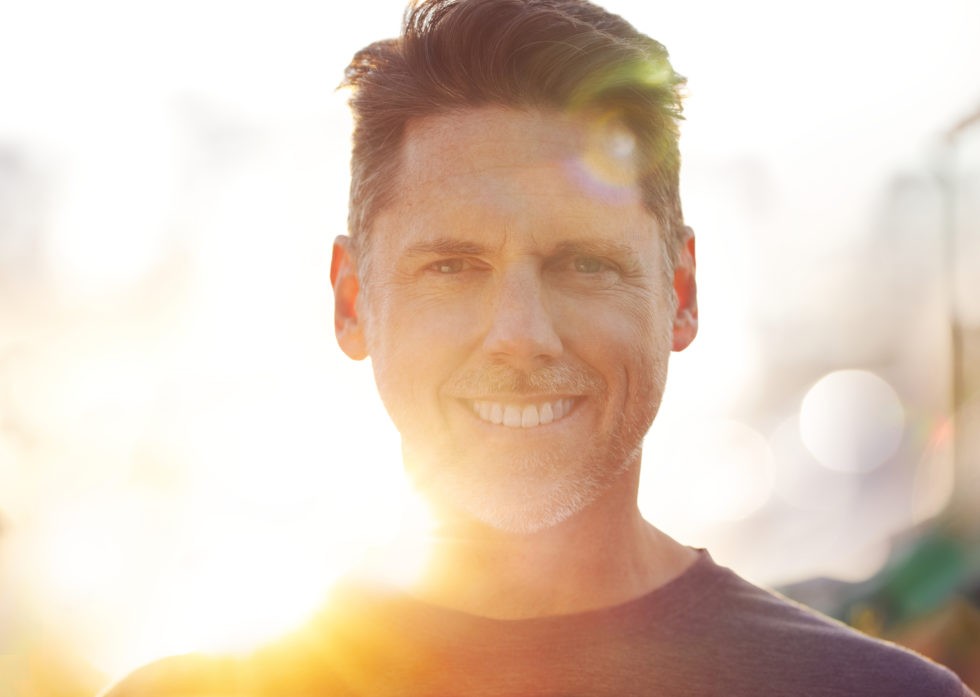
Tripp Lanier is a professional coach, author of This Book Will Make You Dangerous, and host of The New Man Podcast: Beyond the Macho Jerk and the New Age Wimp which — for over a decade — has been downloaded millions of times.
Since 2005, he has spent thousands of hours coaching people all around the world to get out of the rat race, become an authority in their field, and make a great living doing the work they were put on this earth to do. Over the years he’s designed several businesses to support a simple lifestyle focused on freedom, ease, meaning, and fun.
If you’d like to learn more about coaching with Tripp Lanier visit TrippLanier.com.
About Alyson Lanier

Alyson Lanier is a multifaceted expert at the intersection of psychological and spiritual healing. With a 30 year career in Psychotherapy that includes a BA, MA, and LPC in psychology, Alyson supplemented her education with extensive training and certifications in attachment work, Gestalt therapy, Transpersonal psychology, Shambhala Buddhism, internal family systems, and Psychedelic assisted psychotherapy. Her professional journey encompasses over 50,000 hours of therapeutic experience working with individuals, couples, families, children, and adolescents across clinical and private settings.
If you’d like to learn more about working with Alyson Lanier visit AlysonLanier.com
Transcript
Where the topic came from
Alyson: Our daughter came up with this topic.
Tripp: Yeah. What did she come up with?
Alyson: You asked her, "What should we talk about on the podcast?" And she said, "I want you to tell embarrassing stories because they're funny."
Tripp: I think she just wants me to be embarrassed.
Alyson: She laughs so hard when you tell embarrassing stories.
Tripp: What about you? Let's talk about your embarrassing stories.
Alyson: I don't have any. But I do think it's a great idea to talk about it. What that did is it became a really cool trailhead for us on, like, what is it about embarrassment?
Tripp: There's low levels of embarrassment, and then they kinda get into deeper territory where it's just like, oh my gosh, real guilt, real shame, like, I'm terrible.
Alyson: Right. Think of it like a spectrum.
Tripp: Yeah. Go ahead and share something embarrassing about you.
Alyson: Well, the embarrassing story that I thought of… I don't know. How do you judge if it's good or not?
Tripp: I can judge.
Alyson: This is a simple one. I really wish I could shout out the name of who this was with, who I had a call with, because I know they listen to the podcast and they enjoy us.
Tripp: But you embarrassed yourself with a client?
Alyson: Yes. A client. I can't say their name. And that's not saying their name. I just embarrassed myself again.
Tripp: There you go.
Alyson: You don't even have to try. I had a call with him for an hour and a half. And right before the call, I'd had a salad for lunch. And I did not look in the mirror. I thought I'd rinsed my mouth with water before I got on the call, but apparently it didn't get the big piece of spinach that was in my front tooth. So the entire hour and a half, I didn't realize. I got off the call and went to pee and just happened to look up in the mirror, and there's the spinach in my tooth.
Tripp: That's embarrassing.
Alyson: That was pretty embarrassing because it was like…
Tripp: Dude, that is nothing.
Alyson: It's nothing.
Tripp: That's nothing.
Alyson: I said it's a little one. You're disappointed. Alright. Well, give me one of your embarrassing stories.
The doctor's office
Tripp: So there's a story in my book. I lead off the book with going to the doctor because I was having some pain, and we couldn't figure out what was going on. But it was in the genital area. In that stuff. In order to get that appointment with that specialist, I had to go to our other doctor. I won't name her name.
Alyson: Your primary.
Tripp: A primary doctor who you know.
Alyson: On a personal level. I went to middle school with her.
Tripp: She's super cool.
Alyson: She's cool.
Tripp: But I go to her, and I'm like, "Hey, I'm having this pain." And she's like, "Alright. Take off your clothes, and I'll come back in here with a witness, another woman, and I'm gonna examine you." And I'm like, oh, fuck. Really? This is what's gonna happen?
Alyson: You get two women.
Tripp: You get two women.
Alyson: You got a threesome.
Tripp: This is something that…
Alyson: You were naked with two other women in a room.
Tripp: Think about embarrassment. It's actually somebody else's fantasy. Right? So anyway, I'm wearing the apron. She comes back in, and I have completely shriveled up in terror.
Alyson: Well, they also keep those rooms really cold.
Tripp: I loved that we could just use that as an excuse for what was going on. That was me. But I was like, man, at least give me this. Come on. Come on, man.
Alyson: Like talking to your boy?
Tripp: I'm feeling a little embarrassed now. Go ahead. Get it out. Come on, girl.
Alyson: Alright. Alright.
Tripp: Are we good? Do we keep going?
Alyson: All of it is making you laugh. I love making you laugh. Anyway.
Tripp: So she does the examination. There's this older woman sitting over there just judging. Right?
Alyson: Like, visibly judging?
Tripp: Not saying anything, just over there judging. And meanwhile, the doctor's asking me question this, question that. And then she's like, "Are you sexually active?" And I was like, "Well, yeah. Only with my wife." And I look over at the other woman, and she's like, "Oh, you cheating motherfucker." And the doctor's like, "No. Are you sexually active? Is it painful when you're sexually active?" And I was like, fuck. I basically just made it look like I'm cheating.
Alyson: She knows you.
Tripp: She knows you, and now she thinks I'm cheating on you and I got some venereal disease.
Alyson: You just went there. Snowballed.
Tripp: I just started to crawl out of that room. I was like, oh god. Yeah, he's definitely cheating on her.
Alyson: That's much better than my story.
Tripp: I hadn't seen her in years. And I recently went and saw her, and I was like, "Hey, how's it going? I'm not cheating on my wife. Still." Which is what innocent people say.
Alyson: Oh, that's funny. That's so great.
Altitude and gas
Tripp: Do you remember the first weekend we spent together and you were farting? A lot.
Alyson: You're gonna say I was farting a lot? Is that when you were in the Zendo, or whatever he called it? The little…
Tripp: And you were gassy.
Alyson: No. You were gassy.
Tripp: Me. I knew one of us was gassy.
Alyson: So, Florida boy, sea level boy, comes to Colorado, and we had spent… We didn't sleep together or anything, but was that the second or third night we were together?
Tripp: We were hanging out.
Alyson: We were just hanging out. It must have been within the first twenty-four or forty-eight hours, because that's usually when the body has such a big response to altitude. So you would step out. There wasn't a bathroom in there, so maybe you said you had to go to the bathroom.
Tripp: And you drank a lot of water. Go look at the stars.
Alyson: You'd step out often, and then you told me later that…
Tripp: You couldn't hear it?
Alyson: No. I couldn't hear anything.
Tripp: I thought, man… I was just unleashing hell.
Alyson: Were they, like, little farts, or was it…
Tripp: Oh, no. It's just these long, just horrendous…
Alyson: Were you feeling relief when you got to fart?
Tripp: Yeah. But it was just like, oh my god. What did I do to deserve this? It was so painful.
Alyson: It really is, going to altitude like that.
Tripp: The stuff that was coming out of me was awful.
Alyson: Really funny. Anyway, I can't think of stories that good. Those are good stories.
The water gun at the mall
Tripp: The story that Bea wanted me to tell, because I think this is probably most relatable to her, was that I was in college, and I had a crush on this girl. I'd been trying to find her. I knew she worked at a certain store.
Alyson: In town?
Tripp: In the mall.
Alyson: Okay.
Tripp: And I would just go to the mall and walk around the store and see if I could see her and maybe talk to her. And it never happened. I could never find her. So fast forward a few months, and me and some buddies went to the mall. We might have had a few drinks, and then we went to the mall. It's during the day. And we bought some water guns, and we had a water gun fight in the mall.
Alyson: In the mall. Awesome.
Tripp: And I'm running around the mall, and we happen to go in the store. And in the back of my mind, she's not there because she's never there. And I'm looking for the water fountain near the back where the bathrooms are, to fill up my gat and reload.
Alyson: They had a water fountain in the store?
Tripp: In the back. It's a big department store. You go to the back of the department store. And I'm like, oh, I found a place to reload, and they don't know where this is, and I've got the advantage.
Alyson: That's a good idea.
Tripp: So I load this thing up, this cheap little plastic thing.
Alyson: Plastic gun.
Tripp: And I run out, and I turn around and there she is. And I'm like, oh, shit. And I want her to see me with the water pistol, so I put it in the front of my pants. And I'm like, "Hey, how's it going?" I'm trying to act super cool. "Hey, what's going on?" Meanwhile, this thing just starts leaking down the front of me. It looks like I'm actively pissing myself while I'm talking to her.
Alyson: No. I haven't heard this.
Tripp: And she has zero interest in me. I had already asked her out and she'd blown me off, and I was like, I'm gonna stay on this one. This one needs a little work. And she's just like, "Hey, how's it going?" And I was like, "Hey, what's going on? I'm totally not having a water pistol fight with my friends in the mall." And we're talking. And she looks down and sees me pissing myself, and I'm just like, alright.
Alyson: Right by the bathrooms, no less.
Tripp: It's good to see you.
Alyson: I was like, fuck.
Tripp: She tells that story. She's like, "I talked to a guy who was so nervous talking to me, he pissed himself." So that's her version.
Alyson: Oh, that's so great. I don't think I've ever heard that story before.
Tripp: Really? I love this about you, that you don't remember things like this. I can make you laugh over and over again.
Alyson: It's really enjoyable right now at this point in my life.
Humor, resilience, and shame
Tripp: Alright. Well, you wanted to bring this up because we were talking about our ability to be resilient and our ability to laugh at ourselves. I think it points to real strength. And if you can't laugh at yourself, that makes you really fragile.
Alyson: Right.
Tripp: And makes me better than you. I think that's where we were going.
Alyson: I can't laugh at myself.
Tripp: I think that's it for today.
Alyson: You don't think I can laugh at myself? I just think the things that I laugh at myself about are not as funny to other people.
Tripp: I think you have to do dumb shit like I do.
Alyson: Yes. But coming back to what you were saying, to me there's a thread here. From embarrassment to shame, that's the spectrum. And then how we invite humor in… Humor, to me, no matter which way you cut it, it's about resilience. One of the reasons I lit up at this conversation is that when we have embarrassment about a thing… I watch this with our daughter. I watch it with people in the world, friends. When we have shame about a thing, we tend to wanna wall off or retreat, because we don't know if it's okay to be that way. We don't get a sense that we'll still feel accepted or loved. So the natural adaptation is to hide. But what that does is create distance. And the thing I've always adored about you is that you are so resilient in lots of ways, and you use humor. You're willing to stay connected through the thing that might feel embarrassing. You end up making it funny. Even just telling a story, you're able to laugh.
Tripp: It's not funny at the time.
Alyson: At the time.
Tripp: It was not funny when I was in the doctor's office, shrinking and thinking, now your friend thinks I'm cheating on her, and she's got a HIPAA agreement that she can't tell you.
Alyson: I hadn't even thought of that layer. But yes, that's right. That's so funny that you mentioned that, because when I went to go see her…
Tripp: How are you?
Alyson: Kidding.
Tripp: Well, it's tough, because there's a version of this where humor is a way to deflect and actually not be with something. It's like, oh, that's a joke. We're not actually gonna be with the severity or the reality of what's here, and we can use it to deflect and diminish what's going on. I see that a lot, and that can actually piss us off. So I think there's a version of this where, can I laugh at myself? I can. But there were times where you've barked at me. You were in a thing and I tried to use humor, and you're like, "Stop it."
Alyson: Yeah. That's the story I do have around that. To me, that's when we move into shame. We feel kinda fragile with it. We don't feel our resilience in shame. And then it becomes super vulnerable, and then it potentially feels like a threat.
Tripp: Yeah. So with humor, you gotta be really careful, because humor is a way to take somebody down.
Alyson: That's true. There are different types of humor.
Tripp: If you don't know what you're doing, it becomes a weapon. I've had to learn that lesson, because I've been mister jokester and funny guy my whole life, but I didn't realize that at times when I was just trying to have fun, I was taking people down. And that felt awful. When I realized that was going on, it was like, oh, that sucks. It's one thing if you have a friend and you guys are giving each other shit, like me and Ray do. We're just constantly giving each other shit. But it's another thing if somebody is not in on it, and we don't have an agreement that we can play in that way.
Cards Against Humanity
Alyson: Well, to me, that's what I was saying. If somebody's got some genuine shame, or there's a fear of being outed, meaning cast out, socially, it's not okay. In this story that I have, this would have been something I typically would have been fine with you joking about. But because of the setting we were in… We had friends from Colorado here to visit, and we played Cards Against Humanity, which I fucking love that game so much.
Tripp: That's how you find your friends.
Alyson: So she's also a therapist, a longer-time therapist than me, actually. And we often have connection over the profane things. We talk about the need to have kinda gallows humor because of the kind of content that we've handled over the years. So we bring out Cards Against Humanity, thinking, how perfect. And all of us start really going there. But we hadn't had her and her husband over for a weekend visit. That was a pretty new situation for all of us. So there was still some newness, and now we're showing our assholes, in an effort to laugh at the smell and the sight and all that. Anyway, we get into it, and we start sort of teasing. Of course, that's part of the game. You pick the cards that you think are gonna be the worst. And then people are like, "Oh my god. That's so bad."
Tripp: You're a terrible person.
Alyson: And so that's what started. We were joking, "We're all terrible people." And then I, of course, was winning. Well, instead of "I love you" that day, it felt like it took a turn.
Tripp: Oh.
Alyson: And you were playing with me, like, "I can't believe you actually did that. I can't believe you went there."
Tripp: You're good, girl.
Alyson: But then I started to notice in my world that we weren't doing it as bad with each other as everybody was doing it with me. It hit a point where I was like, oh, fuck.
Tripp: I'm really a bad person.
Alyson: Yeah. Maybe I'm going too far.
Tripp: Well, we were trying to tell you that.
Alyson: You were telling me that. But then I totally freaked out. I contracted.
Tripp: Really?
Alyson: Yeah. I remember I got scared, and then I got angry. I'm pretty sure I lashed out at you because you were the safe one in the room. Basically, I was like, "What the fuck?" I don't remember what I said. It was probably something like, "We're supposed to be playing this game. You're supposed to be having fun. What is happening right now?" I got really serious and angry, and I just totally killed the vibe in the whole room. Everybody was like, ugh.
Tripp: We were playing a game, and you just freaked out.
Alyson: But that was me going into shame.
Tripp: I'm not acceptable here.
Alyson: Yeah. I got into this really like, oh, fuck. I went way too far. And now they really do think I'm a terrible person, which I can laugh at now because I know them and they still love me and all of that. But I really had a moment where I was like, I've gone way too far. These people aren't gonna accept me. And so I went into shame. And instead of being able to be resilient and either laugh at myself through it or earnestly be like, "I feel so vulnerable right now. I know we're playing hard because it gives humanity, but did I go too far?" Instead of checking it out, I felt like suddenly you guys were ganging up on me. And I took the action to break the connection.
Tripp: Well, it's a betrayal. Right? We have an agreement, essentially, that we're gonna go into an inappropriate place together. And we know we're playing a game. We're laughing and joking about things that are inappropriate. It's a trusted circle. And not taking each other seriously. And then if it turns, suddenly now we're being judged. It's like, wait a second.
Alyson: Wait. I thought we had this. I thought we were doing a thing together.
"I'm not acceptable here"
Tripp: Yeah. That's one of my earliest memories. I was at an ironically named daycare center called Fun Village. Not fun.
Alyson: Wait. Did you just say you got to name…
Tripp: It was an ironically named day care center when I was a little kid. Love how you just got soft there. And I was hanging out with some of the older kids, and so instead of putting me in nap time, they said, "You can go out with the older kids and play with them out in the playground." And I went out there and I'm hanging out with them. The edge of the daycare center was a chain link fence, and there was a busy road that went right by outside. And the older kids were like, "Hey, Trippie, you should take your pants down and show your butt to the cars." And I was like, "Cool. Sounds rad to me. Why not?" And I was mooning the cars.
Alyson: You do do that all the time now, though. You love to moon.
Tripp: Go to jail. So I'm mooning the cars, and one of the kids went in and told on me. Then I got spanked. And not in an erotic way.
Alyson: No. I would think not, at four years old.
Tripp: But that thing of, hey, we're having fun. This is fun. I'm belonging. And then suddenly it turns, and now I'm being punished, misunderstood.
Alyson: You didn't even get a spanking for that. You can say that.
Tripp: We need to make that up.
Alyson: You wanna…
Tripp: Okay. So let's come back to it. There's a point where it crosses into "I'm not acceptable here," whether I'm peeing my pants because of a busted water gun, or I've got gas, or I've got a small dick and you think I'm cheating on my wife, or whatever. There's this thing of, I'm not accepted. And that's the core thing. We can't be with that. It's terrifying. And I think it's different for everybody. When I've worked with guys, whatever that line is, it still feels the same. Something that might not be a big deal for me or you could be a really big deal for somebody else, and it still feels the same. Still feels like an existential death, an ego death. Like, if you knew this about me, you would not wanna hang out with me anymore. There's no way you would hang out with me anymore.
Alyson: Yeah. You couldn't see me as a good person or whatever. And this is interesting. We talked initially about how this is all about our own fragility or our own resilience, or our ability to take ourselves seriously or too seriously. But what we're highlighting here is that it's such a relational dance. And obviously, in my world, we could just all lead with love, and then we could be more resilient all the way around. But what that tells me is that, whether it's what happened for me… You actually did get a betrayal, whether I had a perceived betrayal or whether it was real, it's still super relational. What happens with those that we're with tells us that what we're doing is okay or isn't okay, and how it lands for us. And what you were saying about humor, I see humor as such a through line for the resilience and the ability to wash it all off. But it depends on the type of humor. What if the humor is cutting or cruel?
The tragedy that becomes a comedy
Tripp: I think there's a humor… So I was talking with a client yesterday. I've worked with this person long enough to recognize the pattern that he and his wife get into together. There's a thing that she does, then there's a thing that he does, and that activates the thing that she does even more, and they get into the spiral. And up until that point, it was occurring to him as more surface level. Like, we just get into these fights. And I was like, let's zoom out a little bit and see this pattern. There's a thing that you do and it violates her thing, and then you guys go back and forth. And he was like, "Oh, yeah. I can see that." And I saw him kinda sink lower, like, oh, fuck. And I was like, well, what if we could just go, "Oh, there it is. We're doing our thing. This is our dance," and maybe have a lightness to that. You got your shit and I got my shit, and we can try to work with it. But there can also just be, "Oh, right. Look at us doing our thing again." Not in a dismissive way. This is the nuance part. It's not that we don't have to pay attention to it. It's just, isn't that kind of silly, that we do this thing and we hurt ourselves, we hurt each other, and we really believe the other person doesn't love us? Because it's really obvious they do love each other. And so this dance comes up and you put your masks on and you go through this theater. And the whole time, you've forgotten that you really love each other. It's a tragedy, but it's also a comedy. And it was hard for him to start to see it. But I think that over time, the tragedy does become a comedy. You're like, it is silly, because the truth is that we really love each other, and we do wanna be together, and then we just get into this dance. And I think the same is true if we have a thing that we have shame about in our own life. If we can hold it with some lightness instead of…
Alyson: Heaviness. I'm even worse of a person.
Tripp: Yeah. We get even more into our rigidity and our fragility. The strength comes from, yeah, I do this thing from time to time, and I'm gonna take responsibility for it. But yeah, I do this thing. Like, yeah, fart. And not, oh god, I fart. How terrible.
Alyson: I can't believe that I've got…
Tripp: I'm so flawed. You can see where the egoic thing just gets amplified.
Alyson: It gets amplified. That's that piece around resilience. To me, that's lower resilience. And then being able to be with it with compassion, with care, with love, or with humor, that is higher resilience.
Tripp: So the more we take ourselves seriously, the more fragile we get. It's like, oh, this is so important. You can feel this heaviness. And it just gets more and more tight and rigid and fragile. And then when I can laugh at it, it's like, oh, wait a second. I feel more expansive.
Alyson: I'm learning, just in unpacking this conversation, and I'm really enjoying that it is really relational. It's not just our own fragility or resilience that comes into play, which absolutely matters, but the ability to stay connected, to aim to stay connected through whatever is going on. That's the fault line. That's where there's a fallout. And we really miss so much opportunity to be endeared to each other, to be deeply connected to each other. When our dog bites your dick, or comes up from behind you and either gooses you or nibbles on the very high inside of your thigh, you have almost a lightning bolt reaction. It goes from electric to hilarious.
Tripp: It's hilarious.
Alyson: You also can take it really well.
Tripp: Do I?
Alyson: Yeah. You do. You'll be like, "Woah," and you laugh.
Tripp: But I get bitten in the…
Alyson: Then you also look at us and start smiling.
Tripp: Do I?
Alyson: Yes. Maybe it might be because we're already rolling on the ground laughing first. But my point with that was that you tend to be able to roll with things that happen to you that might be embarrassing or uncomfortable. And with that resilience and your ability to roll with it and also laugh at it, what I noticed, at least in this family, is we just fucking adore you for it. We love laughing at you. We love you having the physical humor that you can have, and your willingness to laugh at things. Both of us are like, we want to be near you. We love you more for it. We feel closer to you. And just think, if that happened and you took it seriously in such a way where it was like, you gotta shame the dog…
Tripp: What a dick.
Alyson: Tell us to fuck off. Not only does that create distance, but then that creates a lack of trust, like, oh, we can't go here.
Tripp: You're on eggshells.
Alyson: Yeah.
Humor as a love language
Tripp: Well, I was raised in an environment where my dad was a cop and a Marine. But we were always laughing. And he was the butt of some of the jokes. So it went around. In our house, if anybody got too big for their britches, you were gonna get sniped. In a fun way.
Alyson: Our house too.
Tripp: And I think it was better than getting outright shamed or outright criticized. It was more like, pop. You're gonna pop your bubble when you really let some air out. So nobody was ever able to get too big for their britches. But it also was like, hey, I love you enough to do this. And I notice there are people in my life where it's like, I don't know if I care enough to give them that feedback. Or if it feels safe, like, can they actually take it? The people that are closest to me are the ones I can do that with. And it's a love language. We have to be able to do that. And there's way more trust and way more depth that we can have because we can actually have that aspect of it. So recently, I was out at a coach training in California. And an old friend of ours was part of the coach training. Well, several old friends were there. And me and my buddy Ray, who have a combined IQ of like 30 together…
Alyson: You two get…
Tripp: And the third guy, who we've known for a long time, was working out with his kettlebell.
Alyson: He's proud of it.
Tripp: And Ray and I come by and see him working out, and it's like, oh, well, I think we need to have a commentary about the workout. Anyway, we're having fun with our friend, and he gets it. I'm playing "Girls Just Wanna Have Fun," "Wake Me Up Before You Go-Go"…
Alyson: For the workout songs?
Tripp: Yeah. We're just rooting him on, like, "Hey, man, would you mind turning around so we can see some better angles?" And there were guys in the room that you could feel were uncomfortable. There wasn't that trust and connection there.
Alyson: Or did they not know that you guys went way back?
Tripp: Maybe not. I don't know. But I could feel the tension of, this was not safe.
Alyson: Not okay.
Tripp: Right. Our friend wasn't… We fully expected to get sniped back. It's part of the game to take a shot. And so I felt for them. Like, oh, you're missing out on this love. But I could get it if you didn't have that trust, that this would be really confronting.
Alyson: Especially if it was never a love language, and never a way to create connection. Even if it feels new or different or awkward, if you weren't raised inside that language, it is a foreign language. That is not a love language. It's foreign.
Tripp: And it's a way of, can you hang? Can you be a part of our group? Your group of friends did this to me the first…
Alyson: So in grad school, I had a raucous group of friends. We were so bad. We would play pranks on each other all the time.
Tripp: I'm seeing a theme.
Alyson: Anyway, when I met you, I got together with all of them, and I was like, "Look. I'm feeling some feelings for this guy, and I need to know. You guys are my people. You know me. I need to know if he can hang. So I want you guys to grill him." And we literally sat before you came to town.
Tripp: We met at a restaurant.
Alyson: Well, no. Before you came to town. This was totally premeditated. So before you came to town, I sat with my friends, and we basically brainstormed things that we could do to haze you. It was so great. It was pretty much all premeditated.
Tripp: Because everybody showed up with clipboards.
Alyson: That was one of the ideas. We were gonna have a clipboard questionnaire.
Tripp: Like an evaluation sheet. Everybody walked in and they all had clipboards. We're in a Mexican restaurant. There's eight people with clipboards. "Oh, sit down. Join us, Trip." I was like, holy shit.
Alyson: This is so fun.
Tripp: But I was also, immediately, like, I love it. I'm in.
Alyson: So guys and girls, to be clear, all of us were… And some of these dudes were big dudes. Marcus was a tall dude. They show up with clipboards, and you're trying to be nice and fit in.
Tripp: I was way more comfortable with this than with, "Oh, let's all get to know each other." I was like, okay, let's just fucking roast each other.
Alyson: They started grilling you, interrogating. And then they would check off their evaluation sheet. And then ultimately someone somehow brought music, and they started playing music. Somehow they made you get up. We were at a banquet table altogether, one of the long tables, and they made you get up and dance for us. They had you do a catwalk because they wanted to see. The girls were like, "Alright, let's see your backside. How do you look?" And that was me. It was all fun and edgy, but that was the most edgy. It was like, alright, now we're gonna make you get up, do a catwalk, and also do a dance for us.
Tripp: I love being objectified by women.
Alyson: It was so rude. Other people at the restaurant were like, what the f is going on right now?
Tripp: Yeah. But then I started dishing it back.
Alyson: You did. And not only that, when you did the catwalk, you did a full-on catwalk. Then you put your hand on your hip and turned around with a Zoolander smooch face.
Tripp: I fucking totally owned it.
Alyson: You owned it. It was so great.
Tripp: Bring it on.
Alyson: And then you went to the wall and did like you were gonna get patted down, and looked over your shoulder and wiggled your butt. And the whole table just erupted in laughter. And they all looked at me, nodding, like, yeah. He's a good one. He's a keeper.
Play, trust, and self-acceptance
Tripp: Well, I think there is an ability to relate and create trust. And for me, I have a hard time trusting people that can't play.
Alyson: Creates trust or breaks trust.
Tripp: Yeah. If you think of animals in a defensive posture, it's like, what's going on? There's something unsafe here. And the same thing's true with people. What do we need to be worried about right now? Why are we fearful? And I understand that people have their own worlds, and they might be scared for whatever reason. But for me, if I'm around that person and they're fearful, it's like, well, I need to be fearful too. What are we fearful about?
Alyson: You know what? It occurs to me, and this, to me, sums up our whole conversation. Our ability to do that with ourselves shows that we can be with whatever is here. With love, with care, with regard, with irreverence and reverence at the same time. That's where the sacred and profane can dance together so beautifully. And I think the whole threat response, the "it's not safe" or "I can't trust," comes from this: if we can't do that with ourselves, then the other person who's with us sees that they can't trust that we could do that with them.
Tripp: Right. If I can't accept who I am, I can't accept you.
Alyson: Right. And often what happens is that we project first. We imagine that they couldn't possibly be with us. But what's actually happening is we don't know how to be with it. And over and over and over again, that's what creates the disconnection. That's what creates the distance. That's what breaks trust. That's what breaks our culture and our world. That's what creates big trouble.
Tripp: Yeah. And I think there's a point to this where, after living in Boulder and doing this work for so long, there were a lot of folks for whom trying to find self-acceptance was this heavy thing. "Oh, I'm working to accept myself and all of my faults." And it was like, alright. Well, put on a fucking thong and let's see what you got, bro. It just got heavier and more important. It becomes part of my identity that I'm working on my self-acceptance. Let's go do some humiliating shit. Let's have fun with it. And I think without that playfulness we become more rigid, and we miss out on real connection. And ultimately, for me, it's like, if we can't play through this life, what the fuck are we doing?
Alyson: Yeah. That's right.
Tripp: It's so hard. It's so confronting. It's so difficult.
Alyson: And scary.
Tripp: And scary. We're gonna have loss. We're gonna be hurt. And it's not about dismissing that stuff. But ultimately, if we can learn to not take the small shit so seriously and not take ourselves so seriously, maybe it's a little bit better ride.