

Podcast: Download
Subscribe: RSS
What is Self Leadership? Tripp Lanier and Alyson Lanier

Are you holding yourself back from the life and work you truly want?
Do your fears of rejection or going broke keep you playing small?
And would others think you were weird if they knew what truly lights you up?
Today, my wife Alyson challenges me to go big. In this conversation, she pushes me to be more transparent about the work I feel called to do, we explore what keeps me playing small, and you’ll hear why IFS founder Richard Schwartz probably won’t talk to me anymore.
In this interview:
- Frida Kahlo’s unibrow
- Tripp goes on a rant
- Being patient with your partner when they vent
- IFS and Richard Schwartz
- Tripp’s fears about going deeper with his work
Plus:
- Does having a family keep you from being bold?
- Creating more alignment between your work and values
- What is Self Leadership?
- How is coaching different than therapy?
- Does your partner invite all of you into your relationship?
About Alyson Lanier
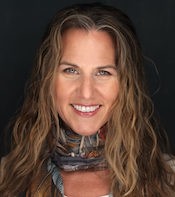
Alyson Lanier is a guide, coach, mentor, asskicker, counselor, and teacher. She received her BA, MA, and LPC in psychology, and has extensive training and certification in attachment work and Gestalt therapy, Transpersonal psychology, and Shambhala Buddhism. She has over 50,000 hours of therapeutic experience with individuals, couples, families, children, and adolescents in clinical and private settings. Halfway through her second decade of working in clinical and trauma informed therapeutic settings, Alyson realized psychotherapy alone was incomplete. In order to better serve her clients, Alyson broadened her professional toolbox with trainings and certifications in somatic sex education, energy work and consciousness development, and Ancestral Medicine work, a lineage repair approach to healing personal, family, and cultural burdens.
Adding alternative and spiritual practices to her therapeutic offerings made sense for Alyson because her experience with animist traditions and supernatural encounters began at a very young age, and set the foundation for her life’s study and practice. Her encounters with other-than-human beings, Old World traditions, Shambhala Buddhist practice, and subtle energy work over the years have given her a unique and layered perspective that plants her feet firmly in seemingly antithetical worlds: clinical and transpersonal psychology; Eastern and Western philosophy; clinical diagnosis and energetic and spiritual traditions of healing. Alyson has learned to fully embrace this duality, and to use it to understand the lenses her clients are seeing through, how they’re metabolizing what’s coming through for them, and to lovingly stir shit up to help them level-up.
Alyson delights in supporting her clients as they navigate their growth processes on psychological, physical, energetic, and spiritual levels. Her knowledge of psychology, development, and integral, energetic, and somatic studies give her a centered gravity, and her formative experiences and practices give her a rare wisdom. Her passion and humor spring from a desire to make the sacred profane and the profane sacred. Alyson approaches her transformative work with creative and dynamic interventions, serving her clients and groups as if the world depends on the fulfillment they are seeking, because it most assuredly does.
For over a decade, Alyson has been married to Tripp Lanier (who is also a coach and the host of The New Man Podcast which has been downloaded millions of times by men and women all around the world). Together they have a daughter and live on the coast of North Carolina.
Transcript
Frida Kahlo and the visor
Tripp: So anyway, I was driving Bee to school this morning. And she said that she was really excited about art class. And I said, okay, what's exciting about art? And she was telling me that she liked the teacher and she liked the project she was working on. What's the project you're working on? And she's like, I'm working on the Frida Kahlo thing. And I'm like, oh, you were doing that a while back. And then I said, well, tell me, how big is the unibrow that you're painting on Frida?
Alyson: Dude.
Tripp: And she was like, "Dad." And I was like, well, she's gotta have one. Signature. That's her thing.
Alyson: Signature. Trademark.
Tripp: And I was like, did you know that Frida Kahlo never needed to wear a hat? She had a visor. The furry visor.
Alyson: Oh my god.
Tripp: And she was like, "Rude, Dad." And I was like, ask your teacher. Just bring it up with your teacher and ask her about the visor situation. I don't think she's gonna do it. She said it was immature. And I said, I'm an adult male. What are you talking about here? So how could that be immature?
Alyson: She's not wrong.
Tripp: I think it's well documented that Frida never needed to wear a hat. She always has a visor. She's protected.
Alyson: Well documented.
Tripp: Look at every painting of her.
Alyson: Is this who I'm getting today for my interview too? For the interview?
Tripp: This part of me?
Alyson: Yeah. The Frida Kahlo historian. Is this your self-led part?
Tripp: The art historian. Yes. I didn't do well in art history. That was a tough class.
Alyson: Why? How was it tough for you?
Tripp: I had zero relationship to the painting or to the artist. It was like, this was painted in this century and this was part of this movement. As soon as I learned about the artist and what they were about and what they were doing, then it stuck. It was like, oh, now I know what that piece is. But just showing something up on the wall, this was 1573. It's like, who cares? Context. Speaking of which, we don't have context today. Don't have any.
Rant versus bitching
Alyson: I know. Got some loose ideas floating around. And I didn't know that we were gonna start recording now. My suggestion was that we sit up here and talk, and then hit the record button at any time. Isn't this more work for you if you have to edit it?
Tripp: It's more work if I have to think about when we're gonna start it. Because as soon as I say I'm gonna press record, your sphincter gets… I have to really watch what I say. This is a lot different than where we were in the kitchen a little while ago.
Alyson: You think so?
Tripp: I knew. You were listening to me, but you also did your smirky thing where you were listening to me and you had a smirk on your face.
Alyson: I told you I was amused. I was appreciating you. You came home irritated and frustrated, and you needed to talk, and you went on a full rant, full circle on all the points. Not just the thing that you're irritated about, but a few other things. And I really appreciate that. I appreciate that you feel comfortable doing that with me. And I certainly do it plenty with you.
Tripp: What's the difference between my rant and if I'm bitching and complaining? What's the difference?
Alyson: You're just in your process with it. You're not trying to be self-mastered, like, "I'm super self-aware that here's this part of me that's triggered or activated, and here's what I know I need to do differently." You stop governing yourself, and you simply let yourself be where you're at. It's sometimes funny to me because you're not there very often. But you're not working hard to hold yourself together. If you have a rant, you have a rant. You're not tracking. You asked me for my reflection on a couple of things, and I appreciated that because I knew you just weren't tracking it. There are times when you're sharing with me and you're tracking all of those things, so you're holding it all together. There's not as much opportunity, so it's more like, okay, I'll just listen, because you've got this. It was sweet to see you. I also always love to see you a little bit on your heel.
Tripp: Twitterpated?
Alyson: Yeah, twitterpated. I always love it.
Tripp: There are times where I may be bitching about something and that's draining. I was just curious if you had a sense, because you were definitely, I wouldn't say energized by what I was talking about, but you were engaged. Which is different than if I come home and I'm like…
Alyson: Well, the topic that you're…
Tripp: That's when you're like, clamp it down, stuff it. Don't express. Knock it off. Don't have your experience.
Alyson: Yeah. Shut the hell up.
Tripp: Don't have your emotions.
Alyson: Go to the basement. So essentially, the nature of what you were speaking to was familiar to me in a number of ways. To dovetail on what I was saying about you not self-governing: the things that were aggravating to you, you were just expressing from your parts, to use parts language. You had one part that was aggravated. You had another part that was kind of exhausted and just done. You had another part that was angry and wanting to push back. Because I know you so well, I know all of those parts are related to old wounds in you, burdens that they have carried over time. What was different for me is that it's not draining. I was able to just stay in a place of calm and openness, essentially just stay curious about what was going on for you. And I had some appreciation because I could see that you weren't fully eclipsed by the parts. You were bouncing around with these parts in the name of getting them to have a voice, getting them to be seen and heard.
Tripp: I think what I'm hearing is that when I'm listening to someone bitch and it's draining for me, there's an element of blaming. There's not an element of taking responsibility. It's just, man, that's wrong, that's wrong. It's not going anywhere. It seems to be stuck. And maybe what you were witnessing this morning was an actual movement of energy. I'm holding this energy, I don't wanna hold this anymore, I wanna move this in a safe place and get it out and move through it so that I can reaccess more self-led energy. And for those listening, the language that Alyson and I are using is borrowed from IFS. Go listen to the interview that I did with Richard Schwartz a while back. So this core Self, more of this core sense of self. What was so funny?
Big Dick Schwartz
Alyson: I was just remembering how you… Big Dick Schwartz. Big Dick. You went around the house for like two weeks. "Big Dick. I'm gonna interview Big Dick."
Tripp: Okay. I don't know if we're gonna keep that. He's a large figure.
Alyson: Authentically you.
Tripp: He's a large figure in…
Alyson: His name's also Richard.
Tripp: And he goes by Dick. He does go by Dick.
Alyson: Yeah. Which is why you like him.
Tripp: So I think you're turning this into a sexual thing, but it's really just that he's a large…
Alyson: I'm just remembering.
Tripp: He's a large Richard.
Alyson: Try to get yourself out of this.
Tripp: Burning this bridge.
Alyson: I'm being dick.
Tripp: Sorry, Dick. Thank you for your work though.
Alyson: Sorry, Mr. Schwartz.
Tripp: Oh, wow. I just shit the bed there. But anyway, there's bitching that happens online and in comments, and it's just stuck. It's not moving anywhere. That doesn't do anything for me. And then we get the message, especially men, of "Don't whine, don't complain." So it gets stuck, and then you get these grumpy guys going around who are just grumpy all the time and emotionally constipated. And then what was happening this morning… there are times when I'm complaining and I'm doing my bitching thing where you're like, do you have a request? Do you need to go anywhere? You've got a thing, let's move this along.
Stuck, whining, and being met
Alyson: I have opinions about everything that you're saying. I actually disagree with what you're saying.
Tripp: Oh.
Alyson: You said something earlier like, you're not doing anything with it or moving it. It was the language that you chose that I don't agree with. I get the whole moving it or doing something with it. But you're talking about comments online, where it seems like people's stuff is stuck. How the stuckness and the draining occurs, as well as what happens with me when I say, "Do you have a request?", is that no one is fielding those tweets or whatever the heck you're referring to. No one is in the place of actually meeting that part, being curious and interested to be with that part where they are. I think that's actually the difference. If we're talking about IFS really genuinely, there's time for all of it. There's space for everything that's here, and everything that's here is often a trailhead to something deeper. That's what's not there. When I say, "Do you have a request?", I'm like, I ain't got time for this. I've got work to do, and this could take an hour. Do you need something?
Tripp: And there's a wallowing that can happen where we're not willing to actually get out of our own way. We're kinda like, oh, I love being pissed off. It gives me a sense of power, a sense of self…
Alyson: Not through the lens of IFS though.
Tripp: That part's okay.
Alyson: But the wallowing happens. Think of small children. When do they whine?
Tripp: When they're not getting what they want.
Alyson: Yeah. When they have a need that's not getting met, that's when whining really starts showing up. If they're getting present…
Tripp: Well, they have a desire. A need is different.
Alyson: I actually think that even the desire is rooted in a need somewhere. Even if it's just quality attention for five minutes. We've tested it on Bee a thousand times over. When she was younger and would start getting whiny, we would just get really present with her, and the whining would stop.
Tripp: It wasn't about the toy or the TV.
Alyson: Right, it's not even about that. It's like ten years ago, when it was "it's not about the batteries" or "it's not about the trash," whatever the topic was. It's not about that. So I'm holding my stance that through the IFS lens, if we're going to look through this lens of how we really be with each other or any given part of us, then we're talking about really being with instead of not.
Tripp: All right.
Alyson challenges Tripp: where are you playing small?
Alyson: Now I wanna pause. I'm aware that you're doing your interview. Essentially, you're interviewing me. We're trying to have a discussion, but you're asking the questions.
Tripp: This is a discussion, which means that you can find your curiosity. If you don't have curiosity, that's fine.
Alyson: There's nothing I'm curious about.
Tripp: But if there are things that you are curious about, then you are welcome to bring them in. I want you to just drop, to the best that you can, the idea that we're sitting in front of these microphones and the screen and everything. It's tough. But if you have curiosity, I wanna invite you to bring it. The thing we wanna let go of is that there's an agenda, even though… Wow. We do have one agenda, get it in your mouth.
Alyson: I just spilled my coffee all over my face and my body.
Tripp: It was kinda hot though, especially the way you were wiping it.
Alyson: Oh, big dick. There he is. There's the guy that yells "Big Dick."
Tripp: You know, I feel really unseen right now.
Alyson: Very civilized.
Tripp: I think we already established a very civilized and mature…
Alyson: Yeah. So what I'm curious about for you, knowing you so personally and intimately… you're shaking your head right now, and now you're gonna also pull your pants down.
Tripp: Wow. Fantasies.
Alyson: Were you just adjusting your nonexistent underwear?
Tripp: I'm paying attention to what you're trying to say. I'm trying to track this.
Alyson: What I believe I'm seeing in you is your essence wanting to be more and more expressed in service to others. I see you sitting with a question of how you still do what you do with your clients. From the outside in, I don't actually know what you're doing on your calls because I'm not on the calls, but it seems much more achievement oriented. It's like go…
Tripp: It's creative.
Alyson: Yeah, okay. But it's a lot of "what do you want, and then go get it, let's create steps to go get it." That kind of coaching. What I'm tracking in you like a scent is that there's a more essential nature, capital S, Self-led. I don't want to bring in the word spiritual because I don't think you would orient towards it in a spiritual fashion. But I do think there's an essential spiritual nature to that. And how do you want to integrate more of that, as well as more of your humor? What's happening for you there, with your desire to do more of that, but also not wanting to be a therapist? You're really clear that you don't want to do therapy. There's IFS coaching, and then there's IFS therapy, where we're working with the deep trauma. So I'm curious what you're…
Tripp: Well, I wrote about what you're talking about in my book. I framed it from the position of who are we when we're not in this place of protecting and pleasing and proving? Who are we when we're not always striving for more comfort, more certainty, more acceptance? I threw out the idea that when we're not in those places, there's a part of us that just shows up, that is genuinely curious, genuinely wants to explore the world and create and play and really explore our lives.
Alyson: And just to give you some applause and appreciation, this is part of me acknowledging that it's been in your nature. You wrote that book before you learned about IFS.
Tripp: I'd worked with IFS before then. Chris Burris was my IFS therapist. I was familiar with the process and I had read through stuff.
Alyson: Including, like, this part that's burdened: if it didn't have this job, or if it wasn't burdened, what would it wanna do?
Tripp: Yeah. I was familiar with the process. I'd worked with Chris primarily, and I think maybe somebody else, and appreciated the process. But at that point, I'd seen it more as just a therapeutic process. I didn't see the through line to where I like to play, which is, let's go create the life and the business and the relationships that we want. It was more like, oh, I'm stuck in this place and I can't get out of this grudge or this hurt or this fear, this angst, this anxiety. Let me go work with an IFS therapist and heal this part, and now I can get back to my life. That's different from what I was throwing out, which was, hey, those things can show up. But what looks like success to most people is still in this place of protecting and pleasing and proving. I've gotta be comfortable all the time, or certain all the time, or I've gotta look good and be accepted. I've gotta have status and prestige. So I was throwing out that we're still doing the fear-based thing even though it looks like we've got it all together. I've worked with enough folks who have it all together, and I know my own life, with people saying, "Wow, you've got it all together." I was like, no, I don't. I've got my problems. I've got my insecurities. So at that time, I'd seen IFS through the lens of a therapeutic thing to help with trauma and healing those bits and pieces, but I hadn't seen it all the way through. That's why I was really excited about Richard Schwartz's book, No Bad Parts. He's connecting it all the way through. It's not just about healing, but also about these more creative areas. And I was like, okay, cool, we're definitely on the same page now. Maybe if I revise the book at some point, I'll use more of Richard's language. I don't know. We'll see.
Alyson: So what's your big takeaway then, not just from his book, but with what you're saying? I also want to loop back around to where you were suggesting it's draining when somebody's bitching or they seem stuck. How are you orienting what you took away from the book?
Not realizing you're playing small
Tripp: Well, what came up for me with the book was that I didn't realize, and this is where I could relate it to maybe somebody who's listening, that I'm playing small. Not realizing that I'm waiting or hoping to move in a certain direction.
Alyson: Be specific, please. How are you playing small? How are you waiting to move?
Tripp: Yeah. What I realized as I was going more and more into this work, the first part is just accessing more of that Self. What's the part of us that is relaxed and calm and curious and playful and sees life as an adventure, something to explore? We've got limited time. Let's live open. I wanna have a full heart. I wanna go and just play full out, instead of "Jesus, this is too much and I need to hide out." I love that conversation. I love being able to access that capital S Self for myself, but I also love drawing that out of my clients. And I found that the more I do that with my clients, a lot of the things they thought were missing in their life, whether it was the money or the house or the title or whatever, seem to just relax. It's like, oh, I thought that was the thing that was going to bring me this state of being, when it's not. I already had that all along. It was this capital S Self. So I love helping them access that more. I get to access it myself, and I also get to help them access it. And then there is something to be created from that place. It's not like we just sit there and drool on ourselves and look at the trees all day. It's like, okay, what wants to be created? When you're not trying to prove something, when you're not trying to…
Alyson: Protect.
Tripp: Protect, or make sure that you fit in, or whatever those things are, then it's like, oh, well, shit, I would rather be doing X, Y, and Z in my life. I love both of those things. I love the creative process. But helping somebody do something from the state of "This is gonna be a thing and I'm finally gonna be enough, I'm finally gonna impress those people that made fun of me in middle school," I don't have any space for that. I just don't care. There are plenty of other coaches that will help you do that shit. I'm not interested in that.
Alyson: Right.
Tripp: But to come back to your question, it was realizing that I haven't necessarily been explicit about it. And I don't know if that's necessarily true, because I wrote a freaking book about it. But there was something about landing in this place of, first and foremost, I really wanna help folks access that. That is the starting point. Let's really develop the practices, or the process, that helps you access that state of Self first and foremost. And I think if anything, I was playing a little soft there, like, well, we'll see if that gets worked in. Sometimes they're not ready to go there because it's just not on their radar. They're not aware that they're eclipsed and in that place of protecting and pleasing and proving. Until they get stuck, they're like, shit, this doesn't work anymore, what's going on? I say, well, I've got an idea, are you open to trying this? Then we start to access Self, and it's like, holy shit, this is amazing. Now I see what I really wanna do. I've got all this clarity and this sense of direction. This feels a lot better. So I'll just pause.
The fear that being explicit will push people away
Alyson: Coming back to what's happening for you, where are you holding back? Where do you want to bring more, but you're not really sure how? Where are you essentially having a parallel process with the people that you coach? Different context, maybe different content, but it's not dissimilar.
Tripp: I don't know if it's necessarily that, as we're pulling it apart. I don't think I'm acting out of alignment, but I think there's a way I could lean into it more and be more out with it in my process. If I look at my website, there's nothing in there about creating a self-led life. I don't think there's anything on there right now that says, "Yes, I'm gonna help you access this way of being." I should say it's not a state. "I'm gonna help you access this way of being, and then we're gonna create what you want." And the concern is, oh, if I did that, then nobody would wanna work with me. There's the part that shows up and says you can't really be who you truly are. You can't really state what you really wanna do, because that will be the thing that screws the whole thing up. That's just a script I can run on myself and that so many others run. There's this thing I'd really love to be doing, but if I really leaned into that, it would blow the whole thing up. Which is weird enough, because that's essentially what I help people overcome every day.
Alyson: That's why I'm inviting you to speak to it. No one is immune to this, including the guy that writes books about it and teaches it and interviews people and integrates this concept into who he's interviewing.
Tripp: Right. What's happened for me lately is more like, you get to really take your seat there. It was much more about living that self-led life. Whereas before it was more, we're gonna create some things, and along the way you're probably gonna start to access more Self if we work together. It may just seem like semantics, but for me it was more of a "No, motherfucker, this is what you do."
Alyson: Well, I actually see you integrating the concept differently with your people. I'm gonna use a metaphor that's common here: you've always been the rock. You're the leader, the manager, the person that people go to, including me, when it's like, ah, I'm wigging out, I'm off center. You're able to basically be the surrogate capital S Self for me and, I'm sure, other coaching clients and other people in your life. I've certainly witnessed that, and you're good at it. All of that is amazing. And it's almost like you're gifting it back to them now. You have this language, this access or bridge, to offer it to them. It seems like there's something you've grokked in yourself: that everybody has a core Self. Everybody has capital S Self. Doesn't matter who you are, doesn't matter what you've been through. Everybody has it. And you're putting more trust into that, and you want to facilitate that with others just as much as with yourself. Does that feel accurate to you? Instead of you being the one to hold that seat for others, you're inviting them to hold their own seat, helping them find it for themselves.
Owning the calling, and the survival part
Tripp: Yeah. If anything has shifted, as we tease this apart, it's really recognizing that there's value there. I'd made an assumption that folks don't really want this way of being so much, they want the outcome. That's why people hire coaches. They want an outcome. "I'm gonna hire this coach, and this person's gonna hold me accountable and challenge me and support me to go create this outcome." That's essentially the coaching 101 context for a lot of folks.
Alyson: Rooted in a part.
Tripp: Well, that's just kind of a model. That's part of the model. Like, I would hire a therapist because I wanna heal A, B, C in my life so I'm not so torn apart by the stuff or in pain. It's a real basic version of that. So if anything, I got a little fixed on helping people create those outcomes when really I needed to own that I was helping people access a way of being in the world. But I think a part of me, maybe the part that takes care of things, provides for the family, said, you can't do that, because people won't pay for that. I saw enough broke shaman types, weekend shaman types in Boulder and whatever, who were all about this state-of-being stuff. And yeah, they couldn't freaking keep the lights on. Or they were trust fund kids, or they had some other means of support. So I think, from a nature of survival, we're back to that survival mentality. I use that loosely. But to provide for the lifestyle we had, I needed to focus on A, B, C, talk about that, and present that. What's been changing, especially with my clients more and more, is they're like, holy shit, this is helping me access this way of being. The outcomes are cool, but this is far better. This is something I will treasure for the rest of my life, being able to access it. I'm not giving it to them. I'm just helping them access that for themselves.
Alyson: You seem to be grokking that your capital S Self can be the one that's in relationship, leading the way for all the other parts that sometimes get freaked out and scared, or want to protect or prove or please. And you're experiencing that with you too. Of course, what I want for you is to see your humor, your irreverence, your love of racing and cars and women and beauty and art and music, but mostly your irreverent humor. And also your essential nature of this steady, wise leader with the ability to draw out gold. I want that for you. So what part speaks up and says, "I can't provide for my family"? How is that working as a system in you when that part shows up and says, "But I can't, I'm the one holding down the fort here for everybody. There's danger, danger"?
Tripp: Yeah. I think that's essentially it. It was coming to this realization, it really landing at the next level, in the place of, oh wow, this is my calling. This is what I do. I've always had a knowing, but here's the next oomph of it: it's really about helping people live a self-led life, to use that term. And then starting to realize there are ways I could live that more. On a fundamental level that's at the core of the work I do, but it's not that explicit. It's still kind of hiding out.
Alyson: Right. I remember you… gosh, I don't know how long ago, you were like, "I think I may need to find some language for this."
Tripp: Right. I think something's starting to shift here. At least I'm starting to challenge this. Is there a part that's like, no, you need to keep that down low because it's gonna push people away, it's gonna push opportunities away if you lead with that? It's gonna be too weird. It's what others are gonna think, and they're suddenly not gonna see the value in what you offer. And I'm starting to be like, I just don't believe that anymore. So it's like wanting to lean in and be a little more explicit about it without having to talk shop necessarily. But at the same time, finding those places where there's that pinch of "I say I really believe this, but my actions don't…" I want to live my own life fully. There are places where I could be more in integrity. There's always a little pinch. It's always, oh, I could lean into that more. So I think that's the shift that's happening now. Still a question mark of what that looks like, but this conversation is a step in that direction. I've had several moments as we're talking here today where it was like, there's no way I'm releasing this. This is just not valuable to people. That part's just showing up. They're not gonna be served. They're not gonna wanna go deeper into conversations with you or explore coaching or whatever that might be. And it's like, okay, thank you, I hear that part. But nonetheless, what if it does serve somebody?
Going out into the world
Alyson: That's how it happens. With this, there's no one session where suddenly all of my parts are…
Tripp: That is brilliant. Well, that's the process. You can have access to that in a safe environment, you and I talking. And then it's a matter of going out in the world. That's where the coaching process comes in. So a client and I are having a conversation, they access the core Self, and it's like, wow, I have this clarity now, I would do this. Great, so when are you gonna have that conversation? Oh, there's the contraction. There are the parts that show up. They're like, you can't do that. You can't tell your wife A, B, C, or you can't request this of your business partner. And that's where it comes in. It's like, okay, you have access to this big S Self now. How do you wanna act in alignment with it? And it's a continuing process. Like you said, it's not a finish line. But I love that process, which is, oh, I couldn't possibly do that. And they do it and they're like, that was no big deal. Holy shit, everything was fine. To me, that's where it goes hand in hand. I don't wanna just help people access Self and then it's done. It's more like, okay, now let's get out in the world and act in alignment with this, because that's where things really get exciting. Even with a client recently, he was praising me at the end of the call, and it felt so good. He was like, I don't think you realize, you helping me means you're helping all my 40 employees. It's rippling out into these areas. And it was like, wow. The more he accesses that in himself, the more it ripples out and invites that from the people working there. That's where I get lit up. I don't wanna give that part of the process up, because I love that let's-go-out-in-the-world, let's-go-create-from-that-place.
Being invited to bring all of who he is
Alyson: Anything else you wanna name or bring? Anything living and stirring in you right now?
Tripp: I do wanna name that I'm sitting here and realizing that you are inviting me to bring more of all of who I am and what I do.
Alyson: Are you? Are you breathing?
Tripp: Including my humor, including the beliefs that might be a little weird. And I just feel really fortunate. Before you and I were together, I was in relationships where… and I still have friendships that are that way, where it's just like an eyebrow goes up, like, "Really, dude? We don't talk about that here. We don't bring that in." And you've always been like, "Yeah, come on. Bring it. Bring all of you in. It's always welcome." It would be easy for me to say, yeah, that's just normal for us. But I know so many people that I coach whose partners are not on the same page. Their partners are really uncomfortable with the aspects of them that rock the boat. The context of their relationship is simply "Just make sure I'm comfortable, make sure I feel safe, make sure I feel accepted. Don't do anything outside of that." And you've always been willing to push me and say, "I think there's more of you that can come in, and it might make me uncomfortable. It might be a little shaky here. But I want all of you here. I'd rather have all of you here in the room than just the parts of you that make me feel safe and comfortable."