
Podcast: Download
Subscribe: RSS
Needing the Approval of Others — Coaching Call with Tripp Lanier
Is success a way to make you look more impressive?

Do you ruminate about ways to get the approval of others?
And what truly motivates you to be more successful?
Today’s call is an emotional one. Our guy has had a checkered past which has left him estranged from his daughters. He’s gotten his own life back on track, but when it comes to his girls there’s still a lot to repair. In this call we start out talking about making money, but we quickly reveal what’s driving his need for success.
Make sure you stick around to the end to hear how things have progressed since this call was recorded.
In this conversation:
- Repairing a checkered past
- What motivates our need to do more?
- Using success to prove we’re good enough
- Cleaning up our side of the street
- Dealing with neediness and our desire for approval
Note: What you’re about to hear is an actual coaching call. The person being coached volunteered and gave explicit permission to have our conversation recorded for this podcast.
About Tripp Lanier
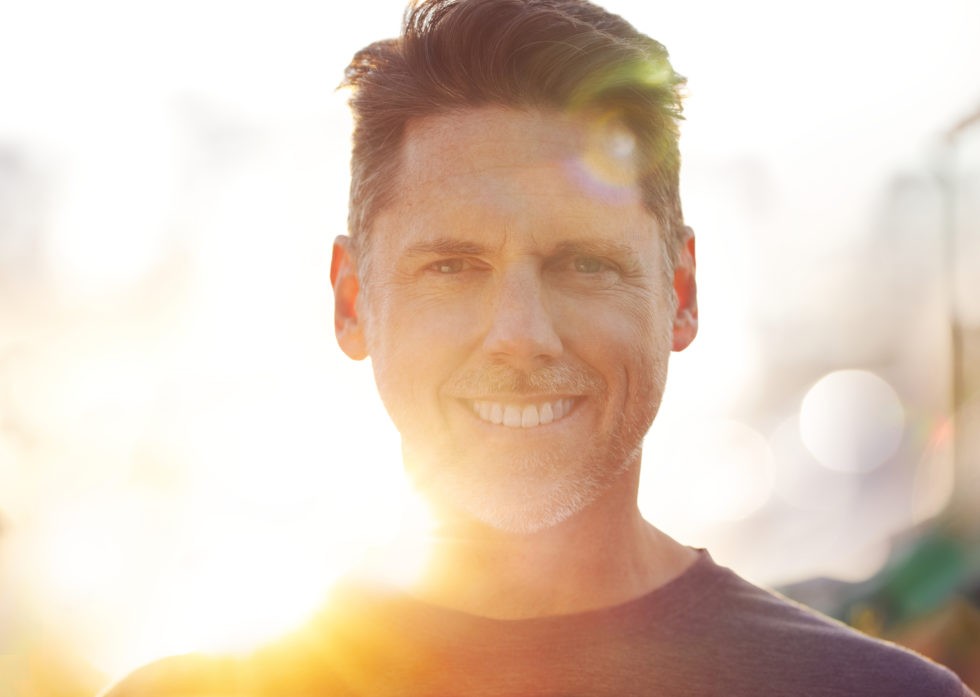
Tripp Lanier is a professional coach, author of This Book Will Make You Dangerous, and host of The New Man Podcast: Beyond the Macho Jerk and the New Age Wimp which — for over a decade — has been downloaded millions of times.
Since 2005, he has spent thousands of hours coaching people all around the world to get out of the rat race, become an authority in their field, and make a great living doing the work they were put on this earth to do. Over the years he’s designed several businesses to support a simple lifestyle focused on freedom, ease, meaning, and fun.
If you’d like to learn more about coaching with Tripp Lanier visit TrippLanier.com.
Transcript
Where to Kick Things Off
Tripp: Where do we wanna kick things off today, even if it's not exactly where we end up?
Guest: Watching you do what you do inspired me and woke something up in me to want to do the same thing. And I have been. There's been this pattern. I was running the men's group, coaching men, primarily, a few women, and I'm fucking doing it. And then it's like one foot on the gas and a foot on the brake. Like, who the fuck do I think I am? Impostor syndrome. And I think there are other layers. I left after living there for twenty-seven years to come back to where I grew up. The man I left as was not even remotely close to the man that I am today. I came back to serve my community and the men in this area because I was a lost young man. Drugs, alcohol, all of it. Thief, liar, just lost. Coming back, I've been able to be a leader in my community and I'm involved with some really great organizations.
I'm also noticing a pattern in my life where I have a full-time job, but I've never made the transition. I got the boat close enough to the dock, and I always fell back on the safety and security of my full-time job. I'm doing what I love to do. I don't hate waking up every morning. I get to serve. But how do I make that transition? Like you say, the rat race. How do I leave the job behind and jump with both feet in a way that doesn't leave me hanging? Because I think that had a bearing in my marriage and was part of the reason it cost me my marriage. I was gung-ho. I started a kid's fitness business so I could take my kids to work with me, and that was the first change I made in my life. I was fifty pounds overweight, drugs, alcohol. Once I had my first daughter, I gave all that up and became a personal trainer. I climbed the ranks to top personal trainer, then I started my own business. And then I got scared and went back to driving a truck. I see this pattern where I go into what I really love and then go back to the safety and security of a paycheck. So what comes up for me is finding a path through to leaving the rat race behind and really getting uncomfortable and stepping into what I really love doing.
Tripp: But right now you're able to do the thing you say you love to do. It's just not the main way you fund your lifestyle, is that right?
Guest: Correct. I do it every day. I get to have conversations with men, serve the homeless, be of service in my community, and be a leader. I absolutely love that I get to do that. And then there's this voice inside of me that's always saying, you can do more. You can be more. And then there's a voice that says, you don't know what you're doing.
The "Should" Voice
Tripp: Right. Let me see if I've got the picture so far. You've been able to make some major life changes from the path you were on, which doesn't sound sustainable.
Guest: It was not sustainable. Drugs, the alcohol, being overweight.
Tripp: Questionable choices in terms of…
Guest: Yeah. Super lawlessness.
Tripp: Okay. So huge respect for you for turning that around. Now you're in a position where you can fund your lifestyle and also do what you love, impacting people, young people, men, all the ways you've named. Right?
Guest: Yeah.
Tripp: And then it sounds like there's something in here where I hear an expectation, like, I should be able to make a living at this. What's the voice? What's the should?
Guest: Yeah. I should be able to make a living at this. I should know how to do this. I should be able to make a transition into doing this.
Tripp: Let's follow this a little more. What would be different in your life if what you call your passion was also affording your lifestyle? It doesn't have to be logical. If you think about it, okay, I'm making enough money, or more than enough, from my quote-unquote passion of helping and serving people, what would be different?
Guest: I feel like that voice, that inner dialogue, would subside. If the volume on that decreases, it feels like it would be more peaceful inside my body. More peace. Yeah. That's what comes up.
Tripp: And if we ask that part of you that has this big should, that you should be able to make money doing this, or that I should do more, I can do more, I should be more, is that the same voice?
Guest: Yeah. It's the same voice. It's like a younger part of me.
Tripp: Okay. Let's appreciate this part. If we listen to him, what does he see? What's he concerned about? Follow the shoulds here. If you don't do more, what's he concerned about?
Wanting His Kids' Love and His Father's Approval
Guest: It's a great question. What's he concerned about? That he won't be loved, that he won't be adored, he won't be respected. There's another layer, and it has to do with the relationship with my children. So it's the adult me and this younger part of me. Because of my past behaviors, I think, there's been an impact on my family. I'm still trying to clean up the relationship with my two daughters. And if they could see me now, that would change our relationship. That would make things different. Somehow they would view me in a different light, or they would love me, or they would speak to me.
Tripp: So if we follow this down, in this moment, this voice of you should be more, you should do more, you should take this ability to serve and help others, whether it's men or people in the community, with their health and fitness or their way of being in the world. If you did this more and you were able to actually pay your bills and have a successful career and business around it, then according to this part, that would open the door to having the relationship you want with your daughters. Is that right?
Guest: Yeah. And I have a son too. All three of my kids. Things would somehow be magically different.
Tripp: Okay. Keep telling me about magically different.
Guest: Let's see. I left during COVID after twenty-seven years of living there. It's been hard to make the transition to come back here. My relationship with their mother and them was a bit challenged after being divorced for thirteen years, and my life fell apart. I lost my job, lost my business, was challenged in communicating with their mom and with them, and I felt alone. I needed to be with family, so I decided I wanted to come back here. I had a story that my parents, my mom, my dad passed away, wouldn't welcome me back here. For some reason, I had this narrative that I created. I was embarrassed, I felt shame, and asking them for help was going to be a lot. So I finally just said, fuck it, I'm going to call them up. And they welcomed me. They were like, are you kidding me? Come home. We want you here. And it was fucking cool, man. It helped me relax, and I had somewhere to go, because I felt like I had nowhere to go. I jumped in my car and headed back. Coming back here was life-changing. I know it was the right move, but then I have this thing about leaving and my kids feeling abandoned by me.
Tripp: And if we come back to this part, it somehow believes that if you were successful, I'm going to use that word, successful…
Guest: Yeah.
Tripp: …with this next phase of your business, that would somehow repair the relationship with your kids?
Guest: Yes.
Tripp: Anything else you'd add? If we listen to this part, this guy that's pushing you, you gotta be more, you gotta do more.
Guest: Let's see. And I think there's something coming in right now. It's proving something to my dad. I saw him work his ass off eighty, ninety hours a week, and I knew he had dreams and hopes and he never lived them out. So I feel like an extension. It's proving something to my dad, not like I did better than you, look, Dad, we made it. Like, this is for us. I knew you had something you wanted to do more than what you did, and this is me doing this, not only for me, but for us. And for my son and my daughters.
Tripp: And he passed away, right?
Guest: Yeah. He passed away six years ago.
Tripp: So it's gonna be kind of hard to get his approval at this point.
Guest: Yeah. Well, I got him over here on this, like, pooja table, man. I can look at him. I got his cufflinks and his school ring. I can ask him.
Tripp: Okay. We've all got our ways. Right?
Guest: Yeah.
Tripp: How much money do you think you'd have to be making to get your kids to finally love you and feel like you didn't leave them?
Guest: Oh, fuck. All of it? All the money? Oh, we better get started then. That's a great question too. I'm thinking about what you're saying, putting a dollar amount on love. Like, if I made this X amount of dollars, then they would love me X amount more. It's fucking stupid. I know my kids love me. And I don't think it has to do with money. Hearing you say that, being rational about it, there is no dollar amount. I could make all the money and…
Tripp: Well, if it's not money, is it some kind of influence? Some kind of look-at-Dad status in the world? Look at him, he's important now, all these people are appreciating him?
Wanting to Repair What Happened
Guest: I think it's because of some of the things that happened when they were younger. I want them to see that I've changed my behavior. My son gets it. Our relationship has been repaired, we communicate. My daughter's is challenged, and that's hard for me to accept as a father and as a man, that my behavior had an impact on them. Because there was a time lapse between the rupture and having the opportunity to repair, it's had an impact on them. They have a narrative of who they think I am, and I have made substantial steps and changes to be a better man because of the impact my behavior has had on them. I'd like the opportunity more than anything to have the conversation, to listen to them, to understand them and how my behavior impacted them. My youngest daughter recently allowed me, she cracked the door, because they had set some boundaries where they're like, we're not gonna have this conversation.
Tripp: Alright. I think this helps me understand. It's a little more clear. I'm limited in the ways I can show them I'm not that person. So maybe I've got another theory, that if I go and do these things and make this money, or become this other person, I can show that to them: hey, I'm not that guy you thought I was. I'm not that guy you had to push away.
Guest: Yeah. Because of what happened, I chose this path to first help myself become a better man and understand why I behaved the way I did, and then help other men who are a few steps behind me, so maybe they don't have to go through what our family went through. And I want them to know that what I put our family through wasn't in vain. It had to happen, and because of that, there's this. I don't have to pass this on. It started and stopped with me.
Tripp: Yeah. I can really feel that. And it makes a lot more sense. It's not just about the money.
Guest: No. Not at all. I don't give a lot of fucks about the money. Of course, there is that aspect of it for sure.
Tripp: Right. But it's a weird algebra. If I do this and then do that and then do this, then I can show that, hey, all of this wasn't in vain.
Guest: Yeah.
Tripp: And I'm not that guy. I'm not that guy that you think I am.
Guest: Correct. The biggest thing is I love my daughters, man, more than anything in the world. And knowing that I hurt them, that fucking… It kills me.
Taking the Pressure Off
Tripp: What if we took the pressure off of your career? What if we took the pressure off of this mission you have to serve others to repair the relationship with your daughters? What if it's not the job of your career or your mission to repair what happened with your daughters?
Guest: As you said that, I had this image of a fucking valve stem, like on a tire, and it was like, I could breathe again. Oh, there's room. And it felt great. The pressure needs to be off, because I feel like I can't breathe with all that pressure. It's so fucking heavy. It's too much.
Tripp: It's also a burden on the people you're serving. I'll explain why. It's like, I need to make an impact on them. I need to make a difference in their lives. I need this. It's not really about them.
Guest: It's for me. Yeah. Dude, thank you for that. Big time. It's not about them at all, and that's not serving anybody. It's me, me, me, me. That's fucking selfish as fuck.
Tripp: I mean, we love to help people. It feels good to help people. It's a wonderful exchange and it makes life meaningful. But it's different when there's that hook of, come on, have your breakthrough, brother. I need you to have this breakthrough.
Guest: It's a fix, man. Like, I'm slapping my arm, man.
Tripp: You better fucking have a breakthrough today. My daughter is hanging on this. Right?
Guest: Yes. Absolutely, man. For sure.
Tripp: So wherever it starts to feel tight, or that grip starts to come in, like, I've gotta make something happen or this has to be a certain way, that's a wonderful place to slow down, especially when it involves somebody else. If we're not aware of it, we're kinda strong-arming things into that place. It's one of the reasons we made agreements before we had this conversation: let's relax that. This could go completely sideways. Nothing has to happen today. That was for both of us, to go into this place with open curiosity, knowing it was completely okay for nothing to happen. Letting go of that attachment. If I've got this attachment and I need this person to be different, or something to happen so I get paid or whatever, it's really hard to do this work.
Guest: It is, man.
Tripp: It's a burden on the other person.
Guest: Yeah. Thank you for that.
Tripp: It also makes the work hard.
Guest: Yeah. And I could see how the attachment creates the suffering. Relaxing into not having an expectation would not only make it better for them, because I'd be coming from a place of true service, it's not about me. It's like what you're doing for me right now. Just relax. Something happens, cool. It doesn't, cool. And I feel that from you. I don't feel like, ah, fuck, man, I gotta get this podcast downloaded a million times, so you better fucking… I'm not getting that from you. So thanks for modeling that.
Tripp: It reminds me of how I've been fortunate to have some really quality women in my life. If I was in an insecure place, it would become about sexual performance. And to have a woman be like, slow down. Let's stop. You think you're trying to help me, you think you're trying to get me off, but this is not it.
Guest: It's funny you say that, because I was thinking about relationships and women, and how that could be extremely unattractive and a turn-off. Having her just say, slow down and breathe, don't do me any favors.
Tripp: And it's also, oh, I need to get her off so I feel better about me.
Guest: Right.
Tripp: Oh, look at me, I'm a man. I'm enough. I'm adequate because I was able to get her to do a thing. And nobody wants to feel like a means to an end in that regard. Maybe it's a little playful if you've got a good relationship. There's that phase too. Right?
Guest: For sure.
Tripp: But there's a real subtle hook there. Being able to name it: oh, right, I am doing that thing. I am making it about me. This is about my insecurity.
Guest: Mhmm. And I wasn't seeing that at all. Now it's like, oh, yuck. What it's reminding me of is to get really present and just be in my body and not be in my head and just be really allowing.
Tripp: This is why I think you're in a good position. You have a way to pay your bills and take care of that, and it takes the pressure off of, oh, shit, this week I gotta make X and Y happen with people's lives. You have this space. I think this is where a lot of folks get wrapped up: my mission has to be the thing that pays my bills. It's wonderful if you can, but you gotta understand it starts to muddy the waters too. It can create that urgency or that scarcity, and it can really start to mess with our heads. So if you can create an environment where you show up with an open heart, in that curious place, where nothing has to happen, you might find that you have the most fun, but you also do the most impactful work.
Guest: I feel that big time. And I'll add something. There was a piece about my full-time job: I'm not good enough because I'm doing that. Hearing you say it's a good thing, you're in a position where you make a good income and you get to serve, so relax, be appreciative of what you have, come to this service piece with an open heart rather than from a place of it being about you, and there's no hook. That feels like freedom. I feel free, and again, there's more room to be of service to others. It's me telling myself that I'm enough. It doesn't have to be a different way. I don't have to have a different job. It doesn't have to be any other way than the way it is right now. And then from that place, moving forward.
Staying Open Without the Hook
Tripp: And what's also true at the same time is I want to repair the relationship with my daughters. That doesn't go away. But now it's not obscured or muddied with, cool, the way to do that is to go do this impressive thing.
Guest: Right. I love that.
Tripp: So if we start to play with this spaciousness and this freedom, releasing the pressure off of the work you do that's tied to your mission, and we start to bring into focus the deep desire you have to repair the relationship with your daughter. I understand that's a two-way street. They've gotta be able to meet you. But what can we do to make sure your side of the street is in alignment with where you are?
Guest: That's a great question. I think it starts with what we just discussed, them not feeling a hook from me. Like you said, they have to meet me. My youngest daughter has set some boundaries and has cracked the door open. She hadn't spoken to me for years, and just recently, when I went back to visit her, she cracked the door open and we had a conversation. So she experienced me differently. My other daughter is going to have to move toward me. I guess to answer your question, I can continue to do the work over here on me and continue to grow and develop myself. I can't do anything over there. It feels hard at times. And it's also like, okay, I could try to be not attached to any sort of outcome.
Tripp: I like that catch, because that's where we can stay in integrity with ourselves. I love my daughters. I want to have a genuine connection with them. And that connection can't come at the cost of me trying to manipulate this thing to feel okay for me. I might have to sit in that fire that I love them, and I misunderstood, and I'm not who they think I am. Whatever those things are. This is really tough stuff, but I want to help you see where that hook is still coming in, and where the desire to connect might be so you feel validated: see, my daughter likes me again, I'm okay. Versus, I just want my daughters back in my life. I want to connect with them. I want to watch them grow. I want to understand who they are as people and who they're becoming.
Guest: Yeah. That is more of what it is for me. It's not to make me feel better. There was a point where I didn't know how to listen to understand them. So it really is about understanding them. That part isn't so much about relief for me. I've been sitting in it for a long time and it's fucking brutal. And I know there has been some alchemy. Being and sitting with the uncomfortable feelings has transformed me. I had to go through that. Had I not learned to be with those emotions, it wouldn't be possible for me to have a relationship with them, if they so choose, because it would be about me. But I have and will continue to sit in that fire. It's fucking brutal. And I think that's the work as a man.
Tripp: I think there's a parallel here, which is: how do I design my life? How do I show up? What choices do I make so that I can stay open-hearted and spacious, not only with the people I help in my mission, but also towards my daughters, even if the door is closed with them?
Guest: Mhmm.
Tripp: A lot of us are like, well, I'll open my heart when I get something. And your job might be to just remain patient and have an open heart and not be tapping on the window every thirty minutes: hey, I'm still out here. Will you like me now?
Guest: Absolutely.
Tripp: But consistently: I'm here. I'm not going anywhere. I am your father. I'm always gonna be your father. My heart is here. And at any time, I am ready to join you.
Guest: Yeah. I'm curious, because I know I've done some of the window tapping. Hey, I'm over here.
Tripp: Be honest. I would probably have Roxanne blaring through the window, so I can't imagine.
Guest: It's fucked. It's hard, man. I'm finding ways of staying here, but not too intrusively. So far, so good. Like I said, my youngest daughter cracked the door open. That's cool. And just what you said, being patient and not tapping on the window, I like that. Don't always be up in their grill. Allow them to have the space and, like you said, keep the open heart.
Tripp: And I just wanna circle back to the tapping on the window, because where I'm coming from is that clingy thing of, I need you to make me feel okay. Which is different than, I can appreciate where you are, I'm your father, I'm here, and I would love nothing more for us to reconnect.
Guest: Yeah. That's a huge difference.
Tripp: Right. And that doesn't mean you're not there and you don't contact them or send them cards or whatever. I don't know what's allowed. But the thing is to continuously broadcast that signal, but not with the hook of, you owe me something, or please come and rescue me, that kind of thing.
Guest: There's definitely some validity to the point about them rescuing me, and that's not their role. It's not their job. I gotta rescue myself. I get that for sure. I'm curious, how do you let go of that? How do you drop that shit?
Tripp: Well, I think the confusing part for some is that it doesn't mean we don't want something. It is really hard. I can really want to be with this person, or really want to have this relationship, and it can hurt that it's not happening. It can hurt that the door is closed. And I can feel that hurt, that disappointment and that pain. But I don't need to do any manipulation. I don't have to play games. It can be just as simple as, I would love to be with you, I would love to have a relationship with you, and I understand that's not where you are right now.
Guest: Yeah.
Tripp: And then you get to be in that fire. But if you think about where we started this conversation, if I just did this and I just did that, right, there's the…
Guest: Then.
Tripp: Then. Yeah. And there's the suffering.
Guest: Right. Got it. I feel like the hook just fell out. Like, out of the side of my mouth.
Tripp: Beautiful. And now imagine how much more powerfully you can move through the world when you're not navigating, oh, I don't wanna screw that up. You're doing this little side-door thing in order to, quote, get that thing. And now you can just focus: this is what I'm really here to do.
Guest: Yeah. And that feels so much better. Thanks for helping me get the hook out.
Practice: Noticing and Pivoting
Tripp: Well, it might be back at five in the afternoon today. I'm pretty sure.
Guest: No, it's gone forever. That's how this works. Right? I like the word you used. I'm exonerated now. There's no more suffering. I'm good. Thank you.
Tripp: One conversation, it's over. But you bring up a good point, because this is where the practice comes in. This is what I was alluding to earlier, the things you do to keep your side of the street clean. You might have a poker tell: I know when I start to do this that I'm doing that thing again. I notice when I start to worry about X, Y, Z, or I start to feel this pressure in the chest or whatever, I'm back on that attachment train. I'm back on that manipulation train. So what do I do to come back to center? That becomes your practice. It's a spiritual practice. It's an emotional practice. It's pivoting into other things. But it's over and over again. It's like balancing a basketball on your finger. You're in constant motion and you're noticing, oh, I'm getting sucked back into the thing that I do. And so I come back. This is why we meditate. This is why we journal. This is why you do the other practices, like talking with others. Because we will be seduced and suckered back into that place. There is no exoneration, as you pointed out. So you're anticipating it: when am I gonna get suckered back in? When am I gonna get pulled back in? And knowing what it feels like and what your behaviors look like, so you can pivot back into different places.
Guest: So what I'm getting is that when I start to feel that tightness, and that's what it is for me, a tightness in my chest, like I'm clenching my fist, I'm feeling contracted, that's the information to get me to pay attention, to pivot, meditate, have a conversation, work out.
Tripp: Go work out, go play, do whatever you gotta do. It's also helpful to ask, what would I do if I wasn't attached? I wouldn't be scheming to prove this thing and get this approval. If I wasn't striving for approval, how would I handle X, Y, Z right now? A lot of times there's a difference. I wouldn't be gritting my teeth trying to get this person to like me or do X, Y, Z. I might still want that approval, and I might still wish it could happen, but my choices can be different.
Guest: Say more about that, my choices.
Tripp: If I'm looking at my business as a way to prove something about me and have me feel better about me, and that's not how I wanna be doing things, that's where this pressure and urgency come in. I could start to ask myself, what would I do if I didn't need this business to prove anything? What would I do if I didn't need this business to have me feel validated? That doesn't mean we don't enjoy the perks, but it doesn't become the purpose. And I might just recognize, oh, I wouldn't sweat these things. I would concern myself with these things and focus on that.
Guest: Gotcha.
Tripp: If we had more time, it would be great to create a catalog of the behaviors, the shit that I do when I'm in proving mode and approval-seeking mode. Then you might find that you don't need to do any of that shit. And if you start to slip back into it, it's like, okay, I can come back to center and do these other things instead.
Guest: Yeah. So contracted versus open-hearted, hooked versus authentic.
Tripp: And we don't have to wait until we're open-hearted. We don't have to wait until we're not attached to do those things. We can just pivot back into it, and then the heart can open that way.
Guest: Yeah, that makes perfect sense. Taking action and doing the behaviors that elicit an open heart. Noticing, hey, here comes the hook, the attachment thing, I'm doing that thing again. Now I just pivot, do the behaviors that don't involve me needing them or things to be any other way than they are. And it's like, oh, there's the space that I need. There's the creativity. There's the open-heartedness.
Tripp: And the freedom to express it in any moment. So, oh, I'm noticing that I'm doing that right now as I'm working with you. I just wanna name it. I noticed I'm doing this thing to get approval right now. So let me take a minute to ground myself and come back. Or maybe we pause the session, whatever the work is you're doing. If we feel like we can't express it and can't reveal it, then it has a lot more power. But if we can just name it, like, I'm doing that fucking thing again, then, like you said, you get that visceral sense of allowing that valve to open and release. Then you can come back to center over and over and over again. Anticipate that.
Guest: Yeah, I think that's really helpful, knowing it's not if it'll happen again, it's when, and then being prepared, having tools to navigate that over and over and over again. It's like having a plan.
Tripp: And if you've done versions of this in the past because of food or substances or other behaviors, you've got a sense of that internal gnawing of, oh, I need this right now. I've gotta go in this direction. I won't be okay unless I have X, Y, Z. You understand how to pivot into healthier behaviors and healthier choices. So this is a different version of that.
Guest: Okay. Yeah. And it's just putting it into practice in these instances.
Tripp: And there'll be days where you're just sad. I want this connection. It's not happening, and that's okay. Totally okay. You could still want it.
Guest: Be with it. Feel it. Sit with it. Not avoid it.
Tripp: Or posture: I don't want it. Fuck them. They don't wanna be with me. Fuck them.
Guest: Yeah. And then you're checking.
Tripp: Do they text? Do they call?
Guest: I'll be on Instagram looking at… My youngest daughter just went to college, and I saw her, and I light up, man. She is a fucking leader. She's a badass. She just transformed her life. I'm impressed with what she's done and is doing and will continue to do with her life. And it's cool because I still get to see what she's up to. I'll check out her page, and there she is, right there, man. And I'm lit up, so proud, so grateful. And that's enough. And then there are those moments of, did they text, did they call, what's going on? I need that to be okay.
Finding More Resources and Takeaways
Tripp: One thing I wanna throw out there is that we've gone from "I'm gonna do X, Y, Z and that's gonna get my girls back and repair the trust" to all the other things. This is outside my area of expertise, and one of the things I'd like to create an agreement with you on is for you to find… I'm sure somebody's written books. I'm sure somebody has figured this out. If the old idea was I'll just build this new way of life in this business and that'll do the trick, go find the healthy way. Who's modeling the healthy way? Who has ways to do that? Because I don't want you to feel under-resourced there. We've left a vacuum. We've talked about how you can deal with this on an emotional level, but there might be some other strategies, and I would like for you to not leave that opportunity unchecked. Does that make sense?
Guest: That makes perfect sense. Looking for other resources from someone who has gone through this very thing.
Tripp: Sure. It's gotta be so common. Right?
Guest: And, of course, I feel like I'm the only one. I'm the only dad going through this. I'm the only man.
Tripp: Oh, I feel really fortunate. Out of billions of dads, you're the guy.
Guest: It feels like that sometimes, though, in life. Yeah, I'm the only one. I'm so unique.
Tripp: Like I said, I feel very privileged to talk to you. And then how could we take today's conversation and turn it into practices and new ways of behaving?
Guest: You helped me to see where I'm hooked and where that isn't serving me or the people I'm working with or my daughters. It's not serving anyone. So the takeaway I'm having is to notice it, name it, be with it, and then pivot, shift, in that I'm enough right now. Nothing needs to change for me to be enough. Also, look into someone else who has had this experience or something similar, so I can look into ways that might be more helpful and might serve me in trying to repair the relationship with my daughters.
Tripp: Okay. And what this does is take the pressure off of your work, and it takes the pressure off of your daughters, to help you just enjoy your life.
Guest: Yeah. Definitely.
Tripp: So what can you do to enjoy your life, even if it's not some of the ideals that you want? You still get to enjoy your life. And what it does is take the pressure off of them to do that for you.
Guest: My old way was, you stay stuck and you keep going back into not enough. There's this looping pattern. I need my daughters to be okay. I need this business to be okay. Hook, hook, hook. Like, okay, that's there. That's coming. Be prepared. And now the way through is new behaviors that will allow me to have an open heart and continue to live my life with more peace, more freedom, and that's still there. It's not going away, and that's okay.
Tripp: Tough path to walk, but yeah, it takes the burden off of them.
Guest: Yeah.
Tripp: Beautiful. Well, I really appreciate where we started and where we are, because you're not alone. This pattern of using our work to fix and heal all this other shit we have in our lives is everywhere. I think it's natural. I think it's part of our wiring. It's like, okay, this is my contribution. I identify with my contribution, and my contribution is gonna be the thing that checks all these boxes everywhere else. It's just really easy to slip into that. I can do it, and you're certainly not alone here. So the work you did today is gonna help many, many people.
Guest: Man, thank you. Thank you for the opportunity and for the guidance and for modeling what you model, man. I feel really grateful, and I feel the peace, and the fucking relief valve is there. I'm gonna go fucking move my body and do some CrossFit or, I don't know, do some parkour, jump on some shit. I feel good, man. Thank you.
Tripp: Alright. Beautiful. Hey, I'd love a follow-up. Will you send me a follow-up in a few weeks and let me know how you're doing?
Guest: I will. For sure.
Tripp: Alright, brother. Much love to you, man. Great work.
Guest: Yeah. Thanks. Peace. Bye-bye.
Tripp: Bye.