
Podcast: Download
Subscribe: RSS
Macho Jerks and Neutered Nice Guys: Let’s Talk Masculine and Feminine Energy — Alyson and Tripp Lanier
Why does trying to be a “real man” scream insecurity?
Why do so many guys turn into neutered, “yes dear” pushovers?
And could all this talk about masculine and feminine energy be a big distraction?
Today Alyson and I break it down. What do people really mean when they talk about masculine and feminine energy? Why do some swear it’s the secret to passion, polarity, and purpose? And what if the whole thing is missing the bigger point?
In this conversation:
- Masculine/feminine polarity
- The trap of “trying” to be masculine
- Neutered and “Yes dear” men
- Macho jerks and unhealthy masculine energy
- Why men cut off their masculine energy
Plus:
- Being who you are vs who you should be
- Where are all the good men?
- Wholeness, essence, and soul
- David Deida and men’s groups
- Comedian Pete Holmes
About Tripp Lanier
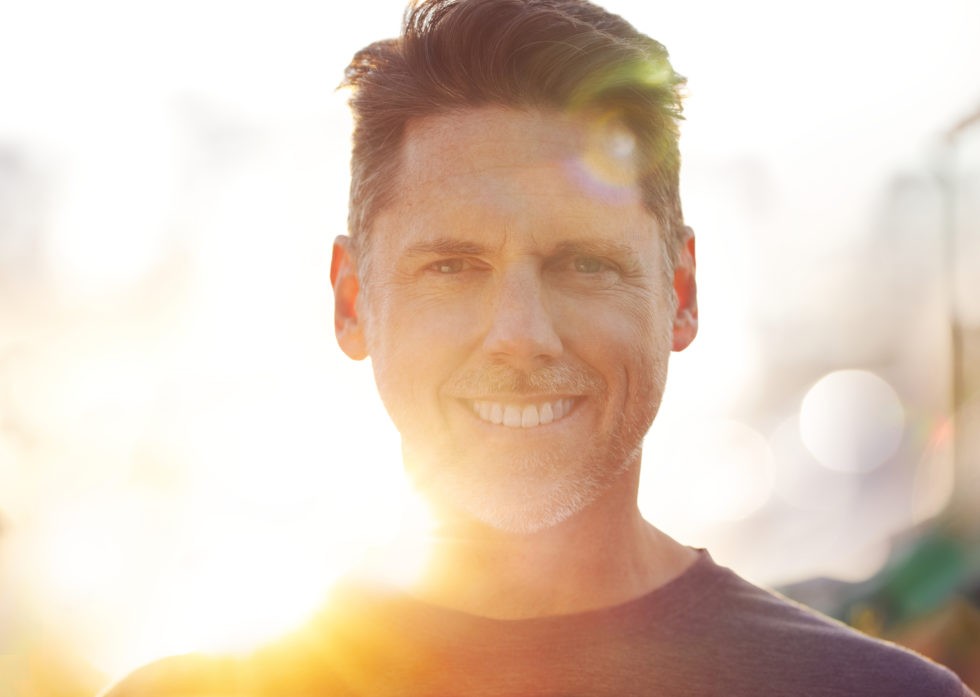
Tripp Lanier is a professional coach, author of This Book Will Make You Dangerous, and host of The New Man Podcast: Beyond the Macho Jerk and the New Age Wimp which — for over a decade — has been downloaded millions of times.
Since 2005, he has spent thousands of hours coaching people all around the world to get out of the rat race, become an authority in their field, and make a great living doing the work they were put on this earth to do. Over the years he’s designed several businesses to support a simple lifestyle focused on freedom, ease, meaning, and fun.
If you’d like to learn more about coaching with Tripp Lanier visit TrippLanier.com.
About Alyson Lanier

Alyson Lanier is a multifaceted expert at the intersection of psychological and spiritual healing. With a 30 year career in Psychotherapy that includes a BA, MA, and LPC in psychology, Alyson supplemented her education with extensive training and certifications in attachment work, Gestalt therapy, Transpersonal psychology, Shambhala Buddhism, internal family systems, and Psychedelic assisted psychotherapy. Her professional journey encompasses over 50,000 hours of therapeutic experience working with individuals, couples, families, children, and adolescents across clinical and private settings.
If you’d like to learn more about working with Alyson Lanier visit AlysonLanier.com
Transcript
A Question from Dale
Tripp: Good morning.
Alyson: Good morning. What do you have up your sleeve?
Tripp: Oh, nothing. Nothing at all.
Alyson: I don't believe you. I like your shirt.
Tripp: Is it because it's not black?
Alyson: It's not black. It's nice to see you in something other than black.
Tripp: I see people wearing all black and I'm like, that guy looks like he's gonna help put the concert up later today.
Alyson: And then you're like, oh, that's me. I dress like that every day.
Tripp: Gotta roll these cables up and get the cases back in the truck. I'm playing Oklahoma tomorrow.
Alyson: How are you today?
Tripp: Been good. Been mixing music all morning and enjoying this rainy day. How are you? You were out?
Alyson: I was outside taking care of the beehives.
Tripp: Before the rain?
Alyson: Yeah. Before the storm.
Tripp: Well, we have a question.
Alyson: We have a question.
Tripp: And I've got some questions about this question.
Alyson: Okay. Do you wanna read the question?
Tripp: You're gonna read the question.
Alyson: Why am I gonna read the question?
Tripp: Because I just think it's better that way. Who's this from?
Alyson: This is Dale Earnhardt.
Tripp: Dale Earnhardt. What's his deal?
Alyson: It's like a porn star's name. It says, "Alyson knows who I am. Oh my god. I'm her ex-boyfriend."
Tripp: I didn't know you dated a guy named Dale Earnhardt.
Alyson: I did not date a guy named Dale Earnhardt. "Alyson knows who I am. I'm her ex-boyfriend. AI took my job."
Tripp: AI took his job. Wow.
Alyson: "AI is short for Alan Ipswich."
Tripp: So not the computer revolution. Just Alan Ipswich. Okay.
Alyson: "That jerk-off at the tire store. Asshole got me fired. Said I was stealing tires and selling them out of my truck. Can you believe that shit? Anyway, I've been looking all over for you, and I'm so glad I found you on this podcast. I need you back, girl. Please come back. I just want us to be romantic and super sexual again. Please, baby. You know that other girl, she didn't mean nothing to me. She was super fine. That's why I had to hit it."
Tripp: Oh, so you got your heart broken by Dale.
Alyson: If this really were an email to me, I would be skimming this part.
Tripp: I think you're probably curious why Dale cheated on you.
Alyson: I never dated Dale.
Tripp: Okay. Your word against his.
Alyson: "If you had this extreme sexual power like I do, you would do the same." How's your coffee? Sorry. "So please, baby, please come back, and on your way back, stop by the store and get some frozen pizzas and some Skittles and one of those rotisserie chickens."
Tripp: So he wants you back.
Alyson: He wants me to go grocery shopping. "And make sure you hit that ATM. I'm gonna need you to let me hold a little bit of cash for a minute. But you know I'm good for it, baby. You can always trust me. Anyway, here's my question. My men's group…" Oh, he's in a men's group.
Tripp: Oh, Dale's in a men's group. One of those evolved guys.
Alyson: I wonder what this men's group does. I wonder if they just whistle at women on construction sites or if they just play poker. "My men's group says I need to be more in my feminine. I don't know what the hell that means. I'm a grown-ass man. Why would I wanna be feminine?" Oh my god. I don't know how he landed himself in a group like that.
Tripp: That's a little awkward, isn't it? Having your ex-boyfriend right in.
Alyson: He's not my ex-boyfriend, so it's not awkward. It's inappropriate.
Tripp: That was inappropriate. I hope we learned a lesson here today.
Alyson: What's the lesson? You're reminding me a lot of him right now. If I had known a Dale, you'd be reminding me a lot of him.
Tripp: You think I'm a Dale?
Alyson: Yeah.
What Are Masculine and Feminine Energy?
Tripp: Okay. So he says his men's group says he needs to be more feminine, but he doesn't know what the hell that means. He's a grown-ass man. Why would he wanna be feminine? That's a good question. So I think we're talking about polarity today. Masculine-feminine polarity.
Alyson: That's dumb. That's what he said.
Tripp: Oh, that's what he said. Okay. Well, let's talk a little bit about what it is. It's not about gender. It's not about what you've got between your legs. Masculine, feminine energies. I think Ken Wilber referred to them as types, if I recall correctly. But anyway, what is the masculine? We all have access to the feminine and the masculine regardless of gender. So it has nothing to do with what's going on between our legs. The masculine is associated with the aspects of ourselves that are seeking direction and purpose and freedom and stillness and goals and structure and solutions and getting shit done. And the feminine within us is more associated with our desire for connection and love and flow and feeling and expression and movement and relationship and beauty and emotions. Those two create the yin and the yang within us all. We have access to all of those things. For each of us, we might have more of one than the other, or we might have suppressed one of them. If we grew up in an environment where there are a lot of boys being feminized, their masculine is pushed down. Or if you were raised in my time, you pushed down your feminine because it wasn't okay to be sensitive. So we can be shaped by our culture to animate certain aspects or push them down. Are you gonna argue with any of that so far?
Alyson: No. I'm not gonna argue with any of that so far. I think a lot of this is silliness, though. But I appreciate how you're framing it. I'm in agreement with you on that. My only personal beef is, I can appreciate the qualities that people might say are more feminine or more masculine. I get irritated, like with what you were talking about with upbringing, when the human, their whole self, gets cut off. Or suppressed, or told they can't… Like, boys don't cry. Girls are bitches if they're decisive and bossy. Or they have to be pretty, and the ultra-masculinized feminists of, like, I can have babies and be beautiful and look great and also have a top-tier job. I think there's a lot of programming around these types that is damaging to the whole person.
Tripp: Yeah. And I think ultimately you're talking more about the gender identity stuff. What does it mean to be a man, and what does it mean to be a woman? I tend to stay out of those conversations because they turn into roles. I've been asked that so many times in interviews: what's the new man? They're looking for the checklist. Here's how to be a man, or here's what it means to be a woman. And they're all a fucking trap because they don't point to who we are at our essence. At our essence, like you said, we all have access to all of these attributes. Because of who we are in our essence, we might tend to lean one way more than the other. I think there's something helpful around understanding these ideas, but not getting sucked into them. I'll be honest, I was in men's groups for years. I was part of that whole David Deida world and all that. It can turn into a mind fuck like, oh, am I being in my masculine or am I being in my feminine? You're not actually feeling into yourself.
Alyson: It's yourself.
Tripp: So I'm totally with you. I'm all about the wholeness aspect. But it can also help us understand, well, why am I struggling to get out of this place with my partner? Why are we lacking some spark? Why are we lacking some polarity? What might need to relax in me in order for me to occupy a bit more over here, and for her to occupy a bit on that side? Then we might get to experience more polarity. You and I went through a period early on where you were working a lot and I was doing a thing, and I thought our polarity flattened out for a while. Through some of this work, we understood these things, and it helped us find our place in who we were more naturally, not just what I've gotta do to make a living or to provide. So I think it can be helpful, but it's really easy for folks who are looking to be told what to do. Here's what to do to be attractive, or here's what to do to get X, Y, and Z. There's a lot of "am I checking the boxes?"
Alyson: Where the trouble is.
Tripp: Yeah. When I was joining one men's group, one of the questions I asked was, is this one of those men's groups that's full of Deida-bots? No shade to David Deida at all, but like any other culture, any other movement, people stop thinking for themselves and start putting on this act. I saw that happening a lot in men's groups. If I'm here in a men's group, then I sit a certain way and I talk a certain way. It was an act or a role that people were playing instead of naturally being who they were.
Neutered Men and Lost Sexual Power
Alyson: You and I have talked a lot about this. We got invited to a few events, and we looked around, and when we left we were like, what's with all the men here? Where are they? They just seem…
Tripp: You have to use words. Neutered?
Alyson: Yeah. Like, neutered. Either disembodied, which is one thing, or just not in touch with their own embodied sexuality, maybe. I wanna be careful how I say this, because I think embodied sexuality can look a lot of different ways. But there's the old patriarchal saying, who wears the pants in the family? It seemed like a lot of the women were wearing the pants and the men were just like, "yes, dear." I remember walking away from a few of those gatherings with you, wondering what their sex life is like. Do they have one? I know that the people I work with, when they lose their embodied sexuality or their own agentic drive, whether it's sexual or otherwise, it tends to flatten a lot of things: their work, their life, what they're interested in, as well as their marriage. I don't know if that's appropriate to weave in here, but I feel really curious about it.
Tripp: I think you're speaking to this: if I got the message that my sexuality was dangerous or could be harmful or disruptive, then I'm gonna put that away. I might have gotten that message early on from mom…
Alyson: Shame from masturbating or something.
Tripp: Or just culture. Like when the Me Too movement happened, everybody was zipping it up. It was like the pendulum swung. Is it okay to even be sexual as a male? There was this fear, because it could lead down that slippery slope. I don't wanna harm anybody, definitely. But so it's just, keep it under wraps. But our power gets tucked away there as well. Sexual power isn't just about what's happening in the bedroom. Sexual power is also our ability to penetrate in the world. That's a masculine quality, to be able to move through the world and claim things: I want this, or I stand for that. If we disconnect from that energy within us, then we turn into the "yes, dear," the "happy wife, happy life" guy. I think that's what you were perceiving. And I perceive that a lot when I've gone to men's groups. Depending on the group, it can be very soft and very feminine. There are a lot of guys who have cut that part of themselves off.
Alyson: Is that in the effort to be safe and non-threatening?
Tripp: I think it's a reaction to unhealthy masculine energy. If they've witnessed unhealthy masculine energy through an abusive dad or a drunk dad or an absent dad, then there's this "screw men, screw the masculine, let's go be feminine." The pendulum swings to the other side, but instead of seeing healthy and unhealthy versions of things, it's just feminine good, masculine bad. I've seen those pendulum swings over time, and they swing back the other way. It's like, we're too feminine, let's be super masculine, and then it just turns into macho bullshit.
Alyson: It's all just a mess.
Tripp: Yeah. And that's not it either, the dipshits. Ken Wilber was great at talking about this through the lens of healthy and unhealthy, and the integration is about healthy versus throwing the baby out with the bathwater. Doing this podcast for as long as I have, I've had so many women come up to me and say, where are all the good men?
Alyson: Yeah.
Tripp: Part of that question was, where's the guy who knows how to hold his ground with me, not get lost when I am in my emotions, and also knows how to fuck me and value me at the same time, instead of sitting back and waiting for me to call all the shots? So it is a weird message men get around their masculine energy because, let's face it, guys are the ones doing a lot of damage on the planet. It's a lot easier to tuck it away and not bring it to the surface.
Human Qualities, Not Categories
Alyson: You keep talking about "where are the good men" and the sex life and the pull, kinda like where the charge is between men and women. Anytime anybody tries to talk about it categorically as masculine or feminine, I'm always playing this game in my head: okay, what if we took away those words and talked about this as just human qualities? I think where the charge shows up is when you're in total alignment with your desire, when you're okay and right with the power, the life force energy that's running through you, and you're clear about what you want, and you're willing to feel that and declare it or go for it. There's something around the truth of that that has somebody like me soften and yield and receive you. For lack of a better way of saying it, I wanna submit, but the submitting is because I wanna feel you there. I wanna actually experience you there, and that's enjoyable for me. So what if we took away doing masculine or doing feminine, being masculine, being feminine? We just talked about human qualities, and what that looks like as you as a human, and then what happens for me as a human. And yes, I happen to be your wife, but here's how your aligned expression impacts me.
Tripp: Yeah. I think it's around wholeness. Can I accept all of me, including the sexual part of me or the powerful part of me, the part of me that takes a stand for things? Wholeness really speaks to all of this. And it can be confronting. I could imagine being a young woman who's been told that if she acts a certain way, she would be a slut. She would probably push that stuff down.
Alyson: In the value of being nice and polite and helpful and all that.
Tripp: Right. Even if we just talk about the sexual power piece, for her, how draining that is and how shame comes up out of that stuff. It's just painful. Some guy was interviewing me a while back. He had a men's group, nice guy. I don't think he aired the interview, because I challenged him on some stuff. He was like, well, men need to learn integrity. I was like, absolutely. But my daughter does too. These qualities about integrity and owning what you want and being courageous and strong, they're not masculine qualities. They're about people.
Alyson: Yeah. They're human.
Tripp: But he was going in this bucket of, and this is where some of this stuff gets sloppy, "the feminine is wild and crazy and untamable." I was like, yeah, at its essence, but that's not women. He was suggesting that women are just gonna say whatever they wanna say because they're just feeling shit. I was like, tell my daughter she's incapable of having integrity. Who the hell are you hanging out with? You're not hanging out with high-quality women if that's the case. So there's this really sloppy thing that can happen in this conversation.
Alyson: A huge mess.
Tripp: And I think some people let folks off the hook. If they're into this dynamic, like, "my wife is very feminine, so she's full of shit," it's like, well, don't deal with that. You hold her accountable. Bring integrity into the relationship. And then from there, you can gift one another. You can play in those energies, but at the core is the integrity and the strength and the structure that holds the two of you together. Is there anything else that was bothering you?
Alyson: No. Thank you for letting me say all my things. I chickened out on saying this is dumb, and I blamed it on Dale, but I think we all know how I feel about this. I think there's a place for it. In a person's growth and development, this kind of stuff can be very helpful. But there's something about it that feels really limiting. There's so much damage that has come on both sides from drinking this kind of Kool-Aid, I think.
Tripp: I wouldn't throw the baby out with the bathwater, but what I do sense, and I can hear it in people's language, is, "I'm animating my masculine and my wife is struggling to animate her feminine because she works all day." And there's this trap: so we're gonna go on a workshop and she's gonna learn how to animate her feminine, and I'm going to work on animating my masculine. It turns into a project instead of an allowing. What do we do to allow those aspects of us to come forth? Because she might not be that feminine. What if she's not?
Alyson: What if she doesn't? There is actually one more thing.
Tripp: What if at her essence she's just more of a tomboy?
"Who Are You to Tell Me I'm Masculine?"
Alyson: Yeah. I can appreciate how you're talking, so we have some shared language and definitions. But I got pinned on this when we started doing the workshops in Boulder. A lot of California people came to Boulder, and I was leading the women's team and doing a lot with the men's team. There was a lot of attempting to reflect to me that I was being very masculine.
Tripp: Was that not nice to hear?
Alyson: It pissed me off. Still pisses me off.
Tripp: Let's get after him.
Alyson: My thing is, who are you to tell me I'm masculine or being masculine? This is what my feminine looks like, period. Full fucking stop.
Tripp: Yeah. And then you got in your truck and knocked down some trees with your front-end loader.
Alyson: I mean, women can like front-end loaders and motorcycles and drugs too. I'm still feminine. I'm still a girl.
Tripp: You are. We wouldn't be together if you weren't. You do a thing where you relax with me, and you actually get very… I don't know the word here, but it's girly.
Alyson: What do you mean?
Tripp: You should do it right now.
Alyson: Even if I'm hauling mulch or something, I'm like, oh, look at the garden.
Tripp: I see that. I feel that in you. And you'll also be like, let's watch a rom-com, I wanna cook. You have that aspect to you. We all have our shell, our thing that we do to protect ourselves, and I think that tends to occur to others, in their world, as masculine.
Alyson: Yeah. It's a defense. And rom-coms and cooking are perceived by you as feminine, when I know plenty of men who like rom-coms and cooking also. And they also really like to fuck. Also get shit done.
Tripp: That's good. They also cut hair.
Alyson: No. Okay. You're terrible. You're underlining this bullshit.
Tripp: Well, I think inherently, though, we can appreciate that some things lean more toward a masculine nature and some lean more toward a feminine one. It doesn't mean that you are masculine or you are not feminine. It's just that those aspects of things could be attributed that way.
Alyson: I completely disagree.
Tripp: You just fucking hate that shit.
Alyson: No, I totally hate it all. Maybe nature, I don't know, but it's what we do with it. Cooking is a creative act. Period. That's just being creative, as is building a fucking building or furniture or being a woodworker. That's all creative. They're just creating.
Tripp: Yeah. I'm with you. I don't have a problem with you not liking this at all. I'm not gonna argue with you. I know that deep down you and I are more aligned on the wholeness piece and the essence piece.
Alyson: Totally.
Essence, Source, and Soul
Tripp: And then it's just, who are you really? Who are you when you're not trying to play defense? Who are you when you're not trying to fit in? Who are you when you're not trying to be attractive or whatever? Allowing those aspects to come through. Can we accept ourselves there? Can we bring more of that to the world? Can we express that in the world? That might look this way, it might look that way, it'll have a certain flavor. And can we own it? Can we say, yes, this is me, this is who I am? That's what I stand for when I work with people. I don't give a fuck if it's masculine or feminine or whatever. It's just a gauge. Somebody wants to use it, great, but I think they can lose the plot.
Alyson: Well, let's talk about essence for a second, because you're throwing that word around often. I think we've talked about wholeness enough, but I'm not sure we've talked about essence enough. Something just came across my mind. I really liked the bit that you showed our daughter and me last night. I can't remember the comedian's name.
Tripp: Pete Holmes.
Alyson: Pete Holmes did this really sweet little clip, where he was talking about how, as he moves through life, he looks at the person in front of him and says, that's me. Which I think is a really non-dual or Buddhist principle. So instead of being a jerk to the flight attendant just because you're having a bad day, it's like, wow, that's also me, doing the best I can with all these people and all of these circumstances. Or I look at this person experiencing homelessness, and that's also me. Or I look at this person who's impatient in the drive-through, and that's also me. I thought that was a really sweet piece. I'm thinking about that because I imagine that when people are brought into this kind of conversation, needing to try on masculine or feminine or animate more of their masculine or feminine selves, there's something in them where they've departed from their essence. Or they're not sure where they themselves lie. So trying that stuff on is great, as is trying on the concept that you are all the things. You have the capacity to be a murderer or a jerk or a soft person or whatever.
Tripp: I think what Pete was talking about in that clip was recognizing… I don't know if it was the Buddha who said it, but the right hand feels what the left hand does. There's this impact of not cutting the other hand. How much do I identify with that hand, where I see myself as separate from the entire body? I thought what Pete was pointing to was that if I'm identified as the finger or the hand and I don't see that I'm connected to the other thing, it's like, oh, that's also me over there. I saw that as an expression of source in all the different ways. The source is expressing itself in all of these different ways all at once.
Alyson: Which is why I like that, when it comes to what if we looked at everything like that.
Tripp: And then also at the same time, there is our individual expression, and I would call that essence. If I hold up my right and left hands, they're not identical. There's something unique about each one of them. They are unique expressions of source. We can hold both of those as true: I'm connected to source, but I'm also a unique expression of source. What's missing from this part of the conversation is the whole "who should I be?" I should be more masculine. I should be more feminine. I should be fit. I should be successful. All of those things get put on, instead of what's trying to express itself through me and as me, which I would point to as our essence. And I think this is a lot easier to see in young children. You put a kid in the sandbox and he just has a thing about him, and she's got a thing about her. They're unique, and it's not as much about how they've been raised yet. They haven't been shaped by that as much. That points to this essential piece, and I think it's soul. That's where soul comes in. It's the thing within us that's here to express something. So I can use this masculine-feminine language to talk about that part of me that's trying to fit in and be safe and be accepted and be significant and be important. This is my thing: I'm gonna be super masculine and get shit done. Oh, wow, maybe I need to be more feminine. I'll fucking get a man bun and grow a beard and change my name and whatever. But that's all the external stuff coming in and trying to shape me, versus: can I shut the fuck up and listen, and feel what is trying to come through me? Then it's an experiment. We might be mind-fucking ourselves there, but it's: where do I sense that this is more me? And my belief is that when we align with soul, when we align with essence, that's where we experience a greater sense of freedom.
How Do We Know We're Aligned with Soul?
Alyson: What do you mean when you say "align with soul"? Some people maybe have no idea what you're talking about.
Tripp: Okay. Soul is this essential part of us that's coming through us. We don't have a chart on the wall that says if I'm masculine I'm doing X, Y, and Z, and if I'm feminine I'm doing A, B, C, and D. How we know we're aligning with soul, aligning with essence, is that we feel more free, more alive, more love, genuine connection, more at peace. It's quite the opposite when we're denying soul, denying essence. We don't feel free to be all of who we are. Freedom's not about, oh, I want to take Friday afternoon off from work. Freedom is, can I be all of who I am, or are people gonna think I'm an idiot? As for aliveness, we feel drained playing this role, being somebody else who we're not. It's a fucking drag. We don't really feel loved and accepted, because the parts of us that we can't accept about ourselves, we haven't brought into that relationship. It's really hard to be loved in that place. And then ultimately there's just this tension. There's no peace there. So I argue that if we can come back to this internal guidance system, the freedom, the aliveness, the love and peace, that's an indicator that we're aligning with who we are at our essence.
Alyson: I agree. Our bodies are really great barometers or indicators of that. Your body will feel it if you're contracted, if even your thinking is coming from some programming, versus if you're really in your essence, in that flow of freedom, aliveness, love, and peace. Your body will reflect that freedom. It's muscular: how you're holding yourself, how you're breathing, how you're able to move. That's one of the easiest ways we can play around with "what's here for me?" If you're somebody who's really exploring, I don't know who I am, I don't know what my essence is, I just know my programming, it's like, okay, cool. When you feel free, what do you notice in your body?
Tripp: Yeah. This is where we go from being a concept. I have this idea of who I should be, and this vision of who I am: he's the guy who makes this amount of money and has this body fat percentage and lives here and drives that and has this wife. It's a concept. I am a concept, that's who I'm striving to be, and until I'm there, I'm not enough. That's very different from checking in and just being in this place, and then looking for where there might be a knot. Can I allow this? This is actually more of who I am. And I can already hear the defensive aspects: if I let my guard down, I'll be a piece of shit, I'll be lazy, I won't work. But I would argue that our soul, our essence, doesn't want us sitting on our asses. It's here to create. It's here to explore, to discover, to experiment, to play. So there is an activity to it, and the real challenge is, but I still have bills to pay, I have a family to feed. So there's this challenge to honor both. I am a provider, I do have these roles and responsibilities, and can I make sure I'm honoring this deeper aspect of myself and who I'm becoming as well?
Alyson: Yeah. I love that. Anything else? Woody, any last words for Dale?
Tripp: I'm just learning a lot about you.
Alyson: Oh my god. You're a rascal.
Tripp: Do I need to worry about Dale? Do I need to call an attorney?
Alyson: He's nonexistent. Nope. Not at all.