

Podcast: Download
Stealing Fire Jamie Wheal and Steven Kotler
Why are Silicon Valley Founders flocking to Burning Man? What is Seal Team 6 doing with woo-woo technology developed by counter culture hippies? And how can all of this help you unlock yourself from your own mental cage? Jamie Wheal is the co-author of Stealing Fire: How Silicon Valley, the Navy SEALs, and Maverick Scientists are Revolutionizing the Way We Live and Work. Today Jamie and I going to discuss how we can all benefit from a better understanding of altered states.
 In this interview:
- Why startup founders are flocking to Burning Man
- Why 10,000 hours doesn’t guarantee you’ll become a master
- Why dolphins get stoned
- How to tame your inner critic
- How Seal Team 6 (DEVGRU) is using altered states to be even more badass
- What action sport athletes, meditators, dancers, porn addicts, and bio-hackers all have in common
- The common traits of “ecstasis”
About Jamie Wheal
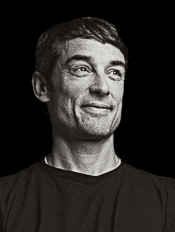 Jamie Wheal, Executive Director of Flow Genome Project, is a leading expert on the neuro-physiology of human performance. His work ranges from Fortune 500 companies like Cisco, Google, and Nike, to the U.S. Naval War College and Red Bull.
He combines a background in expeditionary leadership, wilderness medicine and surf rescue, with over a decade advising high-growth companies on strategy, execution and leadership. He speaks to diverse and high-performing communities such as Young Presidents’ Organization (YPO), Summit Series, and MaiTai Global on the intersection of science and high performance.
At the Flow Genome Project, he leads a team of the world’s top scientists, athletes and artists dedicated to mapping the genome of the peak-performance state known as Flow.
He lives on the Colorado River with his wife Julie, their two kids Lucas and Emma, and a righteous Golden Retriever named Cassie.
Transcript
Non-ordinary states and what elite performers are doing
Jamie: Great to be here, Tripp. Thanks for having me.
Tripp: Yeah. You and Steven have been investigating this. You're out there talking to the astronauts and every different kind of realm, talking to all these different high performers, whether it's SEAL teams, CEOs, or athletes. You're connecting dots between people that don't really seem to have connections on paper. But you're doing this to learn about peak performance and how people are solving problems. So I'm curious. The whole point of this is what you call non-ordinary states of mind. What do you find when it comes to non-ordinary states of mind and how these guys are using them for their own peak performance and solving problems?
Jamie: Well, it was a four-year mystery tour we went on. As you mentioned, we were fortunate enough to get to visit these high-performing organizations, the folks interested in the trailing 1% they can get out of their teams and organizations. Everyone from special operators to Fortune 50 companies to world-class life-and-death athletes. What we found was really surprising, because we were there to talk about being in the zone. There are moments where an individual or a group really clicks into another gear, and what they do almost becomes unconscious competence. Keith Sawyer at the University of North Carolina calls it group flow. You can call it being in the zone, you can call it anything you want. That's what we'd been sharing and teaching.
What was happening is that time and time again, after a presentation or over drinks at dinner following a workshop, we'd get pulled aside by some of the folks we'd been speaking to. They'd say, "Hey, really loved your stuff on flow, but we're using brain electrode devices. Is that flow?" Or, "We're using modafinil or Provigil, some of these off-prescription pharmaceuticals to boost concentration and focus. Is that flow?" Or, "Hey, my whole team of engineers has been microdosing on psychedelics for the last six weeks. Is that flow?"
Tripp: Or just a party.
Jamie: Yeah. Or, "We're going to a nine-day meditation." You've got special operations commanding officers going to nine-day Vipassana meditation retreats. They were all continually asking us, and what we realized is that the audiences we were speaking to, thinking we were bringing something new and relatively progressive, meaning states of consciousness can impact performance, were well ahead of us. That was our first query. There might be something bigger going on here.
There were two moments in particular that really bracket this. We got invited to DEVGRU, which the popular term for is SEAL Team Six. It's the advanced anti-terrorist, anti-hostage unit of the SEALs. We were invited to speak and present to them on, again, group flow. How can they drop into super-high-performing teamwork? They showed us around this new multimillion-dollar facility they'd just created called the Mind Gym. They were using all sorts of body-brain tech, a lot of things that would be familiar to your audience of biohackers. Heart rate variability, EEG tracking, sort of NFL combine meets CrossFit meets DARPA. They're all bundled together in one cool space.
We went around the corner into the final little alcove of their Mind Gym and saw four float tank pods. They're called Samadhi pods, and they literally look like something out of Aliens or a morgue. Big pods, and inside are sensory deprivation tanks. Super salty water, you climb in, you close the lid, and it's pitch black. You can't see where you end and the walls begin, and you have a literally out-of-body experience.
The crazy thing is that for anybody who ever saw the movie Altered States or knows anything about Doctor John Lilly, who invented them back in the sixties, those tanks were the domain of far-out hippie psychedelic voyagers. And here we are in the red-hot center of the military-industrial complex, seeing a tool that had been a relic of the counterculture actually being used to train super soldiers. We thought, that is so strange. The counterculture, even today, has come so far around that they can pretty much shake hands over the backyard fence. What we call that in the book is the relationship between spooks and kooks. You've got the military-industrial complex seeking tools of consciousness and often trying to weaponize them, and you've got the kooks of the counterculture using these tools to sow love, light, and Age of Aquarius kind of stuff. We thought, this is a fascinating hidden story.
Altered states versus ten thousand hours
Tripp: Let me interrupt you here, because it sounds like there's been this one thread of the ten thousand hours to mastery, that that was how we got to the highest performing levels. It's just more experience. And you say in the book that altered states are a shortcut to good old-fashioned hard work, strong habits, and experience. That's gonna piss off those ten-thousand-hours-to-mastery guys out there. So is there a parallel path here where, yes, we develop our experiences, but then we also access these tools or practices to reach the state of mind? Are they concurrent? Are they against each other? What's going on there?
Jamie: The idea that deliberate practice is essential is essential. There is no question that grooving motor patterns, taking things from conscious competence to unconscious competence, is a necessary step. But the key is in what Anders Ericsson originally talked about, which is deliberate practice. A lot of the devil is in the details of how deliberate you're being. For Ericsson, and this is where I think the two ideas reconcile, deliberate means fully focused. Deliberate means undivided attention. Deliberate means completely immersed in the task at hand. And funnily enough, that typically doesn't occur in an ordinary state of consciousness when we live in twenty-first-century normal.
Twenty-first-century normal for most of us is indicated by an awful lot of interior mind chatter and partially divided attention. We're only half-arsing the thing we're attempting to do. Some of our attention is distracted into the past, what happened yesterday or ten years ago. Some of it is, what are we gonna have for lunch? Or what happens if I don't make a million bucks and can't retire safely? Whatever. We're anywhere but the deep present, the deep now. So we can reduce that ten thousand or twenty thousand or five thousand hours of practice down significantly when we attempt to learn new information from an optimized state.
Tripp: So if I understand you correctly, it's not just putting in the time, it's what state of mind you're in when you're putting that time in. That's what really governs how much we're gonna learn and how quickly.
Jamie: Exactly. And to go back to the SEALs and the float tanks, they didn't just dust those suckers off from some basement at Esalen. They got new ones, hopped up with some colleagues of ours at Advanced Brain Monitoring, and included heart rate variability, EEG, and various light and sound feedback loops. Basically, they were able to put operators into a heightened non-ordinary state of consciousness and then let them learn something. In this particular instance, they were learning foreign languages. It used to take them up to six months to become baseline proficient. When they combined it with the state-shifting technologies of the float tanks and the biofeedback, they were able to take six-month language acquisition down to six weeks.
Tripp: Got it.
Jamie: By attuning their state. That's echoed across tons of other studies, both civilian and military, which basically show that a huge slug of our capacity for learning and adapting to new information depends on the state we're in when we get that new data.
Ecstasis and the four elements of STER
Tripp: Got it. There's so much I want to cover with you, so I want to keep moving forward. You have a term for this. Is it "ecstasis"? Is that how you pronounce it? Okay. It's called ecstasis. What I'm getting is that whether these are action sports athletes or meditators or dancers or folks on psychedelic drugs, people in exotic sex experiences, they're all pointing to this state of mind, ecstasis, as you call it. What are the four elements of ecstasis that help us see that all of these practices are pointing to the same state of mind?
Jamie: Yeah, for sure. To be clear, we had put our flag in the ground around flow states. The name of our organization is the Flow Genome Project, meaning what is the genome, or the building blocks, of those peak experiences. What it turned out to be is a Rosetta Stone. As soon as we had that genome, we could lay it over all these other practices. Here's sexuality. Here's psychedelics. Here's meditative states. Here's other variations of flow states. They're all tweaking the same knobs and levers in the body and brain. They're different doorways into a remarkably similar experience, and that experience tends to have four core qualities. We call them STER for short, and that stands for selflessness, timelessness, effortlessness, and richness.
Selflessness: typically, we lose our inner monologue because that part of our prefrontal cortex goes quiet. Timelessness: we drop all distractions of past and future, and we get pulled into what researchers call the deep now. Immediate, deep absorption in the present moment.
Effortlessness means that all of the reward and learning neurochemicals, from endorphins to dopamine to anandamide, serotonin, oxytocin, all these feel-good, keep-doing-more-of-this chemistry, let us feel self-propelled. It's the classic example of how you don't stop surfing glassy waves until you can't move your fingers, and you drag your ass up the beach. Or kids on a snow day who will sled until the last light while their parents are dragging them in for dinner. That's the notion of effortlessness.
The final one is richness, and it refers to the amount of information we tend to have access to in these non-ordinary states of consciousness, because our filters are down, our pattern recognition is up, and our ability to make lateral connections jacks up significantly. In non-ordinary states, we gain access to an additional slug of that. In the past, that additional slug seemed so miraculous, so superhuman, that we always assigned it to supernatural causes. It was the gods, it was the muses, it was possession, fill in the blank, something far out and not us. But once we understand the neurobiology of it, you realize it's supernatural, but not supernatural. It is us in a heightened and optimized state, and we don't necessarily need to mythologize the origins. It's big data for our own minds.
The four-trillion-dollar industry
Tripp: Okay. You talk about this being a $4 trillion industry and that we're wired to seek these experiences. On one level, a lot of us, whether it's conscious or unconscious, are trying to escape that inner critic. We're trying to find that selflessness because there's relief there. And then this book asks, how do we use this to go into a more high-performance brain state? But talk about this $4 trillion industry. You looped porn in there too, because you say we watch porn to get high, not to get laid. So it's all about accessing this state of mind. My job is boring, time's dragging on. Is everything we do an attempt to eject ourselves into a different state? Is that the $4 trillion?
Jamie: In part, yeah. To wind back to how we even started that search in the first place: after spending time with the SEALs, with Google, with a lot of these organizations, we thought, okay, it's clear that elite organizations are throwing a lot of time and money at this. Hedge fund managers, folks at that top 1%, are already in on this game. So we wanted to ask ourselves, does this matter to anybody else? Is this showing up more broadly? And if it is, there should be some economic validation that this is the real deal.
So we took that Rosetta Stone, that matrix of the neurobiology of what pushes us into those specific non-ordinary states of consciousness, which we've been calling ecstasis, from the ancient Greek, which just means to stand outside yourself. It's those experiences writ large, regardless of the door you come in from, that give us a momentary or extended step outside waking self-awareness. We said, okay, if a state or experience, from illicit to licit pharmaceuticals, to personal growth, therapy, and self-help, which is help me get out of myself or relate to myself and the world in a better way, all the way to social media, which is predominantly about distraction, not information.
We talked about IMAX theatres. Why do we pay that much more? We pay that much more to be overwhelmed in our visual system by a forty-foot screen, and to be in community with other people and experience that collective thing. So we pay a premium all the time to get out of ourselves momentarily. And certainly streaming pornography is an obvious example where we are shifting our state and our neurochemistry. We're not procreating. We're not advancing the evolutionary imperative one wit. We're doing it momentarily to get our ya-yas out and to escape ourselves in a fantasy coupling. So we added all this stuff up, and we were super conservative every step of the way because we didn't wanna overstate the case. We thought we'd maybe come up with a hundred billion dollars here or there. It turned out to be $4 trillion.
Tripp: That's amazing, by the way. That number is insane.
Jamie: It's completely insane. That's a quarter of the US GDP. That's as much as the GDP of Russia or the United Kingdom or Brazil. It's more than we spend on health care, K-12 education, and Social Security. It's as many dollars a year as there are galaxies in the known universe, and we are spending that on a recurring basis just to get out of ourselves.
Hedonism, commercialization, militarization
Tripp: You call this the revolution that's right under our noses, out here in plain sight. And I can imagine somebody listening to that feeling this contraction, like, that stuff's not okay. Whatever that stuff is, it's not part of the norm. We recently had Doctor Will Van Der Veer on the show. He's part of the MAPS program. They're having phenomenal success treating PTSD with MDMA, and there's still pushback to these ideas even given the results. We've been wired culturally. We obviously have the state bringing in laws against this, for good reason. But there's still some kind of rub, even though the top 1% is saying, look, this is where things are headed. So why are we resisting it?
Jamie: I think there's a couple of important points to note. The first is that the $4 trillion is not all intentional. It's not all deliberate. It's not all constructive. In fact, huge swaths of it, everything from online porn addiction to gambling addiction to addiction to chemicals and substances, you name it. There's a lot of us that don't know what we're doing, fumble and stumble toward that relief, and create more problems than we solve in our blind efforts. If someone points that out, we'd say, absolutely, we agree. And what our advocacy is for is not hedonism, not "oh, go get twisted, it's good for you."
Tripp: Just go be blasted out of your mind all the time. That's not it.
Jamie: It's to say, look, there's $4 trillion. That's unavoidable. We have to deal with that. That's real. So the question is, can we introduce some cognitive literacy? Meaning I understand my state of mind and being more intelligently, with more information, so I have greater choice and agency over what I do and why. Step one. And then ultimately cognitive liberty, which means the experiences that occur between my ears are mine and mine alone, and I'm also aware of who else might be looking to crowbar in and get some of my mind share, with or without my consent. We talk about that later in the book. But hedonism, our own wayward tendencies to just keep hitting that lever like the rat with the cocaine, is that. But there are two others. There's commercialization, which we're seeing all day long these days.
Tripp: Corporations are gonna use this whether we want them to or not.
Jamie: Yeah. So hedonism is one leg of the stool, and then commercialization and militarization are the other two. We would be crazy not to realize that these are some of the most potent techniques for shifting consciousness, for accelerating learning, for creating community and collective mobilization. Now the cat's out of the bag, and no one else is gonna notice this? This is for mortal stakes, it always has been, and we'd be naive to think that this is just unicorns and rainbows.
Dolphins, puffer fish, and the fourth drive
Tripp: You talked a little bit about, or at least I brought up, that this is a fourth evolutionary drive, not just in humans but in other mammals. They tend to find ways to get into altered states. You mentioned something about dolphins messing around with a puffer fish and getting high doing that. Is that right?
Jamie: Yeah. That came out a few years ago. I think there was a BBC documentary, and they used hidden underwater cameras so they could observe animals in an undisturbed habitat, versus scuba divers with big cameras. What they found was a pod of adolescent dolphins floating up near the surface, taking a puffer fish, which has nerve toxin in it, squeezing it lightly, and passing it around to each other. Then they all hung out near the surface with their snouts just breaking it, where they could see their own reflections. It certainly appeared to be a curious behavior. Now there are some questions as to whether that neurotoxin crosses the blood-brain barrier and delivers a meaningful high or not, blah blah blah, but that was just one funny example of what is clearly a much bigger trend.
That's everything from cats and catnip, cows and locoweed, baboons in Africa eating iboga, reindeer in the Siberian tundra eating Amanita muscaria mushrooms, to elephants drinking from fermented marula trees and breaking into breweries and drinking beer. The bottom line is that not just mammals, birds as well, animals tend to like to shift state and will do so even at risk to their momentary survival. Why would animals repeatedly do this? You would think that kind of behavior would get edited out of the gene pool fairly quickly. The answer is that it serves as a depatterning instrument. We get stuck in cognitive and behavioral ruts, so we tend to do the thing that worked for us last year, and we tend not to reinvent or reimagine. Intoxication can help break some of those patterns and introduce novelty into an individual organism's or its ecosystem's behavior loops. Therefore it's rewarded and persists despite its drawbacks.
So the first three drivers are food, water, and sex. And Ronald Siegel advances the notion that the desire to shift states could be as deeply rooted, as it's clearly pre-human, so it precedes culture even, and could be as powerful as that fourth evolutionary drive. If so, let's stop moralizing and judging particular flavors of the month or decade or century, and let's start looking at it as an evolutionary imperative, and then see where its benefits and drawbacks are.
Tripp: The thing I'm taking away is that this drive to seek states could be inherently within us as animals. What happens when we make it conscious? What happens when we destigmatize it, take it out of the pathologized version, and start to say, how can this be helpful? How can this heal? How can this help us have peak performance and solve problems? We're up against some big problems today. We need a new way of thinking. So it sounds like that's the work you guys are doing. Let's keep it from sliding into hedonism, commercialization, or militarization, and use this so we can actually not become slaves to ourselves, but exponentially grow. Does that fit?
Jamie: I think that's beautifully said. The only mild modification I would make is, let's be realistic. People are always gonna overshoot and hedonistically indulge. It just seems to be the deal.
Tripp: Yeah.
Jamie: And there will always be organizations looking to bend this technology. If you think of it as a psychotechnology, literally, these are the tools to shift state. While it used to involve knobs and levers and brain implants and that kind of thing, it's getting increasingly virtual. At some point, with a little biofeedback and a little practice, just with my own breathing patterns and a few visualizations, we can accomplish what used to take yogis and monks decades to master. That stuff can be democratized. So let's assume that hedonism, commercialization, and militarization are norms. They're probably not gonna disappear anytime soon, but if we can add a fourth way, and that's the whole premise of the book, if we can democratize this and open source it, because we really do now have the keys to the kingdom, the keys to unlocking multiple beneficial and profound states of consciousness. That key to the kingdom is also the key to our cage. We can unlock ourselves from the prison house of twenty-first-century normal, from the mundane, desacralized lives we've all found ourselves living. And if the tools are out there, and if it's truly open source, meaning no matter how many places it gets shut down or co-opted, there's always a place to rekindle that flame, and there's always an opportunity to share and distribute it among people who are ready and wanting that access.
Practical approach: hedonic calendaring and finding your white whale
Tripp: Right. You do a really good job in the book of sending that warning, that this is not a toy, that these states are not something to be taken lightly. You even talk about how to ease into them, no matter what the practice is, and mitigating risk at the same time. I'm curious if you could share some of that. In terms of ecstasis, what techniques provide the biggest bang for the buck without the risk, so to speak?
Jamie: Well, the answer is there are just no free lunches. We all have to take radical responsibility for our own choices and outcomes. That's first and foremost. People always ask us, "Yeah, but what's the best, and where's that limitless pill, and can I get me some?" The answer is that it depends. It depends on your time horizon, meaning how quickly you need the return on investment, and it depends on your risk tolerance.
The value of any ecstatic technique ranges from sitting meditation ten minutes a day, or three yoga sun salutations every day, all the way to "I'm gonna go down to Peru and hook down some wild-ass potion with 5-MeO-DMT in it and have fifteen minutes of blast-off to the back of beyond." That's a big-ass spectrum.
Tripp: Mhmm.
Jamie: To say which is best for you depends on the time it takes to practice or engage it, times the reward, meaning how much practical integrated benefit it offers in my life, divided by the risk. Because you can lose your mind or your life doing these things. We feature some stories of extreme athletes who used to come to the zone with radical life-death risk and realized they had to do something else or their number was going to come up, to hairball psychonauts who risk turning their brains to goo by spending a little too much time out in the deep mystery. You have to make those assessments for yourself.
But the simplest way we would suggest is to consider it a tops-down, bottoms-up combo move. We introduce an idea called hedonic calendaring, which is literally the art of scheduling. You stack-rank all of the things you do. It could start with brushing and flossing your teeth every day, the healthy, beneficial things. I sit in meditation for fifteen minutes a day, or I do my yoga or my CrossFit, things you, by and large, can't do too much of. You want those as your foundational practices on a daily basis. Once a week, whether you wanna call it a contemporary Sabbath or whatever you wanna name it, one day dedicated to deliberately cultivating higher peak states, through whatever mechanisms are comfortable and appropriate for you. Then monthly, quarterly, annual. The annuals are usually the big bucket-list items. It could be an ultramarathon. It could be a trip down to Peru. It could be a visit to Burning Man. Whatever would be, for you, a no-greater-than-fifty-fifty chance of success. Something where you're really laying it on the line, something that takes a lot of prep, a lot of recovery, and shoots you into a state or experience you would never get in your normal day-to-day. And schedule that stuff.
Then see for yourself. Because if you do this deliberately, versus that unconscious $4 trillion, or part of it, where people are just fumbling around trying to get their fix, what you will find is that those practices have an accumulated flywheel effect, and you will build momentum in your practices that is additive. Finding joy, magic, mystery is like everyone's white whale. It's the thing we don't necessarily know is out there, and we spend our lives yearning and searching for it. But the simplest thing to say these days is, go find your white whale. Don't die wondering. If you're still wondering about the fundamental nature and structure of life, love, consciousness, universe, go find that shit. It'll be unique and different for you, but there are enough entryways to go do it.
Once you've done it, the question is not "is it there?" The question is, "hell yes, now what do I do with it?" And the what-do-I-do-with-it is how do I integrate these non-ordinary states and the information and inspiration they provide into everyday waking life. That's the endgame. We can't all just change our names, wrap ourselves in white robes, and go live in a cave afterwards. We're twenty-first-century Western householders, and that's both the paradox and the gift, I think, of our contemporary situation.
Integration: wake up, grow up, show up
Tripp: Well, I just appreciate this integrated approach. I call it an adult approach. We're gonna access these states so that they can inform the rest of our lives. The state itself is not the point. It's about, okay, I access these states, how can this impact everything else that is important to me, versus pitting them against one another, which is what we see, unfortunately, when these guys are dying out there. They place them against one another and they lose. So I love this integrated place. Be smart, be an adult about this, be responsible, and let these practices inform the rest of your life instead of eclipse it.
Jamie: You mentioned MAPS and their MDMA therapy with trauma survivors, and not just war trauma, although they've done profound work with veterans of Iraq and Afghanistan, but also childhood trauma, sexual abuse, heavy, heavy stuff that people carry. The idea is that these momentary states outside ourselves, with appropriate support, with talk therapy, within a grounded context, can support profound cathartic release and relief of some of those things. And you realize, okay, why on earth wouldn't we be making use of the tools we have available to wake up, grow up, and show up? Wake up: oh, there is a point of view or perspective on this life of mine
Tripp: Mhmm.
Jamie: bigger than the stories I routinely tell. Grow up: there are gaps in my game, which I now see with greater clarity, and I can take some of this good feeling, the ecstasis, and plow those peak experiences back into the valleys of my remaining growth. And then show up. At some point, we've hunted our white whale. There is a there there. We've used it to mend ourselves and patch our bones so we can stand a little taller in our true sense of ourselves, and then show up. What am I here to do? I've got my basics down, and we don't have to keep doing that to perfection. We don't have to wait till we can fucking levitate to give a homeless person $5. We can do this in real time as we continue to grow. But then show up. What is the most clear and on-point expression of my unique capabilities here and now, and just absolutely fearless service.
Tripp: I love it. That's a great place to wrap it up. Please go read Stealing Fire. That's the name of the book. Visit stealingfirebook.com. You can get the book there, but there's also a ton of other stuff that you guys are giving away with it. Jamie Wheal, thanks so much for this talk. I freaking love this book. It's such a cool ride. I couldn't wait to read it every night when I would go to bed and get another window into some other world that didn't seem to have anything to do with the previous chapter. It was amazing how you guys were connecting all these dots.
Jamie: Awesome, man. Great to hear it, Tripp. Thanks for having me on.