
Podcast: Download
Subscribe: RSS
How to Use Your Mood to Your Advantage — Tripp Lanier
Tired of feeling uninspired or “meh?” Tired of hearing yourself bitch and complain? And why do we choose to “cover our ass, kiss ass, or prove we’re not an ass?” In this short video, we explore a simple process to use our mood to our advantage. In this episode:- Why do moods matter?
- What causes our moods?
- Why are we giving up our power?
- The 3 step process to shift a lousy mood into empowering action
- Why do we choose to “cover our ass, kiss ass, or prove we’re not an ass?”
Tripp Lanier is…
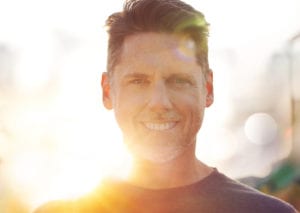 Tripp Lanier is the author of This Book Will Make You Dangerous, and host of The New Man Podcast: Beyond the Macho Jerk and the New Age Wimp which — for over a decade — has been downloaded millions of times.
As a Professional Coach…
Since 2005, he has spent thousands of hours coaching people all around the world to get out of the rat race, become an authority in their field, and make a great living doing the work they were put on this earth to do. Over the years he’s designed several businesses to support a simple lifestyle focused on freedom, ease, meaning, and fun.As Host of The New Man Podcast…
Tripp Lanier has conducted hundreds of interviews with experts and authors from all walks of life including:- Tim Ferriss (The 4 Hour Workweek, The 4 Hour Body, The 4 Hour Chef)
- Laird Hamilton (Big wave surfing legend)
- Ryan Holiday (The Obstacle is the Way, The Ego is the Enemy, The Daily Stoic)

- Phil Stutz and Barry Michels (The Tools, Coming Alive)
- Dan Millman (Way of the Peaceful Warrior)
- Steven Pressfield (The War of Art, Turning Pro)
- Robert Greene (48 Laws of Power, Mastery)
- Steven Kotler (The Rise of Superman, Stealing Fire)
- Mark Manson (The Subtle Art of Not Giving a F*ck)
- Aubrey Marcus (Founder/CEO of Onnit)
- Dr. Robert Glover (No More Mr Nice Guy)
- Navy SEAL Mark Divine (Unbeatable Mind, The Way of the SEAL)
- Jonathan Haidt (The Happiness Hypothesis, The Righteous Mind, The Coddling of the American Mind)
- Neil Strauss (The Game, The Truth)
- Alan Alda (legendary actor and NY Times best selling author)
As a Human Guinea Pig…
 Tripp has thrown himself into everything from 10 day silent meditation retreats to plant medicine journeys to men’s groups in the Costa Rican jungle to somatic sex intensives in his bedroom to drinks with Zen masters — He even learned some life lessons by hanging out backstage with David Lee Roth.
At the age of 23, Tripp created one of the first digital video post-production companies in the Southeast. To support his music career and love for travel, he crafted TV shows and commercials for national and regional clients. Wanting to align his personal values with his work in the world, he sold the company after 12 years to become a professional coach. Other contributions include working with world-renowned philosopher Ken Wilber as Co-Director of Integral Institute’s Art Center.
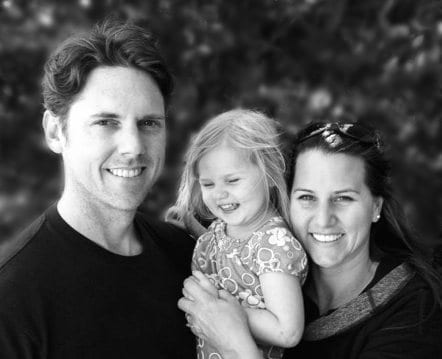
Tripp is married to therapist/relationship coach Alyson Lanier and has the best daughter in the whole wide world. They live in a small beach town in North Carolina where he spends much of his time surfing, playing music, and enjoying a simple life.
Transcript
Why Moods Matter
Tripp: Let's set a little context here. Why do moods matter? Why do we care about moods? Moods make us more effective. Think about it. A good mood opens the door for us to take more action. We get more stuff done when we're in a good mood. When we're in a lousy mood, we just wanna lay around. We wanna procrastinate. We wanna kick things to the curb.
Tripp: Good moods open the doors for us in terms of relationships. Who wants to hang out with Mr. Poopypants? The guy who's stinking up the room? Nobody. A good mood makes it easier for us to connect and build trust with others.
Tripp: A good mood helps us see opportunities. When we're in a bad mood, we tend to be pessimistic. We tend to be focused on threats, all the things that could go wrong. When we're in a good mood, we focus on the possibilities. We see opportunities all around us. Bottom line, our mood has a drastic impact on what we do and, obviously, how we experience our life.
How We Numb a Lousy Mood
Tripp: Now we can tell we're struggling with mood based on the actions and the behaviors that we're doing. So what do we typically do when we're in a lousy mood? We numb ourselves. We work too much. We get stuck in being busy, convincing ourselves that we have to constantly be busy. We get stuck in our screens. We get stuck in news. We believe we have to always be up to date on all the latest news. We need to be up to date on all the social media bullshit.
Tripp: Porn comes in. Porn's a big one. When we're in a lousy mood, porn's a way that we look for relief and an escape from our lousy mood. We tend to get involved in drama and talking shit about others. Obviously complaining and bitching and moaning, as we said, but then there's also the most reliable ones: alcohol and weed and drugs and all those types of things that attempt to pull us out of our moods and numb ourselves from them.
Lousy Moods Come From Lousy Habits
Tripp: So lousy moods are often the result of lousy habits. We can't expect to feel good. We can't expect to feel energized when we're getting poor sleep, when we're not doing any kind of movement, when we're eating poorly, when we don't get time outside with folks, when we're not hanging out with our friends. Yeah, we're gonna feel like shit.
Tripp: Food's a huge one for me. I'm learning more and more about my brain every year. If I skip protein in the morning, I can guarantee that I will be in an aggravated, lousy mood in the afternoon. We've got to understand how sugar and caffeine and alcohol create the peaks that we love, but then also how they create the valleys that we're not really crazy about. All of that impacts dopamine and serotonin, which are the chemicals that govern the moods that we're in.
Tripp: So we've got to treat ourselves well. At the most fundamental, basic level, a good mood is dependent upon our brain chemistry, which means we can't expect to have good moods if we've got poor habits. We can't wait for our mood to give us permission to do what's best for us. Meaning, hey, if I'm not in the mood to go to bed earlier, I'm not in the mood to eat well, I'm not in the mood to do some movement, or ABC, I can't wait for myself to be in the mood. I've got to do that stuff anyway. That's what's going to put me in a better state of mind.
Mood as a Sign We've Given Up Our Power
Tripp: All right. That said, a lot of times our mood is a product of when we have given up our power. Our mood is typically an indicator that we are protecting or pleasing or proving. We've convinced ourselves that we can't do anything. We're stuck in this situation. We're hemmed in, we're confined, and we're playing the victim. And we believe this because it's too dangerous to do any kind of alternative choice. It's too dangerous to speak up or make a move or make a proposal or request, whatever it might be.
Tripp: Result: we feel fragile. We feel trapped. We feel drained. We feel isolated. We feel bored. We feel overwhelmed, whatever it might be. None of that stuff's good. I don't know anybody who wants that.
Tripp: So what if, instead of tolerating these lousy moods and just acting like, hey, this is just how life is, we could get curious? We could start to see these moods as information. We could learn how to cut the crap, get out of victimhood, act with power, and become more effective. We can learn how to turn feeling trapped and drained and start to see those as the doorways to the opposite of those, which is feeling alive and free.
A Client Story: The New Hire
Tripp: Let me tell you a story about a client and how we were able to do a version of this. So the client's business is humming along, he's doing really well. It was time for him to make a new hire. Great. It's also really challenging. It's a vulnerable place, edgy, to lean into new things like this. Nonetheless, he pushed through it and made the new hire. It's an exciting time. That first week's the honeymoon, everything seems to be going great. Awesome. Fantastic.
Tripp: Two weeks later, though, my client shows up on the call. He's not feeling so fantastic. He's in this lousy mood, but his attitude towards it is like, what's wrong with me? Why do I get into these lousy moods? It's as if his mood was something that was just happening to him and he was powerless to do anything about it.
Tripp: So I proposed, why don't we look at this mood as information? Why don't we get curious about this mood? Let's look at where you were a few weeks ago and let's see what was working then, and why you were energized and why you were lit up.
Tripp: At that time, the situation with the new hire was such that things were very transparent. There was a lot of communication. There was a lot of accountability. Things were getting done. Things were humming along. They were in a groove. It was all great. What was happening now was a lot different. There wasn't so much accountability. There wasn't so much transparency. Communication tapered off. His new hire was flaking a bit. And as a result, my client was feeling scared. He was feeling vulnerable. He'd gotten himself into this place where he was frustrated, angry. He was like, this isn't working. This isn't fitting. And he felt like he was stuck in this place.
Tripp: But instead of settling for this, we got curious and we said, okay, well, what do you actually want this new hire to do? Given that this was what was working a couple of weeks ago, and given that this is where you are now and, as a result, you're feeling this way, what do you want instead? And so we made a list of the very specific behaviors. We made a list of the very specific things that he wanted to have happen differently with the new hire.
The Competing Commitment: Protecting, Pleasing, Proving
Tripp: All simple, really easy to do, but resistance shows up. My client immediately starts to get tense and he starts to push back and he's like, well, wait a second. If we do this stuff, I'm going to end up being the micromanager. And here we are. Now we're up against his competing commitment. Now we're up against the thing that had kept him in this bind. This is what feels dangerous for him. This is the root of his resistance. This is why he was choosing to give up his power.
Tripp: He had fear. He was scared to be seen a certain way. He'd been micromanaged by other folks in the past, and he didn't want to be one of those guys. Speaking up, making these requests, this was dangerous to his self-image. He was committed to protecting himself from uncomfortable conversations. He was committed to pleasing, to making sure that he was always liked. He was committed to proving that he was one of the cool guys and he wasn't a douche like some of his previous managers. And this is why he was choosing to give up his power instead of owning what he wanted.
Tripp: This is what actually was leading to the shitty mood. It was the belief that he couldn't speak up. It was the belief that he was damned if he did, damned if he didn't, and he was trapped and drained as a result.
Tripp: So what's the answer here? I discuss this in This Book Will Make You Dangerous. The first step is we've got to become aware of when we are protecting and pleasing and proving. And then we want to pivot out of that to be bold, to be playful, to get over ourselves, and then speak up for what we want.
Tripp: On that day, my client left that call, and he and I had a very clear set of agreements on what he was gonna do. I held him accountable to that. He had the conversation with his new hire and, as a result, immediately was feeling far more empowered, feeling lighter, feeling expansive.
The Three-Step Process
Tripp: All right. So what can we take away from all this? Step one, we have to be aware of our mood. Instead of just going along with the flow, being on autopilot, we have to wake up and say, wait a second, my mood is information. It's like the check engine light on your dashboard. Something's off. There's something off track here. Being aware of that is step number one.
Tripp: Step number two, instead of choosing to numb ourselves or distract ourselves, we want to get curious. We want to make the effort to get out of autopilot, get present, and ask ourselves, okay, what's going on here in this moment? Given that I'm feeling this way, what do I want instead?
Tripp: And then step three, speak up. We want to turn our frustrations into clear requests or clear proposals. We want to turn expectations into clear agreements, meaning what's going to be done, who's going to do it, and when is it going to be done by? Steve Chandler has done some great work around turning expectations into agreements. Go check that out.
Tripp: The other thing we wanna do is check out our assumptions. Assumptions are stories in our mind that typically only exist in our mind. Sometimes they're right, but most of the time they're way off. An assumption is, oh, this is what's going on. And when I believe that this is what's going on, I feel terrible. So we wanna be aware of that assumption and say, hey, is this really what's going on? I'm gonna go check it out. I'm gonna ask this person, is this really true? This story, this assumption that I'm carrying.
Don't Let the Discomfort Cost You Your Power
Tripp: Keep in mind, all of this is going to feel dangerous, meaning it's going to feel uncomfortable. It's going to feel risky. We're going to run up against the possibility of being judged or criticized. This is why so many of us choose to cover our asses. We choose to kiss ass. We choose to prove that we're not an ass, instead of owning what we want.
Tripp: Keep in mind, this weight, this discomfort, what feels like a burden, is actually your power. Do not let the effort or a pain in the ass get in the way of you utilizing your power. Do not let a pain in the ass have you betray yourself and give up your power. Avoiding stuff, stewing in poison, that's what breeds anxiety. That's what breeds helplessness. That's what keeps our nervous system in the shitter. Getting aware, getting curious, steering directly into our challenges and doing stuff about it, that's what nips it in the bud. Things get handled. And as a result, our nervous system calms down. We feel lighter. We feel energized. We feel empowered.
Tripp: Again, we gotta take care of the fundamental pieces. We gotta take care of those foundational things. We've gotta make sure that we're giving our brains and our bodies what they need in order to feel good. Otherwise, we're gonna be in a lousy mood no matter what.